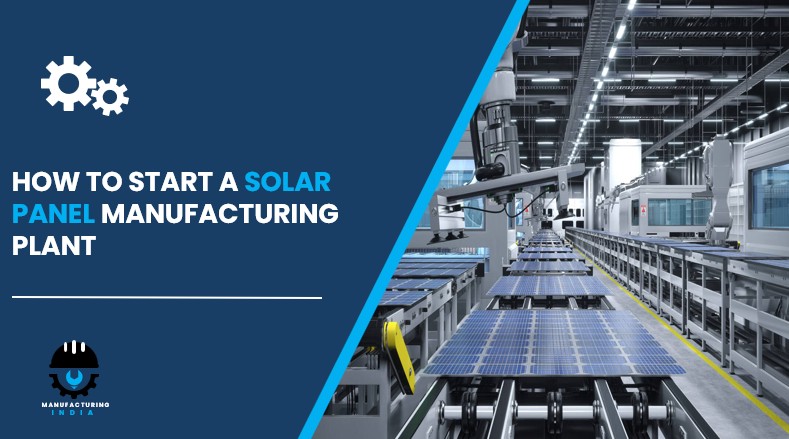
Setting up a solar panel manufacturing plant in India represents a highly attractive investment proposition underpinned by the global energy transition toward renewable power, declining photovoltaic technology costs, supportive government policies, and increasing investments in utility-scale and rooftop solar installations. India’s Production Linked Incentive (PLI) scheme for high-efficiency solar PV modules, combined with the Approved List of Models and Manufacturers (ALMM) framework administered by the Ministry of New and Renewable Energy (MNRE), is driving rapid localisation of the domestic module and cell manufacturing base. As utility-scale solar farms, rooftop programmes such as PM Surya Ghar, and commercial and industrial installations continue to expand, solar panel manufacturing occupies an increasingly strategic position in the country’s clean energy and industrial policy landscape, creating a highly favourable environment for new entrants with efficient, quality-certified production capabilities.
What is Solar Panel?
A solar panel is an assembly of interconnected photovoltaic (PV) cells that convert sunlight directly into electricity through the photovoltaic effect. The cells are manufactured from semiconductor materials such as crystalline silicon or thin-film compounds, which generate direct current (DC) electricity when exposed to sunlight. This DC output is subsequently converted into alternating current (AC) using inverters for use in homes, industries, and the wider electricity grid. Solar panels are valued for their high operational strength, long service life, low maintenance requirements, and emission-free operation, with performance typically assessed against parameters including power conversion efficiency, temperature coefficient, degradation rate, and resistance to environmental stresses such as moisture, ultraviolet exposure, and mechanical load.
Panels are broadly categorised into monocrystalline, polycrystalline, and thin-film variants, with monocrystalline and high-efficiency TOPCon or heterojunction (HJT) technologies gaining share due to superior conversion efficiency. Beyond grid-connected power generation, solar panels are deployed across utility-scale solar farms, rooftop residential and commercial installations, off-grid rural electrification systems, and hybrid energy storage applications, reflecting their versatility across the renewable energy value chain.
Cost of Setting Up a Solar Panel Manufacturing Plant
The total capital investment required to establish a solar panel manufacturing plant is shaped by several key parameters: annual production capacity (typically ranging from 1 to 2 GW), the level of vertical integration adopted (module assembly only versus integrated cell and module manufacturing), the level of automation and cleanroom specification, facility location, raw material sourcing strategy, and applicable BIS and ALMM certification requirements. Below is a structured breakdown of the major cost components.
1. Capital Expenditure (CapEx)
Total capital investment in a solar panel manufacturing plant covers the following major heads:
Land and Site Development
This encompasses land acquisition or lease, site preparation, boundary development, and utilities connectivity. Site selection should prioritise proximity to raw material and component suppliers, reliable and adequate power supply, strong road and logistics infrastructure for inbound glass, aluminium, and cell shipments and outbound finished panels, and availability of a trained technical workforce. Compliance with industrial zoning regulations, factory safety norms, and environmental clearance requirements must be assessed from project initiation.
Civil Works and Construction
Building costs cover the main manufacturing facility including the cleanroom cell production area (where applicable), module assembly and lamination hall, automated testing and quality control laboratory, raw material and finished goods warehousing, administrative block, and utility infrastructure including power backup, compressed air and gas systems, HVAC and cleanroom climate control, and effluent management systems. Construction must comply with applicable factory act requirements, fire and electrical safety norms, and BIS infrastructure guidelines for solar manufacturing facilities.
Machinery and Equipment
Machinery represents the single largest CapEx component. Key equipment required for a solar panel manufacturing plant includes:
- Cell Production Line: Diffusion furnaces, plasma-enhanced chemical vapour deposition (PECVD) systems, screen printers for metallisation, and texturing and cleaning baths for converting silicon wafers into finished photovoltaic cells
- Cell Sorting and Testing Systems: Automated sorters and flash testers that classify finished cells by power output and efficiency prior to module assembly
- Tabber-Stringer Machines: Automated equipment that solders interconnect ribbons to cells and forms them into strings for module lay-up
- Automated Lay-up and Bussing Systems: Robotic placement systems that arrange cell strings, glass, encapsulant (EVA/POE), and backsheet layers into the module stack
- Laminators: Vacuum lamination presses that bond the glass, encapsulant, cell matrix, and backsheet into a sealed, weatherproof module
- Edge-Trimming and Framing Units: Equipment for trimming excess laminate and fitting aluminium frames to provide structural rigidity and mounting compatibility
- Junction Box Assembly and Curing Stations: Systems for bonding and curing junction boxes and bypass diodes onto the rear of finished modules
- Electroluminescence (EL) Testers and Sun Simulators: Quality assurance equipment used to detect microcracks and defects and to measure current-voltage (I-V) performance of finished modules against rated output
- Material Handling and Packaging Systems: Automated conveyors, robotic palletisers, and protective packaging lines for safe handling and dispatch of finished panels
Other Capital Costs
These include pre-operative expenses, commissioning charges, import duties on specialised cell and module manufacturing equipment, staff training and competency development, initial raw material and consumable inventory for production commissioning, and regulatory compliance setup costs covering BIS product certification and ALMM enlistment with the Ministry of New and Renewable Energy (MNRE).
Request a Sample Report for In-Depth Market Insights: https://www.imarcgroup.com/solar-panel-manufacturing-plant-project-report/requestsample
2. Operational Expenditure (OpEx)
Raw materials principally solar cells, tempered glass, aluminium frames, encapsulant film, backsheet material, and junction boxes constitute the dominant operating cost, typically representing 70–80% of total OpEx. Utility costs, driven primarily by electricity consumption of cleanroom, lamination, and testing equipment, account for 10–15% of OpEx. Labour, maintenance, quality control, packaging, transportation, depreciation, taxes, and overhead costs constitute the remainder of the operating cost base.
3. Plant Capacity
The proposed solar panel manufacturing facility is designed with an annual production capacity ranging between 1–2 GW, enabling economies of scale while maintaining operational flexibility. This capacity range supports both module-assembly-only operations and integrated cell-to-module production, serving utility-scale developers, EPC contractors, rooftop installers, and government procurement programmes requiring ALMM-listed modules.
4. Profit Margins and Financial Projections
The project demonstrates healthy profitability potential under normal operating conditions. Financial projections encompass capital investment, operating costs, capacity utilisation ramp-up schedule, product mix between cells and modules, and forward demand outlook underpinned by policy-mandated domestic procurement. A comprehensive feasibility analysis includes sensitivity analysis, Net Present Value (NPV), Internal Rate of Return (IRR), and Payback Period calculations. Gross profit margins for solar panel manufacturing typically range from 20–30%, supported by stable, policy-backed domestic demand. Net profit margins of 8–12% are achievable with disciplined cost management, optimal capacity utilisation, and access to PLI incentive support.
Why Set Up a Solar Panel Manufacturing Plant?
Critical Renewable Energy Component
Solar panels are the core building blocks of clean energy systems, converting sunlight into electricity and forming the foundation of utility-scale solar farms, rooftop installations, and distributed generation. As the global energy transition accelerates, solar panel manufacturing is becoming essential infrastructure for decarbonisation goals and energy security strategies across both developed and emerging economies.
Policy-Backed Domestic Demand Through ALMM
India’s Approved List of Models and Manufacturers (ALMM) framework mandates that solar projects under net metering, open access, PM Surya Ghar, PM-KUSUM, and most government-funded and DISCOM procurement programmes use domestically manufactured, ALMM-listed cells and modules. With enforcement tightening further from June 2026, domestic manufacturers benefit from a large, policy-protected captive market that reduces direct price competition from non-listed imports.
Production Linked Incentive (PLI) Support
The PLI scheme administered by MNRE, through IREDA and SECI, provides financial incentives to manufacturers of high-efficiency solar cells and modules tied to efficiency thresholds, materially improving project returns for manufacturers investing in advanced cell technologies such as TOPCon and heterojunction production lines.
Rapid Capacity Expansion and Import Substitution
India’s domestic solar cell and module manufacturing base has expanded dramatically over the past several years, yet domestic cell capacity continues to lag installed module capacity and overall demand, leaving a structural supply gap that creates sustained opportunity for new entrants, particularly in upstream cell and wafer manufacturing.
Megatrend Alignment
Accelerating adoption of renewable energy, rising electricity demand, decarbonisation targets, electrification of transport, and energy security concerns are driving sustained, double-digit growth in solar installations globally across utility, commercial, and residential segments, providing durable long-term demand visibility for panel manufacturers.
Localisation and Supply Chain Resilience
Developers, EPCs, and utilities increasingly prefer local and reliable solar module suppliers to reduce import dependence, mitigate logistics and tariff risks, ensure faster delivery, and meet domestic content requirements, creating strong opportunities for regional manufacturers with integrated and efficient operations.
Rising Electricity Demand and Infrastructure Push
Sustained growth in national electricity generation, government-led clean energy targets, net-zero commitments, and carbon reduction policies are encouraging large-scale solar adoption, while declining production costs from technological improvements in cell efficiency and automation further enhance the attractiveness of new manufacturing investment.
Manufacturing Process Overview
The solar panel manufacturing operation transforms silicon wafers and cells into finished, weatherproof photovoltaic modules through a sequence of cell processing, module assembly, and quality testing operations. The key process stages are:
- Cell Fabrication: Silicon wafers undergo texturing, diffusion, anti-reflective coating deposition, and screen-printed metallisation to form finished photovoltaic cells with the required electrical characteristics
- Cell Testing and Sorting: Finished cells are flash-tested and automatically sorted by power output and efficiency to ensure consistent performance grouping within each module
- Tabbing and Stringing: Interconnect ribbons are soldered onto busbars to link individual cells into strings of the required voltage configuration
- Lay-up and Bussing: Cell strings are arranged between layers of tempered glass, encapsulant film (EVA/POE), and a polymer backsheet, with bus ribbons connecting strings into the final circuit
- Lamination: The assembled stack is heated and pressed under vacuum to bond the layers into a single sealed, weatherproof laminate
- Edge Trimming and Framing: Excess laminate is trimmed and an aluminium frame is fitted around the module to provide structural rigidity and simplify mounting
- Junction Box Assembly: A junction box housing bypass diodes is bonded and cured onto the rear of the module to enable electrical connection and protect against hotspot damage
- Electroluminescence Testing and Quality Control: Finished modules are tested using electroluminescence imaging and sun simulators to detect microcracks and verify current-voltage performance against rated specifications
- Packaging and Dispatch: Modules are stacked, protected with corner and edge packaging, and dispatched by pallet or container to project sites, distributors, or EPC contractors
Key Applications of Solar Panel
The solar panel market serves several major end-use segments across utility, commercial, residential, and off-grid sectors:
- Utility-Scale Solar Farms: Large ground-mounted installations that supply bulk renewable electricity to the grid, forming the largest single demand segment for solar panels globally
- Rooftop and Distributed Generation: Residential and commercial rooftop installations, supported in India by schemes such as PM Surya Ghar, that allow consumers to generate and net-meter their own electricity
- Commercial and Industrial (C&I) Installations: Captive and open-access solar deployments by industrial and commercial consumers seeking to reduce grid electricity costs and meet sustainability commitments
- Off-Grid and Rural Electrification: Standalone and mini-grid solar systems, often paired with battery storage, that extend electricity access to areas with limited grid infrastructure
- Energy Storage Integration: Solar-plus-storage installations that combine panels with battery systems for grid stability, backup power, and time-shifted energy use
Global Solar Panel Market Outlook
India’s solar panel market was valued at approximately 12.36 GW in 2025. According to IMARC Group estimates, the market is expected to reach 91.39 GW by 2034, exhibiting a CAGR of 24.89% from 2026 to 2034. The solar panel market benefits from multiple structural demand drivers:
- Policy-mandated domestic procurement through the ALMM framework, which tightens further from June 2026 and channels government-backed demand toward domestically manufactured, certified modules
- Production Linked Incentive support for high-efficiency solar cells and modules, improving manufacturer economics and encouraging investment in advanced cell technologies
- Sustained growth in national electricity generation and demand, supporting continued expansion of utility-scale and distributed solar capacity
- Declining production costs driven by technological improvements in cell efficiency, automation, and economies of scale
- Growing investments in grid infrastructure, energy storage integration, and distributed generation systems supporting sustained demand for panels
- A structural domestic supply gap, with cell manufacturing capacity continuing to lag module assembly capacity and overall market demand, favouring new entrants in upstream cell production
- Rising electricity prices and energy security concerns motivating industrial and residential consumers to adopt solar power solutions
Leading manufacturers in the global solar panel industry include LONGi Green Energy Technology, JinkoSolar Holding, Trina Solar, Canadian Solar, and First Solar, alongside major Indian manufacturers such as Adani Solar, Waaree Energies, Tata Power Solar, and Vikram Solar, serving end-use sectors including utility-scale solar farms, rooftop and distributed generation, and industrial and commercial installations.
Latest Industry Developments
July 2025: True Power Limited announced the launch of a 1 GW solar module manufacturing facility in Barabanki, Uttar Pradesh, marking the company’s entry into solar panel production with a total investment of approximately INR 100 crore.
June 2025: Solarium Green Energy announced its re-entry into solar module manufacturing with a new, fully automated 1 GW production line in Ahmedabad, Gujarat.
Licenses and Regulatory Requirements
Establishing a solar panel manufacturing unit requires a range of approvals and certifications, which may vary by country and jurisdiction, including:
- Business registration and company incorporation under applicable company law
- Factory License under applicable state Factories Act provisions for manufacturing operations
- BIS (Bureau of Indian Standards) product certification for solar cells and modules, a mandatory prerequisite for ALMM enlistment
- ALMM (Approved List of Models and Manufacturers) enlistment with the Ministry of New and Renewable Energy (MNRE), involving factory inspection, document review, and product testing
- Registration under the Production Linked Incentive (PLI) scheme, where applicable, for manufacturers of high-efficiency cells and modules
- GST registration in the state of manufacture and any other state where operations require it
- Import-Export Code (IEC) for raw material imports and finished module exports
- Pollution Control Board Clearances Consent to Establish (CTE) and Consent to Operate (CTO) for manufacturing operations
- Fire safety and electrical safety approvals for the manufacturing facility
- ISO 9001:2015 Quality Management System and ISO 14001 Environmental Management System certification
- Trademark and Brand Registration for proprietary branded product launch
Key Challenges to Consider
Silicon Wafer and Cell Import Dependence
Despite rapid expansion of module assembly capacity, India’s domestic solar cell and wafer manufacturing base remains significantly smaller than module capacity, leaving many module manufacturers dependent on imported cells, primarily from China. This exposes manufacturers to import duty changes, supply chain disruption, and currency risk, making backward integration into cell and wafer production an important long-term strategic consideration.
Capital Intensity of Integrated Manufacturing
While module assembly can be established at relatively moderate capital investment, integrated cell manufacturing including diffusion, texturing, and metallisation represents a substantially higher capital commitment. New entrants must carefully evaluate the phasing of investment between assembly-only operations and fully integrated cell-to-module production based on available capital and target markets.
BIS and ALMM Compliance Complexity
Achieving and maintaining BIS product certification and ALMM enlistment requires factory inspection, ongoing product testing against IS specifications, and ALMM List-II compliance, with no blanket extensions expected beyond June 2026. Any lapse in certification maintenance can result in loss of access to government-backed procurement programmes, which represent a large share of addressable domestic demand.
Technology and Efficiency Obsolescence Risk
Rapid technological progress in cell architectures, including the shift toward TOPCon and heterojunction technology, means that PLI incentives and market competitiveness are increasingly tied to efficiency thresholds. Manufacturers investing in lower-efficiency legacy technology risk delisting from incentive schemes and declining competitiveness against higher-efficiency entrants.
Price Competition from Non-ALMM Imports
While ALMM protects a substantial share of the domestic market, export-oriented and non-mandated private-sector demand remains exposed to competition from lower-cost imported modules, particularly from established Southeast Asian and Chinese manufacturing hubs, requiring domestic manufacturers to manage cost structures carefully to remain competitive outside protected procurement channels.
Skilled Workforce and Cleanroom Operations
Cell manufacturing in particular requires cleanroom operating discipline, precision process control, and a technically skilled workforce familiar with semiconductor-adjacent processes. Securing and retaining trained personnel, particularly in regions with limited prior solar manufacturing presence, is an important operational planning consideration.
Frequently Asked Questions (FAQs)
1. How much does it cost to set up a solar panel manufacturing plant?
The total investment depends on plant capacity (1–2 GW per annum), the level of vertical integration (module assembly only versus integrated cell and module manufacturing), automation level, facility specification, location, and BIS/ALMM certification requirements. Costs cover land, civil construction, machinery (cell production lines, tabber-stringers, laminators, testing equipment), quality certifications, working capital, and regulatory compliance. A comprehensive feasibility study from IMARC Group provides detailed, capacity-specific cost estimates covering all CapEx and OpEx components.
2. Is solar panel manufacturing a profitable business in 2026?
Yes. Policy-mandated domestic demand through the ALMM framework, Production Linked Incentive support, and sustained growth in renewable energy installations combined with gross margins of 20–30% and net profit margins of 8–12% make solar panel manufacturing financially attractive, particularly for manufacturers investing in high-efficiency cell technology.
3. What machinery and equipment are required for a solar panel manufacturing plant?
Key equipment includes diffusion furnaces and screen printers for cell production (if integrated), automated cell sorters and testers, tabber-stringer machines, lay-up and bussing systems, laminators, edge-trimming and framing units, junction box assembly stations, electroluminescence testers and sun simulators, and automated packaging and material handling systems.
4. What licenses and approvals are required?
Required approvals include company registration, Factory License, BIS product certification, ALMM enlistment with MNRE, PLI scheme registration where applicable, GST registration, Import-Export Code, Pollution Control Board clearances, and ISO 9001/14001 certification. BIS certification is a mandatory prerequisite for ALMM enlistment, which is required to access government-backed procurement programmes in India.
5. How long does it take to commission a solar panel manufacturing plant?
Typically, 12–18 months from project initiation to commercial production launch, depending on project scale, the level of vertical integration, equipment procurement lead times, and BIS/ALMM certification timelines, which should be initiated early in the project to avoid delays to commercial launch and government-market access.
6. What are the key raw materials for solar panel manufacturing?
Primary raw materials include high-purity silicon wafers or finished solar cells, tempered glass, aluminium frames, encapsulant film (EVA or POE), polymer backsheet material, and junction boxes with bypass diodes, along with silver and copper for cell metallisation and interconnection where cell production is integrated.
7. What is the break-even period for a solar panel manufacturing plant?
The break-even period generally ranges from 3 to 7 years, depending on plant capacity, the level of vertical integration, capacity utilisation ramp-up trajectory, and access to policy incentives such as PLI. Government incentives and ALMM-protected demand can meaningfully shorten this period by improving revenue predictability.
8. What are the main types of solar panels and their applications?
The principal types are monocrystalline, polycrystalline, and thin-film panels, along with higher-efficiency variants such as TOPCon and heterojunction (HJT) modules. Monocrystalline and high-efficiency variants are increasingly preferred for utility-scale and rooftop applications, while thin-film technology retains niche applications in specific climate and installation conditions.
9. What government incentives are available for solar panel manufacturers?
Manufacturers may benefit from the Production Linked Incentive (PLI) scheme for high-efficiency cells and modules, state-level industrial investment incentives and capital subsidies, and policy-mandated domestic demand through the ALMM framework, which channels government-backed and subsidised installations toward domestically certified manufacturers.
10. How does solar panel manufacturing compare to other electronics manufacturing in terms of setup?
Module assembly shares similarities with general electronics assembly in terms of automation and testing discipline, while integrated cell manufacturing is closer to semiconductor-adjacent processing, requiring cleanroom conditions, precision process control, and significantly higher capital investment. Manufacturers with experience in precision electronics assembly can adapt existing capabilities to module assembly with targeted investment in solar-specific testing and certification infrastructure.
Key Takeaways for Investors
The solar panel manufacturing industry represents a structurally resilient and financially attractive investment opportunity positioned at the intersection of accelerating global energy transition, supportive Indian industrial policy, and a substantial domestic supply-demand gap. Policy-mandated demand through the ALMM framework, tightening further from June 2026, provides manufacturers with a large, protected market, while Production Linked Incentive support improves project economics for manufacturers investing in high-efficiency cell technology. India’s continued lag in domestic cell and wafer manufacturing capacity relative to module assembly and overall demand creates particularly strong opportunity for investors considering backward integration. The scalable nature of the value chain, from module-assembly-only operations to fully integrated cell-to-module production, allows investors to phase capital deployment according to risk appetite and target market positioning, while continued policy support and rising global electricity demand reflect strong confidence in the long-term growth and profitability of the category.
About the Author