Key takeaways
- A technically strong bid can still get rejected over a documentation gap, an expired certificate, a missing annexure, an EMD instrument in the wrong format, that has nothing to do with the underlying capability being bid.
- Not every tender is worth bidding on. A feasibility check against eligibility criteria before committing time and resources avoids the common trap of investing weeks into a bid that was disqualified from the start.
- Government tenders in India run through several distinct routes, open, limited, single-source, and e-procurement portals like GeM and CPPP, and each has different eligibility, documentation, and timeline requirements.
- Private sector and government tenders reward different things. A bid built purely around statutory compliance and lowest-cost pricing can underperform in a private RFP process that weighs relationship history and delivery track record just as heavily.
- Technical and financial bids are evaluated separately in most government tenders, and a strong technical score can still lose if the financial bid is not structured against the specific evaluation formula the tender actually uses.
- Post-bid clarification requests and pre-bid queries are common touchpoints where bids get strengthened or quietly weakened, and missing a response deadline at this stage can be as costly as a documentation error at submission.
- A structured, repeatable bid preparation process tends to outperform a one-off, deadline-driven scramble, particularly for organizations bidding on multiple tenders across a year rather than a single opportunity.
Introduction
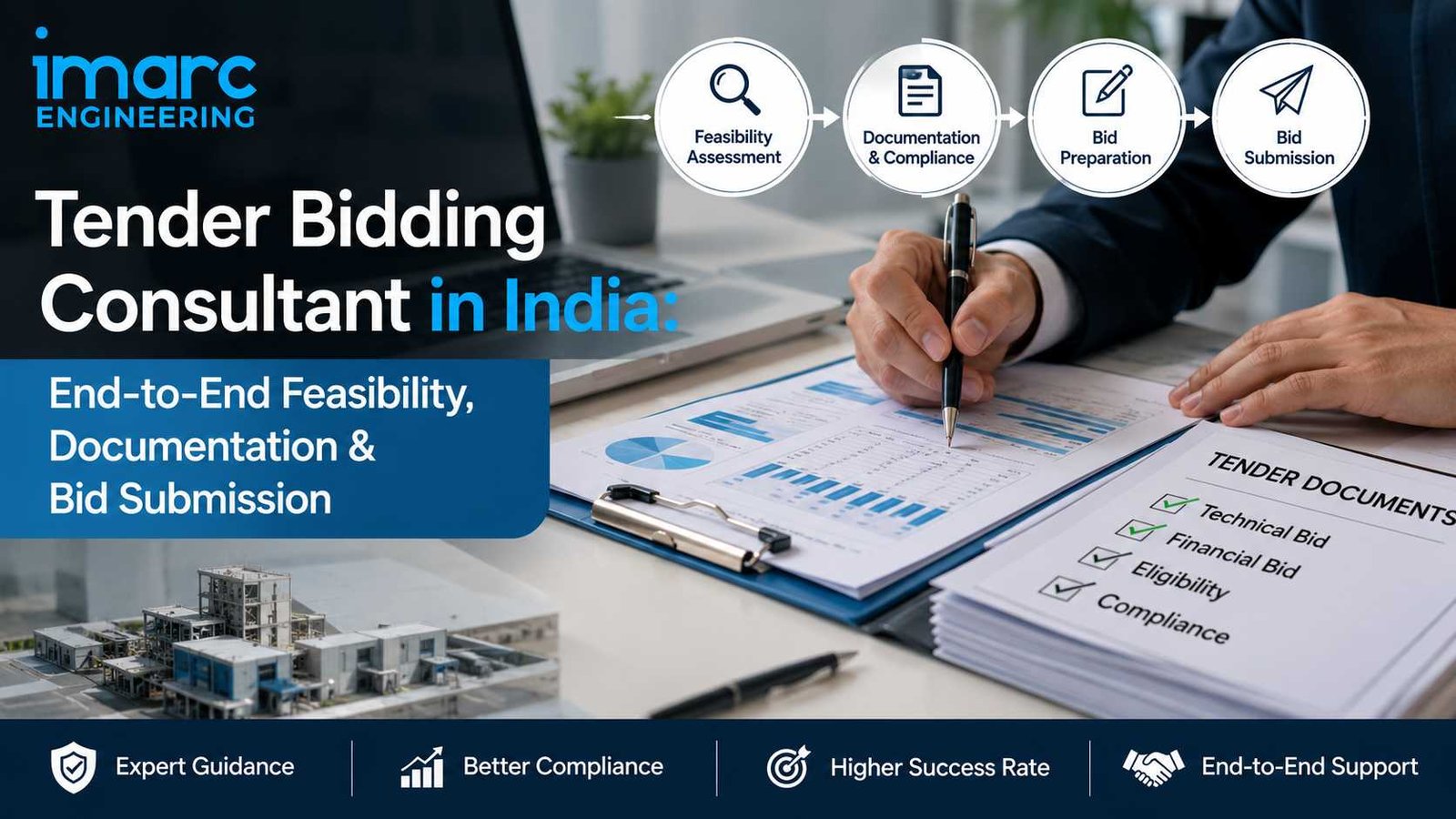
Government and large institutional tenders in India run on a documentation-heavy, deadline-driven process where a technically capable bidder can still lose on a procedural error that has nothing to do with their ability to deliver the work. A missing certificate, an EMD instrument submitted in the wrong format, or a technical bid that does not map cleanly to the evaluation criteria can disqualify a bid before it is even scored on merit. This is the specific risk a Tender Bidding Consultant in India is brought in to manage, from an early feasibility check against eligibility criteria through documentation, technical and financial bid preparation, and submission.
This guide covers the different tender routes available in India, what a proper bid preparation process looks like, and the most common reasons technically strong bids get rejected on procedural grounds.
Why Tender Bidding Needs Structured Support
- High documentation burden: A single tender submission can require dozens of certificates, licenses, financial statements, and declarations, each with specific validity and format requirements that vary by tendering authority.
- Strict, non-negotiable deadlines: Government tenders generally do not allow late submission or post-deadline corrections, which means a documentation gap discovered after submission cannot be fixed, only avoided beforehand.
- Separate technical and financial evaluation: Most tenders score technical and financial bids independently, and a bid built without a clear view of the actual scoring formula can underperform even when the underlying proposal is strong.
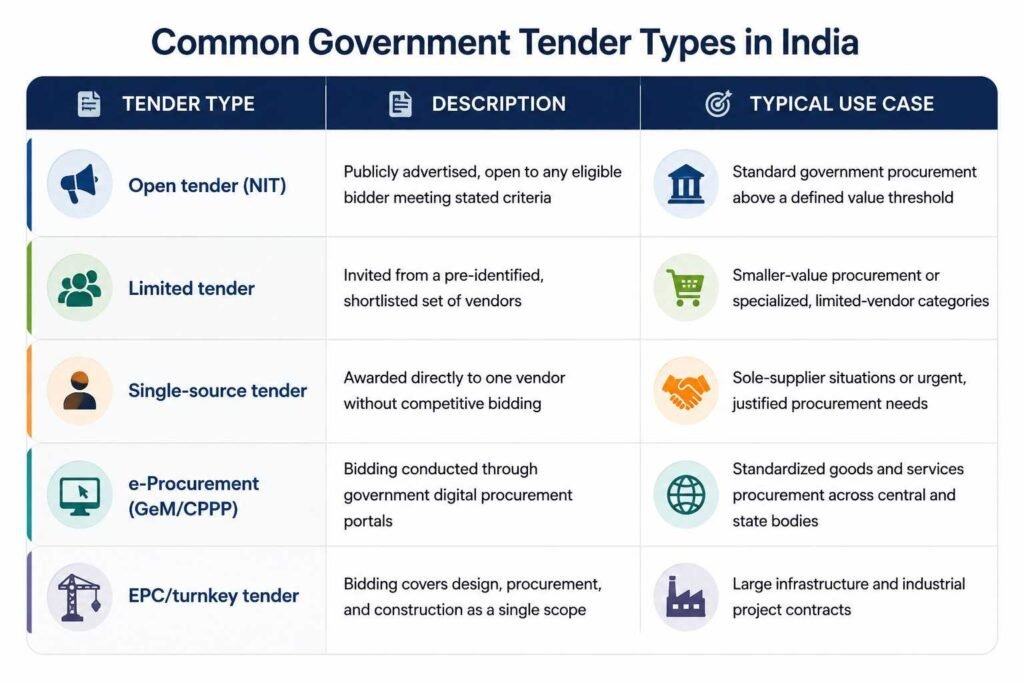
- Multiple procurement routes: Open tenders, limited tenders, single-source procurement, and e-procurement portals like GeM and CPPP each carry different eligibility and process requirements, and treating them all the same way is a common source of avoidable disqualification.
Common Government Tender Types in India
Understanding which route a specific opportunity falls under shapes both eligibility and the documentation approach needed.
Private Sector Tenders in India
Not all bidding in India runs through government channels. Large private enterprises, PSUs awarding commercial contracts, and multinational corporations increasingly run their own RFPs and vendor tenders, and while these share some structure with government tenders, several aspects work differently enough that bidding on them the same way can put an otherwise strong bidder at a disadvantage.
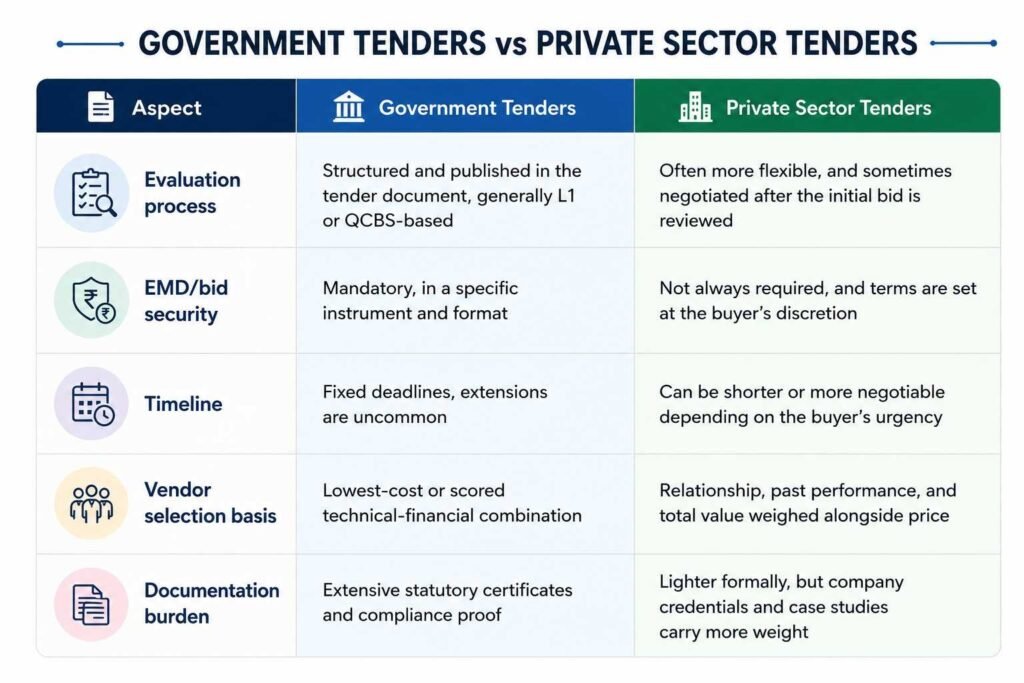
The practical implication is that a bid built entirely around statutory compliance and L1 pricing, the discipline that wins government tenders, can underperform in a private sector process where the buyer is weighing relationship history and delivery track record as heavily as price. Bidders active in both spaces generally need two distinct playbooks, not one process adapted loosely for both.
The Tender Bidding Process
A structured bid preparation process reduces the chance of a procedural disqualification and improves the odds of a competitive technical and financial score.
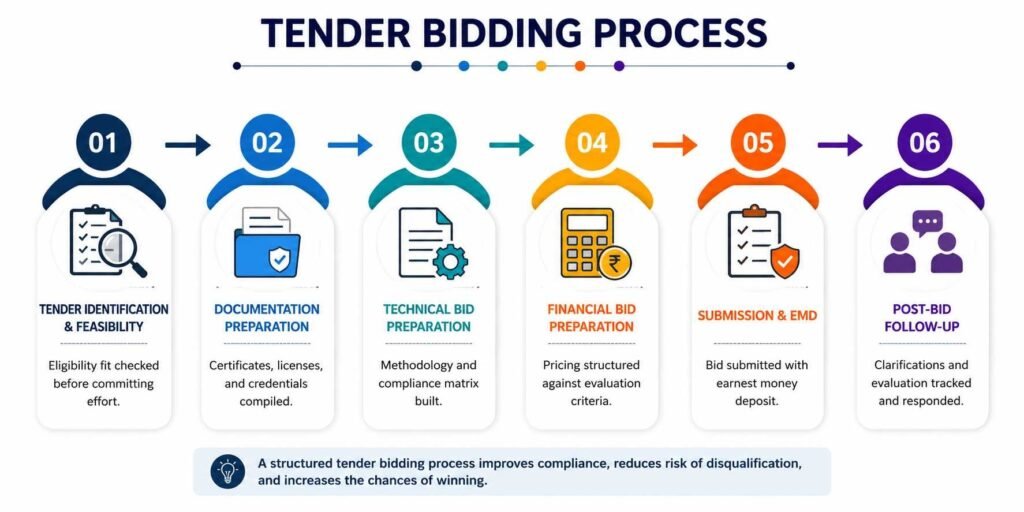
- Tender identification and feasibility: Prospective tenders are screened against eligibility criteria and organizational capability before committing time to a full bid, avoiding the common trap of preparing a bid that was disqualified from the start.
- Documentation preparation: Certificates, licenses, financial statements, and other required credentials are compiled and checked for validity and format compliance well ahead of the submission deadline.
- Technical bid preparation: The technical proposal is built to map directly against the tender’s stated evaluation criteria, rather than presenting general capability that the evaluator has to interpret against the scoring matrix.
- Financial bid preparation: Pricing is structured with a clear understanding of the tender’s evaluation formula, since technical strength alone does not guarantee a competitive combined score.
- Submission and EMD: The bid is submitted with the earnest money deposit in the correct instrument and format specified by the tender, one of the more common points of avoidable rejection.
- Post-bid follow-up: Pre-bid queries, clarification requests, and evaluation correspondence are tracked and responded to within their own deadlines, since this stage can still meaningfully affect the outcome after submission.
Get end-to-end tender bidding support from IMARC Engineering: https://www.imarcengineering.com/contact?service=tendering-and-bid-evaluation
Common Reasons Bids Get Rejected
- A required certificate or license that has expired or was not included in the format specified by the tender document.
- An EMD submitted in the wrong instrument type or format, which can trigger disqualification regardless of the underlying financial capability it was meant to demonstrate.
- A technical bid that does not clearly map to the tender’s stated evaluation criteria, leaving the evaluator to interpret fit rather than score a direct match.
- Missing a pre-bid query or clarification deadline, which can leave ambiguity in the submission unresolved in the bidder’s favor.
- Submitting for a tender the organization was not actually eligible for, a cost in time and resources that a feasibility check at the start would have avoided.
Best Practices for a Stronger Bid
- Run an eligibility feasibility check before committing resources to a full bid, rather than discovering a disqualifying gap after significant preparation work is already done.
- Maintain a standing, up-to-date document library of certificates, licenses, and financial statements, so tender-specific preparation does not start from scratch each time.
- Build the technical bid directly against the tender’s stated evaluation matrix, section by section, rather than presenting a general capability narrative.
- Track pre-bid queries and clarification deadlines as seriously as the submission deadline itself, since this stage remains open to influence the outcome.
- Review past bid outcomes, won and lost, to identify recurring gaps in documentation or bid structuring before the next submission.
How IMARC Engineering Helps in Tender Bidding Services in India
IMARC Engineering supports organizations throughout the tender bidding lifecycle by combining technical, commercial, regulatory, and project management expertise with a structured bid management approach. The engagement begins with an eligibility and feasibility assessment before resources are committed, followed by documentation review, technical proposal development aligned with evaluation criteria, financial bid structuring, and submission support.
The team also assists with pre-bid meetings, bid queries, clarification responses, EMD compliance, submission verification, and post-bid correspondence, helping organizations strengthen bid quality, reduce procedural risks, and improve compliance throughout the evaluation process.
Want to learn deeply? Explore our latest insights: https://imarcengineering.com/blog/how-tendering-and-bid-evaluation-improve-contractor-selection-india
Final Thoughts
Winning a government or institutional tender in India depends as much on procedural discipline as on the underlying capability being bid. A technically strong organization can lose on a documentation gap or a mismatched financial structure just as easily as on a genuinely weaker proposal.
The organizations that consistently win tenders are rarely the ones scrambling to assemble documentation against a deadline. They are the ones running a structured, repeatable bid process, screening for fit early, and treating every stage from feasibility through post-bid follow-up with the same discipline.
Contact Us:
IMARC Engineering
Phone: +91-120-433-0800
Email: sales@imarcengineering.com
India: C-130, Sector 2, Noida, Uttar Pradesh 201301
LinkedIn: https://www.linkedin.com/showcase/imarc-engineering/
About the Author