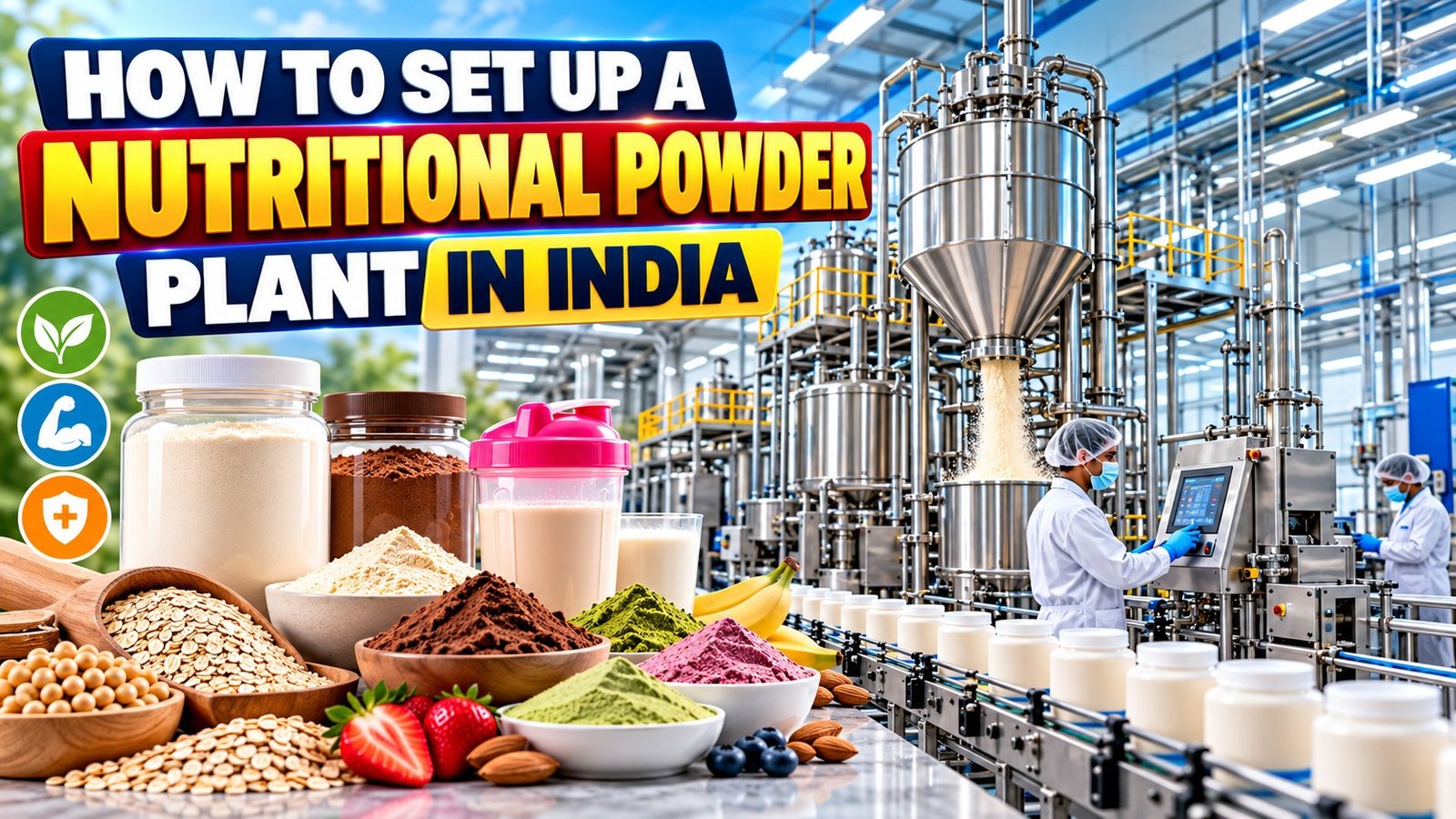
Setting up a nutritional powder manufacturing plant in India presents a compelling investment case, given demand from infant nutrition, sports nutrition, clinical nutrition, dietary supplements, food and beverage, healthcare, and wellness sectors. Rising cases of nutritional deficiencies and growing awareness of preventive healthcare are supporting market expansion across emerging economies, making these products increasingly central to everyday health management.
India’s expanding health and wellness market positions the country as a strategically sound location for this production, with the global market valued at USD 18.6 Billion in 2025 and projected to reach USD 37.7 Billion by 2034. Growing e-commerce and direct-to-consumer channels are further improving product accessibility and enabling personalized nutrition offerings for domestic manufacturers.
Backed by a global market growing at a 7.92% CAGR, healthy gross margins of 26–38%, and rising demand across sports, infant, and clinical nutrition segments, this investment offers a cost-competitive route into a fast-growing wellness category, with steady end-use demand supporting sound break-even viability.
What is Nutritional Powder?
Nutritional powder is a concentrated dietary supplement made from animal or plant sources, vitamins, and minerals. People mix these powders with water, milk, or smoothies to build muscle, replace meals, or fix vitamin shortages. Common types include whey, pea, and soy formulas.
The nutritional powder manufacturing process uses raw material blending, sieving, homogenization, dry mixing, fortification, flavoring, filling, and packaging. This method serves end-use industries such as infant nutrition, sports nutrition, clinical nutrition, dietary supplements, food and beverage, healthcare, and wellness.
Cost of Setting Up a Nutritional Powder Manufacturing Plant in India
The cost of a nutritional powder manufacturing plant depends on capacity, technology, location, automation, and regulatory compliance.
1. Capital Expenditure (CapEx)
Capital investment covers land acquisition, site preparation, and infrastructure, optimized through industrial estates or SEZ-linked plots with developed utilities and faster approvals. Civil works cover the production shed, laboratory, storage areas, and administrative block.
Machinery is the largest portion of capital expenditure for a nutritional powder manufacturing plant, since equipment costs scale with automation level and capacity. Key machinery required includes:
- Powder blenders
- Ribbon mixers
- Sieving machines
- Homogenizers
- Spray dryers
- Agglomeration units
- Weighing and dosing systems
- Filling machines
- Metal detectors
- Packaging machines
Other capital costs include effluent treatment, monitoring systems to detect leaks or process deviations, pre-operative and commissioning expenses, and import duties.
Request a Sample Report for In-Depth Market Insights: https://www.imarcgroup.com/nutritional-powder-manufacturing-plant-project-report/requestsample
2. Operational Expenditure (OpEx)
Raw material cost is the largest OpEx component, at approximately 50–62% of total OpEx. Formulations vary by product type: infant formula relies on skimmed milk powder, whey protein concentrate, lactose, a vegetable oils blend, and vitamin-mineral premix; sports nutrition on whey protein isolate or concentrate, maltodextrin, BCAA blend, and vitamin-mineral premix; and meal replacement on soy or pea protein, oat flour, MCT oil, and fiber blend. Long-term supplier contracts help stabilize pricing and secure consistent supply.
Utility cost, covering electricity, water, and steam, accounts for approximately 10–14% of OpEx. Other costs include transportation, packaging, salaries, depreciation, taxes, and maintenance. By the fifth year, operational cost is expected to rise on inflation, market fluctuations, and supply chain disruptions.
3. Plant Capacity
The proposed facility is designed with an annual manufacturing capacity of 5,000–20,000 MT, enabling economies of scale while maintaining flexibility. Capacity can be customized to investor requirements, and profitability improves with higher capacity utilisation as fixed costs spread across greater output.
4. Profit Margins and Financial Projections
Financial projections cover net present value (NPV), internal rate of return (IRR), payback period, liquidity, and profitability analysis. Under normal conditions, a nutritional powder manufacturing plant typically shows gross margins of 26–38% and net margins of 10–18%, reflecting profitability supported by stable demand and value-added applications.
Why Set Up a Nutritional Powder Plant in India?
Crucial Nutrition and Wellness Product: These powders serve as convenient sources of essential proteins, vitamins, minerals, carbohydrates, and other nutrients across sports nutrition, infant nutrition, clinical nutrition, weight management, and general wellness, positioning them as an important category for health and preventive care.
Moderate but Justifiable Entry Barriers: While requiring lower capital than complex pharmaceutical manufacturing, stringent quality standards, precise formulation, food safety regulations, and controlled blending and drying methods create entry hurdles favouring experienced producers focused on quality and reliable performance.
Megatrend Alignment: Growing focus on preventive healthcare, active lifestyles, sports nutrition, healthy aging, and weight management is driving consistent demand, with rising health awareness and fitness participation further supporting market expansion globally.
Policy and Healthcare Push: Government initiatives promoting nutrition, food fortification, maternal and child health, sports development, and public health awareness, alongside rising healthcare and wellness spending, are supporting demand and creating opportunities for domestic manufacturers.
Localization and Dependability in Supply Chains: Brands, healthcare providers, and distributors increasingly favour local, dependable suppliers to shorten lead times, maintain formulation consistency, and ensure uninterrupted availability, opening doors for regional producers with efficient sourcing and quality-control capabilities.
Active Industry Investment: In June 2026, Garden of Life debuted Clear Whey Protein, a lighter alternative to traditional protein powders delivering 20 grams of high-quality whey protein isolate that blends seamlessly into water, smoothies, and other recipes — reflecting continued product innovation across the category.
Manufacturing Process – Step by Step
The nutritional powder manufacturing process uses raw material blending as the primary production method, followed by a series of unit operations, material handling steps, and quality checks.
- Raw Material Blending: Powder blenders and ribbon mixers combine base ingredients into a uniform mix.
- Sieving: Sieving machines remove lumps and ensure consistent particle size.
- Homogenization: Homogenizers ensure uniform distribution of ingredients throughout the blend.
- Dry Mixing: Additional dry ingredients are incorporated to achieve the target formulation.
- Fortification: Weighing and dosing systems add vitamins, minerals, and other nutrients in precise quantities.
- Flavoring: Flavoring agents are blended in using agglomeration units for improved texture and solubility.
- Filling: Filling machines dose the finished powder into containers or sachets.
- Packaging: Metal detectors verify product safety before packaging machines complete the process for dispatch to nutrition, healthcare, and wellness end-users.
Key Applications
This product serves a broad set of end-use industries centered on nutrition and wellness:
- Infant and Child Nutrition: Infant formula, growing-up milk, and fortified nutritional powders.
- Sports and Fitness Nutrition: Protein powders, meal-replacement powders, and recovery supplements.
- Clinical and Medical Nutrition: Therapeutic nutrition, dietary supplements, and specialized nutritional formulations.
- General Wellness and Adult Nutrition: Vitamin-fortified powders, weight-management products, and daily nutritional supplements.
Leading Manufacturers
Leading manufacturers in this global industry include several companies with extensive manufacturing capacities and diverse application portfolios. Key players include:
- Biofrank Pharma
- Zeon Lifesciences
- Nutra Healthcare
- Herbal Hills
Timeline to Start the Plant
- Feasibility study and project report preparation
- Land acquisition and site development
- Regulatory approvals and environmental clearances
- Factory licence and fire safety compliance
- Machinery procurement and installation
- Raw material supplier agreements and supply chain setup
- Trial production and quality testing
- Commercial production launch
Licences and Regulatory Requirements
Starting a nutritional powder manufacturing unit in India requires several approvals:
- Business registration (Proprietorship, LLP, or Pvt Ltd)
- Factory Licence under the Factories Act
- Environmental Clearance from State Pollution Control Board
- GST Registration
- Fire Safety NOC
- Food safety compliance covering formulation, labeling, and fortification standards
- Effluent Treatment Plant (ETP) operational clearance
- Occupational Health and Safety compliance
Key Challenges to Consider
High Capital Requirements: A nutritional powder manufacturing plant’s machinery is the largest share of capital expenditure, with drying and dosing systems demanding significant investment before operations begin.
Raw Material Price Volatility: Milk-derived proteins, plant proteins, and vitamin-mineral premixes are subject to price fluctuations affecting operating costs.
Regulatory Compliance: Food safety rules, precise formulation control, SOPs, documentation, and regular audits govern each stage of production.
Competition from Established Players: Biofrank Pharma, Zeon Lifesciences, Nutra Healthcare, and Herbal Hills hold extensive manufacturing capacities and diverse application portfolios.
Formulation and Innovation Pressure: Manufacturers are increasingly focused on clean-label formulations, plant-based ingredients, organic sources, and fortified powders to meet evolving consumer preferences.
Skilled Manpower: Formulation, blending, and quality control require trained personnel for consistent standards.
Frequently Asked Questions
1. How much does it cost to set up a nutritional powder manufacturing plant in India?
Cost depends on capacity, automation level, land and site development, and civil works; a detailed CapEx and OpEx breakdown is covered in the full feasibility report.
2. Is nutritional powder manufacturing profitable in India in 2026?
The facility demonstrates healthy profitability potential, with gross margins of 26–38% and net margins of 10–18% under normal operating conditions.
3. What machinery is required for a nutritional powder plant in India?
Key machinery includes powder blenders, ribbon mixers, sieving machines, homogenizers, spray dryers, agglomeration units, weighing and dosing systems, filling machines, metal detectors, and packaging machines.
4. What licences and approvals are required to start a nutritional powder plant in India?
Requirements include business registration, a Factory Licence, Environmental Clearance, GST Registration, Fire Safety NOC, food safety compliance, ETP clearance, and occupational health and safety compliance.
5. What raw materials are needed for nutritional powder manufacturing?
Requirements vary by product type: infant formula uses skimmed milk powder, whey protein concentrate, lactose, vegetable oils, and vitamin-mineral premix; sports nutrition uses protein isolate or concentrate, maltodextrin, and BCAA blend; meal replacement uses soy or pea protein, oat flour, MCT oil, and fiber blend.
6. What are the environmental compliance requirements for a nutritional powder plant in India?
Plants require Environmental Clearance from the State Pollution Control Board, an operational Effluent Treatment Plant, and adherence to emission and safety monitoring standards.
7. What is the best location to set up a nutritional powder plant in India?
Sites should offer access to raw materials, proximity to target markets, robust transportation and utility infrastructure, and compliance with zoning and environmental regulations.
8. What is the break-even period for this type of plant in India?
Break-even timing depends on capacity utilisation, pricing, and cost structure, assessed through payback period and net present value analysis.
9. What government incentives are available for manufacturers in India?
Incentives vary by state and are typically tied to industrial estate or SEZ location, land and infrastructure support, and regulatory compliance; government nutrition and food fortification initiatives further support demand.
Key Takeaways for Investors
A nutritional powder manufacturing plant offers a compelling opportunity supported by demand from infant nutrition, sports nutrition, clinical nutrition, dietary supplements, food and beverage, healthcare, and wellness sectors. Financial projections indicate sound viability across capacities of 5,000–20,000 MT annually, with gross margins of 26–38% and net margins of 10–18%. The global market, valued at USD 18.6 Billion in 2025 and projected to reach USD 37.7 Billion by 2034 at a 7.92% CAGR, points to sustained demand for fortified, convenient nutrition products across sports, infant, and clinical segments.
About the Author