Setting up a concrete pavers manufacturing plant in India presents a highly compelling investment opportunity as the concrete pavers market is driven by expanding residential and commercial hardscaping, increased investment in urban walkways and streetscapes, growing adoption of permeable paving for stormwater management, and preference for durable, modular surfacing systems that enable easier maintenance and utility access.
“With a rapidly expanding global market projected to grow at a CAGR of 5.0% from 2026 to 2034, rising from USD 17,926.50 million in 2025 to USD 27,809.89 million by 2034, and gross margins of 30-40%, concrete pavers manufacturing in India offers one of the most financially attractive opportunities in the construction and infrastructure sector.”
What are Concrete Pavers?
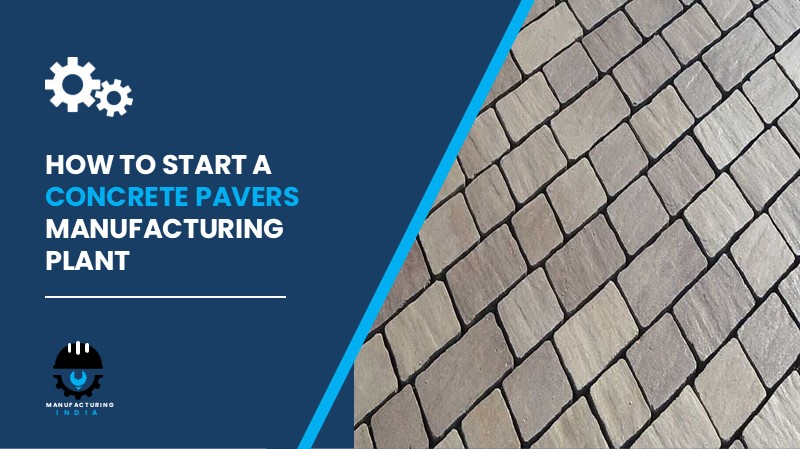
Concrete pavers are precast concrete units manufactured in standardized shapes and thicknesses to create paved surfaces for pedestrian, residential, and light-to-heavy traffic applications. They are produced from cementitious materials, aggregates, water, and admixtures, and may include pigments and integral water repellents depending on performance and aesthetic requirements. Industry specifications focus on key quality parameters such as compressive strength, absorption, dimensional tolerances, and surface integrity to ensure long-term durability under freeze-thaw, abrasion, and traffic loading. Concrete pavers are supplied in interlocking or modular formats that improve load distribution and enable repair by unit replacement without full pavement reconstruction.
- Process Used: Raw material collection, batching and semi-dry concrete mixing, demolding, curing, finishing, and palletizing and packaging.
- End-use Industries: Residential construction and landscaping, commercial real estate, municipal infrastructure, and industrial facilities.
- Applications: Driveways, patios, walkways, parking lots, footpaths, plazas, streetscapes, and permeable interlocking concrete pavement (PICP) systems.
Cost of Setting Up a Concrete Pavers Manufacturing Plant in India
The concrete pavers manufacturing setup cost is provided in detail covering project economics, capital investments (CapEx), project funding, operating expenses (OpEx), income and expenditure projections, fixed costs vs. variable costs, direct and indirect costs, expected ROI and net present value (NPV), profit and loss account, financial analysis, and more. Here is a structured breakdown of all major cost components:
1. Capital Expenditure (CapEx)
The total capital investment in a concrete pavers manufacturing plant in India typically covers the following:
Land and Site Development The cost of land and site development, including charges for land registration, boundary development, and other related expenses, forms a substantial part of the overall investment. The location must offer easy access to key raw materials such as cement, sand, aggregate, and pigments. Proximity to target markets will help minimize distribution costs. The site must have robust infrastructure, including reliable transportation, utilities, and waste management systems. Compliance with local zoning laws and environmental regulations must also be ensured.
Request a Sample Report for In-Depth Market Insights: https://www.imarcgroup.com/concrete-pavers-manufacturing-plant-project-report/requestsample
Civil Works and Construction Building costs cover the main production facility and supporting infrastructure. The layout should be optimized to enhance workflow efficiency, safety, and minimize material handling. Separate areas for raw material storage, production, quality control, and finished goods storage must be designated. Space for future expansion should be incorporated to accommodate business growth.
Machinery and Equipment Machinery costs account for the largest portion of the total capital expenditure. High-quality, corrosion-resistant machinery tailored for concrete pavers manufacturing must be selected. Essential equipment includes:
- Conveyor Systems
- Weigh Batching Systems
- Mixers
- Vibro-Press Paver Block Machines
- Curing Equipment
- Surface Finishing Equipment
- Packaging Machines
The scale of production and automation level will determine the total cost of machinery. All machinery must comply with industry standards for safety, efficiency, and reliability.
Other Capital Costs These include pre-operative expenses and other related costs. This allocation ensures a solid foundation for safe and efficient plant operations.
2. Operational Expenditure (OpEx)
In the first year of operations, the operating cost for the concrete pavers manufacturing plant in India is projected to be significant, covering raw materials, utilities, depreciation, taxes, packing, transportation, and repairs and maintenance. By the fifth year, the total operational cost is expected to increase substantially due to factors such as inflation, market fluctuations, and potential rises in the cost of key materials. Additional factors, including supply chain disruptions, rising consumer demand, and shifts in the global economy, are expected to contribute to this increase.
Raw Material Cost (Cement): 60-70% of Total OpEx Raw materials, including core ingredients like cement, sand, aggregate, and pigments, are a major part of operating costs. Long-term contracts with reliable suppliers will help mitigate price volatility and ensure a consistent supply of materials.
Utility Cost: 10-15% of Total OpEx Costs associated with utilities including electricity, water, and steam must be considered in the financial plan.
Other Operating Costs The remaining budget covers transportation, packaging, salaries and wages, depreciation, taxes, repairs and maintenance, and other expenses.
3. Plant Capacity
The proposed concrete pavers manufacturing facility in India is designed with an annual production capacity ranging between 1-5 million sq.m., enabling economies of scale while maintaining operational flexibility.
4. Profit Margins and Financial Projections
The project demonstrates healthy profitability potential under normal operating conditions:
- Gross Profit Margin: 30-40%
- Net Profit Margin: 12-20%
The financial projections for the proposed project have been developed based on realistic assumptions related to capital investment, operating costs, production capacity utilization, pricing trends, and demand outlook. These projections provide a comprehensive view of the project’s financial viability, ROI, profitability, and long-term sustainability. A detailed financial analysis including income projections, expenditures, and break-even points must be conducted, as this aids in securing funding and formulating a clear financial strategy.
Why Set Up a Concrete Pavers Manufacturing Plant in India?
The global market environment presents a uniquely favorable opportunity for establishing a concrete pavers manufacturing facility in India:
Strong Pull from Hardscape-Led Urban Development Concrete pavers align with streetscape upgrades, pedestrianization, and outdoor living trends by offering modular, design-forward surfacing for public and private projects. In India, the urbanized population is around 461 million people, with a year-on-year growth rate of around 2.3%. Moreover, by 2031, cities are expected to generate close to 75% of the total income generated in the country, creating sustained demand for urban infrastructure and paving solutions.
Performance Defined by Established Standards Specifications such as ASTM requirements drive demand for consistent strength, absorption control, and dimensional uniformity, favoring manufacturers with disciplined quality control and process control. Industry specifications focus on key quality parameters such as compressive strength, absorption, dimensional tolerances, and surface integrity to ensure long-term durability under freeze-thaw, abrasion, and traffic loading.
Scalable Production Using Repeatable Unit Operations Batching, vibro-pressing, curing, and palletized handling can be scaled with automation, enabling high-throughput manufacturing with stable product quality. The proposed manufacturing facility supports an annual production capacity ranging between 1-5 million sq.m., enabling economies of scale while maintaining operational flexibility.
Portfolio Expansion Through Aesthetics and Functional Variants Producers can add value via pigments, textures, surface treatments, and permeable paver formats tailored to local stormwater rules and architectural preferences. With increased traction on stormwater management and long-term climate-proofing, the demand for permeable interlocking concrete pavers is projected to expand, as these offer a secondary source for recharging groundwater while reducing surface run-off.
Regional Manufacturing Advantage Pavers are heavy, transport-sensitive products; plants located near demand centers can improve delivered cost competitiveness and service levels for contractors and municipalities. Due to a strong inclination toward the use of long-lasting material in both private and government sectors, the concrete pavers market is likely to continue its upward trend over the coming years.
Manufacturing Process Overview
Setting up a concrete pavers manufacturing plant in India requires evaluating several key factors, including technological requirements and quality assurance. The manufacturing process is a multi-step operation that involves several unit operations, material handling, and quality checks. The main stages involved in the concrete pavers manufacturing process flow include:
- Unit Operations Involved
- Mass Balance and Raw Material Requirements
- Quality Assurance Criteria
- Technical Tests
Key considerations in the manufacturing setup include:
- Raw Material Sourcing: Reliable suppliers must be secured for raw materials like cement, sand, aggregate, and pigments to ensure consistent production quality. Minimizing transportation costs by selecting nearby suppliers is essential. Sustainability and supply chain risks must be assessed, and long-term contracts should be negotiated to stabilize pricing and ensure a steady supply.
- Safety and Environmental Compliance: Safety protocols must be implemented throughout the manufacturing procedure of concrete pavers. Advanced monitoring systems should be installed to detect leaks or deviations in the process. Effluent treatment systems are necessary to minimize environmental impact and ensure compliance with emission standards.
- Quality Assurance Systems: A comprehensive quality control system should be established throughout production. Analytical instruments must be used to monitor product concentration, purity, and stability. Documentation for traceability and regulatory compliance must be maintained.
Key Applications of Concrete Pavers
Concrete pavers serve a wide variety of end-use industries and applications:
- Residential Construction and Landscaping: Used for driveways, garden pathways, patios, pool decks, and outdoor living areas where aesthetics, modular installation, and localized repairability are important.
- Commercial Contractors: Applied in shopping plazas, office campuses, pedestrian zones, and commercial parking areas to deliver durable surfacing with design flexibility across colors, textures, and patterns.
- Municipal Infrastructure and Public Works: Used in sidewalks, transit-adjacent pavements, public squares, traffic-calmed streets, and permeable systems to support runoff reduction and easier utility reinstatement.
- Industrial Facilities and Logistics Yards: Used in selected yards and service lanes where staged maintenance, surface durability, and rapid repair are operationally beneficial.
Global Market Outlook
The global concrete pavers market size was valued at USD 17,926.50 million in 2025. According to IMARC Group estimates, the market is expected to reach USD 27,809.89 million by 2034, exhibiting a CAGR of 5.0% from 2026 to 2034. Urbanization and investments in streets, walks, parking lots, and large areas are fueling demand and creating opportunities for concrete pavers, as they are flexible, easy to install, and can also be replaced locally if damaged. In India, the urbanized population is around 461 million people with a year-on-year growth rate of around 2.3%, and by 2031, cities are expected to generate close to 75% of the total income generated in the country.
Leading manufacturers in the global concrete pavers industry include:
- Wirtgen Group
- VOLVO
- SANY
- Belgard
- ZOOMLION
- SCMC
All of which serve end-use sectors such as residential construction and landscaping, commercial real estate, municipal infrastructure, and industrial facilities.
Latest Industry Developments
- August 2025: Ammann India rolled out its first ABG 5420 Tier-3 tracked paver from its newly established assembly line at the Ditasan facility in Gujarat. It is aimed at marking the integration of the ABG paver business into its operations and reinforcing its focus on localized manufacturing for both domestic and export markets, including Southeast Asia, the Middle East, and Africa.
- October 2024: Wienerberger acquired Betonarna Lesonice, a Czech producer of concrete blocks and pavers, to strengthen its foothold in the Czech building materials market and expand its portfolio of infrastructure and paving solutions. The acquisition enhances Wienerberger’s capacity to serve customers on both residential and infrastructure projects.
Licenses and Regulatory Requirements in India
Starting a concrete pavers manufacturing unit in India requires several regulatory approvals and certifications. The report covers regulatory procedures, financial assistance, and necessary certifications, ensuring all legal and compliance requirements are met, including:
- Business registration and incorporation
- Factory License under applicable labor and manufacturing laws
- Environmental Clearance from relevant pollution control authorities
- Industrial permits and business licenses
- Industry-specific regulatory licensing
- Intellectual property rights (IPR) registrations and licensing
Frequently Asked Questions
The following questions are answered in the report:
- How has the concrete pavers market performed so far and how will it perform in the coming years in India?
- What is the market segmentation of the global concrete pavers market?
- What is the regional breakup of the global concrete pavers market?
- What are the price trends of various feedstocks in the concrete pavers industry in India?
- What is the structure of the concrete pavers industry and who are the key players?
- What are the various unit operations involved in a concrete pavers manufacturing plant in India?
- What is the total size of land required for setting up a concrete pavers manufacturing plant in India?
- What is the layout of a concrete pavers manufacturing plant in India?
- What are the machinery requirements for setting up a concrete pavers manufacturing plant in India?
- What are the raw material requirements for setting up a concrete pavers manufacturing plant in India?
- What are the packaging requirements for setting up a concrete pavers manufacturing plant in India?
- What are the transportation requirements for setting up a concrete pavers manufacturing plant in India?
- What are the utility requirements for setting up a concrete pavers manufacturing plant in India?
- What are the human resource requirements for setting up a concrete pavers manufacturing plant in India?
- What are the infrastructure costs for setting up a concrete pavers manufacturing plant in India?
- What are the capital costs for setting up a concrete pavers manufacturing plant in India?
- What are the operating costs for setting up a concrete pavers manufacturing plant in India?
- What should be the pricing mechanism of the final product?
- What will be the income and expenditures for a concrete pavers manufacturing plant in India?
- What is the time required to break even?
- What are the profit projections for setting up a concrete pavers manufacturing plant in India?
- What are the key success and risk factors in the concrete pavers industry in India?
- What are the key regulatory procedures and requirements for setting up a concrete pavers manufacturing plant in India?
- What are the key certifications required for setting up a concrete pavers manufacturing plant in India?
Key Takeaways for Investors
The concrete pavers manufacturing industry in India represents a strong and scalable investment opportunity backed by growing global demand across residential construction and landscaping, commercial real estate, municipal infrastructure, and industrial facilities. This report provides the comprehensive blueprint needed to transform your concrete pavers manufacturing plant cost in India vision into a technologically advanced and highly profitable reality. With gross margins of 30-40% and net margins of 12-20%, a well-planned concrete pavers manufacturing plant remains competitive and financially viable. The convergence of expanding residential and commercial hardscaping, increased investment in urban walkways and streetscapes, growing adoption of permeable paving for stormwater management, and preference for durable, modular surfacing systems creates a robust and diversified revenue base for concrete pavers manufacturers entering or expanding in this market.
About the Author