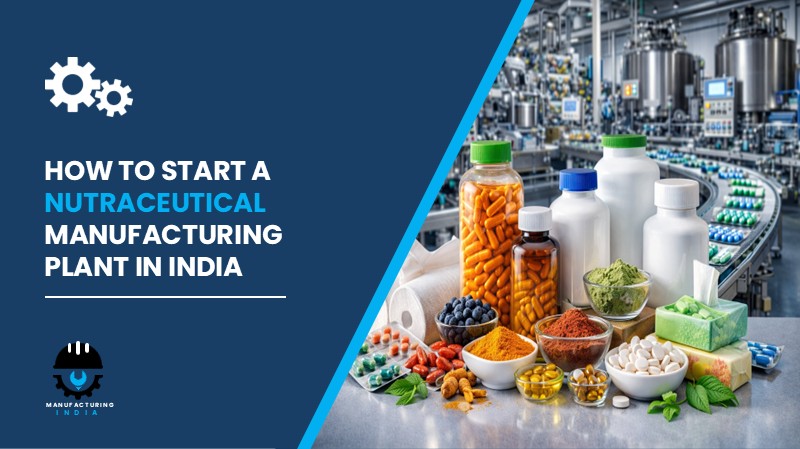
Setting up a nutraceutical manufacturing plant in India presents a compelling investment case driven by surging demand across healthcare, pharmaceuticals, food and beverage, sports nutrition, and the broader wellness and preventive healthcare segment. Nutraceuticals encompassing dietary supplements, functional foods, fortified beverages, herbal extracts, probiotics, vitamins, minerals, and bioactive compounds are increasingly integral to India’s evolving health economy. As lifestyle diseases including diabetes, obesity, and cardiovascular disorders become more prevalent, consumers are turning to nutraceutical products for preventive, supportive, and lifestyle-based health management, generating durable demand across every price tier and formulation category.
India offers a strategically sound foundation for this investment. The country’s expanding middle class, rapid urbanisation, and growing health consciousness are creating an addressable consumer base of unprecedented scale. The Make in India initiative and government nutrition and wellness programmes provide indirect policy support to domestic nutraceutical production. States such as Gujarat and Maharashtra with their robust pharmaceutical and food-processing infrastructure, port connectivity, and established chemical supply chains are natural locations for this type of plant. Proximity to excipient and active ingredient suppliers further reduces logistics costs and supports competitive pricing in a market where margins are structurally attractive.
Establishing a nutraceutical manufacturing facility in India combines strong policy tailwinds, cost-competitive land and labour, and access to a rapidly expanding consumer base across healthcare, sports nutrition, and functional foods. With gross margins reported at 55–65% and net margins of 25-35%, the financial case for this investment is compelling, and break-even viability is well within reach for investors operating at scale.
What is Nutraceutical?
Nutraceuticals are products that come from food sources and deliver health benefits which exceed their fundamental nutritional content. The category is broad and commercially diverse, covering dietary supplements, functional foods, fortified beverages, herbal extracts, probiotics, vitamins, minerals, and bioactive compounds. These products are widely used to support immunity, digestive health, heart health, bone strength, mental wellness, and overall disease prevention. They exist in multiple dosage forms capsules, tablets, powders, liquids, and gummies creating a product bridge between conventional nutrition and pharmaceutical medications.
The production method is a multi-step operation involving raw material extraction, blending, granulation, drying, encapsulation or tableting, coating, quality testing, and packaging. End-use industries served include healthcare, pharmaceuticals, food and beverage, sports nutrition, and the wellness and preventive healthcare segment. Applications span dietary supplements such as multivitamins and botanical extracts, clinical and preventive nutrition formulations, sports and active nutrition blends, and functional foods and drinks including nutrient-enriched snacks and fortified dairy alternatives.
Cost of Setting Up a Nutraceutical Manufacturing Plant in India
The total cost to establish this type of plant in India depends on several interlinked variables: production capacity, technology selection, degree of automation, plant location, and the depth of regulatory compliance infrastructure. Investors should evaluate both capital expenditure and operational expenditure before arriving at a project economics framework.
1. Capital Expenditure (CapEx)
Machinery costs account for the largest share of total capital expenditure in a nutraceutical manufacturing plant. Land and site development covering land registration, boundary development, and related site preparation forms a substantial second component, laying the physical foundation for safe and efficient operations. Civil works costs encompass construction of the production shed, quality control laboratory, raw material storage areas, finished goods warehouse, and the administrative block.
Key machinery required includes:
- Mixers
- Granulators
- Dryers
- Capsule filling machines
- Tablet presses
- Coating machines
- Packaging systems
Other capital costs include effluent treatment plant (ETP) installation, pre-operative expenses, trial run and commissioning costs, and applicable import duties on specialised equipment sourced internationally. Investors establishing within a Special Economic Zone (SEZ) or notified industrial estate may access duty concessions and infrastructure subsidies that meaningfully reduce this component.
Request a Sample Report for In-Depth Market Insights: https://www.imarcgroup.com/nutraceutical-manufacturing-plant-project-report/requestsample
2. Operational Expenditure (OpEx)
Raw material cost is the dominant operating expense, accounting for approximately 40-50% of total OpEx. Key raw materials for the nutraceutical manufacturing process include active ingredients (vitamins, minerals, herbal extracts, amino acids, and probiotics), excipients such as binders (microcrystalline cellulose), fillers (maltodextrin), disintegrants, and lubricants (magnesium stearate), encapsulation materials (gelatin or vegetarian HPMC capsules), and packaging consumables such as blister packs, HDPE bottles, labels, and desiccants. Long-term supplier contracts are strongly recommended to stabilise pricing and ensure supply continuity.
Utility cost covering electricity, water, and steam represents 10–15% of OpEx. Additional operating costs include transportation, packaging, salaries and wages, maintenance, depreciation, and taxes. By the fifth year of operations, total operational cost is expected to increase substantially due to inflation, market fluctuations, potential rises in the cost of active ingredients, and supply chain adjustments driven by global demand shifts.
3. Plant Capacity
The proposed nutraceutical manufacturing facility is designed with an annual production capacity ranging between 200 and 500 million capsules or tablets, enabling economies of scale while preserving operational flexibility. Capacity can be customised based on investor requirements, market access strategy, and available capital. Profitability improves materially with higher capacity utilisation, as fixed costs are spread across a larger output base, directly improving net margins.
4. Profit Margins and Financial Projections
The nutraceutical manufacturing plant project demonstrates strong profitability potential under normal operating conditions. Gross profit margins typically range between 55-65%, supported by stable end-market demand and value-added product applications. Net profit margins of 25-35% are projected on an average basis across the five-year operating horizon. Full financial projections — including NPV, IRR, payback period, detailed income projections, expenditure schedules, and sensitivity analysis are covered in the detailed project report (DPR).
Why Set Up a Nutraceutical Plant in India?
Rising Lifestyle Disease Burden. The global burden of diabetes alone has increased sharply, with the number of affected individuals climbing from approximately 200 million in 1990 to nearly 830 million in 2022, as reported by the World Health Organization (WHO). This growth is especially prevalent in low- and middle-income nations, a category India falls within, creating direct demand for nutraceutical products that support preventive and metabolic health management.
Ageing Population Driving Preventive Nutrition Demand. Increasing numbers of elderly consumers in both developed countries and emerging markets are driving demand for products that improve bone health, immune system function, cognitive ability, and overall vitality. India’s fast-growing senior demographic adds structural depth to this demand segment.
Megatrend Alignment. Global and Indian consumer trends including clean-label products, plant-based nutrition, personalized supplements, and immunity-boosting formulations align directly with the nutraceutical product category. These trends support sustained demand growth across retail, pharmacy, and e-commerce channels.
Policy and Regulatory Tailwinds. Government initiatives promoting domestic nutrition, wellness, and manufacturing indirectly support nutraceutical production and consumption. Regulatory frameworks around GMP, ISO, FSSAI, and FDA-aligned quality certifications create manageable entry barriers that favour organised, compliant manufacturers a structural advantage for well-capitalised entrants.
Active Industry Investment. In November 2024, Akums entered into a strategic partnership with Caregen to introduce a new range of nutraceuticals and cosmeceuticals in the Indian market, with plans to develop specialised nutraceutical products alongside pharmaceutical drugs. In February 2025, Nutrify Today introduced Dealsphere, an AI-powered platform designed to transform how businesses identify, license, and commercialise scientifically validated nutrition products. These developments confirm accelerating domestic industry momentum.
Cost-Competitive Manufacturing Base. India’s combination of lower land costs, a large and trainable workforce, and an established excipient and active ingredient supply chain creates a cost-competitive production environment. Local sourcing of raw materials from domestic suppliers reduces import dependence and insulates the unit from currency-driven cost volatility.
Manufacturing Process Step by Step
The nutraceutical manufacturing process uses raw material extraction, blending, granulation, drying, encapsulation or tableting, coating, quality testing, and packaging as the primary production method. The process is a multi-step operation involving several unit operations, material handling stages, and quality checkpoints.
- Raw Material Extraction: Active ingredients including vitamins, minerals, herbal extracts, amino acids, and probiotics are extracted or procured and subjected to incoming quality checks before entering the production stream.
- Blending: Active ingredients are combined with excipients (binders, fillers, disintegrants, lubricants) in industrial mixers to achieve uniform composition across the batch.
- Granulation: The blended material is processed through granulators to form granules of consistent particle size, improving flowability and compressibility for downstream tableting or encapsulation.
- Drying: Granules are dried using industrial dryers to achieve the required moisture content, ensuring product stability and shelf life compliance.
- Encapsulation or Tableting: Dried granules are filled into gelatin or vegetarian HPMC capsules using capsule filling machines, or compressed into tablets using tablet presses, depending on the product specification.
- Coating: Tablets or capsules are passed through coating machines to apply protective or functional coatings that control release, mask taste, or improve appearance.
- Quality Testing: Finished dosage forms are subjected to analytical testing for concentration, purity, stability, and compliance with GMP and regulatory specifications.
- Packaging and Dispatch: Approved product is packed into blister packs, HDPE bottles, or other approved formats with labels and desiccants, then dispatched to healthcare, pharmaceutical, food and beverage, sports nutrition, and wellness sector customers.
Key Applications
Nutraceutical products serve a broad and growing range of industries and health application categories:
- Dietary Supplements: Used in multivitamins, trace elements, botanical extracts, and gut-health formulations targeting everyday wellness consumers.
- Functional Foods and Drinks: Employed in nutrient-enriched snacks, wellness beverages, and fortified dairy alternatives sold through retail and food service channels.
- Sports and Active Nutrition: Utilised for proteins, recovery blends, and endurance-support formulas targeted at athletes and fitness-oriented consumers.
- Clinical and Preventive Nutrition: Used for immunity support, metabolic balance, joint health, cardiac wellness, and digestive health management in clinical and consumer healthcare settings.
Leading Manufacturers
The global nutraceutical industry is served by a competitive landscape of multinational companies with extensive production capacities and diversified application portfolios. Key players operating across healthcare, pharmaceuticals, food and beverage, sports nutrition, and the wellness sector include:
- Amway Corp.
- Yakult Honsha Co., Ltd.
- General Mills Inc.
- Danone
- Nestlé S.A.
- The Kraft Heinz Company
- The Hain Celestial Group, Inc.
- Herbalife Nutrition Ltd.
- Tyson Foods
- Haleon Group of companies
- Otsuka Pharmaceutical
- GlaxoSmithKline plc.
Timeline to Start the Plant
- Feasibility study and project report preparation
- Land acquisition and site development
- Regulatory approvals and environmental clearances
- Factory licence and fire safety compliance
- Machinery procurement and installation
- Raw material supplier agreements and supply chain setup
- Trial production and quality testing
- Commercial production launch
Licences and Regulatory Requirements
Starting a nutraceutical manufacturing unit in India requires several approvals:
- Business registration (Proprietorship, LLP, or Pvt Ltd)
- Factory Licence under the Factories Act
- Environmental Clearance from State Pollution Control Board
- GST Registration
- Fire Safety NOC
- FSSAI (Food Safety and Standards Authority of India) licence mandatory for nutraceutical and food supplement manufacturers
- GMP certification aligned with Schedule M requirements
- Effluent Treatment Plant (ETP) operational clearance
- Occupational Health and Safety compliance
Key Challenges to Consider
High Capital Requirements. The investment in mixers, granulators, dryers, capsule filling machines, tablet presses, coating machines, and packaging systems represents a significant upfront commitment, and investors must plan for both CapEx and working capital needs from the outset.
Raw Material Price Volatility. Active ingredients such as vitamins, minerals, herbal extracts, amino acids, and probiotics are subject to global supply fluctuations and currency-driven price movements. Long-term supplier contracts and dual-sourcing strategies are advisable to manage this risk.
Regulatory Compliance. Meeting GMP, ISO, FSSAI, and FDA-aligned quality certification requirements demands ongoing investment in quality infrastructure, documentation systems, and trained compliance personnel a cost that must be built into the operating model.
Technology and Innovation Pressure. Advanced ingredient extraction, improved formulation design, and enhanced delivery system development are actively reshaping product performance benchmarks. Facilities must be designed with the flexibility to incorporate new technologies as the market evolves.
Competition. Global players including Nestlé S.A., Herbalife Nutrition Ltd., Haleon Group, GlaxoSmithKline plc., and Amway Corp. operate at scale in the segments this facility would serve. Differentiation through formulation, certification, and local market responsiveness is essential.
Skilled Manpower. Nutraceutical manufacturing requires qualified formulators, quality control analysts, regulatory affairs professionals, and trained production operators a talent pool that must be actively recruited and retained.
Frequently Asked Questions
1. How much does it cost to set up a nutraceutical manufacturing plant in India? Total investment depends on plant capacity, technology selection, automation level, and location. The detailed project report covers all CapEx components including land, civil works, machinery, and other capital costs.
2. Is nutraceutical manufacturing profitable in India in 2026? Yes. Gross margins of 55-65% and net margins of 25–35% indicate strong profitability for well-operated plants, supported by sustained demand across healthcare, sports nutrition, and functional food segments.
3. What machinery is required for a nutraceutical plant in India? Key equipment includes mixers, granulators, dryers, capsule filling machines, tablet presses, coating machines, and packaging systems.
4. What licences and approvals are required to start a nutraceutical plant in India? Requirements include business registration, Factory Licence, FSSAI licence, GMP certification, Environmental Clearance, GST Registration, Fire Safety NOC, ETP clearance, and occupational health compliance.
5. What raw materials are needed for nutraceutical manufacturing? Raw materials include active ingredients (vitamins, minerals, herbal extracts, amino acids, probiotics), excipients (microcrystalline cellulose, maltodextrin, disintegrants, magnesium stearate), encapsulation materials (gelatin or HPMC capsules), and packaging consumables (blister packs, HDPE bottles, labels, desiccants).
6. What are the environmental compliance requirements for a nutraceutical plant in India? Plants must obtain Environmental Clearance from the State Pollution Control Board and maintain an operational Effluent Treatment Plant (ETP). Advanced monitoring systems should be installed to detect any process deviations.
7. What is the best location to set up a nutraceutical plant in India? Locations with access to active ingredient and excipient suppliers, reliable utilities, transportation infrastructure, and proximity to target healthcare and retail markets are preferred. States with established pharmaceutical manufacturing clusters offer natural advantages.
8. What is the break-even period for this type of plant in India? Break-even timelines are covered in detail in the financial analysis section of the project report, incorporating NPV, IRR, and payback period calculations under realistic assumptions.
9. What government incentives are available for manufacturers in India? The Make in India initiative and government wellness and nutrition programmes provide indirect support. Investors in SEZs or notified industrial estates may access additional duty and infrastructure benefits.
Key Takeaways for Investors
A nutraceutical manufacturing plant in India represents a high-margin, structurally sound investment opportunity backed by durable demand across healthcare, pharmaceuticals, food and beverage, sports nutrition, and the preventive wellness segment. The financial model is viable across a range of plant capacities, with gross margins of 55-65% and net margins of 25-35% achievable under normal operating conditions. The global nutraceutical market was valued at USD 532.5 billion in 2025 and is projected to reach USD 938.57 billion by 2034, reflecting a CAGR of 6.5% from 2026 to 2034 a growth trajectory that underpins long-term demand sustainability for domestic manufacturers serving both Indian and export markets.
About the Author