Castor Oil Processing Plant in India
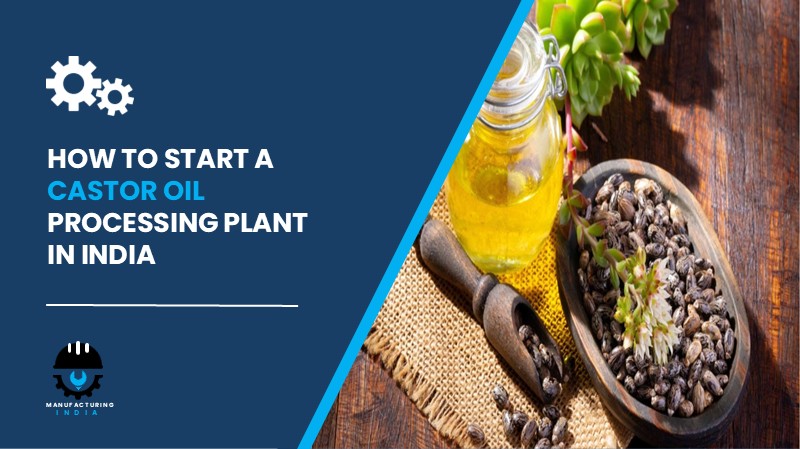
Setting up a castor oil processing plant in India presents a compelling investment case driven by surging demand from pharmaceuticals, cosmetics, lubricants, bio-based chemicals, biofuels, and agriculture. This vegetable oil is a critical renewable industrial feedstock underpinning multiple high-value downstream sectors, making domestic production capacity strategically and economically vital for India. As the pharmaceutical and personal care industries expand rapidly, the need for a reliable, locally produced supply of this versatile oil has never been stronger.
India is uniquely positioned to lead global output of this commodity. The country is already one of the world’s primary production regions, giving domestic processors a natural feedstock advantage. Combined with the Make in India initiative, agro-processing incentives, and cost-competitive land and labour in key manufacturing states such as Gujarat and Maharashtra, the economics of establishing this type of facility are highly compelling. With global consumers increasingly preferring traceable, geographically rooted suppliers, an Indian-based unit offers both supply chain reliability and pricing competitiveness that is difficult to replicate elsewhere.
India’s castor sector sits at the intersection of renewable chemistry, export opportunity, and domestic industrial demand. With gross profit margins of 20–30%, net margins of 8–12%, and a global market expanding toward 891 Kilo Tons by 2034, a well-capitalised processing facility here offers strong financial viability, policy tailwinds, and long-term demand sustainability across pharmaceuticals, lubricants, cosmetics, and bio-based chemicals.
What is Castor Oil?
Castor oil is a light yellow, viscous, non-volatile vegetable oil derived from the seeds of the Ricinus communis plant. It is notably rich in ricinoleic acid a monounsaturated fatty acid that imparts exceptional lubricating, solubility, and reactivity properties. Key physical characteristics include excellent emollient quality, high dielectric strength, and thermal stability. The oil is insoluble in water but miscible with alcohols and organic solvents. These properties, combined with biodegradability, renewability, and sustainability, make it a critical raw material for bio-based chemicals, lubricants, surfactants, and intermediate polymers.
The primary production method is mechanical pressing combined with solvent extraction and refining. End-use industries served include pharmaceuticals, cosmetics, lubricants, chemicals, biofuels, and agriculture. Applications span medicinal compounds, skincare formulations, high-performance lubricants, biodegradable plastics, biodiesel feedstock, and paints and coatings a breadth of use that insulates revenues from single-sector downturns.
Cost of Setting Up a Castor Oil Processing Plant in India
The total setup cost of a castor oil processing plant depends on capacity, technology, location, automation level, and regulatory compliance infrastructure. A clear breakdown of capital and operating expenditure is essential before committing to investment.
1. Capital Expenditure (CapEx)
Capital investment covers four principal categories. Land and site development including registration, boundary development, and related charges forms a substantial portion of initial outlay. Investors may reduce this burden by opting for plots within SEZs or GIDC/MIDC industrial estates, which offer pre-approved land, shared infrastructure, and potential tax exemptions. Civil works encompass construction of the processing shed, quality-control laboratory, raw material and finished goods storage, and administrative block.
Machinery and equipment represent the largest single CapEx component. Key machinery required includes:
- Seed hullers
- Mechanical presses or expellers
- Solvent extraction units
- Filtration systems
- Neutralization tanks
- Bleaching units
- Deodorizers
- Specialized packaging lines
- Oil storage tanks
- Heating systems and transfer pipelines
Other capital costs include effluent treatment plant (ETP) construction, pre-operative expenses, commissioning charges, and applicable import duties on specialised equipment.
Request a Sample Report for In-Depth Market Insights: https://www.imarcgroup.com/castor-oil-processing-plant-project-report/requestsample
2. Operational Expenditure (OpEx)
The operating cost structure is primarily driven by raw material consumption. Castor seeds and L590 together account for approximately 80–85% of total OpEx, making feedstock procurement strategy the most critical lever for margin management. Investors are advised to negotiate long-term supply contracts directly with farming communities in Gujarat and Rajasthan to stabilise pricing and ensure consistent quality. Utility costs covering electricity, water, and steam for extraction and refining contribute a further 5–10% of OpEx.
Remaining costs include transportation, packaging, salaries, maintenance, depreciation, and taxes. By the fifth year, total operational costs are projected to increase substantially due to inflation, market fluctuations, and potential rises in key material costs.
3. Plant Capacity
The proposed facility is designed with an annual production capacity of 10,000–20,000 MT of oil, enabling economies of scale while maintaining operational flexibility. Capacity can be customised per investor requirements — smaller configurations suit niche specialty-grade production, while larger setups maximise throughput for commodity and industrial supply. Profitability consistently improves with higher capacity utilisation, making ramp-up planning a critical element of financial strategy.
4. Profit Margins and Financial Projections
The investment demonstrates healthy profitability potential under normal operating conditions. Gross profit margins typically range between 20–30%, supported by stable multi-sector demand and the value-added nature of refined and derivative products. Net profit margins are projected at 8–12%. Financial projections span five years, covering NPV, IRR, payback period, gross and net margin tracking, liquidity analysis, and sensitivity analysis for feedstock price volatility.
Why Set Up a Castor Oil Plant in India?
Pharmaceutical and Personal Care Demand. India’s pharmaceutical industry is one of the largest in the world by volume, with a growing appetite for natural, biodegradable excipients. The personal care sector’s shift toward natural formulations deepens domestic demand, creating a dependable customer base for any new Indian production facility.
Bio-Based Chemicals and Polymers Growth. Growth in bio-based polymers and specialty chemicals has strengthened this feedstock’s role in renewable chemistry. Rising demand for sustainable lubricants, eco-friendly cosmetics, and pharmaceutical excipients is accelerating global consumption, supported by double-digit growth in green chemistry a trend from which an Indian processor can benefit directly.
Industrial Lubricant Demand. Industrial lubricant consumption is rising due to superior lubricity and thermal resistance properties. As manufacturing activity intensifies across automotive, heavy engineering, and precision sectors, the requirement for high-performance, non-petroleum lubricants strengthens the investment case for domestic production.
Policy and Regulatory Tailwinds. Government support for bio-based manufacturing, agricultural value addition, and export-oriented processing through agro-processing incentives and green manufacturing policies bolsters demand for new capacity. The bio-based packaging sector alone has the potential to create 2,000–3,000 full-time equivalent jobs by 2030, with a market potential of USD 200–400 Million and investment opportunities of USD 400 Million–1 billion by 2030, as per the Council on Energy, Environment and Water.
Active Industry Investment. In November 2025, Casterra Ag Ltd. a subsidiary of Evogene Ltd. announced a strategic collaboration with Fantini Italia S.R.L. for large-scale commercial castor cultivation through advanced mechanisation technologies. Earlier, in November 2022, Casterra Ag Ltd. signed a long-term royalty agreement with Titan Castor Farms Limited, a Zambian cultivator and distributor, signalling sustained global investment in the value chain.
Supply Chain Localisation. Limited global production regions primarily concentrated in India enhance the strategic importance of domestic facilities for global supply stability. Global consumers increasingly seek traceable, geographically rooted suppliers, providing significant opportunities for processors with robust sourcing and farmer relationships.
Manufacturing Process Step by Step
The castor oil manufacturing process uses mechanical pressing combined with solvent extraction and refining as the primary production method. The workflow is a multi-step operation involving unit operations, material handling, and quality checks at each stage.
- Seed Cleaning and Preparation: Incoming seeds are cleaned to remove foreign matter and dehulled to separate the seed coat from the kernel.
- Crushing and Mechanical Pressing: Dehulled seeds pass through mechanical presses or expellers to extract crude oil via physical compression.
- Solvent Extraction: Residual oil from the pressed cake is recovered using solvent extraction units, maximising overall yield.
- Filtration: Extracted crude oil passes through filtration systems to remove solid impurities.
- Neutralisation: Crude oil undergoes treatment in neutralisation tanks to remove phospholipids and free fatty acids.
- Bleaching: Oil passes through bleaching units where colour bodies and trace impurities are removed.
- Deodorisation: Deodorizers eliminate volatile odour compounds, producing refined oil suitable for pharmaceutical, cosmetic, and industrial applications.
- Chemical Processing (Derivatives): For industrial-grade outputs, refined oil undergoes hydrogenation, dehydration, and derivatisation processes.
- Storage and Packaging: Finished oil is held in heated storage tanks and dispatched via specialised packaging lines to end-use industries.
Key Applications
The product serves a wide range of industries, underpinning revenue resilience across market cycles.
- Pharmaceuticals: Used as an excipient, laxative base, and carrier in medicinal compounds and drug formulations.
- Cosmetics and Personal Care: Key ingredient in skincare formulations, hair oils, lipsticks, and moisturisers.
- Lubricants: Formulated into high-performance lubricants valued for lubricity, thermal resistance, and biodegradability.
- Chemicals: Feedstock for surfactants, intermediate polymers, and specialty chemicals.
- Biofuels: Applied as biodiesel feedstock, contributing to renewable energy production.
- Agriculture: Used in bio-pesticides and adjuvants that enhance the efficacy of crop-protection products.
- Paints and Coatings: Incorporated into industrial and decorative paint formulations.
Leading Manufacturers
The global industry is served by established processors with extensive production capacities across pharmaceuticals, cosmetics, lubricants, chemicals, biofuels, and agriculture. Key players include:
- Jayant Agro-Organics Ltd.
- NK Proteins Ltd.
- RPK Agrotech
- Thai Castor Oil Industries Co., Ltd.
- Gokul Refoils and Solvent Ltd.
Timeline to Start the Plant
Investors should plan for the following structured development phases:
- Feasibility study and project report preparation
- Land acquisition and site development
- Regulatory approvals and environmental clearances
- Factory licence and fire safety compliance
- Machinery procurement and installation
- Raw material supplier agreements and supply chain setup
- Trial production and quality testing
- Commercial production launch
Licences and Regulatory Requirements
Starting a castor oil manufacturing unit in India requires several approvals:
- Business registration (Proprietorship, LLP, or Pvt Ltd)
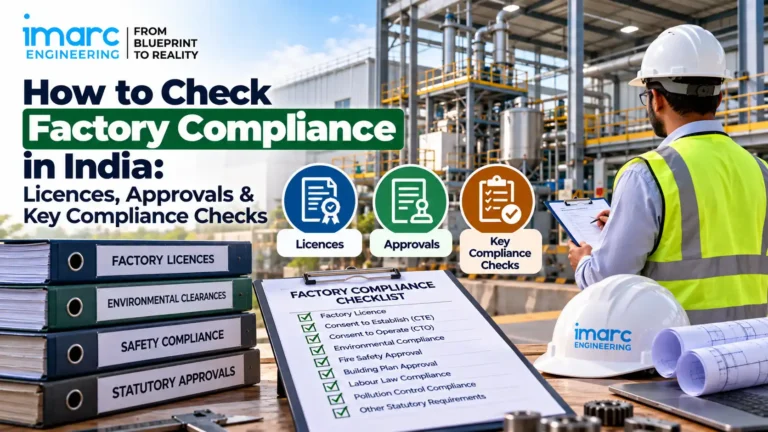
- Factory Licence under the Factories Act
- Environmental Clearance from State Pollution Control Board
- GST Registration
- Fire Safety NOC
- Hazardous/Chemical compliance (relevant given solvent use in extraction)
- Effluent Treatment Plant (ETP) operational clearance
- Occupational Health and Safety compliance
Key Challenges to Consider
High Capital Requirements. The machinery-intensive nature of the facility covering seed hullers, expellers, solvent extraction units, neutralisation tanks, bleaching units, and deodorizers demands significant upfront capital, which can be a barrier for first-time investors without secured financing.
Raw Material Price Volatility. Castor seeds and L590 constitute 80–85% of operational costs. Seasonal crop cycles and export demand shifts can compress margins significantly if not hedged through long-term procurement contracts.
Regulatory Compliance. Operating a solvent-based extraction unit requires rigorous adherence to environmental, fire safety, and chemical-handling regulations; non-compliance risks production stoppages and penalties.
Technology and Innovation Pressure. Rising demand for bio-based chemicals and pharmaceutical-grade derivatives drives ongoing innovation in extraction efficiency, requiring periodic technology upgrades.
Competition. Established players including Jayant Agro-Organics Ltd., NK Proteins Ltd., RPK Agrotech, Thai Castor Oil Industries Co., Ltd., and Gokul Refoils and Solvent Ltd. mean new entrants must compete on quality consistency and application-specific grades rather than price alone.
Skilled Manpower. Operating extraction and refining equipment to pharmaceutical and cosmetic-grade specifications requires trained chemical engineers and quality-control personnel, who can be difficult to recruit in semi-urban plant locations.
Frequently Asked Questions
1. How much does it cost to set up this type of processing plant in India? Total investment varies by production capacity (10,000–20,000 MT/year), automation level, and location; a full CapEx breakdown is available in the IMARC Group project report.
2. Is castor oil manufacturing profitable in India in 2026? Yes gross margins of 20–30% and net margins of 8–12% make the investment commercially viable, backed by India’s position as a primary global production region.
3. What machinery is required for a castor oil plant in India? Essential equipment includes seed hullers, mechanical presses or expellers, solvent extraction units, filtration systems, neutralisation tanks, bleaching units, deodorizers, and specialised packaging lines.
4. What licences and approvals are required to start a castor oil plant in India? Business registration, Factory Licence, Environmental Clearance, GST Registration, Fire Safety NOC, chemical compliance, ETP clearance, and Occupational Health and Safety certification.
5. What raw materials are needed for castor oil manufacturing? The primary inputs are castor seeds and L590, which together account for 80–85% of total operating expenses.
6. What are the environmental compliance requirements for a castor oil plant in India? Environmental Clearance from the State Pollution Control Board, a functional ETP, solvent-handling compliance, and advanced process-monitoring systems are mandatory.
7. What is the best location to set up a castor oil plant in India? Gujarat and Maharashtra offer the strongest combination of feedstock proximity, port access for export, and established agro-industrial infrastructure.
8. What is the break-even period for this type of plant in India? The payback period depends on capacity utilisation and cost management; detailed NPV and IRR analysis is available in the full feasibility report.
9. What government incentives are available for manufacturers in India? Agro-processing incentives, bio-based manufacturing subsidies, make in India schemes, and SEZ benefits including tax exemptions are all applicable to this type of production unit.
Key Takeaways for Investors
Establishing a castor oil processing plant in India represents a multi-dimensional opportunity with demand anchored across pharmaceuticals, cosmetics, lubricants, bio-based chemicals, biofuels, and agriculture sectors that are each growing independently and collectively. The economics are defensible across a range of capacities, with gross margins of 20–30% and net margins of 8–12% providing a strong foundation for investor returns. The global market, volumed at 812.1 Kilo Tons in 2025, is projected to reach 891 Kilo Tons by 2034 at a CAGR of 1.0%, with India positioned as a primary supply hub. With rising global preference for renewable, bio-based inputs across industrial and consumer applications, the long-term demand trajectory for this production investment remains robust and commercially sustainable.
About the Author