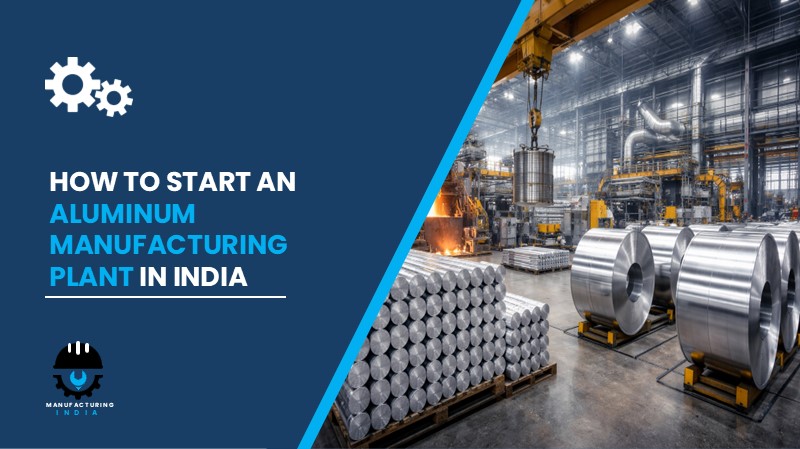
Setting up an aluminum manufacturing plant in India presents a compelling investment case for domestic and foreign investors alike. The country’s fast-expanding construction sector, rapidly growing automotive industry, booming electrical and electronics segment, packaging industry, and accelerating renewable energy targets collectively drive robust, sustained demand for aluminum. As a lightweight, corrosion-resistant metal with exceptional thermal and electrical conductivity, aluminum is indispensable to modern infrastructure, and India’s rapid urbanisation and industrial buildout make it one of the most strategically attractive locations in Asia to establish this form of production.
India’s structural advantages — competitive land and labour costs, the government’s Make in India initiative, growing Special Economic Zone (SEZ) ecosystems, and well-developed industrial corridors in states such as Gujarat, Odisha, Jharkhand, and Maharashtra — position the country as a cost-competitive base for aluminum manufacturing. Proximity to bauxite-rich mineral belts in Odisha and Andhra Pradesh further reduces raw material logistics costs, while growing domestic consumption across construction, transportation, and packaging sectors ensures a ready off-take market. For investors seeking a material that sits at the intersection of infrastructure growth and green energy transition, this investment in India is strategically sound and financially viable.
India’s Make in India policy, cost-competitive manufacturing base, and surging demand from construction, automotive, and renewable energy sectors create an ideal environment for aluminum production investment. With gross profit margins of 20–30% and achievable payback periods under normal operating conditions, an aluminum plant in India offers compelling return potential across a range of production capacities.
What is Aluminum?
Aluminum is a silvery-white and lightweight metal mainly produced through the refining and smelting of bauxite ore. It is noted for great resistance to corrosion, high thermal and electrical conductivity, and ductility — properties that make it particularly suitable for recycling without losing original purity. Commercial aluminum is produced in several product forms, including ingots, billets, slabs, sheets, rods, and extrusions, to meet the diverse needs of modern industry. The combination of strong mechanical properties and inherent sustainability credentials makes aluminum one of the most versatile metals in the global economy.
The primary production method involves bauxite refining, alumina production, electrolytic smelting, casting, and rolling or extrusion. This multi-stage aluminum manufacturing process transforms raw bauxite into finished products suited for a wide range of downstream applications. End-use industries served include construction, electrical and electronics, automotive, aerospace, packaging, and renewable energy — a broad demand base that insulates the facility from single-sector cyclicality.
Cost of Setting Up an Aluminum Manufacturing Plant in India
The cost of establishing an aluminum manufacturing plant in India depends on several interrelated factors including plant capacity, technology selection, degree of automation, geographic location, and the extent of regulatory compliance infrastructure required.
1. Capital Expenditure (CapEx)
Land and site development form a substantial part of the total capital investment for the facility. Costs include land registration, boundary development, levelling, drainage, and related site preparation. Investors may reduce acquisition costs by opting for plots within designated industrial estates, Special Economic Zones (SEZs), or government-notified manufacturing parks, which also offer faster regulatory clearances and utility connectivity.
Civil works and construction expenditure covers factory shed construction, quality control laboratory, raw material storage warehouses, administrative block, utilities rooms, and safety infrastructure — all sized based on the chosen production capacity and aluminum plant layout requirements.
Machinery and equipment costs account for the largest single portion of total CapEx for an aluminum manufacturing plant. Key machinery required includes:
- Crushers — for initial size reduction of bauxite ore
- Digesters — for bauxite dissolution in the Bayer refining process
- Electrolytic cells — for the Hall-Héroult smelting process to produce primary aluminum
- Casting units — for forming molten aluminum into ingots, billets, or slabs
- Rolling mills — for producing aluminum sheets and plates
- Extrusion presses — for producing aluminum profiles and structural sections
- Finishing systems — for surface treatment, anodising, and quality finishing of final products
Other capital costs include effluent treatment plant (ETP) construction, pre-operative and commissioning expenses, and applicable import duties on specialised equipment not manufactured domestically.
Request a Sample Report for In-Depth Market Insights: https://www.imarcgroup.com/aluminum-manufacturing-plant-project-report/requestsample
2. Operational Expenditure (OpEx)
Raw material cost is the dominant driver of operating expenditure, with alumina and power collectively accounting for approximately 40–50% of total OpEx for the aluminum manufacturing plant. Raw materials include alumina as the primary feedstock and substantial quantities of electrical power for the electrolytic smelting process. Investors are advised to negotiate long-term supplier contracts to stabilise alumina pricing and mitigate supply chain disruption risks.
Utility costs — primarily electricity, water, and steam — represent another major expenditure category, accounting for approximately 40–45% of OpEx. Given smelting’s high electricity intensity, proximity to low-cost power sources or captive power arrangements can significantly improve margin profiles. Additional recurring operating costs include transportation and logistics, packaging materials, salaries and wages, routine machinery maintenance, depreciation charges, and applicable taxes. By the fifth year of operations, total OpEx is projected to increase due to inflationary pressures, rising input material costs, and supply chain fluctuations.
3. Plant Capacity
The proposed aluminum plant is designed with an annual production capacity ranging between 250,000 and 500,000 metric tonnes, enabling economies of scale while maintaining operational flexibility. Capacity can be customised to align with investor budgets and target market requirements. Profitability improves with higher capacity utilisation, making production ramp-up planning a critical component of the financial model.
4. Profit Margins and Financial Projections
Financial projections for an aluminum facility are built on realistic assumptions covering capital investment, operating costs, capacity utilisation, pricing trends, and demand outlook. Gross profit margins typically range between 20–30%, supported by stable multi-sector demand and value-added product applications. Net profit margins are projected at 8–15% under normal operating conditions. Key financial metrics include Net Present Value (NPV), Internal Rate of Return (IRR), and the payback period — all of which demonstrate favourable viability across a range of production capacity configurations.
Why Set Up an Aluminum Plant in India?
India’s structural demand profile, policy ecosystem, and manufacturing cost base make it one of the most compelling destinations globally for this type of production investment.
Construction Sector Demand. Rapid urbanisation, infrastructure development under national programmes, and expanding residential and commercial construction drive strong demand for aluminum in window frames, roofing sheets, facades, and structural parts. Aluminum’s durability and corrosion resistance make it the preferred material for long-life building applications.
Automotive and Transportation Growth. India’s automotive sector is one of the largest globally, and the shift toward electric vehicles (EVs) is particularly impactful. Aluminum helps offset EV battery weight and improve vehicle range, making it critical for body parts, engine components, and railway coaches. The aluminum manufacturing process delivers material that directly enables India’s EV transition goals.
Renewable Energy Expansion. India’s aggressive solar and wind energy targets create substantial demand for aluminum in solar panel frames, wind turbine components, and associated energy infrastructure. Aluminum’s strength-to-weight ratio and recyclability make it the material of choice for renewable energy manufacturing across the country.
Policy and Regulatory Tailwinds. India’s Make in India initiative, production-linked incentives, infrastructure investment programmes, renewable energy targets, and EV production subsidies indirectly but significantly boost aluminum demand across multiple end-use sectors, de-risking domestic manufacturing investments.
Active Global Industry Investment. In June 2023, Rio Tinto committed USD 1.1 billion to expand its low-carbon AP60 aluminum smelter in Canada, adding 160,000 tonnes of annual capacity. In February 2024, Alcoa announced an agreement to supply low-carbon aluminum produced using ELYSIS technology — an innovative process that avoids direct greenhouse gas emissions — to cable producer Nexans. In August 2025, Metra North America launched, formed by the merger of Extruded Aluminum Company, Profile Custom Extrusions, and Metra Canada, with over a century of combined experience serving building and industrial markets.
Local Supply Chain Preference. India’s construction, automotive, packaging, and electronics industries increasingly prefer local aluminum sourcing to reduce import dependency, currency risk, and logistics lead times. The aluminum plant is therefore well-positioned to capture growing domestic off-take from large industrial buyers.
Aluminum Manufacturing Process Step by Step
The aluminum manufacturing process uses bauxite refining, alumina production, electrolytic smelting, casting, and rolling or extrusion as its primary production method.
- Bauxite Mining and Crushing: Raw bauxite ore is sourced and fed through crushers to reduce particle size in preparation for chemical processing.
- Digestion (Bayer Process): Crushed bauxite is treated in digesters with hot caustic soda to dissolve alumina content, separating it from impurities.
- Clarification and Precipitation: The alumina-rich liquor is clarified to remove solid impurities, then alumina trihydrate is precipitated out and calcined to produce alumina powder.
- Electrolytic Smelting (Hall-Héroult Process): Alumina is dissolved in molten cryolite within electrolytic cells; electrical current reduces alumina to liquid aluminum metal.
- Casting: Molten aluminum is transferred to casting units and formed into ingots, billets, or slabs based on downstream product requirements.
- Rolling and Extrusion: Cast forms are processed through rolling mills to produce sheets and plates, or through extrusion presses for structural profiles and sections.
- Finishing and Quality Control: Final products pass through finishing systems for surface treatment, anodising, and inspection to ensure dimensional accuracy.
- Packaging and Dispatch: Finished products are packaged and dispatched to construction, automotive, packaging, electrical, and renewable energy sectors.
Key Applications of Aluminum
Aluminum serves a wide range of industries, underlining the strong demand case for the production facility in India:
- Construction: Window frames, roofing sheets, facades, and structural components — chosen for durability and corrosion resistance.
- Automotive and Transportation: Vehicle body parts, engine components, and railway coaches — aluminum reduces vehicle weight and improves fuel efficiency and EV range.
- Electrical and Electronics: Power transmission lines, busbars, heatsinks, and electronic enclosures — valued for high conductivity and lightweight properties.
- Packaging: Beverage cans, food containers, and foil packaging — chosen for recyclability, barrier properties, and compliance with sustainability regulations.
- Aerospace: Structural components and aircraft body parts where strength-to-weight ratio is critical.
- Renewable Energy: Solar panel frames, wind turbine components, and energy infrastructure — benefiting from aluminum’s corrosion resistance and lightweight strength.
Leading Aluminum Manufacturers
The global aluminum industry is served by established multinational companies with extensive production capacities and diverse application portfolios. Key players include:
- BASF SE
- Solvay
- Evonik Industries
- Arkema
- Kemira Oyj
- FMC Corporation
These companies serve construction, automotive, aerospace, electrical and electronics, packaging, and renewable energy sectors — forming the competitive landscape that domestic investors will need to benchmark against when establishing the aluminum plant.
Timeline to Start the Plant
Setting up the facility typically proceeds through the following phases:
- Feasibility study and project report preparation
- Land acquisition and site development
- Regulatory approvals and environmental clearances
- Factory licence and fire safety compliance
- Machinery procurement and installation
- Raw material supplier agreements and supply chain setup
- Trial production and quality testing
- Commercial production launch
Licences and Regulatory Requirements
Starting an aluminum manufacturing unit in India requires several approvals:
- Business registration (Proprietorship, LLP, or Private Limited Company)
- Factory Licence under the Factories Act, 1948
- Environmental Clearance from the State Pollution Control Board
- GST Registration
- Fire Safety NOC
- Hazardous and Chemical compliance under relevant environmental laws (applicable for aluminum smelting operations)
- Effluent Treatment Plant (ETP) operational clearance
- Occupational Health and Safety compliance under applicable Indian standards
Key Challenges to Consider
High Capital Requirements. Establishing a full-scale aluminum manufacturing plant — including electrolytic cell infrastructure, rolling mills, and casting units — requires significant upfront capital. Securing project financing and managing construction cost overruns are critical to project success.
Raw Material Price Volatility. Alumina and electricity, which accounts for 40–45% of OpEx, are both subject to price volatility. Long-term supply contracts and energy hedging strategies are advisable.
Regulatory Compliance. Aluminum smelting operations involve significant environmental compliance obligations including effluent treatment, emission monitoring, and hazardous material management. Securing all State Pollution Control Board clearances on schedule is a key project management priority.
Technology and Innovation Pressure. The global industry is rapidly adopting low-carbon smelting technologies, as demonstrated by Alcoa’s ELYSIS process agreement with Nexans in February 2024. Indian producers will need to align with evolving sustainability standards to remain competitive in premium export markets.
Competition from Global Players. The competitive landscape includes BASF SE, Solvay, Evonik Industries, Arkema, Kemira Oyj, and FMC Corporation. New entrants must develop differentiated product strategies, cost advantages, or niche application focus to compete effectively.
Skilled Manpower. Operating electrolytic cells, extrusion presses, and finishing systems requires technically trained personnel. Building and retaining a skilled workforce at the plant’s geographic location is an ongoing human resource challenge.
Frequently Asked Questions
1. How much does it cost to set up an aluminum manufacturing plant in India?
The cost varies based on capacity (250,000–500,000 MT annually), technology, automation, and location. CapEx covers land, civil works, machinery — including crushers, digesters, electrolytic cells, casting units, rolling mills, extrusion presses, and finishing systems — plus ETP construction and commissioning costs.
2. Is aluminum manufacturing profitable in India in 2026?
Yes. Gross profit margins typically range 20–30% and net margins 8–15%, supported by multi-sector demand from construction, automotive, packaging, and renewable energy industries.
3. What machinery is required for an aluminum plant in India?
Essential machinery includes crushers, digesters, electrolytic cells, casting units, rolling mills, extrusion presses, and finishing systems, selected based on target production capacity and product range.
4. What licences and approvals are required to start an aluminum plant in India?
Required approvals include business registration, Factory Licence, Environmental Clearance from the State Pollution Control Board, GST Registration, Fire Safety NOC, hazardous chemical compliance certifications, ETP operational clearance, and Occupational Health and Safety compliance.
5. What raw materials are needed for aluminum manufacturing?
The primary raw materials are alumina (the main feedstock) and substantial electrical power for the electrolytic smelting process, plus process materials for casting, rolling, and finishing.
6. What are the environmental compliance requirements for an aluminum plant in India?
Aluminum smelting operations require Environmental Clearance from the State Pollution Control Board, an operational ETP, hazardous and chemical management compliance, and adherence to emission monitoring standards throughout production.
7. What is the best location to set up an aluminum plant in India?
States proximate to bauxite-rich regions such as Odisha, Andhra Pradesh, and Jharkhand offer raw material advantages. Industrial estates and SEZ locations in Gujarat and Maharashtra provide infrastructure support and regulatory facilitation.
8. What is the break-even period for this type of plant in India?
The break-even period depends on capacity utilisation, product pricing, and operating cost management. The IMARC Group project report provides plant-specific payback period analysis based on realistic assumptions.
9. What government incentives are available for manufacturers in India?
Indian manufacturers can access Make in India incentives, production-linked incentive (PLI) schemes, state industrial policy subsidies, SEZ fiscal benefits, and capital subsidy programmes under various central and state ministry-level frameworks.
Key Takeaways for Investors
An aluminum manufacturing plant in India represents a high-conviction investment opportunity, with demand anchored across construction, automotive, electrical, packaging, aerospace, and renewable energy sectors — all of which are on strong multi-year growth trajectories in the country. The financial model is viable across a range of plant capacities, with gross profit margins of 20–30% and net margins of 8–15% achievable under normal operating conditions, providing investors with clear return pathways. The global aluminum market, valued at USD 75.00 million in 2025, is projected to reach USD 107.68 million by 2034 at a CAGR of 4.1% from 2026 to 2034, underlining sustained long-term growth in underlying demand. With India’s policy ecosystem, cost-competitive manufacturing base, and growing domestic consumption, this production category offers durable demand sustainability that supports long-horizon investment planning.
About the Author