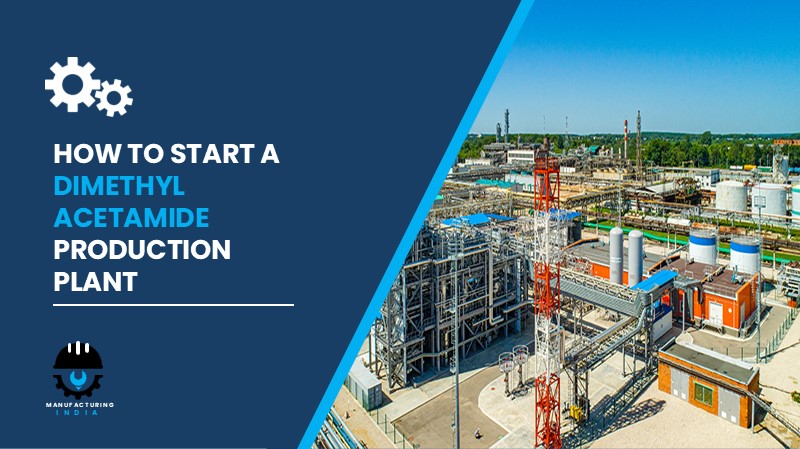
Setting up a dimethyl acetamide production plant in India presents a compelling investment case driven by surging demand across the pharmaceutical industry, agrochemical manufacturing, synthetic fibre production, electronics, paints and coatings, plastics, and adhesives. Dimethyl acetamide (DMAc) is a high-performance polar aprotic solvent whose exceptional solubility and thermal stability make it indispensable across multiple downstream industries that demand high purity and consistent quality. As India’s pharmaceutical and specialty chemicals industries continue their rapid structural expansion, the country’s growing dependence on imported DMAc creates a commercially exploitable gap that a domestic manufacturing facility is strategically positioned to fill- at scale, with supply chain reliability advantages that multinational suppliers cannot easily replicate.
India’s structural advantages reinforce the investment case strongly. The Indian pharmaceutical market is slated to grow 7–9% in FY26, fuelled by robust domestic demand, new product innovation, and expansion into Europe, as indicated by IBEF. This growth is a direct driver of DMAc demand, given the solvent’s essential role in drug formulation, extraction processes, and pharmaceutical synthesis. Government initiatives promoting domestic chemical manufacturing, pharmaceutical self-reliance, and specialty chemical exports- including schemes aligned with Make in India- indirectly boost demand for key intermediates like DMAc. States such as Gujarat, Maharashtra, Telangana, and Andhra Pradesh, with their dense pharmaceutical and specialty chemicals manufacturing clusters, represent the most strategically sound locations for a new dimethyl acetamide manufacturing plant.
India’s booming pharmaceutical sector, expanding agrochemical and specialty chemicals industries, and policy-backed drive for supply chain localisation make a dimethyl acetamide production plant a financially viable and strategically well-timed investment. With gross margins of 22–30%, net margins of 12–18%, and a global market growing steadily from USD 116.45 million in 2025 to USD 140.10 million by 2034, the demand outlook for domestic DMAc production is structurally underpinned and durable.
What is Dimethyl Acetamide?
Dimethyl acetamide (DMAc or DMA) is a colorless, high-boiling, and water-miscible polar aprotic solvent. Widely utilised in industrial applications due to its high solvent power, it is commonly employed in producing fibres such as spandex, synthetic resins, and polymers. It is also essential as a reaction medium for pharmaceutical synthesis and as an excipient in some drugs. DMAc is valued for its stability in the presence of bases and its ability to dissolve a wide range of organic and inorganic compounds.
The product serves as a high-boiling polar solvent for chemical reactions, a processing solvent in polymer production- including spandex production- a catalyst in organic synthesis, a solvent for surface coating formulations, and an intermediate in agrochemical manufacturing. These broad application capabilities, spanning pharmaceuticals, agrochemicals, synthetic fibres including polyacrylonitrile, electronics, paints and coatings, plastics, and adhesives, make DMAc one of the most commercially versatile specialty solvents in the industrial chemicals sector.
The primary production method is dimethyl acetamide synthesis via the reaction of acetic acid and dimethylamine, followed by distillation and purification- a controlled multi-step process that yields high-purity DMAc suitable for pharmaceutical and industrial grade applications. End-use industries served include pharmaceuticals, agrochemicals, synthetic fibres, electronics, paints and coatings, plastics, and adhesives.
Cost of Setting Up a Dimethyl Acetamide Production Plant in India
The cost of establishing this facility depends on capacity, technology selection, plant location, degree of automation, and regulatory compliance requirements.
1. Capital Expenditure (CapEx)
Total capital investment for a dimethyl acetamide production plant covers land acquisition, site preparation, civil construction, process machinery, and pre-operative expenses. Land and site development- including charges for land registration, boundary development, and other related expenses- forms a substantial part of the overall investment. This allocation ensures a solid foundation for safe and efficient plant operations. Investors can reduce land acquisition costs by locating the unit in a Chemical Zone, PCPIR cluster, or Special Economic Zone (SEZ), which also provide shared infrastructure and potential fiscal benefits.
Civil works and construction cover the main production building, raw material storage for acetic acid/acetic anhydride and dimethylamine, finished product storage, quality control laboratory, and administrative block. Given that DMAc production involves handling toxic and flammable chemical intermediates, civil and structural elements must comply with hazardous area classification, acid-resistant construction, and appropriate ventilation standards.
Machinery costs account for the largest portion of total capital expenditure. Key machinery required includes:
- Reactor vessels
- Distillation columns
- Heat exchangers
- Condensation units
- Purification towers
- Solvent recovery systems
- Storage tanks
Other capital costs include the effluent treatment plant (ETP), advanced process monitoring and leak detection systems, pre-operative expenses, trial production costs, and commissioning charges. Where specialised reactor or distillation equipment is imported, applicable customs duties must be incorporated into the CapEx plan.
Request a Sample Report for In-Depth Market Insights: https://www.imarcgroup.com/dimethyl-acetamide-manufacturing-plant-project-report/requestsample
2. Operational Expenditure (OpEx)
The operating cost structure of a dimethyl acetamide production plant is primarily driven by raw material consumption. Acetic acid/acetic anhydride- the dominant feedstock- accounts for approximately 58–68% of total operating expenses (OpEx), making supplier proximity and procurement strategy the single most important lever for protecting production economics. Dimethylamine is the second primary raw material input. Securing long-term supply agreements with reliable domestic producers of both raw materials is essential for cost stability and production continuity. Minimising transportation costs by selecting nearby suppliers is a key site selection criterion.
Utility costs- comprising electricity, water, and steam- account for 8–12% of total OpEx. Other ongoing operating costs include transportation, packaging, salaries and wages, depreciation, taxes, equipment repairs and maintenance, and other miscellaneous expenses.
By the fifth year of operations, the total operational cost is expected to increase substantially due to factors such as inflation, market fluctuations, and potential rises in the cost of key materials. Additional factors including supply chain disruptions, rising consumer demand, and shifts in the global economy are also expected to contribute to this increase.
3. Plant Capacity
The proposed production facility is designed with an annual production capacity of 15,000 MT, enabling economies of scale while maintaining operational flexibility. Capacity can be customised per investor requirements based on target market, available capital, and chosen process technology. Profitability improves materially with higher capacity utilisation, making off-take agreements with Indian pharmaceutical formulators, synthetic fibre producers, and agrochemical manufacturers a commercial priority from the commissioning stage.
4. Profit Margins and Financial Projections
The project demonstrates healthy profitability potential under normal operating conditions. Gross profit margins typically range between 22–30%, supported by stable demand and value-added applications. Net profit margins range between 12–18%. A comprehensive financial model covering NPV (net present value), IRR (internal rate of return), payback period, liquidity analysis, uncertainty analysis, sensitivity analysis, and a full five-year profit and loss account provides investors with a rigorous framework for assessing financial viability and long-term sustainability across different capacity and pricing scenarios.
Why Set Up a Dimethyl Acetamide Plant in India?
Critical Industrial Solvent with Multi-Sector Demand. DMAc is a widely used high-performance solvent in pharmaceuticals, agrochemicals, synthetic fibres- especially acrylics- and specialty chemicals, making it a vital input for multiple downstream industries that demand high purity and consistent quality. This breadth of end-use demand reduces revenue concentration risk and ensures a diversified and resilient customer base for domestic producers.
Growing Indian Pharmaceutical Market. The dimethyl acetamide market is poised for steady growth driven by its expanding applications in the pharmaceutical industry. The Indian pharmaceutical market is slated to grow 7–9% in FY26, as indicated by IBEF, fuelled by robust domestic demand, new product innovation, and expansion into Europe. The rise in biotechnology and pharmaceutical production will further bolster the use of DMAc in drug formulation and extraction processes.
Expanding Applications in Polymers and Advanced Materials. Growth in pharmaceuticals, advanced materials, coatings, and high-performance fibres is driving steady demand for DMAc, with increasing global consumption of specialty chemicals and technical textiles further supporting long-term volume expansion. DMAc is essential in the production of polyimides, polyurethanes, and acrylics- materials whose demand is accelerating across India’s electronics and automotive manufacturing sectors.
Policy and Industrial Growth Support. Government initiatives promoting domestic chemical manufacturing, pharmaceutical self-reliance, and specialty chemical exports- including schemes aligned with Make in India- indirectly boost demand for key intermediates like DMAc. Investors in domestic specialty solvent production are well-positioned to benefit from these policy tailwinds as import substitution objectives deepen across the chemicals and pharmaceuticals value chain.
Supply Chain Localisation and Reliability. End users are increasingly prioritising reliable domestic suppliers to mitigate import dependence, reduce logistics risks, and ensure consistent availability of high-purity solvents. This commercial shift creates significant opportunities for regional DMAc producers with strong quality control systems and stable feedstock sourcing- advantages that a well-located and well-capitalised Indian plant can sustain structurally over the long term.
Latest Industry Development. In June 2025, a study published in Elsevier compared two formulations of dimethylacetamide for efficacy in rescuing pups from preterm birth in an inflammation-induced mouse model, examining effects on the maternal-foetal interface and pharmacokinetic profiles in maternal plasma. The findings showed that vaginal administration of dimethylacetamide had similar efficacy in delaying inflammation-induced preterm birth as intraperitoneal administration, but resulted in lower concentrations in the systemic circulation and decreased effects on the maternal-foetal interface- confirming the active and expanding role of DMAc in pharmaceutical and biomedical research applications.
Manufacturing Process- Step by Step
The dimethyl acetamide manufacturing process uses dimethyl acetamide synthesis via the reaction of acetic acid and dimethylamine, followed by distillation and purification, as the primary production method. Each stage is designed to ensure product purity, yield optimisation, and compliance with pharmaceutical and industrial grade specifications.
- Raw Material Receipt and Inspection: Acetic acid/acetic anhydride and dimethylamine are received at the facility and subjected to incoming quality checks for grade specification, purity, and moisture content before entering the process flow.
- Reaction Stage: Acetic acid (or acetic anhydride) and dimethylamine are fed into reactor vessels in controlled stoichiometric ratios under regulated temperature and pressure conditions to initiate the synthesis reaction that produces crude dimethyl acetamide.
- Distillation and Separation: The crude reaction product is transferred to distillation columns where water, unreacted feedstocks, and low-boiling impurities are removed. Heat exchangers and condensation units maintain the required thermal profile throughout the separation stages.
- Purification: The partially refined DMAc stream is processed through purification towers to achieve the high-purity specification required for pharmaceutical and industrial grade product- removing residual impurities to within the required specification limits.
- Solvent Recovery: Solvent recovery systems capture and recycle unreacted dimethylamine and acetic acid streams from the distillation and purification stages, improving raw material efficiency and reducing operating costs.
- Quality Inspection and Testing: Finished DMAc is subjected to analytical testing for purity, acid content, water content, and colour to confirm grade compliance before release for dispatch.
- Storage, Packaging and Dispatch: Approved product is transferred to storage tanks and packaged for distribution to end-use customers across pharmaceutical synthesis, agrochemical formulation, synthetic fibre production, electronics, paints and coatings, plastics, and adhesives manufacturing sectors.
Key Applications
The dimethyl acetamide production plant serves a diverse and commercially significant range of industries across India’s industrial economy.
- Chemical Manufacturing: Serves as a solvent in the production of pharmaceuticals, agrochemicals, and specialty chemicals- valued for its high solvency power and ability to dissolve a wide range of organic and inorganic compounds.
- Polymer Industry: Used in the manufacture of synthetic fibres such as acrylics, polyurethanes, and polyimides- including its critical role as a spinning solvent in spandex and polyacrylonitrile fibre production.
- Electronics: Acts as a solvent for coatings, resins, and photoresists in semiconductor and circuit processing- an application segment growing rapidly in line with India’s electronics manufacturing expansion.
- Textile Industry: Employed as a spinning solvent in fibre production and processing, enabling consistent quality in the manufacturing of high-performance technical textiles and synthetic garment fibres.
- Paints and Coatings: Used as a high-boiling polar solvent in surface coating formulations for industrial and specialty coatings applications requiring high dissolution power and coating uniformity.
- Adhesives: Functions as a solvent and processing medium in adhesive formulations requiring consistent viscosity, solubility, and thermal stability across bonding applications.
Leading Manufacturers
The global dimethyl acetamide industry is served by several established multinational players with extensive production capacities and diverse application portfolios. Key players operating in this market include:
- BASF SE
- DuPont de Nemours, Inc.
- Eastman Chemical Company
- Mitsubishi Gas Chemical Company (MGC)
- Zhejiang Jiangshan Chemical Co., Ltd.
All of these producers serve end-use sectors including pharmaceuticals, agrochemicals, synthetic fibres (spandex, polyacrylonitrile), electronics, paints and coatings, plastics, and adhesives- the same segments that a domestic Indian dimethyl acetamide production plant can target as local demand accelerates.
Timeline to Start the Plant
Investors should plan for a structured pre-production and commissioning phase covering the following key stages:
- Feasibility study and project report preparation
- Land acquisition and site development
- Regulatory approvals and environmental clearances
- Factory licence and fire safety compliance
- Machinery procurement and installation
- Raw material supplier agreements and supply chain setup
- Trial production and quality testing
- Commercial production launch
Licences and Regulatory Requirements
Starting a dimethyl acetamide production unit in India requires several approvals:
- Business registration (Proprietorship, LLP, or Private Limited Company)
- Factory Licence under the Factories Act
- Environmental Clearance from the State Pollution Control Board
- GST Registration
- Fire Safety NOC
- Hazardous chemical compliance for storage and handling of dimethylamine and acetic acid/acetic anhydride
- Effluent Treatment Plant (ETP) operational clearance
- Occupational Health and Safety compliance
Key Challenges to Consider
High Capital Requirements. Establishing a fully equipped dimethyl acetamide production plant- with reactor vessels, multi-stage distillation columns, purification towers, solvent recovery systems, and an ETP- requires significant upfront capital investment. While DMAc production is not as capital-intensive as petrochemical crackers, it still requires controlled reaction processes and specialised corrosion-resistant equipment that elevates the initial cost base.
Raw Material Price Volatility. Acetic acid/acetic anhydride- accounting for 58–68% of total OpEx- is subject to price fluctuations driven by upstream feedstock availability and global supply-demand dynamics. Dimethylamine prices are similarly variable. Long-term procurement contracts and geographical proximity to domestic raw material producers are the primary hedging strategies for managing this risk.
Regulatory Compliance. DMAc production requires handling of toxic intermediates and compliance with stringent environmental and safety norms. Advanced monitoring systems must be installed to detect leaks or deviations in the process. Effluent treatment systems are necessary to minimise environmental impact and ensure compliance with emission standards- adding to ongoing operational overhead.
Technology and Innovation Pressure. Environmental concerns and regulatory challenges surrounding solvent emissions are anticipated to impact the industry, prompting a shift toward greener, more sustainable practices. Innovations in manufacturing technologies and the adoption of alternative solvents will play a key role in shaping the future of the DMAc industry, requiring domestic producers to invest continuously in process improvement and environmental compliance.
Competition from Global Players. Established international producers- BASF SE, DuPont de Nemours Inc., Eastman Chemical Company, Mitsubishi Gas Chemical Company (MGC), and Zhejiang Jiangshan Chemical Co., Ltd.- set high benchmarks for product purity, supply reliability, and competitive pricing. Indian manufacturers must differentiate through local supply security, reduced lead times, and the ability to serve pharmaceutical customers with consistently high-purity product.
Skilled Manpower. Operating reactor vessels, distillation columns, purification towers, and solvent recovery systems in a hazardous chemical environment requires certified chemical process engineers and trained operators. Recruiting, training, and retaining qualified technical and quality control personnel is an ongoing operational challenge in India’s competitive industrial labour market.
Frequently Asked Questions
1. How much does it cost to set up a dimethyl acetamide production plant in India?
Total setup cost depends on plant capacity, location, technology selection, and automation level. Key cost components include land and site development, civil construction, process machinery (reactor vessels, distillation columns, purification towers, solvent recovery systems), and pre-operative expenses. A detailed feasibility study is recommended to generate accurate project-specific cost estimates.
2. Is dimethyl acetamide production profitable in India in 2026?
Yes. The project demonstrates healthy profitability, with gross margins of 22–30% and net profit margins of 12–18% under normal operating conditions. The global dimethyl acetamide market was valued at USD 116.45 million in 2025 and is projected to reach USD 140.10 million by 2034 at a CAGR of 2.1% according to IMARC Group, with India’s pharmaceutical and agrochemical sectors representing fast-growing domestic demand drivers.
3. What machinery is required for a dimethyl acetamide plant in India?
Essential equipment includes reactor vessels, distillation columns, heat exchangers, condensation units, purification towers, solvent recovery systems, and storage tanks.
4. What licences and approvals are required to start a dimethyl acetamide plant in India?
Required approvals include business registration, Factory Licence, Environmental Clearance from the State Pollution Control Board, GST Registration, Fire Safety NOC, hazardous chemical compliance for dimethylamine and acetic acid/acetic anhydride handling, ETP operational clearance, and Occupational Health and Safety compliance.
5. What raw materials are needed for dimethyl acetamide production?
The primary raw materials are acetic acid/acetic anhydride and dimethylamine. Acetic acid/acetic anhydride is the dominant cost driver, accounting for 58–68% of total operating expenses.
6. What are the environmental compliance requirements for a dimethyl acetamide plant in India?
The facility must obtain Environmental Clearance, operate an approved ETP, and install advanced monitoring systems to detect leaks or process deviations. Effluent treatment systems are mandatory to minimise environmental impact and ensure compliance with emission standards applicable to specialty chemical manufacturing units.
7. What is the best location to set up a dimethyl acetamide plant in India?
Locations offering proximity to acetic acid/acetic anhydride and dimethylamine raw material suppliers, combined with access to pharmaceutical, agrochemical, and synthetic fibre end-user clusters, are preferred. The site must have robust infrastructure including reliable transportation, utilities, and waste management systems, and must comply with local zoning and environmental regulations.
8. What is the break-even period for this type of plant in India?
The break-even period depends on plant capacity, total capital investment, product pricing, and capacity utilisation rate. A comprehensive financial analysis covering NPV, IRR, payback period, and uncertainty and sensitivity analysis- as provided in a full feasibility report- is the most reliable method for generating project-specific break-even timelines.
9. What government incentives are available for manufacturers in India?
Government initiatives promoting domestic chemical manufacturing, pharmaceutical self-reliance, and specialty chemical exports- including schemes aligned with Make in India- provide policy and financial support for dimethyl acetamide producers. State government investment promotion subsidies, MSME credit-linked capital subsidy schemes, and incentives within Chemical Zone or PCPIR cluster locations are available to qualifying investors.
Key Takeaways for Investors
A dimethyl acetamide production plant in India offers a well-grounded investment opportunity anchored by growing demand across the pharmaceutical, agrochemical, synthetic fibre, electronics, paints and coatings, plastics, and adhesives sectors- all of which depend on DMAc as a critical high-performance process solvent. The project delivers strong financial viability, with gross margins of 22–30% and net margins of 12–18%, across an annual production capacity of 15,000 MT. According to IMARC Group estimates, the global dimethyl acetamide market is set to grow from USD 116.45 million in 2025 to USD 140.10 million by 2034 at a CAGR of 2.1%, with India’s pharmaceutical market- growing at 7–9% in FY26 per IBEF- representing one of the most active regional demand centres within this global growth story. With end users increasingly prioritising reliable domestic suppliers over import-dependent supply chains, and with government policy actively supporting specialty chemical self-reliance, demand sustainability for domestically produced dimethyl acetamide is well-supported across all investment planning horizons.
About the Author