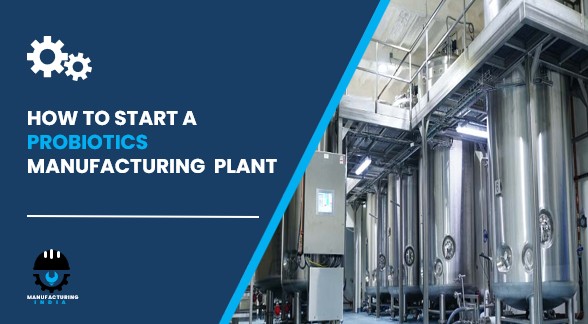
Setting up a probiotics manufacturing plant in India presents a compelling investment case driven by surging consumer demand across food and beverages, pharmaceuticals, dietary supplements, and animal nutrition sectors. Probiotics — live beneficial microorganisms that support digestive health, immune function, and nutrient absorption — have transitioned from a niche wellness product to a mainstream consumer essential, with India’s own probiotics market growing nearly 100% over the last five years, from Rs. 1,016 crore (USD 118.90 million) in 2021 to approximately Rs. 2,070 crore (USD 242 million) in 2025. The global probiotics market, valued at USD 71.9 billion in 2025, is projected to reach USD 124.0 billion by 2034 at a CAGR of 6.05%, underscoring the depth and duration of the growth runway available to investors who establish production capacity today.
India’s strategic advantages make it an exceptionally sound location for this production. The Asia-Pacific region is expected to remain the fastest-growing market globally as India’s middle-class population expands, health awareness deepens, and the food processing sector continues its rapid development. India’s established dairy and fermentation infrastructure, cost-competitive manufacturing environment, abundant skilled workforce, and rising consumer spending on functional foods and nutraceuticals collectively create ideal conditions for a domestically anchored probiotics facility. States such as Maharashtra, Gujarat, and Karnataka, with their strong pharmaceutical and food processing industrial bases, offer ready-built supply chains, reliable utilities, and access to FSSAI and cGMP-compliant industrial zones that are well-suited to this type of high-value biological manufacturing.
India’s probiotics market achieved 22% growth on a Moving Annual Total basis for May 2025, reflecting accelerating domestic consumption across functional foods, dietary supplements, and pharmaceutical formulations. With gross profit margins of 60–70% and net margins of 30–45%, a probiotics manufacturing plant combines high profitability with strong demand tailwinds, making it one of the most financially attractive healthcare manufacturing investments available in India today.
What are Probiotics?
Probiotics are live beneficial microorganisms — comprising bacteria and yeast — that provide measurable health benefits when consumed in sufficient quantities. The most common strains used across food, pharmaceutical, and nutraceutical products include Lactobacillus, Bifidobacterium, and Saccharomyces, each offering distinct functional benefits across gut health, immune modulation, and metabolic support applications. Probiotics are produced through controlled microbial fermentation processes, after which manufacturers preserve the active microorganisms in their viable state using freeze drying or spray drying methods.
The key functional properties of probiotics — gut health support, immune function enhancement, improved nutrient absorption, and maintenance of a balanced intestinal microbiome — make them vital components of functional foods, dietary supplements, and therapeutic products. The production process covers microbial strain cultivation, fermentation, separation, concentration, drying, blending, and packaging, each step requiring controlled biological environments and stringent quality validation. End-use industries served include food and beverages, pharmaceuticals, dietary supplements, and animal nutrition, with finished product forms spanning probiotic capsules and sachets, fortified dairy products, infant nutrition formulations, and animal feed additives.
Cost of Setting Up a Probiotics Manufacturing Plant in India
The total cost of establishing a probiotics manufacturing plant in India depends on production capacity, fermentation technology selection, plant location, degree of automation, and the regulatory compliance pathway pursued. Investors must plan comprehensively for both one-time capital expenditure and the recurring operational cost structure, which is shaped significantly by the biological nature of probiotic production.
1. Capital Expenditure (CapEx)
The capital investment for a probiotics manufacturing unit spans several major categories. Land and site development costs encompass land registration, boundary development, and site preparation; locating the facility within an SEZ or designated pharmaceutical or food processing industrial estate in states such as Maharashtra, Gujarat, or Himachal Pradesh can reduce land acquisition costs and provide access to state-level fiscal incentives. Civil works and construction cover the main production building — including controlled fermentation rooms, cleanroom sections for filling operations, quality control laboratory, raw material cold storage, finished goods warehouse, and administrative block — all designed to meet the biological containment and contamination-control requirements of live microorganism manufacturing.
Machinery and equipment represent the largest component of capital expenditure in a probiotics plant. Key machinery required includes:
- Fermenters
- Centrifuges
- Filtration systems
- Freeze dryers or spray dryers
- Blending units
- Capsule or sachet filling machines
Other capital costs include effluent treatment plant (ETP) setup, pre-operative and commissioning expenses, cold chain infrastructure for viable strain preservation, and import duties on specialised biological processing equipment not yet domestically manufactured at scale.
Request a Sample Report for In-Depth Market Insights: https://www.imarcgroup.com/probiotics-manufacturing-plant-project-report/requestsample
2. Operational Expenditure (OpEx)
The operating cost structure of this facility is dominated by two major heads. Raw material cost — covering bacterial strains, fermentation media, and cryoprotectants — accounts for 50–60% of total OpEx, making supplier relationship management and long-term procurement contracts critical to cost stability. Bacterial strain quality directly determines product efficacy and regulatory compliance, so investing in certified, high-viability strain sources is non-negotiable. Utility costs, covering electricity, water, steam, and refrigeration required for fermentation and cold-chain preservation, account for a significant 25–30% of OpEx — a notably higher utility share than most manufacturing categories, reflecting the energy-intensive nature of biological fermentation and drying processes.
Other operating costs include outbound transportation and cold-chain logistics, packaging materials for capsules, sachets, and fortified food formats, salaries and wages for microbiologists, fermentation engineers, and quality assurance personnel, ongoing maintenance of biological processing equipment, depreciation, and applicable taxes. Total operational costs are projected to increase substantially by the fifth year of operations due to input price inflation, potential supply chain disruptions, rising consumer demand, and shifts in global fermentation input markets — making five-year OpEx escalation planning an essential component of any serious financial model for this facility.
3. Plant Capacity
The proposed manufacturing facility is designed with an annual production capacity ranging between 100 MT and 1,000 MT, enabling economies of scale while maintaining the operational flexibility needed to serve multiple end-use formats — from bulk ingredient supply to finished capsule and sachet production. This capacity range can be customised to match investor-specific timelines, target customer segments, and product portfolio breadth. Profitability improves materially at higher capacity utilisation rates, as the fixed costs of fermentation infrastructure, cleanroom operations, and quality systems are spread across a greater volume of value-added output.
4. Profit Margins and Financial Projections
The probiotics manufacturing plant demonstrates exceptional profitability potential relative to most food or pharmaceutical manufacturing investments. Gross profit margins typically range between 60–70%, supported by the high value-added nature of live biological products and strong branded premium positioning. Net profit margins range between 30–45%, reflecting efficient utilisation of the fermentation and drying cost base. The comprehensive financial model for this facility encompasses net present value (NPV), internal rate of return (IRR), payback period, gross and net margin projections by year, and a full five-year profit and loss account — providing investors with the analytical depth required to secure project funding and formulate a clear financial strategy.
Why Set Up a Probiotics Plant in India?
Strong and Accelerating Domestic Consumer Demand. India’s probiotics market achieved 22% growth on a Moving Annual Total basis for May 2025 and has nearly doubled in value over the last five years. Rising consumer awareness of digestive health, immunity, and preventive healthcare is driving consistent, broad-based demand for probiotics across yogurts, fermented drinks, capsules, sachets, and infant nutrition products — creating a deep and expanding home market for domestic manufacturers.
Alignment with Health and Wellness Megatrends. Functional foods, nutraceuticals, and personalised nutrition solutions are driving continuous market growth in both developed nations and emerging economies. India is experiencing rapid expansion in all three categories simultaneously, as urbanisation, rising disposable incomes, and increased healthcare awareness converge to shift consumer purchasing patterns decisively towards science-backed, health-functional products.
Value-Added Product Premium. Probiotics generate significantly higher margins than traditional food or pharmaceutical ingredients because their commercial value derives from strain science, clinical substantiation, product development, and branding — not from commodity raw material processing. This value-creation dynamic allows well-positioned Indian manufacturers to compete on product quality and local supply reliability rather than on price alone.
Regulatory and Healthcare Support. The growing clinical application of probiotics for managing gut health conditions, supporting infant immunity, and enhancing the efficacy of therapeutic regimens has established market credibility and regulatory acceptance, increasing product adoption across pharmaceutical and hospital nutrition channels in India.
Active Industry Investment. Global probiotic industry leaders continue to expand production and innovation aggressively. In February 2026, Vitaquest established a new probiotics production facility in Parsippany, New Jersey, to meet increasing demand for probiotic supplements, signalling strong global capacity investment. In October 2025, Yakult Singapore launched Y1000 — its most concentrated probiotic drink to date, containing more than 100 billion live probiotics per bottle — demonstrating continued product premiumisation and consumer willingness to pay for scientifically validated, high-potency formats.
Supply Chain Localisation Opportunity. Establishing a production facility in India enables manufacturers to preserve product freshness — a critical factor for live microorganism viability — while achieving better supply chain traceability, faster delivery to domestic buyers, and stronger regulatory compliance. Food companies, dairy brands, and supplement firms sourcing probiotics locally can eliminate cold-chain import delays and reduce dependence on volatile international supply routes.
Manufacturing Process — Step by Step
The probiotics manufacturing process uses microbial strain cultivation, fermentation, separation, concentration, drying, blending, and packaging as the primary production method. The key steps are:
- Microbial Strain Selection and Cultivation: Target probiotic strains — such as Lactobacillus, Bifidobacterium, or Saccharomyces — are selected, authenticated, and cultivated under controlled laboratory conditions to build the seed culture for large-scale fermentation.
- Fermentation: Seed cultures are transferred to fermenters, where controlled growth conditions — temperature, pH, dissolved oxygen, and nutrient feed from fermentation media — enable high-density microbial multiplication over defined production cycles.
- Separation: Post-fermentation biomass is separated from the spent fermentation broth using centrifuges, concentrating the live microbial cells for downstream processing.
- Filtration: Filtration systems further clarify and concentrate the cell mass, removing residual media components and preparing the biomass for the drying stage.
- Drying — Freeze Drying or Spray Drying: The concentrated biomass, combined with cryoprotectants to preserve cell viability, is processed through freeze dryers or spray dryers to produce a stable, free-flowing probiotic powder with defined colony-forming unit (CFU) counts.
- Blending: Dried probiotic powders are blended with excipients, prebiotics, or other functional ingredients as required by the finished product specification, ensuring dose uniformity across the batch.
- Capsule or Sachet Filling: Capsule or sachet filling machines portion the blended probiotic material into the final delivery format — capsules, sachets, tablets, or gummies — under controlled humidity and temperature conditions to preserve viability.
- Quality Testing and Release: Finished products undergo CFU count verification, stability testing, contamination screening, and regulatory documentation review before release.
- Packaging and Dispatch: Approved batches are packaged under cold-chain-compatible conditions and dispatched to food and beverage companies, pharmaceutical distributors, dietary supplement brands, and animal nutrition customers.
Key Applications
Probiotics manufactured at this facility serve a wide and growing range of industries across the functional food, pharmaceutical, nutraceutical, and agricultural sectors:
- Food and Beverages: Used in yogurts, fermented drinks, and functional foods to deliver digestive health and immunity benefits to mainstream consumers.
- Pharmaceuticals: Utilised in capsules, sachets, and therapeutic formulations for clinical gut health management and adjunct disease support applications.
- Dietary Supplements: Used in powders, tablets, and gummies targeting digestive wellness, immune support, and sports nutrition segments.
- Animal Nutrition: Employed in gut health enhancers for livestock and pets, supporting feed conversion efficiency and reducing antibiotic dependence in animal husbandry.
Leading Manufacturers
The global probiotics industry is served by a diverse set of multinational companies with extensive production capacities and broad application portfolios across food, pharmaceutical, and animal nutrition sectors. Key players include:
- Arla Foods
- BioGaia
- Chr. Hansen Holding A/S
- Danone
- DuPont De Nemours, Inc.
- General Mills, Inc.
- i-Health, Inc.
- Lallemand Inc.
- Lifeway Foods Inc.
- Mother Dairy Fruit & Vegetable Pvt. Ltd.
- Kerry Group plc
- Nestle S.A.
- Probi AB
- Yakult Honsha Co., Ltd.
Timeline to Start the Plant
- Feasibility study and project report preparation
- Land acquisition and site development
- Regulatory approvals and environmental clearances
- Factory licence and fire safety compliance
- Machinery procurement and installation
- Raw material supplier agreements and supply chain setup
- Trial production and quality testing
- Commercial production launch
Licences and Regulatory Requirements
Starting a probiotics manufacturing unit in India requires several approvals:
- Business registration (Proprietorship, LLP, or Private Limited Company)
- Factory Licence under the Factories Act
- Environmental Clearance from the State Pollution Control Board
- GST Registration
- Fire Safety NOC
- FSSAI licence for food-grade and nutraceutical probiotic products
- Effluent Treatment Plant (ETP) operational clearance
- Occupational Health and Safety compliance
Key Challenges to Consider
High Capital Requirements. Establishing a probiotics manufacturing plant demands substantial investment in specialised fermentation infrastructure — fermenters, freeze dryers, centrifuges, and filling machines — as well as cleanroom and cold-chain facilities, which together create a capital-intensive entry threshold.
Raw Material Price Volatility. Bacterial strains, fermentation media, and cryoprotectants are globally traded biological inputs whose pricing is subject to supply disruptions, strain intellectual property costs, and currency fluctuations, requiring active procurement risk management strategies.
Regulatory Compliance. Probiotic manufacturing in India involves overlapping FSSAI, pharmaceutical, and environmental compliance frameworks that demand dedicated regulatory resources, documented quality systems, and ongoing monitoring to maintain operational clearances.
Technology and Innovation Pressure. The rapid pace of product development — illustrated by Yakult’s launch of the 100-billion-CFU Y1000 product in October 2025 and Vitaquest’s new production facility in February 2026 — requires continuous investment in fermentation capabilities and new strain development to remain competitive in premium market segments.
Competition from Global Players. Competing against established manufacturers such as Chr. Hansen, Danone, Nestle, and Yakult requires a differentiated strategy built on domestic supply chain reliability, custom formulation capabilities, or cost leadership in specific probiotic formats.
Skilled Manpower. Probiotic production requires microbiologists, fermentation engineers, and quality validation specialists — a skilled profile that demands structured recruitment, training, and retention programmes, particularly in locations away from major pharmaceutical and biotech clusters.
Frequently Asked Questions
1. How much does it cost to set up a probiotics manufacturing plant in India? The total setup cost depends on plant capacity — ranging from 100 MT to 1,000 MT annually — as well as technology selection, location, and automation level. Capital investment covers land, civil works, fermenters, centrifuges, freeze dryers or spray dryers, and filling machinery, with equipment accounting for the largest share of CapEx.
2. Is probiotics manufacturing profitable in India in 2026? Yes. The facility demonstrates gross profit margins of 60–70% and net profit margins of 30–45%, making probiotics one of the highest-margin segments in food and pharmaceutical manufacturing. India’s domestic market grew 22% on a Moving Annual Total basis for May 2025, supporting strong near-term revenue visibility.
3. What machinery is required for a probiotics plant in India? Essential machinery includes fermenters, centrifuges, filtration systems, freeze dryers or spray dryers, blending units, and capsule or sachet filling machines.
4. What licences and approvals are required to start a probiotics plant in India? Required approvals include business registration, Factory Licence, Environmental Clearance, GST Registration, Fire Safety NOC, FSSAI licence, ETP operational clearance, and Occupational Health and Safety compliance.
5. What raw materials are needed for probiotics manufacturing? Key raw materials are bacterial strains, fermentation media, and cryoprotectants, with bacterial strains and fermentation media together accounting for 50–60% of total OpEx.
6. What are the environmental compliance requirements for a probiotics plant in India? The plant must obtain Environmental Clearance from the State Pollution Control Board, operate a compliant Effluent Treatment Plant for biological effluent management, and adhere to waste disposal regulations for spent fermentation biomass and chemical processing residuals.
7. What is the best location to set up a probiotics plant in India? States with established pharmaceutical and food processing industrial infrastructure — such as Maharashtra, Gujarat, Himachal Pradesh, and Karnataka — offer access to cGMP-compliant industrial zones, skilled biotech and pharmaceutical talent, reliable cold-chain utilities, and proximity to major consumer and institutional buyers.
8. What is the break-even period for this type of plant in India? The break-even period depends on capacity utilisation, product mix, and pricing strategy. A detailed payback period analysis, NPV, and IRR calculation are available in the full project report from IMARC Group.
9. What government incentives are available for manufacturers in India? India’s Production Linked Incentive schemes, food processing sector subsidies under the Ministry of Food Processing Industries, and state-level pharmaceutical and nutraceutical manufacturing incentives are all applicable to probiotics plant operators, alongside general MSME support programmes for eligible capacity scales.
Key Takeaways for Investors
The probiotics manufacturing plant in India represents a high-margin, high-growth investment opportunity driven by converging demand from food and beverages, pharmaceuticals, dietary supplements, and animal nutrition — four of India’s most dynamically expanding consumer sectors. The facility is financially viable across a production range of 100 to 1,000 MT annually, with gross margins of 60–70% and net margins of 30–45% delivering returns well above comparable manufacturing investments. The global probiotics market, valued at USD 71.9 billion in 2025 and forecast to reach USD 124.0 billion by 2034 at a CAGR of 6.05%, provides a robust macroeconomic foundation, while India’s own market has nearly doubled in five years to reach USD 242 million in 2025. As health awareness, functional food adoption, and preventive healthcare spending continue to rise across India’s expanding middle class, the long-term demand sustainability for domestically produced probiotics is firmly and durably established.
About the Author