Setting up an epoxy resin production plant in India presents a compelling investment case, driven by surging demand from the construction, automotive, and electrical & electronics industries. As a thermosetting polymer with exceptional adhesion, chemical resistance, and electrical insulation properties, epoxy resin is a critical input for coatings, adhesives, composites, and industrial flooring systems sectors expanding rapidly as India scales its industrial and infrastructure base.
India’s structural advantages including cost-competitive labour, growing urbanisation, robust infrastructure development under the Make in India initiative, and well-established chemical manufacturing clusters in Gujarat and Maharashtra make it a strategically sound production destination. With Asia-Pacific identified as the fastest-growing region for epoxy resin consumption, domestic manufacturers can leverage proximity to demand centres while benefiting from lower logistics and input costs.
Establishing an epoxy resin manufacturing plant in India is backed by strong policy support, a cost-competitive manufacturing environment, and diversified demand from construction, automotive, and electrical sectors. With gross margins of 25–35% and annual production capacity ranging from 20,000 to 100,000 MT, the facility offers a compelling return profile and a viable break-even timeline across investment scales.
What is Epoxy Resin?
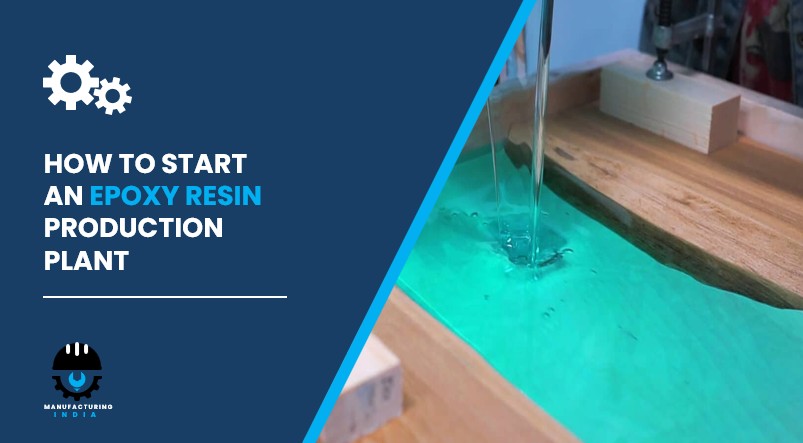
Epoxy resin is a thermosetting polymer produced through the reaction of epichlorohydrin with bisphenol-A (BPA) or similar phenolic compounds. Once cured using hardeners or curing agents, it forms rigid, chemically resistant, and mechanically strong materials with excellent adhesion, high tensile strength, superior electrical insulation, and outstanding resistance to moisture, chemicals, and heat. These properties drive its extensive use in protective coatings, adhesives, electrical laminates, composites, flooring systems, and structural applications across industrial and commercial sectors. The epoxy resin manufacturing process follows a multi-step production route involving epichlorohydrin reaction, polymerization, neutralization, filtration, and resin finishing. End-use industries include construction, automotive, and electrical & electronics, with applications spanning protective coatings, adhesives, composite materials, electrical encapsulation, and industrial flooring systems.
Cost of Setting Up an Epoxy Resin Manufacturing Plant in India
The cost of establishing an epoxy resin manufacturing plant in India depends on plant capacity, technology selection, degree of automation, geographic location, and regulatory compliance requirements. A thorough understanding of capital and operational expenditure is essential for sound investment planning.
1. Capital Expenditure (CapEx)
Capital investment covers all one-time expenditures required to bring the production facility into operation. Land and Site Development costs include land registration, boundary development, and site preparation with Special Economic Zone (SEZ) or established industrial estate locations offering reduced acquisition costs and fiscal advantages. Civil Works and Construction expenditure covers manufacturing sheds, quality control laboratories, raw material and finished goods storage, effluent treatment infrastructure, and administrative blocks. The largest capital allocation is typically directed to Machinery and Equipment. Key machinery required includes:
- Reactor vessels
- Mixing and dispersion tanks
- Metering pumps
- Distillation columns
- Filtration units
- Vacuum degassing systems
- Cooling systems
- Precision filling and packaging lines
Other Capital Costs include effluent treatment plant (ETP) installation, pre-operative and commissioning expenses, and applicable import duties on specialised equipment.
Request a Sample Report for In-Depth Market Insights: https://www.imarcgroup.com/epoxy-resin-manufacturing-plant-project-report/requestsample
2. Operational Expenditure (OpEx)
The operating cost structure is dominated by raw material consumption. Epichlorohydrin, along with bisphenol-A (BPA) and solvents, accounts for approximately 70–80% of total OpEx, making long-term supplier contracts essential to mitigate price volatility and maintain supply continuity. Utility costs for electricity, water, and steam represent a further 10–15% of operating expenditure. Additional costs include transportation, packaging, salaries, maintenance, depreciation, and taxes. By the fifth year, total operating costs are projected to increase due to inflation, market fluctuations, rising key raw material prices, supply chain disruptions, and broader global economic shifts.
3. Plant Capacity
The proposed epoxy resin plant is designed for annual production capacity between 20,000 and 100,000 metric tonnes, enabling economies of scale while maintaining operational flexibility. Capacity can be customised to align with specific investor requirements or phased expansion plans. Profitability improves measurably with higher capacity utilisation, making scale a central consideration in the investment model.
4. Profit Margins and Financial Projections
The project demonstrates healthy profitability under normal operating conditions. Gross profit margins range between 25–35%, supported by stable demand and value-added applications, while net profit margins are projected at 10–20%. The financial model encompasses NPV, IRR, payback period analysis, and a detailed profit and loss account, offering investors a clear view of long-term financial viability and return on investment.
Why Set Up an Epoxy Resin Plant in India?
Critical Industrial Material Across Multiple Value Chains. Epoxy resins are indispensable in coatings, composites, adhesives, and electrical insulation, serving as core inputs for construction, automotive, and electronics industries. India’s rapidly expanding infrastructure and manufacturing sectors create a robust and diversified domestic demand base for local producers who can offer supply chain reliability and competitive pricing.
EV Growth and Renewable Energy Driving Demand. The global transition to electric vehicles is directly accelerating epoxy resin consumption for composites, insulation, and encapsulation applications. According to the International Energy Agency’s Global EV Outlook, sales of electric cars are approaching 20 million in 2025, representing over a quarter of all cars sold globally. This shift is strengthening demand for high-performance epoxy-based materials within India’s growing EV and renewable energy industries.
Policy and Regulatory Tailwinds. Government initiatives supporting infrastructure modernization, domestic manufacturing, renewable energy, and industrial coatings create a favourable environment for production investment. The Make in India programme benefits chemical manufacturers, while industrial zones in Gujarat and Maharashtra offer cost-effective locations with strong supply chain infrastructure.
Cost-Competitive Manufacturing. Affordable land, labour, and utilities give Indian producers a structural cost advantage over competing manufacturing destinations. Siting the production unit within an established chemical cluster further reduces logistics costs and strengthens per-unit economics.
Active Industry Investment in India. In January 2025, Swancor Holding Co., Ltd. signed an MoU with Adani New Industries Limited to build India’s first recyclable wind farm, with Adani planning to certify the SWANCOR EzCiclo recyclable epoxy resin system by 2025 for use in environmentally friendly wind blades. These signals growing commercial appetite for advanced epoxy applications within India’s domestic market.
Local Supply Chain Preference. An increasing preference among construction, automotive, and electronics companies for regional resin suppliers to mitigate import dependency and price volatility creates significant market opportunities for domestic epoxy resin manufacturers and reinforces the long-term commercial viability of local production.
Manufacturing Process Step by Step
The epoxy resin manufacturing process uses epichlorohydrin reaction, polymerization, neutralization, filtration, and resin finishing as the primary production method. The main stages are as follows:
- Epichlorohydrin Reaction: Epichlorohydrin is reacted with bisphenol-A (BPA) in reactor vessels under controlled temperature and pressure conditions to initiate resin formation.
- Polymerization: The reaction mixture is processed in mixing and dispersion tanks via metering pumps to achieve the required molecular weight and resin viscosity.
- Neutralization: By-products, acids, and catalyst residues are removed to ensure chemical purity and product stability.
- Filtration: Filtration units eliminate particulates and unreacted materials, producing a high-purity resin intermediate.
- Vacuum Degassing: Vacuum degassing systems remove entrapped air and dissolved gases for consistent product quality.
- Cooling and Stabilization: Cooling systems bring the resin to safe handling temperatures for downstream processing.
- Distillation: Distillation columns remove residual solvents to achieve targeted product specifications.
- Resin Finishing, Filling, and Packaging: The finished product is processed through precision filling and packaging lines and dispatched to end-use industries including construction, automotive, and electrical & electronics.
Key Applications
Epoxy resin serves a broad range of industrial and commercial sectors:
- Epoxy Coatings and Adhesives: Protective coatings, structural bonding, and corrosion resistance for industrial and infrastructure applications.
- Electrical and Electronics: Encapsulation, potting compounds, and insulating materials for electronic assemblies and high-voltage equipment.
- Construction: Flooring systems, concrete repair compounds, sealants, and structural reinforcement materials.
- Composites Manufacturing: Fiber-reinforced plastics for automotive, aerospace, and marine applications.
Leading Manufacturers
The global epoxy resin industry is served by established multinational producers with extensive production capacity and diversified application portfolios. Key players include:
- Olin Corporation
- Hexion Inc.
- Huntsman Corporation
- Kukdo Chemical
- Nan Ya Plastics
Timeline to Start the Plant
- Feasibility study and project report preparation
- Land acquisition and site development
- Regulatory approvals and environmental clearances
- Factory licence and fire safety compliance
- Machinery procurement and installation
- Raw material supplier agreements and supply chain setup
- Trial production and quality testing
- Commercial production launch
Licences and Regulatory Requirements
Starting an epoxy resin manufacturing unit in India requires several approvals:
- Business registration (Proprietorship, LLP, or Pvt Ltd)
- Factory Licence under the Factories Act
- Environmental Clearance from State Pollution Control Board
- GST Registration
- Fire Safety NOC
- Hazardous/Chemical compliance (applicable given the use of epichlorohydrin and solvents)
- Effluent Treatment Plant (ETP) operational clearance
- Occupational Health and Safety compliance
Key Challenges to Consider
- High Capital Requirements: Significant upfront investment is needed for land, civil construction, and specialised equipment including reactor vessels, distillation columns, and vacuum degassing systems.
- Raw Material Price Volatility: Epichlorohydrin, bisphenol-A, and solvents are exposed to global commodity price swings that can materially affect operating costs.
- Regulatory Compliance: Handling hazardous chemical inputs and managing industrial effluents demands strict environmental protocols and ongoing compliance with State Pollution Control Board standards.
- Technology and Innovation Pressure: Growing industry interest in bio-based epoxy resins and low-VOC formulations may require ongoing investment in process innovation to sustain competitiveness.
- Competition: Domestic producers will compete with established global players including Olin Corporation, Hexion Inc., Huntsman Corporation, Kukdo Chemical, and Nan Ya Plastics, each with large-scale production and entrenched customer relationships.
- Skilled Manpower: A multi-step chemical process involving polymerization, distillation, and precision quality control requires a trained and experienced production workforce.
Frequently Asked Questions
1. How much does it cost to set up an epoxy resin manufacturing plant in India?
Setup cost depends on plant capacity (20,000–100,000 MT per annum), technology, automation level, location, and compliance requirements.
2. Is epoxy resin manufacturing profitable in India in 2026?
Yes. Gross margins of 25–35% and net margins of 10–20% reflect a healthy return profile, supported by stable demand from construction, automotive, and electrical sectors.
3. What machinery is required for an epoxy resin plant in India?
Key equipment includes reactor vessels, mixing and dispersion tanks, metering pumps, distillation columns, filtration units, vacuum degassing systems, cooling systems, and precision filling and packaging lines.
4. What licences are required to start an epoxy resin plant in India?
Required approvals include business registration, Factory Licence, Environmental Clearance, GST Registration, Fire Safety NOC, hazardous chemical compliance, ETP clearance, and Occupational Health and Safety compliance.
5. What raw materials are needed for epoxy resin manufacturing?
The primary raw materials are epichlorohydrin, bisphenol-A (BPA), and solvents.
6. What are the environmental compliance requirements for an epoxy resin plant in India?
Operators must obtain Environmental Clearance from the State Pollution Control Board, maintain an operational ETP, and comply with emission standards and hazardous chemical handling regulations.
7. What is the best location to set up an epoxy resin plant in India?
Chemical clusters in Gujarat and Maharashtra, with access to epichlorohydrin, bisphenol-A, and solvent suppliers, reliable utilities, and strong transport infrastructure are strategically optimal locations.
8. What is the break-even period for this type of plant in India?
Break-even depends on plant capacity, capital investment, and production utilisation rates. A detailed payback period analysis is provided in the full project economics report.
9. What government incentives are available for manufacturers in India?
Government programmes promoting domestic manufacturing, infrastructure development, and renewable energy create favourable policy conditions. SEZ locations may offer additional fiscal and tax benefits for eligible manufacturers.
Key Takeaways for Investors
An epoxy resin manufacturing plant in India offers a well-anchored investment opportunity supported by diversified demand from construction, automotive, electrical & electronics, and composites manufacturing sectors. The financial model holds across plant capacities of 20,000 to 100,000 MT per annum, with gross margins of 25–35% and net margins of 10–20% providing a solid return structure. The global epoxy resin market, valued at USD 15.17 billion in 2025, is projected to reach USD 24.25 billion by 2034 at a CAGR of 5.35%, confirming robust long-term demand fundamentals for this critical industrial material. With India positioned as a key growth market in Asia-Pacific, domestic production capacity in epoxy resin remains strategically compelling and commercially rewarding well into the coming decade.
About the Author