Setting up a PET bottle manufacturing plant in India presents a compelling investment case, driven by surging demand from the food and beverage, pharmaceutical, personal care, and household chemicals industries. PET bottles — manufactured from polyethylene terephthalate resin — serve as the backbone of consumer packaging across beverages, edible oils, medicines, and cosmetics. As urbanisation accelerates and packaged goods consumption deepens across Indian cities and towns, the country’s appetite for lightweight, safe, and recyclable PET packaging continues to grow at a pace few alternative materials can match.
India’s strategic advantages are well-established: cost-competitive land and labour, a rapidly expanding FMCG and pharmaceutical sector, and a Make in India policy environment that actively incentivises domestic production. Industrial states such as Gujarat, Maharashtra, Uttar Pradesh, and Rajasthan provide developed infrastructure, raw material supply chains, and proximity to major consumption markets. With the Indian pharmaceutical industry alone projected to reach USD 130 billion by 2030 according to FICCI, the downstream demand pull for PET packaging is both deep and durable — making India a strategically sound location to build production capacity.
Building a PET bottle manufacturing unit in India is supported by strong policy tailwinds, cost-competitive operations, and expanding demand across the beverage, pharmaceutical, personal care, and food packaging sectors. With gross profit margins between 25–35% and a break-even horizon of 3–5 years, this investment offers defensible returns and long-term demand sustainability in one of the world’s fastest-growing packaging markets.
What is a PET Bottle?
A PET bottle is a bottle designed using a thermoplastic polymer resin called polyethylene terephthalate (also known as PETE). These containers command vast demand for packing water, soft drinks, juice, and other beverages, as well as food products such as cooking oils and peanut butter, and home-use items. They are very light, unbreakable, and translucent — making them safe, inexpensive compared to glass, and eco-friendly. PET is regarded as safe for food contact by influential institutions such as the FDA and is readily recycled into containers, garment fabrics, carpets, and other articles.
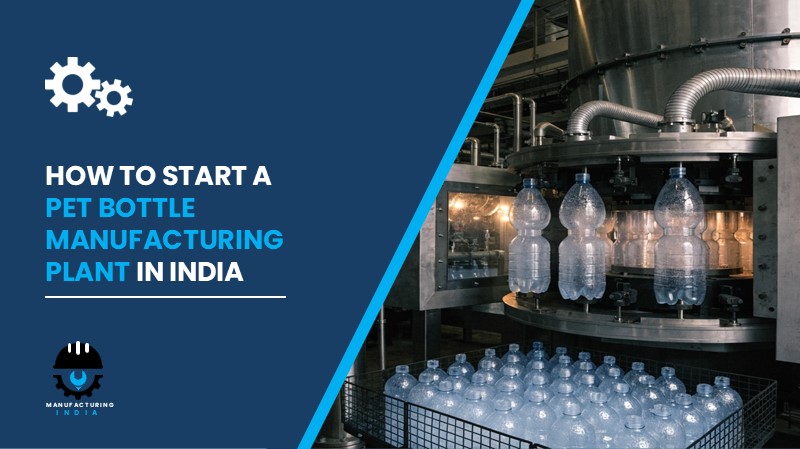
The primary production methods in PET bottle manufacturing are injection molding and injection stretch blow molding (ISBM). The PET bottle manufacturing process encompasses sourcing and drying PET resin, injection molding of preforms, blow molding to form the final bottle shape, cooling, and quality testing before dispatch. End-use industries served include food and beverages, pharmaceuticals, personal care, household chemicals, and industrial packaging. Applications span water bottles, carbonated beverage containers, food-grade jars, shampoo bottles, medical liquid storage, and cleaning product packaging.
Cost of Setting Up a PET Bottle Manufacturing Plant in India
The cost of establishing this plant depends on capacity, technology, location, level of automation, and regulatory compliance requirements. A structured understanding of both capital and operational expenditure is essential before committing to an investment of this scale.
1. Capital Expenditure (CapEx)
The total capital investment covers several distinct cost heads. Land and site development — including land registration, boundary development, and site preparation — form a substantial part of the overall investment. Investors can consider industrial estates, MIDC zones in Maharashtra, GIDC zones in Gujarat, or SEZ locations that may offer duty and tax advantages relative to open parcels.
Civil works and construction costs cover the manufacturing shed, laboratory and quality control area, raw material and finished goods storage, and the administrative block, all sized to support operational flow and future expansion. Machinery and equipment represent the single largest CapEx component in a PET bottle manufacturing plant. Key machinery required includes:
- Resin dryers
- Injection molding machines
- Stretch blow molders
- Cooling systems
- Leak testers
- Labeling units
- Palletizing systems
- Compressors for high-pressure air
- Chillers for cooling
- Conveyors and molds
- Quality control setup and packaging unit
Other capital costs include effluent treatment plant (ETP) setup, pre-operative expenses, commissioning charges, and applicable import duties on specialised machinery.
Request a Sample Report for In-Depth Market Insights: https://www.imarcgroup.com/pet-bottle-manufacturing-plant-project-report/requestsample
2. Operational Expenditure (OpEx)
The operating cost structure of a PET bottle manufacturing plant is primarily driven by raw material consumption. PET resin — the primary input — accounts for approximately 70–80% of total OpEx. Colorants or stabilizers and performance additives constitute the remaining raw material requirements, depending on end-use application specifications. Securing long-term supply contracts with reliable PET resin suppliers is essential to manage price volatility and ensure consistent production quality. Utility costs covering electricity, water, and steam account for 10–15% of OpEx. Other operating costs include transportation, packaging, salaries and wages, maintenance, depreciation, and taxes. By the fifth year of operations, total costs are expected to rise substantially due to inflation, market fluctuations, supply chain disruptions, and rising raw material prices.
3. Plant Capacity
The proposed facility is designed with an annual production capacity ranging between 100 and 300 million pieces, enabling economies of scale while maintaining operational flexibility. Capacity can be customised based on investor requirements and target market size. Profitability improves meaningfully with higher capacity utilisation rates, making early demand-side planning a critical prerequisite for strong financial performance.
4. Profit Margins and Financial Projections
The project demonstrates healthy profitability potential under normal operating conditions. Gross profit margins typically range between 25–35%, supported by stable demand and value-added applications across end-use sectors. Net profit margins fall in the 10–15% range. Financial projections covering NPV, IRR, payback period, and sensitivity analysis are based on realistic assumptions related to capital investment, operating costs, capacity utilisation, and pricing trends. The break-even period typically ranges from 3 to 5 years, depending on production scale, raw material cost management, and operational efficiency.
Why Set Up a PET Bottle Plant in India?
Rising Packaged Beverage Demand. The PET bottle market is driven by the rapid growth of packaged beverages — particularly bottled water and soft drinks — across emerging and developed economies. Urbanisation, changing consumer lifestyles, and rising demand for convenient single-serve packaging continue to boost consumption across Indian markets, creating a consistent and expanding customer base for domestic producers.
Pharmaceutical and Personal Care Growth. Expansion of the pharmaceutical and personal care sectors supports market demand, given PET’s recognised material safety and chemical resistance. The Indian pharmaceutical industry is projected to reach USD 130 billion by 2030 per FICCI, underpinning robust long-term packaging demand that domestic manufacturers are well-positioned to supply.
Policy and Sustainability Push. The government’s emphasis on food safety, pharmaceutical packaging standards, and circular economy principles — combined with Make in India incentives and support for domestic production and recycling infrastructure — reinforces sustained demand for eco-friendly PET packaging in India.
Cost-Competitive Manufacturing. India offers cost-competitive land, labour, and a well-developed supply chain for PET resin procurement. Proximity to major FMCG and pharmaceutical clusters in Gujarat, Maharashtra, and Uttar Pradesh minimises logistics costs and supports faster customer turnaround.
Active Industry Investment. In September 2025, LNJ GreenPET announced the signing of a Memorandum of Understanding (MoU) with Japan-based Sumitomo Corporation to establish a strategic collaboration in India’s rapidly growing recycled PET (r-PET) sector. In April 2024, Amcor launched a one-litre PET bottle for carbonated soft drinks made from 100% post-consumer recycled content — signalling a strong industry push toward sustainable packaging solutions.
Local Supply Chain Preference. FMCG, beverage, and pharmaceutical companies are increasingly opting for local PET bottle suppliers to gain greater flexibility, lower logistics costs, better responsiveness, and more effective control over volatile resin prices — creating significant recurring revenue opportunities for efficient Indian manufacturers.
Manufacturing Process – Step by Step
The PET bottle manufacturing process uses injection molding and injection stretch blow molding (ISBM) as the primary production methods.
- Raw Material Preparation: PET resin is sourced, inspected, and dried using resin dryers to remove moisture before processing.
- Preform Injection Molding: PET resin is fed into injection molding machines to produce uniform preforms — small, tube-shaped intermediate structures.
- Preform Heating: Preforms are reheated to the appropriate temperature to make them pliable and ready for blow molding.
- Stretch Blow Molding: Heated preforms enter stretch blow molders where high-pressure air — supplied by compressors — shapes them into the final bottle form.
- Cooling: Bottles pass through cooling systems and chillers to set the final shape and ensure dimensional stability.
- Leak Testing: Finished bottles undergo leak testing to verify packaging integrity and compliance with safety standards.
- Labeling: Bottles pass through labeling units for product identification and regulatory branding.
- Palletizing and Dispatch: Finished products are stacked using palletizing systems and dispatched to food and beverage, pharmaceutical, personal care, and household chemical customers.
Key Applications
PET bottles serve a wide range of industries, making this manufacturing investment relevant across multiple demand verticals:
- Beverage Packaging: PET bottles for water, soft drinks, juices, and other beverages
- Food Packaging: PET containers for edible oils, sauces, dairy products, and condiments
- Personal Care and Household Products: PET bottles for shampoos, detergents, cleaners, and cosmetics
- Pharmaceutical Packaging: PET bottles and containers for medicines, syrups, and healthcare products
Leading Manufacturers
The global PET bottle industry is served by several large multinational companies with extensive production capacities and diverse application portfolios. Key players include:
- Amcor Plc
- ALPLA Group
- Plastipak Packaging Inc.
- Berry Global Group Inc.
- Retal Industries
Timeline to Start the Plant
- Feasibility study and project report preparation
- Land acquisition and site development
- Regulatory approvals and environmental clearances
- Factory licence and fire safety compliance
- Machinery procurement and installation
- Raw material supplier agreements and supply chain setup
- Trial production and quality testing
- Commercial production launch
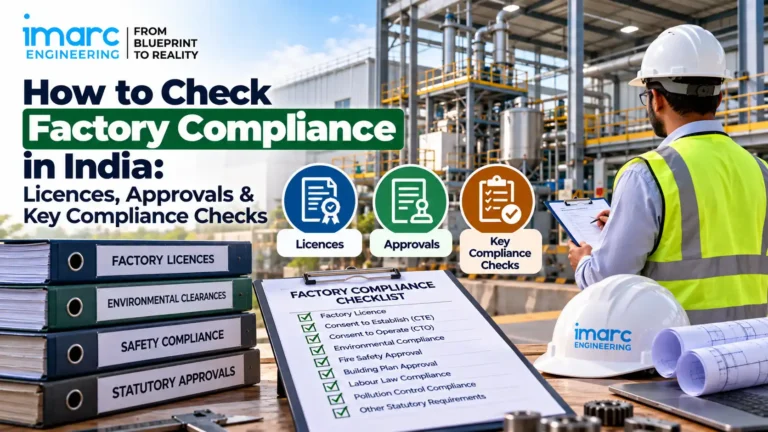
Licences and Regulatory Requirements
Starting a PET bottle manufacturing unit in India requires several approvals:
- Business registration (Proprietorship, LLP, or Pvt Ltd)
- Factory Licence under the Factories Act
- Environmental Clearance from State Pollution Control Board
- GST Registration
- Fire Safety NOC
- Effluent Treatment Plant (ETP) operational clearance
- Occupational Health and Safety compliance
Key Challenges to Consider
- High Capital Requirements. Establishing a PET bottle manufacturing plant of this scale involves substantial upfront investment in land, civil works, and specialised machinery including injection molding machines, stretch blow molders, and ancillary equipment. Securing adequate funding via term loans, government-backed schemes, or private equity is a critical pre-launch step.
- Raw Material Price Volatility. PET resin accounts for 70–80% of total OpEx. Fluctuations in global petrochemical markets can significantly impact margins if supplier contracts do not buffer against price swings.
- Regulatory Compliance. Food-grade production is subject to strict quality, hygiene, and environmental standards, demanding consistent management attention across ETP operations, pollution control norms, and food safety requirements.
- Technology and Innovation Pressure. Advancements in lightweighting technologies and the rise of recycled PET (r-PET) are reshaping production standards. Manufacturers who do not upgrade capabilities risk competitive disadvantage against peers offering lower-weight or higher-recycled-content products.
- Competition. The market includes well-capitalised players such as Amcor Plc, ALPLA Group, Plastipak Packaging Inc., Berry Global Group Inc., and Retal Industries. Indian entrants must compete on quality, service levels, and cost efficiency to secure and retain customer contracts.
- Skilled Manpower. Operating precision injection molding and blow molding equipment requires trained technicians and process engineers, making workforce development an ongoing operational priority.
Frequently Asked Questions
- How much does it cost to set up a PET bottle manufacturing plant in India?
Capital requirements include land acquisition, civil construction, machinery procurement (resin dryers, injection molding machines, stretch blow molders, cooling systems, leak testers, labeling units, palletizing systems), pre-operative expenses, and initial working capital. The total amount varies with plant capacity, technology level, and location. - Is PET bottle manufacturing profitable in India in 2026?
Yes. With gross profit margins of 25–35% and net profit margins of 10–15%, and durable demand from beverages, pharma, personal care, and household chemicals, PET bottle manufacturing delivers scalable and defensible profitability in the Indian market. - What machinery is required for a PET bottle plant in India?
Key equipment includes resin dryers, injection molding machines, stretch blow molders, cooling systems, compressors, chillers, leak testers, labeling units, palletizing systems, conveyors, and molds. - What licences and approvals are required to start a PET bottle plant in India?
Requirements include business registration, Factory Licence, Environmental Clearance from the State Pollution Control Board, GST Registration, Fire Safety NOC, ETP clearance, and Occupational Health and Safety compliance. - What raw materials are needed for PET bottle manufacturing?
The primary raw material is polyethylene terephthalate (PET) resin, along with colorants or stabilizers and additives to enhance bottle properties depending on the end-use application. - What are the environmental compliance requirements for a PET bottle plant in India?
Manufacturers must obtain Environmental Clearance from the State Pollution Control Board, operate a functional Effluent Treatment Plant, and comply with emission standards and waste management norms applicable to plastics manufacturing. - What is the best location to set up a PET bottle plant in India?
Industrial zones in Gujarat, Maharashtra, Uttar Pradesh, and Rajasthan are well-suited, offering proximity to PET resin supply chains, established transportation networks, and major FMCG and pharmaceutical customer clusters. - What is the break-even period for this type of plant in India?
The break-even period typically ranges from 3 to 5 years, depending on production scale, market demand, raw material costs, and operational efficiency. - What government incentives are available for manufacturers in India?
Governments may offer capital subsidies, tax exemptions, reduced utility tariffs, export benefits, or interest subsidies under Make in India and various state-level investment promotion schemes.
Key Takeaways for Investors
PET bottle manufacturing in India presents a compelling opportunity anchored by durable demand from the food and beverage, pharmaceutical, personal care, and household chemicals sectors. Financial viability is demonstrated across a range of production capacities — with gross margins of 25–35% and net margins of 10–15% — making this a scalable proposition for new entrants and capacity-expanding incumbents alike. The global PET bottle market was valued at USD 46.96 billion in 2025 and is projected to reach USD 62.35 billion by 2034 at a CAGR of 3.2%, providing a strong long-term demand backdrop for Indian producers. With urbanisation, e-commerce growth, pharmaceutical sector expansion, and a policy environment favouring domestic packaging production, demand sustainability for well-positioned Indian manufacturers appears structurally robust through the next decade.
About the Author