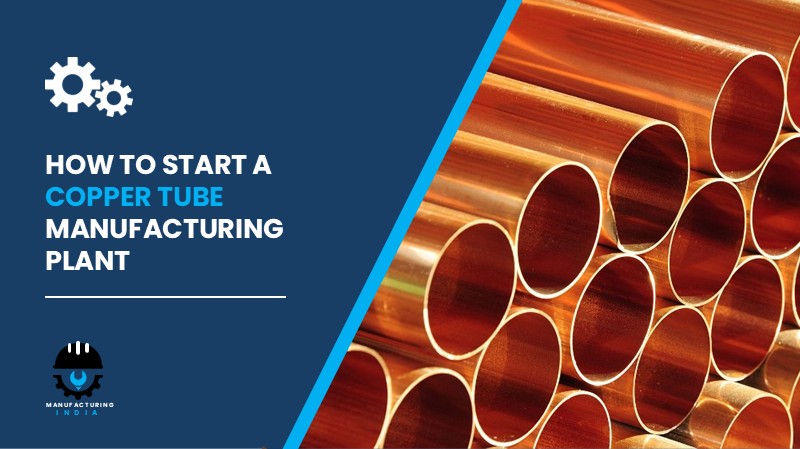
Setting up a copper tube manufacturing plant in India presents a compelling investment case, driven by surging demand from the construction, HVAC, refrigeration, and renewable energy sectors. Copper tubes – hollow, cylindrical bodies prized for thermal and electrical conductivity – are foundational components in plumbing infrastructure, heat exchange systems, and energy-efficient installations. As India accelerates its urbanisation and large-scale infrastructure programmes, the domestic appetite for corrosion-resistant, high-performance tubing continues to grow, making this a strategically timed manufacturing venture.
India’s structural advantages strongly support this investment. The country’s expanding urban centres, government-backed renewable energy rollout, and the Make in India initiative together create a favourable operating environment for copper tube producers. States such as Gujarat and Maharashtra, with their well-developed industrial estates, port connectivity, and established metals supply chains, offer particularly attractive locations. Proximity to HVAC manufacturers, construction contractors, and refrigeration system assemblers further reduces logistics costs and shortens lead times, improving overall unit economics.
India’s copper tube manufacturing sector stands at the intersection of infrastructure growth, energy efficiency mandates, and policy support – offering investors a plant with 15–25% gross margins, a clear demand runway across construction, HVAC, and renewable energy applications, and a market expanding toward USD 57.77 Billion globally by 2034.
What is Copper Tube?
Copper tubes are hollow, cylindrical bodies manufactured from copper, a metal recognised for its high thermal and electrical conductivity, corrosion resistance, and malleability. These properties make copper tubes one of the most reliable and widely specified materials across fluid transport, heat exchange, and gas distribution applications. Their anti-corrosion characteristics, combined with an ability to perform under extreme temperature conditions, make them indispensable across demanding industrial and infrastructure environments.
The production process relies on extrusion and drawing techniques, supplemented by annealing, to produce tubing across various shapes, sizes, and grades. This ensures performance suitability across a wide range of applications. End-use industries served by copper tube manufacturers include construction, HVAC, refrigeration, automotive, and renewable energy – sectors that collectively underpin both everyday infrastructure and India’s long-term growth agenda.
Cost of Setting Up a Copper Tube Manufacturing Plant in India
The cost of establishing a copper tube manufacturing plant in India depends on capacity, technology selection, plant location, automation level, and regulatory compliance requirements. Below is a structured breakdown of the key cost components.
1. Capital Expenditure (CapEx)
Capital investment covers several interconnected components that together define the plant’s physical and operational foundation.
Land and Site Development: forms a substantial part of the initial outlay. Investors may choose to develop within an SEZ or state industrial estate to benefit from concessional land rates, pre-approved zoning, and streamlined utility connections. Land registration charges, boundary development, and site grading are included in this head.
Civil Works and Construction: cover the manufacturing shed, raw material warehouse, finished goods storage, quality control laboratory, effluent treatment area, and administrative block. The build specification depends on the production capacity and automation intensity of the facility.
Machinery and Equipment: represent the single largest component of capital expenditure. Key machinery required for a copper tube manufacturing plant includes:
- Extrusion presses
- Drawing benches
- Annealing furnaces
- Straightening machines
- Cutting and chamfering systems
- Cleaning and degreasing lines
- Testing apparatus
- Packaging stations
Other Capital Cost: include effluent treatment plant (ETP) installation, pre-operative expenses, commissioning charges, and applicable import duties on specialised equipment not manufactured domestically.
Access the Detailed Feasibility Analysis: Request Sample
2. Operational Expenditure (OpEx)
The operating cost structure of a copper tube manufacturing plant is primarily driven by raw material consumption.
Raw Material Cost: is the dominant operating expense, accounting for approximately 85–90% of total OpEx. The principal raw materials are copper cathodes, drawing lubricants, and annealing furnaces (process consumables). Given this concentration, investors are strongly advised to negotiate long-term supplier contracts to stabilise pricing and ensure uninterrupted supply.
Utility Cost: covering electricity, water, and steam – represents 5–8% of OpEx. Given the energy intensity of the extrusion and annealing stages, locating the facility in a state with competitive industrial power tariffs (such as Gujarat or Maharashtra) meaningfully reduces this line item.
Other Operating Cost: include transportation, packaging, salaries and wages, maintenance, depreciation, and taxes. By the fifth year of operations, total operational costs are projected to increase substantially, driven by inflation, market fluctuations, potential rises in copper cathode prices, supply chain shifts, and rising consumer demand.
3. Plant Capacity
The proposed manufacturing facility is designed with an annual production capacity ranging between 20,000–40,000 MT, enabling economies of scale while maintaining operational flexibility. Capacity can be customised per investor requirements – smaller capacities may suit regional market strategies while larger plants capture export potential. Profitability improves markedly with higher capacity utilisation, as fixed costs are distributed over a larger production volume.
4. Profit Margins and Financial Projections
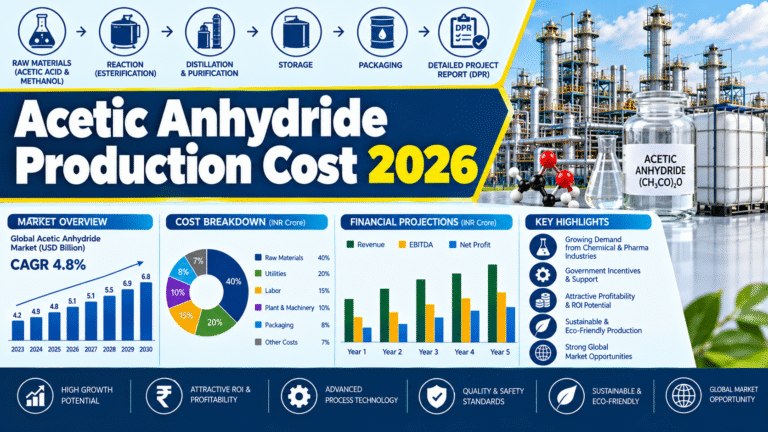
The financial projections demonstrate healthy profitability under normal operating conditions. Gross profit margins typically range between 15–25%, supported by stable demand and value-added applications. Net profit margins range between 5–10%. A detailed financial model covering NPV (Net Present Value), IRR (Internal Rate of Return), payback period, break-even analysis, profit and loss account, sensitivity analysis, and liquidity projections is available in the full project report.
Why Set Up a Copper Tube Plant in India?
Growing HVAC and Refrigeration Demand: India’s rapid urbanisation is generating sustained demand for HVAC installations in residential complexes, commercial offices, data centres, and cold chain logistics. Copper tubes are a critical material in refrigerant lines, condensers, evaporators, and heat exchangers – ensuring that every new HVAC installation drives incremental copper tube consumption.
Renewable Energy Infrastructure Expansion: According to the Ministry of New and Renewable Energy, India added a record 44.5 GW of renewable energy capacity in 2025. Solar heating systems and heat pumps – both significant consumers of copper tubing – are seeing accelerated adoption. This policy-driven buildout creates a durable, long-horizon demand channel for domestic copper tube producers.
Infrastructure and Construction Momentum. The plumbing and water supply sector remains a foundational end-use segment, with copper tubes specified for hot and cold water lines, gas distribution, and sanitary piping. India’s ongoing investments in urban housing, smart cities, and industrial corridors are driving consistent offtake from construction contractors.
Cost-Competitive Manufacturing Base: India offers a combination of competitive land costs, a large skilled and semi-skilled labour pool, and an established metals processing supply chain. These cost advantages, relative to established copper tube manufacturing hubs, allow Indian producers to serve both domestic demand and regional export markets competitively.
Active Industry Investment and Strategic Alliances: In July 2025, Adani Enterprises Limited entered into Share Purchase and Shareholders Agreements with MetTube Mauritius Private Limited (MetTube), specifically aimed at reducing India’s dependence on imported copper tubes and building a robust domestic ecosystem for copper-based applications through state-of-the-art facilities. This signals strong private sector conviction in the domestic copper tube manufacturing opportunity.
Local Supply Chain Preference: Construction contractors, HVAC system assemblers, automotive component manufacturers, and renewable energy project developers increasingly prefer locally sourced copper tubes to reduce lead times, currency risk, and import duties – creating a structural commercial advantage for India-based producers.
Manufacturing Process – Step by Step
The copper tube manufacturing process uses extrusion and drawing techniques – supplemented by annealing – as the primary production method. The process involves the following key stages:
- Raw Material Receipt and Inspection: Copper cathodes are received, quality-checked, and stored in the raw material warehouse.
- Melting and Casting: Copper cathodes are melted in furnaces and cast into billets or hollows suitable for further processing.
- Extrusion: Billets are heated and pushed through extrusion presses to form hollow tube blanks in the required diameter and wall thickness.
- Drawing: The extruded tube blanks are drawn through drawing benches, progressively reducing diameter and wall thickness to achieve the specified dimensions.
- Annealing: Drawn tubes pass through annealing furnaces to relieve internal stresses, restore ductility, and achieve the required mechanical properties.
- Straightening: Annealed tubes are processed through straightening machines to achieve dimensional accuracy and straightness tolerances.
- Cutting and Chamfering: Tubes are cut to specified lengths and their ends are chamfered using cutting and chamfering systems for clean, burr-free finishes.
- Cleaning and Degreasing: Tubes pass through cleaning and degreasing lines to remove surface contaminants, lubricants, and oxides prior to final inspection.
- Testing and Quality Assurance: Finished tubes are tested using testing apparatus for dimensional accuracy, pressure resistance, surface quality, and compliance with applicable standards.
- Packaging and Dispatch: Approved tubes are packaged using packaging stations and dispatched to end-use industries including construction, HVAC, refrigeration, automotive, and renewable energy.
Key Applications
Copper tubes manufactured in India serve a wide range of industries, each requiring reliable performance under demanding operating conditions:
- HVAC & Refrigeration: Refrigerant lines, condensers, evaporators, and heat exchangers in commercial and residential air conditioning systems.
- Plumbing & Water Supply: Hot and cold water lines, gas distribution, and sanitary piping in residential and commercial construction.
- Construction & Architecture: Structural tubing, roofing and cladding systems, and decorative architectural applications.
- Industrial & Manufacturing: Process piping, hydraulic and pneumatic systems, and heat transfer applications in manufacturing plants.
- Automotive: Thermal management and hydraulic systems in passenger vehicles and commercial vehicles.
- Renewable Energy: Solar heating systems, heat pumps, and heat exchange components in clean energy installations.
Leading Manufacturers
The global copper tube market is served by several multinational companies with extensive production capacities and diverse application portfolios. Key players in the global copper tube industry include:
- Freeport-McMoRan
- KME Group
- Mitsubishi Materials Corporation
- Wieland-Werke AG
- National Bronze & Metals, Inc.
Timeline to Start the Plant
Establishing a copper tube manufacturing plant in India typically involves the following sequential phases:
- Feasibility study and project report preparation
- Land acquisition and site development
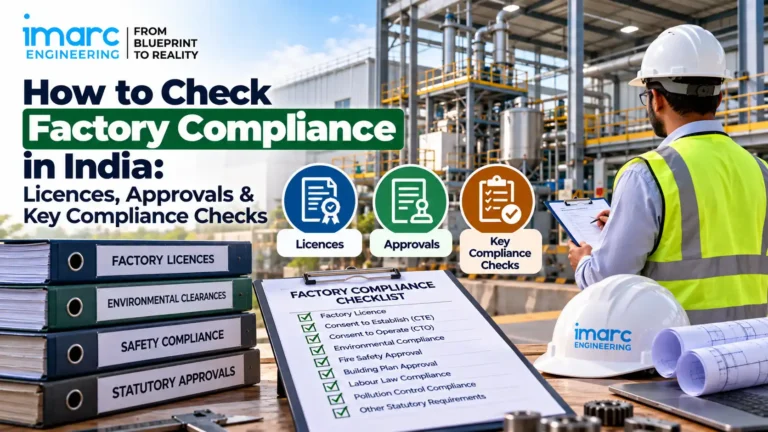
- Regulatory approvals and environmental clearances
- Factory licence and fire safety compliance
- Machinery procurement and installation
- Raw material supplier agreements and supply chain setup
- Trial production and quality testing
- Commercial production launch
Licences and Regulatory Requirements
Starting a copper tube manufacturing unit in India requires several approvals:
- Business registration (Proprietorship, LLP, or Pvt Ltd)
- Factory Licence under the Factories Act
- Environmental Clearance from State Pollution Control Board
- GST Registration
- Fire Safety NOC
- Hazardous/Chemical compliance (applicable given copper processing and lubricant handling)
- Effluent Treatment Plant (ETP) operational clearance
- Occupational Health and Safety compliance
Key Challenges to Consider
High Capital Requirements: Establishing a plant in the 20,000–40,000 MT annual capacity range demands significant upfront capital investment across land, civil works, and specialised machinery such as extrusion presses and annealing furnaces.
Raw Material Price Volatility: Copper cathodes account for 85–90% of total OpEx, making the plant’s cost structure highly sensitive to copper commodity price movements. Long-term supplier contracts and hedging strategies are essential risk mitigants.
Regulatory Compliance: Environmental clearances, ETP operation, occupational health standards, and factory licensing introduce administrative complexity and ongoing compliance costs that must be actively managed.
Technology and Innovation Pressure: The copper tube market requires specialised extrusion and drawing process expertise, with growing emphasis on precision tolerances for HVAC and renewable energy applications. Keeping pace with evolving quality standards requires investment in advanced testing apparatus and process controls.
Competition from Established Players: The domestic and global market includes well-capitalised players such as KME Group, Wieland-Werke AG, and Mitsubishi Materials Corporation with significant economies of scale. New entrants must differentiate through service, specialisation, or regional supply chain advantages.
Skilled Manpower: The extrusion and drawing process requires trained operators for machinery operation, quality control, and metallurgical testing – disciplines where skilled talent availability can be a constraint in certain locations.
Frequently Asked Questions
1. How much does it cost to set up a copper tube manufacturing plant in India?
The total cost depends on plant capacity, technology choice, location, and automation level. The proposed capacity range of 20,000–40,000 MT per annum requires capital investment across land, civil works, and machinery including extrusion presses, drawing benches, and annealing furnaces. Detailed CapEx figures are available in the full project report.
2. Is copper tube manufacturing profitable in India in 2026?
Yes. Gross profit margins typically range between 15–25% and net profit margins between 5–10%, supported by strong demand from construction, HVAC, and renewable energy sectors.
3. What machinery is required for a copper tube plant in India?
Key machinery includes extrusion presses, drawing benches, annealing furnaces, straightening machines, cutting and chamfering systems, cleaning and degreasing lines, testing apparatus, and packaging stations.
4. What licences and approvals are required to start a copper tube plant in India?
Required approvals include business registration, Factory Licence, Environmental Clearance, GST Registration, Fire Safety NOC, ETP operational clearance, and Occupational Health and Safety compliance.
5. What raw materials are needed for copper tube manufacturing?
The primary raw materials are copper cathodes, drawing lubricants, and annealing furnaces (process consumables). Copper cathodes alone account for approximately 85–90% of total operating expenses.
6. What are the environmental compliance requirements for a copper tube plant in India?
Compliance requirements include obtaining Environmental Clearance from the State Pollution Control Board, operating a functional Effluent Treatment Plant, and meeting emission and chemical handling standards relevant to copper processing.
7. What is the best location to set up a copper tube plant in India?
Optimal locations offer proximity to copper cathode suppliers, strong infrastructure, reliable power supply, and access to end-use industries. States such as Gujarat and Maharashtra, with established industrial estates and port connectivity, are well-suited for this type of plant.
8. What is the break-even period for this type of plant in India?
The break-even period depends on capacity utilisation, pricing, and operating cost management. Detailed payback period analysis is provided in the full feasibility report covering NPV, IRR, and sensitivity scenarios.
9. What government incentives are available for manufacturers in India?
India’s Make in India initiative, production-linked incentive schemes, SEZ benefits, and state-level industrial policies offer a range of incentives including capital subsidies, tax holidays, and infrastructure support for manufacturing investors.
Key Takeaways for Investors
A copper tube manufacturing plant in India represents a well-supported investment opportunity, with demand anchored across construction, HVAC, refrigeration, automotive, and renewable energy sectors. The financial profile is compelling across a range of plant capacities, with gross profit margins of 15–25% and net margins of 5–10% achievable under normal operating conditions. The global copper tube market was valued at USD 29.14 Billion in 2025 and is projected to reach USD 57.77 Billion by 2034, growing at a CAGR of 7.9% from 2026 to 2034 – with Asia-Pacific, led by India, expected to be the fastest-growing region. India’s record renewable energy additions, urbanisation momentum, and growing preference for locally sourced copper tubes together underpin the long-term demand sustainability of this investment.
About the Author