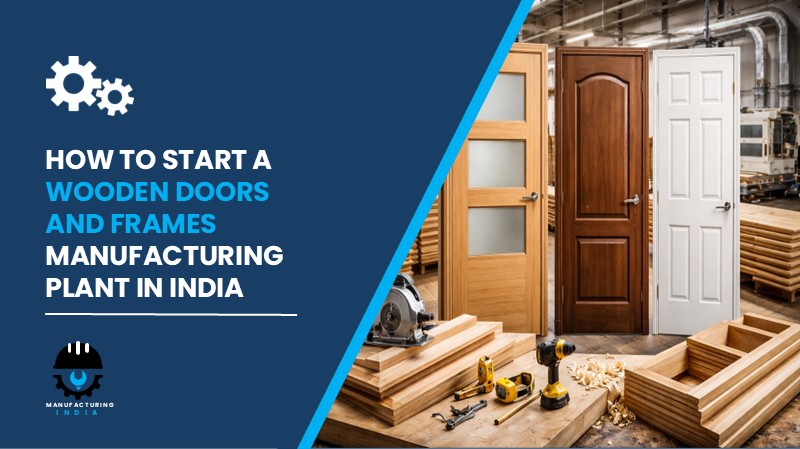
Setting up a wooden doors and frames manufacturing plant in India presents a compelling investment case backed by accelerating demand from residential construction, commercial real estate, hospitality, and institutional buildings. As one of the most fundamental architectural components in any built structure, wooden doors and frames are required across every construction project from affordable housing to premium hotels creating a durable, cycle-resistant demand base. The rising preference for aesthetically finished, durable, and sustainable building materials is further deepening the market opportunity for domestic manufacturers who can deliver quality, customisation, and competitive pricing under one roof.
India’s structural advantages make it a strategically sound location for this production. Rapid urbanisation is driving new housing projects and renovation activity across Tier 1 and Tier 2 cities, directly fuelling consumption of value-added wooden products. Government-backed programmes including smart city initiatives and infrastructure development schemes are generating indirect demand for construction materials including doors and frames. States such as Gujarat and Maharashtra offer well-developed industrial estate ecosystems with reliable utilities, logistics connectivity, and access to raw material supply chains — critical factors in keeping operational costs competitive. The Make in India initiative further reinforces the policy environment for establishing domestic manufacturing capacity in this segment.
Investing in a wooden doors and frames manufacturing plant in India combines strong policy tailwinds with a permanent demand base across residential, commercial, and institutional construction. With gross profit margins ranging between 35-45% and a break-even period of 4-8 years, this facility offers compelling financial viability across multiple capacity scales. Local manufacturing preference among builders and contractors further anchors revenue predictability and supply chain resilience.
What are Wooden Doors and Frames?
Wooden doors and frames are architectural building elements created using solid wood, engineered wood, or composite timber materials to deliver security and visual attractiveness to both residential and commercial buildings. Doors function as movable elements that permit entry or exit while maintaining privacy and controlling temperature, whereas frames serve as the fundamental framework that holds doors in place. These products come in various design options, finishing choices, and different thicknesses, and display wood species including teak, pine, oak, sal, and hardwood derivatives. Wooden doors and frames provide buildings with strong structural support, effective thermal insulation, soundproofing capabilities, and attractive visual appearance, making them suitable for both indoor and outdoor use in contemporary and historic architectural styles.
The manufacturing process uses wood seasoning, cutting, joinery, pressing, finishing, and polishing as the primary production method. End-use industries served include residential construction, commercial real estate, the hospitality sector, and institutional buildings such as schools, hospitals, and government facilities. Key applications span interior and exterior door systems, structural openings, partitions, and architectural finishing across all these segments.
Cost of Setting Up a Wooden Doors and Frames Manufacturing Plant in India
The cost of establishing a wooden doors and frames manufacturing plant depends on plant capacity, technology selection, location, level of automation, and applicable regulatory compliance requirements. A thorough financial model covering both capital and operational expenditure is essential before committing to investment.
1. Capital Expenditure (CapEx)
Capital investment in a wooden doors and frames manufacturing plant covers several major cost heads. Land and site development costs include land registration charges, boundary development, and site preparation. Investors may consider locating within a Special Economic Zone (SEZ) or a notified industrial estate to benefit from reduced land premiums, infrastructure readiness, and fiscal incentives.
Civil works and construction costs cover the manufacturing shed, quality control laboratory, raw material and finished goods storage warehouses, and the administrative block. The scale of civil construction depends on the proposed annual output and automation level of the facility.
Machinery and equipment represent the largest single component of capital expenditure. Key machinery required includes:
- Seasoning kilns
- Wood cutting saws
- Planers
- Molding machines
- CNC routers
- Edge banders
- Hydraulic presses
- Drilling and mortising units
- Sanding machines
- Spray painting booths
- Finishing lines
- Assembly tables
- Dust extraction systems
- Forklifts
- Quality inspection tools
Other capital costs include effluent treatment plant (ETP) installation, pre-operative expenses, commissioning charges, and applicable import duties on specialised equipment components.
Request a Sample Report for In-Depth Market Insights: https://www.imarcgroup.com/wooden-doors-frames-manufacturing-plant-project-report/requestsample
2. Operational Expenditure (OpEx)
Raw material cost is the dominant driver of operating expenditure, accounting for approximately 60–70% of total OpEx. Key raw materials consumed include timber (hardwood or engineered wood) such as teak, oak, mahogany, pine, and cedar, along with plywood, veneers, adhesives, nails, screws, paints, varnishes, sealants, and glass or metal fittings. Securing long-term contracts with reliable timber suppliers ideally within close geographic proximity to the plant is essential to mitigate price volatility and ensure supply consistency.
Utility costs, covering electricity, water, and steam, represent approximately 10-15% of OpEx. Additional operating costs include transportation and distribution, packaging materials, salaries and wages for plant and administrative staff, routine maintenance, depreciation on plant and machinery, and applicable taxes. By the fifth year of operations, total operational costs are projected to increase substantially due to inflation, market fluctuations, and potential rises in the cost of key materials including timber and adhesives.
3. Plant Capacity
The proposed manufacturing facility is designed with an annual production capacity of approximately 100,000 doors, enabling economies of scale while maintaining operational flexibility. Capacity can be customised based on individual investor requirements and target market size. Profitability improves meaningfully with higher capacity utilisation, as fixed costs are spread across a larger output volume, compressing per-unit cost and expanding gross margins.
4. Profit Margins and Financial Projections
The wooden doors and frames manufacturing plant project demonstrates healthy profitability under normal operating conditions. Gross profit margins typically range between 35-45%, supported by stable demand and value-added applications. Net profit margins range between 15-25%. Financial projections cover NPV, IRR, payback period, gross margin, and net margin, developed on realistic assumptions related to capital investment, operating costs, production capacity utilisation, pricing trends, and demand outlook. The break-even period for this type of plant typically ranges from 4 to 8 years, depending on scale, regulatory compliance costs, raw material pricing, and market demand.
Why Set Up a Wooden Doors and Frames Plant in India?
Rising Residential and Commercial Construction Activity. India’s sustained expansion in both residential and commercial real estate creates a permanent pipeline of demand for wooden doors and frames. Every new housing unit, office building, and retail outlet requires door and frame installations, making this a demand segment that grows in direct proportion to overall construction output.
Urbanisation and Interior Design Trends. Growing urban populations and increasing disposable incomes are encouraging investments in housing, renovation, and interior design. Consumers are increasingly prioritising durability, finish quality, and aesthetic appeal, which is driving demand for engineered wooden doors, designer finishes, and customised frames a product mix that supports higher realised prices and improved margins.
Policy and Infrastructure Support. Government housing schemes, smart city initiatives, and infrastructure development programmes create indirect market demand for construction materials including doors and frames. This policy environment provides a structural demand floor that reduces cyclical risk for manufacturers operating in this segment.
Cost-Competitive Manufacturing. India offers competitive advantages across land acquisition, labour costs, and raw material supply chains, particularly for timber sourcing from domestic forestry and engineered wood suppliers. Proximity to target markets reduces distribution costs, while the availability of skilled carpentry and woodworking labour across multiple states supports quality production at competitive cost levels.
Active Industry Investment. In June 2025, Greenply Industries approved entry into the PVC/WPC door, frame, and board segment with plans to set up its first dedicated manufacturing facility in Vadodara, Gujarat, with an annual capacity of 9.18 million kg, expected to be operational by Q4 FY26. In January 2026, GreenFortune Windows and Doors rebranded its finished solutions business as IndiFrame, backed by $5.55 million in funding, targeting India’s fragmented windows and doors market. These developments signal strong investor confidence in the domestic doors and frames segment.
Local Manufacturing Preference. Builders and contractors in India increasingly prefer procuring doors and frames from local manufacturers, as this approach enables faster delivery times, customised product specifications, and reduced transportation expenses. This sourcing preference provides domestic manufacturers with a structural competitive advantage over imported products.
Manufacturing Process – Step by Step
The wooden doors and frames manufacturing process uses wood seasoning, cutting, joinery, pressing, finishing, and polishing as the primary production method.
- Timber Sourcing and Seasoning: Raw timber including hardwood and engineered wood is procured and dried in seasoning kilns to reduce moisture content and prevent warping or cracking in the finished product.
- Cutting and Sizing: Seasoned wood logs or boards are cut to door and frame specifications using wood cutting saws and planers, producing stiles, rails, panels, and frame components to required dimensions.
- Molding and Shaping: Components are shaped to required profiles using molding machines, CNC routers, and edge banders to achieve design-specific contours and joinery fits.
- Assembly and Joinery: Door and frame components are assembled using adhesives, dowels, or mechanical fasteners including nails and screws, with hydraulic presses used to achieve tight, uniform bonds.
- Drilling and Fitting: Drilling and mortising units create recesses for hinges, handles, locks, and glass or metal fittings as per the design requirement.
- Sanding and Surface Finishing: Assembled doors and frames pass through sanding machines for a smooth, uniform surface texture before advancing to the finishing line.
- Painting and Coating: Spray painting booths apply stains, paints, varnishes, or sealants for aesthetic appeal and weather protection, with finishing lines ensuring uniform application and curing.
- Quality Inspection, Packaging, and Dispatch: Finished products undergo quality inspection checks before packaging and storage for dispatch to residential, commercial, hospitality, and institutional end-use industries.
Key Applications
Wooden doors and frames serve a broad range of industries and end-use environments across construction and real estate sectors.
- Residential Buildings: Widely used in homes for main entrances, bedrooms, kitchens, and bathrooms, forming the primary application segment for the product.
- Commercial Spaces: Installed in offices, retail outlets, and corporate buildings for cabins, meeting rooms, and access control areas requiring both functionality and aesthetic finish.
- Hospitality Sector: Hotels and resorts use wooden doors and frames to achieve premium visual appeal and sound insulation in guest rooms and common areas.
- Institutional Buildings: Schools, hospitals, and government buildings utilise wooden doors and frames across high-traffic access points and interior partitions.
Leading Manufacturers
The global wooden doors and frames industry is served by several multinational companies with extensive production capacities and diverse application portfolios across residential, commercial, and institutional construction segments. Key players include:
- Masonite International Corporation
- JELD-WEN, Inc.
- Andersen Corporation
- Pella Corporation
- Simpson Door Company
- Sun Mountain Custom Doors
- VT Industries, Inc.
- Lixil Group Corporation
- Premdor Crosby Limited
Timeline to Start the Plant
- Feasibility study and project report preparation
- Land acquisition and site development
- Regulatory approvals and environmental clearances
- Factory licence and fire safety compliance
- Machinery procurement and installation
- Raw material supplier agreements and supply chain setup
- Trial production and quality testing
- Commercial production launch
The overall timeline to start a wooden doors and frames manufacturing plant typically ranges from 12 to 24 months, depending on site development progress, machinery installation timelines, and environmental clearance schedules.
Licences and Regulatory Requirements
Starting a wooden doors and frames manufacturing unit in India requires several approvals:
- Business registration (Proprietorship, LLP, or Private Limited Company)
- Factory Licence under the Factories Act
- Environmental Clearance from the State Pollution Control Board
- GST Registration
- Fire Safety NOC
- Effluent Treatment Plant (ETP) operational clearance
- Occupational Health and Safety compliance
- Timber sourcing and forest produce compliance where applicable under state forest regulations
Key Challenges to Consider
High Capital Requirements. Establishing a wooden doors and frames manufacturing plant involves significant investment across land, civil construction, and machinery including seasoning kilns, CNC routers, hydraulic presses, and finishing lines, requiring careful capital planning and financing strategy.
Raw Material Price Volatility. Key inputs including timber (teak, oak, mahogany, pine, cedar), veneers, and adhesives are subject to price fluctuations driven by forest availability, import costs, and supply chain dynamics. Long-term supplier contracts are essential to stabilise input costs.
Regulatory Compliance. Environmental clearances, factory licences, ETP requirements, and fire safety certifications involve multi-agency coordination and can extend the pre-commissioning timeline if not managed proactively.
Technology and Innovation Pressure. The market is witnessing active repositioning by companies toward material-agnostic, full-stack door and frame solutions covering uPVC, aluminium, wood, steel, and composite materials, as evidenced by IndiFrame’s expansion strategy, requiring domestic manufacturers to remain competitive on product range and finish quality.
Competition from Established Players. Global manufacturers including Masonite International Corporation, JELD-WEN Inc., Andersen Corporation, and Pella Corporation set high benchmarks on quality, product variety, and brand recognition that domestic entrants must address through differentiation and customisation.
Skilled Manpower. Woodworking, CNC operation, quality inspection, and finishing require technically trained workers. Availability and retention of skilled labour, particularly in non-metro locations, remains a key operational challenge.
Frequently Asked Questions
1. How much does it cost to set up a wooden doors and frames manufacturing plant in India? Total setup cost depends on plant capacity, technology selection, location, and automation level, covering land, civil works, machinery, utilities, and pre-operative expenses. Detailed cost breakdowns are available in the project feasibility report.
2. Is wooden doors and frames manufacturing profitable in India in 2026? Yes. With gross profit margins of 35-45% and net profit margins of 15-25% under normal operating conditions, this facility offers strong profitability potential, supported by stable construction sector demand.
3. What machinery is required for a wooden doors and frames plant in India? Essential machinery includes seasoning kilns, wood cutting saws, planers, molding machines, CNC routers, edge banders, hydraulic presses, drilling and mortising units, sanding machines, spray painting booths, finishing lines, assembly tables, dust extraction systems, and quality inspection tools.
4. What licences and approvals are required to start a wooden doors and frames plant in India? Required approvals include business registration, Factory Licence, Environmental Clearance from the State Pollution Control Board, GST Registration, Fire Safety NOC, ETP clearance, and Occupational Health and Safety compliance.
5. What raw materials are needed for wooden doors and frames manufacturing? Key raw materials include timber (teak, oak, mahogany, pine, cedar), plywood, veneers, adhesives, nails, screws, paints, varnishes, sealants, and glass or metal fittings.
6. What are the environmental compliance requirements for a wooden doors and frames plant in India? The facility must obtain Environmental Clearance from the State Pollution Control Board, operate an approved Effluent Treatment Plant, comply with emission norms related to spray painting and solvent use, and adhere to timber sourcing regulations under applicable forest produce rules.
7. What is the best location to set up a wooden doors and frames plant in India? Ideal locations offer proximity to timber supply sources, access to target construction markets, reliable utilities and transportation infrastructure, and availability of skilled woodworking labour. States such as Gujarat where Greenply Industries has planned a new facility in Vadodara and Maharashtra offer well-developed industrial ecosystems suited to this investment.
8. What is the break-even period for this type of plant in India? The break-even period typically ranges from 4 to 8 years, depending on plant scale, capacity utilisation, raw material pricing, and prevailing market demand conditions.
9. What government incentives are available for manufacturers in India? Governments may offer capital subsidies, tax exemptions, reduced utility tariffs, export benefits, and interest subsidies to promote manufacturing under national and regional industrial policies including Make in India and state-level investment promotion schemes.
Key Takeaways for Investors
A wooden doors and frames manufacturing plant in India represents a well-rounded investment opportunity underpinned by permanent demand from residential construction, commercial real estate, the hospitality sector, and institutional buildings. The financial profile is robust across plant capacities, with gross profit margins of 35-45% and net profit margins of 15-25%, supported by stable demand and value-added product positioning. Recent industry activity including Greenfly Industries’ planned entry into the doors and frames segment with a new facility in Vadodara backed by capacity of 9.18 million kg, and Green Fortune’s rebranding of its solutions business as Indi Frame with $5.55 million in funding reflects strong market confidence in the India opportunity. With urbanisation continuing to drive construction demand, rising consumer preference for durable and aesthetically finished building materials, and policy support reinforcing infrastructure investment, the long-term demand sustainability for this type of plant remains compelling.
About the Author