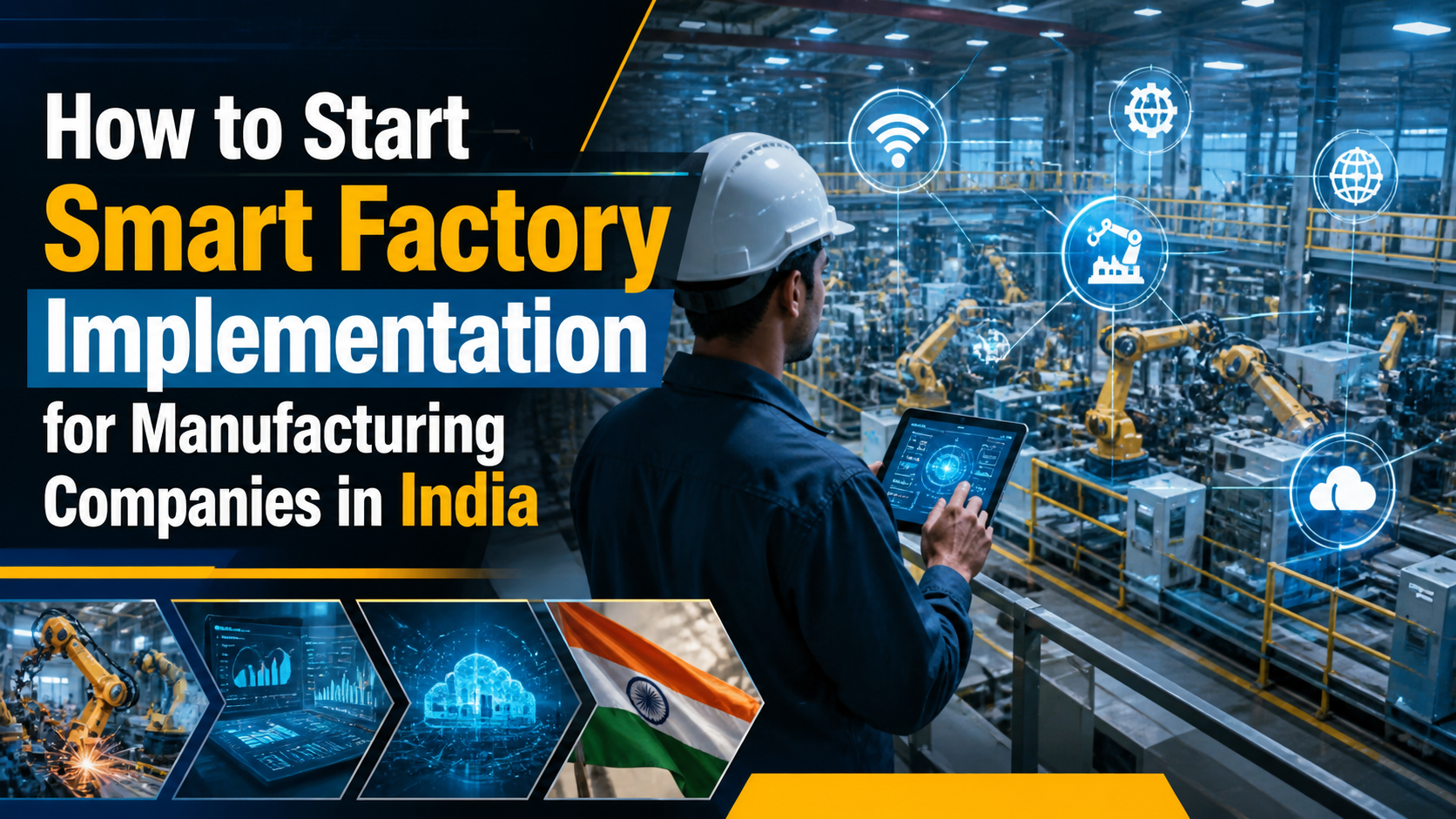
India’s manufacturing sector is undergoing a major transformation driven by Industry 4.0 technologies such as automation, IoT, data analytics, and AI. As companies aim to improve efficiency, reduce operational costs, and stay globally competitive, the adoption of smart factory systems is becoming a strategic priority.
However, for many manufacturing companies, the biggest challenge is not whether to adopt smart manufacturing, but how to start. This guide outlines a practical, step-by-step approach to smart factory implementation for Indian manufacturing plants.
Consult to the Our Expert: https://www.imarcengineering.com/services/smart-factory-industry-4-integration
What is Smart Factory Implementation?
A smart factory is a digitally connected manufacturing environment where machines, systems, and processes communicate with each other in real time. It leverages IIoT integration services in manufacturing, automation, and data-driven systems to optimize production and decision-making.
Smart factory implementation involves integrating:
- Industrial automation systems
- Real-time monitoring tools
- Data analytics platforms
- Connected machines and sensors
- Digital production workflows
This transformation is often supported by Industry 4.0 consulting services in India and digital factory transformation services.
Step 1: Define Business Objectives and ROI Expectations
Before starting implementation, companies must clearly define their goals. Smart factory transformation is not just a technology upgrade it is a strategic business decision that should align with overall operational and financial objectives. Without a clear direction, companies often invest in advanced tools but fail to achieve meaningful outcomes.
Manufacturers should identify specific problem areas such as inefficiencies, downtime, or quality issues, and then map how digital transformation can solve them. Establishing measurable KPIs at this stage ensures that every investment contributes directly to business growth and performance improvement.
Common objectives include:
- Increasing production efficiency
- Reducing machine downtime
- Improving product quality
- Enhancing operational visibility
- Lowering energy consumption
Each smart factory initiative should be aligned with measurable ROI. Without clear objectives, technology investments may not deliver expected outcomes and may instead increase operational complexity.
Step 2: Conduct Factory Readiness Assessment
A detailed assessment of the existing plant setup is critical. This step helps manufacturers understand their current capabilities and identify gaps that need to be addressed before implementing advanced solutions. Many Indian factories operate with a mix of legacy systems and semi-automated processes, so evaluating compatibility and scalability is essential.
A structured readiness assessment provides clarity on what can be upgraded, what needs replacement, and how digital systems can be integrated with minimal disruption. It also ensures that investments are prioritized based on impact rather than assumptions.
Key evaluation areas:
- Current automation level
- Machine condition and compatibility
- Production bottlenecks
- Data collection systems
- IT infrastructure and connectivity
- Workforce skill level
This assessment helps identify gaps and determines where smart factory implementation services can create maximum impact while minimizing risk and cost.
Step 3: Develop a Smart Factory Roadmap
Based on the assessment, companies should create a structured implementation roadmap that outlines how the transformation will be executed over time. A well-defined roadmap ensures that all stakeholders are aligned and that the implementation progresses in a controlled and measurable manner.
Rather than attempting a full-scale transformation at once, a phased roadmap allows manufacturers to focus on high-impact areas first, validate results, and then expand gradually. This approach reduces financial risk and operational disruption.
The roadmap should include:
- Phase-wise implementation plan
- Technology selection
- Budget allocation
- Timeline and milestones
- KPIs and success metrics
A phased approach reduces risk and ensures smooth adoption. Many manufacturers begin with a pilot project before scaling across the plant.
Step 4: Build IIoT and Data Infrastructure
Data is the backbone of any smart factory. Without reliable, real-time data, advanced technologies like automation and analytics cannot function effectively. Building a strong digital infrastructure enables seamless communication between machines, systems, and decision-makers.
Manufacturers need to ensure that their plant is equipped with the right sensors, connectivity, and data platforms to capture and process information continuously. This allows for real-time monitoring, predictive insights, and faster decision-making.
To enable real-time monitoring and control, companies must invest in:
- Sensors and smart devices
- PLCs and control systems
- Industrial communication networks
- Data acquisition systems
- Cloud or on-premise platforms
This is where IIoT integration services in manufacturing play a crucial role in connecting machines and systems into a unified network, enabling a truly data-driven production environment.
Step 5: Implement Industrial Automation
Automation should be introduced strategically, focusing on areas that deliver the highest return on investment. Instead of automating everything at once, manufacturers should prioritize processes that are repetitive, error-prone, or time-intensive.
By automating these areas, companies can significantly improve operational efficiency, reduce dependency on manual labor, and enhance process consistency. Automation also helps standardize operations, making it easier to scale production.
Typical areas include:
- Repetitive manual processes
- Quality inspection systems
- Material handling operations
- Production tracking and reporting
With the help of industrial automation and digital transformation services, companies can improve accuracy, reduce human error, and enhance overall productivity.
Step 6: Integrate Production, Maintenance, and Quality Systems
A key feature of a smart factory is system integration. In traditional manufacturing setups, departments often operate independently, leading to delays in communication and inefficiencies in problem-solving.
By integrating production, maintenance, and quality systems, manufacturers can create a unified digital ecosystem where data flows seamlessly across departments. This enables faster decision-making, better coordination, and improved operational efficiency.
Instead of working in silos, departments should be connected through digital platforms:
- Production systems linked with real-time dashboards
- Maintenance systems enabled with predictive analytics
- Quality systems integrated with defect tracking
This integration improves decision-making and reduces response time to operational issues, ultimately leading to higher productivity and reduced losses.
Step 7: Partner with Industry 4.0 Experts
Smart factory implementation requires technical expertise, industry knowledge, and a clear understanding of business processes. Most manufacturing companies benefit from working with experienced partners who can guide them through the transformation journey.
Choosing the right partner ensures that the implementation is aligned with industry best practices and tailored to the company’s specific needs. It also reduces the risk of costly errors and delays.
Companies should collaborate with providers offering:
- Industry 4.0 consulting services in India
- Smart manufacturing solutions and consulting
- End-to-end implementation support
The right partner ensures proper planning, seamless execution, and long-term scalability of the smart factory ecosystem.
Step 8: Workforce Training and Change Management
Technology alone cannot drive transformation—people play a critical role in the success of a smart factory. Employees must be trained not only to use new systems but also to understand how digital tools improve their daily operations.
A structured training program helps build confidence among employees and ensures smooth adoption of new technologies. It also reduces resistance to change, which is one of the most common challenges in digital transformation projects.
Training programs should focus on:
- System usage and dashboards
- Data interpretation
- Automation workflows
- Maintenance and troubleshooting
Change management is essential to ensure a smooth transition from traditional processes to digital systems and to maximize the value of technology investments.
Step 9: Start with a Pilot Project
Instead of full-scale deployment, companies should begin with a pilot project. This allows them to test technologies, validate assumptions, and measure performance improvements in a controlled environment.
A pilot project provides valuable insights into system performance, integration challenges, and workforce adaptation. It also helps refine the implementation strategy before scaling across the plant.
Benefits of pilot implementation:
- Lower risk
- Faster learning
- Measurable results
- Easier scalability
A successful pilot creates a strong foundation for plant-wide transformation and builds confidence among stakeholders.
Step 10: Monitor Performance and Scale Implementation
Continuous monitoring is essential to evaluate the success of smart factory initiatives. Manufacturers must track performance metrics to ensure that the implemented solutions are delivering the expected results.
By analyzing data and performance trends, companies can identify areas for further improvement and optimize their processes continuously. This ongoing evaluation is key to achieving long-term success.
Key performance indicators (KPIs):
- Overall Equipment Effectiveness (OEE)
- Downtime reduction
- Production output
- Quality improvement
- Energy efficiency
Based on results, companies can gradually scale the implementation across multiple lines or facilities, ensuring sustainable and controlled growth.
Conclusion
Smart factory implementation is no longer optional for manufacturing companies in India aiming for long-term growth and competitiveness. It is a strategic transformation that enables businesses to improve efficiency, enhance visibility, and respond quickly to market demands.
By following a structured, step-by-step approach, manufacturers can successfully transition from traditional systems to digitally connected, intelligent factories without unnecessary risk or disruption.
Contact
IMARC Engineering
Phone: +91-120-433-0800
Email: sales@imarcengineering.com
India: C-130, Sector 2, Noida, Uttar Pradesh 201301
LinkedIn: https://www.linkedin.com/showcase/imarc-engineering/
About the Author