Setting up a banana processing plant in India presents a compelling investment case driven by rising consumer demand for nutritious and convenient food options, expanding quick-service restaurant and café chains, and increasing usage of bananas in processed food products across the food and beverage industry, bakery and confectionery sector, baby food and nutrition industry, and the foodservice and HoReCa segment. As one of the world’s largest banana-producing nations, India offers unmatched access to fresh banana supply, cost-effective labour, and a rapidly maturing food processing ecosystem. Investors entering this sector gain direct access to high-margin value-added product categories that serve both domestic consumption and export markets.
India’s structural advantages make this production segment particularly attractive. The country’s accelerating urbanisation is driving increased consumption of processed and ready-to-use banana goods, while infrastructure improvements in cold chain logistics are improving product availability and quality consistency across retail channels. The Make in India initiative, combined with significant FDI inflows into food processing approximately INR 1,15,596 crore (USD 13.4 billion) from April 2000 to June 2025 signals strong policy momentum for agro-processing investments. States such as Maharashtra, Tamil Nadu, and Andhra Pradesh, which host major banana-growing belts, offer strategic proximity to raw material supply chains that reduce logistics costs and improve input reliability.
A banana processing plant in India combines strong policy support, a competitive cost structure, and multi-sector demand from bakeries, foodservice operators, baby food producers, and household retail to create an investment that is financially viable, scalable, and positioned for long-term demand sustainability. With gross margins in the range of 30–40% and a net margin of 12–18%, the break-even case is robust across a range of plant capacities.
What is Banana Processing?
Banana processing refers to the cultivation, harvesting, ripening, and systematic transformation of fresh bananas under controlled conditions to ensure uniform quality and usability across a wide range of commercial applications. The product category encompasses conventional bananas, organic bananas, ripened bananas, green bananas, and specialty variants such as fortified or spray-dried banana products. Processed forms include banana puree, banana powder, banana flakes, and dehydrated slices all of which enable simplified and scalable usage in food and beverage preparations.
Processed banana inputs deliver consistent sweetness, aroma, and texture while reducing preparation time and raw material variability for industrial buyers. These products offer extended shelf life, ease of storage and transport, and full compatibility with both automated and semi-automated food processing systems. Their standardised quality supports large-scale industrial manufacturing as well as small commercial and household consumption. The production method employed is a multi-step operation involving cultivation and harvesting, cleaning and grading, controlled ripening, slicing or pulping, drying or processing, quality inspection, and packaging and labelling.
End-use industries served by this production include the food and beverage industry, bakery and confectionery sector, foodservice and HoReCa industry, baby food and nutrition industry, and the household and retail consumption segment.
Cost of Setting Up a Banana Processing Plant in India
The total cost of establishing a banana processing plant depends on production capacity, technology selection, plant location, degree of automation, and regulatory compliance requirements. Investors must plan for both one-time capital expenditure and recurring operational expenditure to build a financially sound project.
1. Capital Expenditure (CapEx)
The total capital investment covers land acquisition, site preparation, civil construction, machinery procurement, and other pre-operative costs. Land and site development including charges for land registration, boundary development, and related expenses forms a substantial part of the overall investment and can be optimised by locating the facility within a Special Economic Zone (SEZ) or a state-designated industrial estate, where land costs and utility connections are typically more favourable.
Civil works costs cover the construction of processing sheds, quality control laboratories, raw material and finished goods storage areas, and administrative blocks. These must be designed to meet food safety and hygiene standards applicable to agro-processing facilities.
Machinery costs account for the largest portion of total capital expenditure. Key machinery required includes:
- Harvesting and handling tools
- Washing and grading systems
- Ripening chambers
- Slicing or pulping machines
- Drying or processing equipment
- Packaging and sealing machines
- Quality inspection systems
Other capital costs include effluent treatment plant (ETP) installation, pre-operative expenses such as engineering and feasibility studies, commissioning charges, and import duties applicable to specialised processing equipment.
Access the Detailed Feasibility Analysis: https://www.imarcgroup.com/banana-processing-plant-project-report/requestsample
2. Operational Expenditure (OpEx)
Raw material cost is the dominant operational expense for a banana processing plant. Fresh bananas the core input account for approximately 65–75% of total operating expenses, making supplier contract strategy a critical factor in cost management. Establishing long-term supply agreements with farm clusters or cooperative networks in banana-growing regions helps stabilise procurement costs and ensures consistent input quality across production cycles.
Utility costs, covering electricity, water, and steam, represent 10–15% of OpEx and must be planned against local utility tariff structures. Other recurring operational costs include transportation, packaging materials, salaries and wages, routine maintenance, depreciation on equipment, and applicable taxes. By the fifth year of operations, total operational costs are expected to increase substantially due to inflation, market fluctuations, and potential rises in the cost of key raw materials. Supply chain disruptions, rising consumer demand, and shifts in the broader economy are additional factors expected to contribute to this increase.
3. Plant Capacity
The proposed processing facility is designed with an annual production capacity ranging between 10,000–20,000 MT of fresh bananas, enabling economies of scale while maintaining operational flexibility. Capacity configurations can be customised to match investor requirements, local demand conditions, and available capital. Profitability improves meaningfully with higher capacity utilisation, as fixed costs are spread across a larger production volume and per-unit processing costs decline.
4. Profit Margins and Financial Projections
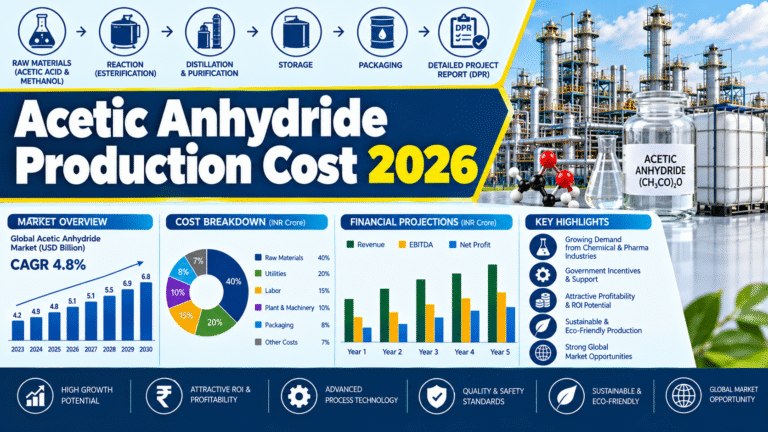
The banana processing plant project demonstrates healthy profitability potential under normal operating conditions. Gross profit margins typically range between 30–40%, supported by stable demand and value-added applications. Net profit margins range between 12–18%. The comprehensive financial analysis for this investment covers NPV (net present value), IRR (internal rate of return), payback period, liquidity analysis, profitability analysis, sensitivity analysis, and uncertainty analysis. These projections are based on realistic assumptions related to capital investment, operating costs, production capacity utilisation, pricing trends, and demand outlook, providing a full view of financial viability and long-term sustainability.
Why Set Up a Banana Processing Plant in India?
Growing demand for nutritious and convenient foods. The banana market is growing strongly worldwide due to increased health consciousness and a clear preference for natural, minimally processed ingredients. Rising demand for nutritious snacks and ready-to-use food components is a primary driver of processing sector expansion in India and globally.
Urbanisation and changing consumption patterns. Increased urbanisation and busy lifestyles are promoting higher consumption of processed and ready-to-use banana goods among India’s expanding middle class. Increasing disposable income and shifting dietary patterns are contributing to broader banana consumption — both raw and processed — across urban and semi-urban markets.
Food processing sector FDI and policy tailwinds. From April 2000 to June 2025, the food processing industry in India received approximately INR 1,15,596 crore (USD 13.4 billion) in FDI, reflecting sustained government commitment to making India a global food processing hub. The Make in India initiative provides an enabling policy environment for agro-processing investment, including access to subsidised industrial land and financial incentive schemes.
Cost-competitive manufacturing environment. India’s comparatively low land acquisition costs, competitive labour rates, and proximity to major banana cultivation belts in southern and western states significantly lower input and logistics costs relative to other manufacturing geographies. These structural cost advantages support stronger margins and faster break-even timelines.
Active industry investment and innovation. In November 2025, BARC released Kaveri Vaaman (TBM-9), India’s first mutant banana variety, marking a milestone in horticultural innovation. The dwarf, lodging-resistant banana enables faster crop cycles, consistent raw material supply, and lower cultivation costs — directly supporting expansion in banana processing through improved yield stability and scalable sourcing. Additionally, in September 2025, Vietnam launched a FAO-funded TR4 emergency project to safeguard banana production across 15 provinces, highlighting the global urgency around supply chain resilience.
Expanding foodservice and organised retail channels. More foodservice providers are switching to banana-based ingredients to maintain a consistent flavour profile while reducing preparation time. Better cold chain infrastructure and the expansion of organised retail in India are increasing product availability and quality consistency, creating reliable downstream demand for processed banana outputs at commercial scale.
Manufacturing Process – Step by Step
The banana manufacturing process uses a multi-step processing procedure involving cultivation and harvesting, controlled ripening, and downstream conversion operations as the primary production method. Each stage involves defined unit operations, material handling protocols, and quality checks.
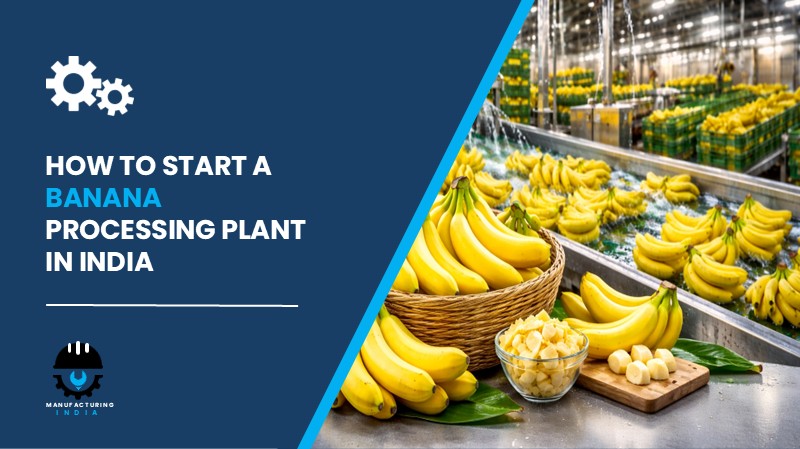
- Cultivation and Harvesting: Fresh bananas are sourced from farms and harvested at appropriate maturity stages to ensure consistent input quality and downstream processing efficiency.
- Cleaning and Grading: Harvested bananas are washed to remove field contaminants, then graded using washing and grading systems to segregate fruit by size, ripeness, and quality.
- Controlled Ripening: Graded fruit enters ripening chambers where temperature and ethylene concentration are precisely managed to achieve uniform ripeness required for downstream processing.
- Slicing or Pulping: Ripened bananas are processed using slicing or pulping machines to produce intermediate forms — slices for dehydration or puree for further refinement into powder or flakes.
- Drying or Processing: Sliced or pulped material passes through drying or processing equipment to produce finished forms including banana powder, banana flakes, and dehydrated slices with extended shelf life.
- Quality Inspection: Finished product is assessed against defined quality parameters including concentration, purity, texture, and microbiological safety using quality inspection systems.
- Packaging and Labelling: Approved product is packed using packaging and sealing machines in formats appropriate for industrial buyers, foodservice operators, and retail channels, then labelled for dispatch to end-use industries.
Key Applications
Banana processing serves a diverse range of industries, from industrial food manufacturing to household retail consumption.
- Food Processing Industry: Banana-based components are used in the production of snacks, purees, drinks, and value-added food items requiring consistent flavour and texture.
- Bakery and Confectionery Sector: Bananas are widely used in cakes, breads, muffins, fillings, and toppings to improve flavour, moisture, and nutritional value.
- Health and Nutrition Segment: Banana products are utilised in clinical nutrition, infant nutrition, and dietary foods due to their digestibility and energy content.
- Foodservice Businesses: Restaurants, cafés, and fast-service establishments use banana inputs for desserts, smoothies, and prepared menu items.
- Household and Retail Consumption: Fresh and processed bananas meet daily consumer demands due to their convenience, low cost, and nutritional profile.
Leading Manufacturers
The global banana processing and supply sector includes several multinational companies with extensive processing capacities and diverse application portfolios serving end-use sectors such as the food and beverage industry, bakery and confectionery, foodservice and HoReCa, baby food and nutrition, and household retail. Key players identified in the industry include:
- 7 Eleven Inc.
- Agro America
- Agrofruit Holding Corp.
- Aldi Stores Ltd.
- Auchan Retail Portugal SA
Timeline to Start the Plant
Establishing a banana processing facility in India involves a structured sequence of phases, typically spanning 18–30 months from planning to commercial launch:
- Feasibility study and project report preparation
- Land acquisition and site development
- Regulatory approvals and environmental clearances
- Factory licence and fire safety compliance
- Machinery procurement and installation
- Raw material supplier agreements and supply chain setup
- Trial production and quality testing
- Commercial production launch
Licences and Regulatory Requirements
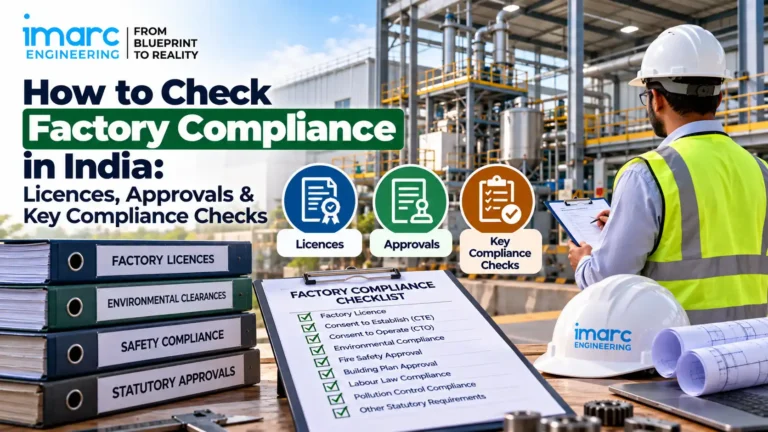
Starting a banana processing manufacturing unit in India requires several approvals:
- Business registration (Proprietorship, LLP, or Pvt Ltd)
- Factory Licence under the Factories Act
- Environmental Clearance from the State Pollution Control Board
- GST Registration
- Fire Safety NOC
- Effluent Treatment Plant (ETP) operational clearance
- Occupational Health and Safety compliance
- FSSAI licence for food processing operations
Key Challenges to Consider
High Capital Requirements. Establishing a commercially viable facility with the required 10,000–20,000 MT annual capacity demands significant upfront investment in land, civil construction, and specialised machinery including ripening chambers, pulping equipment, and drying systems which may challenge smaller investor budgets.
Raw Material Price Volatility. Fresh bananas which account for 65–75% of total OpEx are subject to seasonal supply variability, weather-related crop disruptions, and farm-gate price fluctuations. Securing long-term procurement contracts and diversifying sourcing across multiple growing regions is essential to managing this exposure.
Regulatory Compliance. Banana processing facilities must simultaneously meet food safety standards, environmental clearance requirements, ETP operational norms, and occupational health regulations. Managing this multi-agency compliance landscape requires dedicated resources and ongoing monitoring.
Innovation and Product Development Pressure. The market for processed banana products is evolving toward organic, fortified, and value-added variants. Staying competitive requires investment in product development and potentially new processing technologies to address shifting buyer preferences.
Competition from Established Players. The global processed banana market includes well-capitalised operators such as Agro America, Agrofruit Holding Corp., and other multinational retailers. New entrants must differentiate on quality consistency, product form diversity, or supply chain responsiveness to compete effectively.
Skilled Manpower. Operating ripening chambers, quality inspection systems, and automated packaging lines requires trained technicians and food technology professionals. Workforce availability and retention in proximity to rural banana-growing areas can be a limiting factor for plant operations.
Frequently Asked Questions
1. How much does it cost to set up a banana processing plant in India? The total investment depends on plant capacity, automation level, location, and technology. The cost structure covers land and site development, civil works, machinery (including ripening chambers, pulping machines, and drying equipment), utilities, and pre-operative expenses. A detailed breakdown is available through the IMARC project report.
2. Is banana processing manufacturing profitable in India in 2026? Yes. The banana processing plant project demonstrates healthy profitability, with gross margins of 30–40% and net margins of 12–18% under normal operating conditions, supported by stable demand from food processing, foodservice, and retail sectors.
3. What machinery is required for a banana processing plant in India? Key equipment includes harvesting and handling tools, washing and grading systems, ripening chambers, slicing or pulping machines, drying or processing equipment, packaging and sealing machines, and quality inspection systems.
4. What licences and approvals are required to start a banana processing plant in India? Required approvals include business registration, a Factory Licence, Environmental Clearance from the State Pollution Control Board, GST Registration, Fire Safety NOC, ETP operational clearance, FSSAI food processing licence, and Occupational Health and Safety compliance.
5. What raw materials are needed for banana processing manufacturing? The primary raw material is fresh bananas, which account for 65–75% of total operating expenditure. Sourcing consistency and proximity to banana-growing regions are critical to operational efficiency.
6. What are the environmental compliance requirements for a banana processing plant in India? The facility must obtain Environmental Clearance from the State Pollution Control Board, operate a functional Effluent Treatment Plant (ETP), and comply with emission and wastewater discharge standards applicable to food processing operations.
7. What is the best location to set up a banana processing plant in India? Optimal locations include states with concentrated banana cultivation and established food processing infrastructure, such as Maharashtra, Tamil Nadu, Andhra Pradesh, and Karnataka. Proximity to raw material supply, transportation networks, and utility connections are the primary site selection criteria.
8. What is the break-even period for this type of plant in India? The break-even period depends on plant capacity, capital investment, and capacity utilisation rate. The detailed financial projections including payback period, NPV, and IRR analysis are provided in the IMARC feasibility report.
9. What government incentives are available for manufacturers in India? The food processing sector has received significant policy support, with approximately INR 1,15,596 crore (USD 13.4 billion) in FDI recorded from April 2000 to June 2025. Investors may access incentives through the Production Linked Incentive (PLI) scheme for food processing, state-level industrial promotion policies, and subsidised land and utilities within designated SEZ or industrial estate locations.
Key Takeaways for Investors
A banana processing plant in India represents a well-diversified investment opportunity with confirmed demand across the food and beverage industry, bakery and confectionery, foodservice and HoReCa, baby food and nutrition, and household retail segments reducing revenue concentration risk and supporting stable capacity utilisation across market cycles. The investment demonstrates financial viability across a range of plant capacities, with gross margins of 30–40% and net margins of 12–18% achievable under standard operating conditions. The global banana market was valued at 148.54 million tons in 2025 and is projected to reach 202.80 million tons by 2034, expanding at a CAGR of 3.5% from 2026 to 2034. India’s combination of strong raw material availability, expanding organised food processing infrastructure, supportive policy environment, and multi-sector end-use demand makes long-term demand sustainability for this production category structurally sound.
About the Author