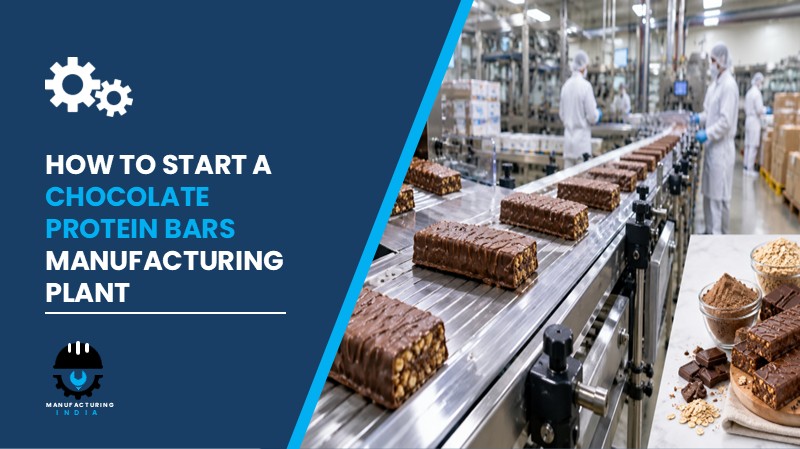
Setting up a chocolate protein bars manufacturing plant in India presents a compelling investment case driven by the country’s rapidly expanding sports nutrition, functional foods, and health and wellness sectors. Chocolate protein bars – formulated with whey, soy, pea, or milk proteins combined with cocoa or chocolate flavoring – are at the intersection of convenience and nutrition, serving athletes, fitness enthusiasts, and health-conscious consumers seeking ready-to-eat snack alternatives. With demand accelerating across sports nutrition channels, retail and supermarkets, and online nutrition platforms, the case for domestic production in India has never been stronger.
India offers a uniquely advantageous environment for this investment. The country’s urbanisation trajectory, expanding middle class, and rising gym memberships are fuelling a surge in demand for high-protein functional snacks. Manufacturing states such as Gujarat, Maharashtra, and Uttar Pradesh offer well-developed industrial infrastructure, SEZ incentives, and access to raw material supply chains. The Make in India initiative further strengthens the investment rationale by enabling cost-competitive local production to substitute imports and serve the growing domestic base.
Establishing a chocolate protein bars manufacturing plant in India combines policy support, cost-competitive operations, and surging domestic demand across sports nutrition and functional foods sectors. With gross margins of 45-55% and net profit potential of 20-30%, the facility offers strong financial viability across plant capacities of 1,000-5,000 MT per year, with a clearly achievable break-even trajectory.
What are Chocolate Protein Bars?
Chocolate protein bars are ready-to-eat functional snack products formulated with protein-rich ingredients such as whey, soy, pea, or milk proteins, combined with cocoa or chocolate flavoring. They are designed to deliver nutritional benefits including muscle recovery support, satiety enhancement, and energy supplementation. These bars typically contain carbohydrates, dietary fiber, healthy fats, vitamins, and minerals, and may be fortified with functional ingredients such as collagen, probiotics, or plant extracts. The product is available in coated, layered, or baked formats, offering varied textures and flavors to suit diverse consumer preferences. The production method used is a multi-step process involving raw material procurement and quality testing, weighing and blending, mixing with syrups, binders, and fats, forming and extrusion, cooling and setting, chocolate enrobing or coating, cutting, portioning, packaging, and labeling. End-use industries served by this production include sports nutrition, functional foods and beverages, retail and supermarkets, health and wellness stores, and online nutrition platforms.
Cost of Setting Up a Chocolate Protein Bars Manufacturing Plant in India
The total cost of establishing a chocolate protein bars manufacturing plant depends on a range of factors including plant capacity, technology level, degree of automation, choice of location, and regulatory compliance requirements.
1. Capital Expenditure (CapEx)
Capital investment covers several major heads. Land and site development represent a substantial component of total CapEx, encompassing land registration charges, boundary development, and related infrastructure work. Industrial estates and SEZ locations in states such as Gujarat and Maharashtra can offer cost advantages through subsidised land rates and duty exemptions. Civil works and construction – including production sheds, raw material storage areas, quality control labs, utilities blocks, and administrative facilities – form a further major portion of upfront spending.
Machinery costs account for the largest share of total capital expenditure. Key machinery required includes:
- Ribbon or planetary mixers
- Extruders
- Slab formers
- Cooling tunnels
- Chocolate enrobing machines
- Cutting and portioning machines
- Flow wrap packaging machines
Other capital costs include effluent treatment plant (ETP) installation, pre-operative expenses, commissioning charges, and import duties applicable to specialised equipment sourced internationally.
Request a Sample Report for In-Depth Market Insights: https://www.imarcgroup.com/chocolate-protein-bars-manufacturing-plant-project-report/requestsample
2. Operational Expenditure (OpEx)
The operating cost structure of a chocolate protein bars manufacturing plant is primarily driven by raw material consumption. Raw materials – including core ingredients such as whey/plant protein, chocolate, nuts, sweeteners, and packaging materials – account for approximately 65-75% of total operating expenses. Securing long-term supplier contracts for these inputs is a recommended strategy to stabilise procurement costs and mitigate supply disruptions.
Utility costs, covering electricity, water, and steam, account for 5-10% of total OpEx. Additional operating costs include transportation, packaging, salaries and wages, maintenance, depreciation, and applicable taxes. By the fifth year of operations, total operational costs are projected to increase substantially due to inflation, market fluctuations, potential rises in key material costs, supply chain dynamics, and shifts in global economic conditions.
3. Plant Capacity
The proposed manufacturing facility is designed with an annual production capacity ranging between 1,000-5,000 MT, enabling economies of scale while maintaining operational flexibility. Capacity can be customized to suit the investor’s specific requirements and growth ambitions. Profitability improves progressively with higher capacity utilisation, as fixed costs are spread across a larger production volume.
4. Profit Margins and Financial Projections
The chocolate protein bars plant demonstrates healthy profitability potential under normal operating conditions. Gross profit margins typically range between 45-55%, supported by stable demand and the value-added, functional nature of the product. Net profit margins are projected in the range of 20-30%. Detailed financial projections – including NPV, IRR, payback period analysis, liquidity analysis, and sensitivity analysis – are developed on the basis of realistic assumptions related to capital investment, operating costs, capacity utilisation, and pricing trends, providing a comprehensive view of long-term financial viability.
Why Set Up a Chocolate Protein Bars Plant in India?
Rising Fitness and Protein Consumption Trends: Growing consumer focus on protein intake is a structural demand driver for chocolate protein bars. Rising gym memberships and sports participation across India are boosting demand for convenient post-workout recovery snacks, creating a resilient and expanding consumer base for this manufacturing unit.
Convenience-Driven Snacking Behaviour: The portable, ready-to-eat format of chocolate protein bars aligns perfectly with busy urban lifestyles. As India’s urban population continues to grow, the demand for nutritious on-the-go snack options is expected to sustain long-term consumption momentum.
Product Innovation Opportunities: Manufacturers operating in India can leverage India’s competitive production cost base to introduce plant-based, low-sugar, or functionally fortified variants targeting different dietary segments. Expansion of plant-based protein sources has broadened product offerings to vegan consumers, opening additional addressable markets.
Premium Pricing Potential: The functional benefits of chocolate protein bars allow for higher value positioning compared to conventional snacks. This premium pricing capacity directly supports the 45-55% gross margin profile achievable by an efficiently operated facility.
Active Industry Investment and Latest Developments: The global chocolate protein bars segment continues to attract active investment and product launches. In February 2026, Le Macarons Chocolatier launched a new Protein Bar Chocolate in the UAE targeting health-conscious consumers seeking functional snacks with premium chocolate quality. In October 2025, GHOST launched its first-ever GHOST PROTEIN BAR in collaboration with General Mills, available in three flavors – Chocolate Caramel, Chocolate Peanut Butter, and Choco Chip Cookie Dough – in a layered format designed to deliver a candy bar-like taste experience.
Expanding Distribution Channels: Growth in online retail and specialty nutrition stores is enhancing market reach for chocolate protein bars manufacturers. Online nutrition platforms targeting personalised diet and fitness markets represent a fast-growing channel for domestically produced products, supporting revenue diversification.
Manufacturing Process – Step by Step
The chocolate protein bars manufacturing process uses a multi-step production method as the primary production approach. Each stage involves careful quality management and adherence to food safety standards.
- Raw material procurement and quality testing: Sourcing of whey/plant protein, chocolate, nuts, sweeteners, and packaging materials from approved suppliers, followed by incoming quality checks.
- Weighing and blending: Precise measurement and blending of protein and other dry ingredients using ribbon or planetary mixers.
- Mixing with syrups, binders, and fats: Combining the dry blend with liquid components including syrups, binders, and fats to achieve the desired texture and nutritional profile.
- Forming and extrusion: Shaping the blended mass into bar formats using extruders and slab formers.
- Cooling and setting: Passing formed bars through cooling tunnels to achieve structural integrity and the correct texture.
- Chocolate enrobing or coating: Applying chocolate coating to bars using chocolate enrobing machines for the signature finish.
- Cutting and portioning: Sizing bars to specified dimensions using cutting and portioning machines.
- Packaging and labeling: Wrapping finished bars using flow wrap packaging machines, applying labels, and preparing for dispatch to sports nutrition, retail, health and wellness, and online nutrition end-use channels.
Key Applications
Chocolate protein bars manufactured at this facility serve a broad spectrum of industries and consumer use cases:
- Sports Nutrition Industry: Widely consumed for muscle recovery and protein supplementation after workouts.
- Functional Foods Sector: Used as convenient, nutrient-dense snacks offering protein and energy benefits.
- Retail and Supermarkets: Sold as ready-to-eat packaged snacks targeting health-conscious consumers.
- Health and Wellness Stores: Marketed as specialised nutritional products for fitness and lifestyle management.
- Online Nutrition Platforms: Distributed via e-commerce channels targeting personalised diet and fitness markets.
Additional applications include post-workout snacks, meal replacement supplements, on-the-go nutrition products, weight management products, and high-protein dietary supplementation.
Leading Manufacturers
The global chocolate protein bars industry is served by several multinational companies with extensive production capacities and diverse application portfolios. As per the source report, key players in the industry serve end-use sectors spanning sports nutrition, functional foods and beverages, retail and supermarkets, health and wellness stores, and online nutrition platforms. Recent entrants and collaborative launches – such as the GHOST and General Mills partnership (October 2025) and Le Macarons Chocolatier’s UAE product launch (February 2026) – reflect the active competitive landscape in this segment.
Timeline to Start the Plant
Establishing a chocolate protein bars manufacturing plant in India involves the following key phases:
- Feasibility study and project report preparation
- Land acquisition and site development
- Regulatory approvals and environmental clearances
- Factory licence and fire safety compliance
- Machinery procurement and installation
- Raw material supplier agreements and supply chain setup
- Trial production and quality testing
- Commercial production launch
Licences and Regulatory Requirements
Starting a chocolate protein bars manufacturing unit in India requires several approvals:
- Business registration (Proprietorship, LLP, or Pvt Ltd)
- Factory Licence under the Factories Act
- Environmental Clearance from State Pollution Control Board
- GST Registration
- Fire Safety NOC
- Food Safety and Standards Authority of India (FSSAI) licence (mandatory for food product manufacturing)
- Effluent Treatment Plant (ETP) operational clearance
- Occupational Health and Safety compliance
Key Challenges to Consider
High Capital Requirements: Establishing a chocolate protein bars manufacturing plant involves significant upfront investment covering land, civil works, specialised machinery such as chocolate enrobing machines and cooling tunnels, and compliance infrastructure. Adequate financial planning and phased investment strategies are essential.
Raw Material Price Volatility: Core raw materials including whey/plant protein, chocolate, nuts, and sweeteners are subject to global commodity price fluctuations. Long-term supplier contracts and diversified sourcing strategies are critical for cost stability.
Regulatory Compliance: Operating a food manufacturing facility in India requires ongoing adherence to FSSAI regulations, environmental clearances from the State Pollution Control Board, ETP operational standards, and occupational health norms. Compliance management must be built into operational planning.
Technology and Innovation Pressure: Rapid product innovation – including plant-based, low-sugar, and functionally fortified variants – requires manufacturers to invest in adaptable processing equipment and R&D capabilities to remain competitive.
Competition: The global chocolate protein bars industry includes established multinational players serving sports nutrition, functional foods, retail, and e-commerce channels. Domestic producers must differentiate through quality, pricing, and distribution strategies.
Skilled Manpower: Operating specialised food-grade production equipment including extruders, enrobing machines, and flow wrap packaging systems requires trained technical personnel. Investment in workforce training and retention is a material operational consideration.
Key Takeaways for Investors
A chocolate protein bars manufacturing plant in India represents a high-potential investment backed by robust demand growth across sports nutrition, functional foods and beverages, retail and supermarkets, health and wellness stores, and online nutrition platforms. The project is financially viable across a production capacity range of 1,000-5,000 MT per year, delivering gross margins of 45-55% and net profit margins of 20-30%, with raw materials accounting for 65-75% of operating costs. North America’s dominant 36.8% share in the global chocolate protein bars market confirms the product’s established global consumption base, while India’s own rising protein consumption, urbanisation, and fitness culture signal strong long-term domestic demand. With product innovation in plant-based, low-sugar, and fortified formats actively driving category growth – as evidenced by the GHOST-General Mills collaboration in October 2025 and Le Macarons Chocolatier’s February 2026 launch – demand sustainability for domestically produced chocolate protein bars remains firmly intact.
About the Author