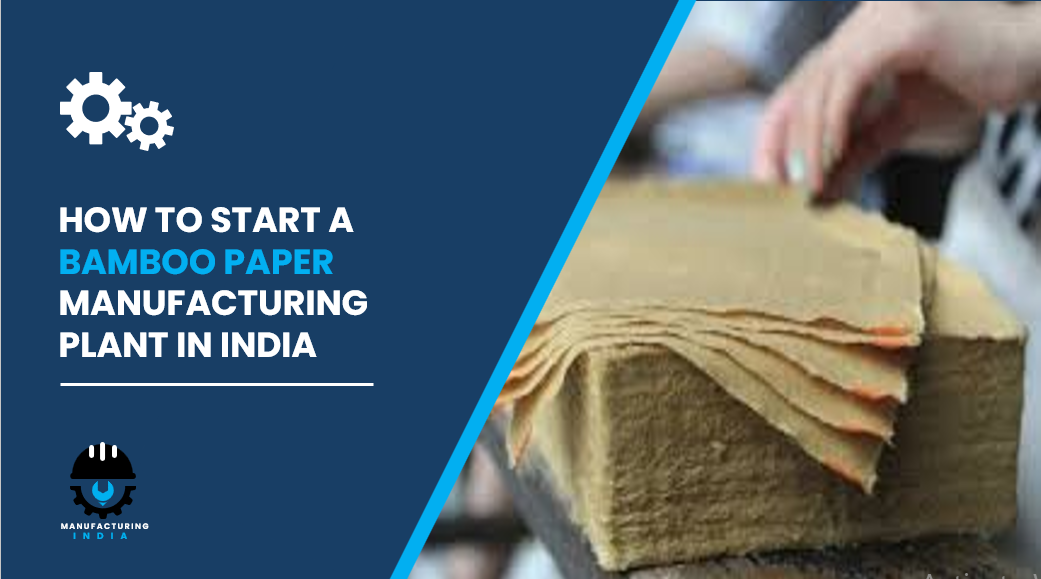
Setting up a bamboo paper manufacturing plant in India presents a compelling investment case rooted in the country’s vast and fast-growing bamboo resource base, accelerating national and global shift toward sustainable and eco-friendly paper products, mounting regulatory pressure on conventional wood-based and single-use plastic alternatives, and rising corporate ESG commitments driving procurement mandates for certified biodegradable materials across packaging, hygiene, and stationery supply chains. Bamboo paper — manufactured from bamboo culm cellulose fibres — delivers superior tensile strength, fast degradation, low chemical consumption, and high absorbency compared to conventional wood-based paper, while being produced from one of the world’s most rapidly renewable raw materials. As deforestation concerns intensify, government policies promoting biodegradable packaging expand, and major FMCG, packaging, and hospitality brands accelerate their transition to bamboo-based paper products, the domestic demand for quality bamboo paper is growing at a structurally and policy-reinforced pace that rewards early investment in dedicated manufacturing capacity.
India’s strategic advantages for this investment are clearly established. The Indian bamboo market is projected to grow at a CAGR of 4.6%, expanding from Rs. 50,135 crore (USD 5.8 billion) in 2022 to Rs. 71,745 crore (USD 8.3 billion) by 2030, as reported by the India Brand Equity Foundation (IBEF). This steady expansion of India’s bamboo sector directly supports the growth of the bamboo paper market, as manufacturers increasingly adopt eco-friendly alternatives to traditional wood-based paper. India’s northeastern states — including Assam, Meghalaya, Nagaland, and Tripura — along with Odisha, Maharashtra, and Madhya Pradesh, hold some of Asia’s largest bamboo reserves, providing an abundantly available and cost-competitive raw material base. The Make in India initiative, government bans on single-use plastics, and sustainable forestry promotion schemes collectively create a policy environment that actively favours establishing a bamboo paper manufacturing plant in India.
A bamboo paper manufacturing plant in India captures accelerating demand from packaging, hygiene, printing, and food service industries simultaneously pivoting toward sustainable, biodegradable inputs — delivering gross margins of 30–40% and net margins of 12–18%. With APAC holding the largest share at 47.3% of the global bamboo paper market and India’s bamboo sector expanding at a 4.6% CAGR toward USD 8.3 billion by 2030, this investment offers strong financial returns and first-mover commercial positioning in one of Asia’s most consequential sustainable materials transitions.
What is Bamboo Paper?
Bamboo paper is an eco-friendly paper product made from bamboo culm cellulose fibres. It offers several key advantages compared to conventional wood-based paper, including high tensile strength, non-toxic composition, fast degradation, and lower chemical consumption in the pulping process. Bamboo is a fast-growing plant that matures within 3 to 5 years and can regenerate on its own after harvest, making it a highly renewable raw material that does not require replanting and requires minimal agrochemical inputs compared to tree-based pulp sources.
Bamboo paper is recognised for its good absorbency, smooth texture, and durability across application types. It can be produced in either bleached or unbleached form, opening the market for both consumer-grade hygiene applications and industrial end-use in packaging and specialty paper categories. The primary production method spans bamboo pulping, bleaching, sheet forming, pressing, drying, and finishing. The product serves end-use industries including packaging, hygiene products, printing and stationery, and food service — with applications in tissue paper, writing and printing paper, food-grade packaging, disposable tableware, and specialty paper products.
Cost of Setting Up a Bamboo Paper Manufacturing Plant in India
The total cost of establishing a bamboo paper manufacturing plant in India depends on production capacity, pulping technology, plant location, degree of automation, and regulatory compliance requirements.
1. Capital Expenditure (CapEx)
The capital investment required to set up this facility covers several major cost heads. Land and site development — including land registration, boundary development, bamboo receiving and storage yard infrastructure, and related site works — forms a substantial portion of total CapEx. Investors should consider locating the unit in close proximity to bamboo-rich states — Assam, Odisha, Meghalaya, Tripura, or Madhya Pradesh — to minimise raw material transportation costs and ensure consistent feedstock availability throughout the production calendar. Proximity to bamboo-growing regions also reduces the risk of seasonal supply interruptions that can affect continuous paper machine operation. Industrial estates and agro-processing zones in bamboo-belt states offer additional infrastructure support and state investment incentives.
Civil works and construction costs cover the bamboo receiving and storage yard, bamboo chipping hall, digester and pulping building, pulp washing and screening section, bleaching area, paper machine hall — which requires a large clear-span building with overhead crane provision — pressing and drying section, finishing and cutting area, quality control laboratory, effluent treatment zone, and administrative block. Paper machine buildings require specialised civil design given the weight and vibration characteristics of continuous paper machines.
Machinery and equipment represent the largest component of total capital expenditure for this bamboo paper manufacturing plant. Key machinery required includes:
- Bamboo chippers
- Digesters
- Pulp washers
- Paper machines
- Dryers
- Cutting units
Other capital costs include effluent treatment plant (ETP) installation for black liquor and pulping wastewater management, chemical recovery systems where applicable, pre-operative and commissioning expenses, and any applicable import duties on specialised paper machine and digester equipment not manufactured domestically.
Request a Sample Report for In-Depth Market Insights: https://www.imarcgroup.com/bamboo-paper-manufacturing-plant-project-report/requestsample
2. Operational Expenditure (OpEx)
The operating cost structure of a bamboo paper manufacturing plant is primarily driven by raw material procurement. Raw material cost — covering bamboo as the primary and dominant feedstock input, along with pulping chemicals used in the digester and bleaching stages — accounts for approximately 50–60% of total OpEx. Bamboo’s 3–5 year maturation cycle and self-regenerating growth habit provide a relatively stable and cost-competitive raw material supply compared to wood-based pulp, which is subject to longer timber rotation cycles and higher forestry management costs. Investors should establish long-term supply agreements with bamboo plantation operators, community bamboo collectors, and state bamboo development agencies to stabilise procurement costs and ensure year-round production continuity.
Utility costs, covering electricity, water, and steam required for pulping, bleaching, paper machine operation, and drying, account for 20–25% of OpEx — a moderately high share reflecting the energy and water intensity of the pulp-and-paper production process. Other operating costs include transportation and logistics for bamboo procurement and finished paper dispatch to packaging manufacturers, hygiene product companies, printing and stationery buyers, and food service suppliers, packaging materials, salaries and wages, maintenance and calibration of paper machine and digester equipment, depreciation of fixed assets, and applicable taxes. By the fifth year of operations, total operational costs are projected to increase substantially due to inflation, bamboo feedstock cost escalation, chemical price movements, market fluctuations, and rising consumer demand dynamics.
3. Plant Capacity
The proposed manufacturing facility is designed with an annual production capacity ranging between 20,000–40,000 MT, enabling economies of scale while maintaining operational flexibility. Capacity can be customised based on specific investor requirements, available bamboo catchment volumes in the target sourcing region, target market mix between hygiene, packaging, and printing grades, and available capital. Profitability and unit economics improve meaningfully with higher capacity utilisation given the significant fixed cost base of paper machine and pulping infrastructure.
4. Profit Margins and Financial Projections
The bamboo paper manufacturing plant demonstrates healthy and consistent profitability potential under normal operating conditions. Gross profit margins typically range between 30–40%, supported by stable multi-sector demand from packaging, hygiene, printing, and food service buyers, the premium pricing commanded by certified eco-friendly paper products in both domestic retail and international export markets, and the cost-competitive nature of bamboo as a raw material relative to virgin wood pulp. Net profit margins are projected in the range of 12–18%. Key financial indicators including NPV, IRR, payback period, liquidity analysis, and sensitivity analysis are covered comprehensively in the full project report.
Why Set Up a Bamboo Paper Manufacturing Plant in India?
Sustainability-Driven Demand Across Multiple End-Use Sectors. Bamboo paper is in sync with global sustainability targets as an eco-friendly, biodegradable alternative to conventional wood-based paper. Government policies promoting sustainable forestry, banning single-use plastics, and mandating eco-friendly packaging are leading to widespread commercial and institutional adoption of bamboo paper — creating structural demand growth that is reinforced by regulatory obligation rather than discretionary preference alone.
Favourable Raw Material Economics from India’s Bamboo Resource Base. Bamboo matures in 3 to 5 years and can regenerate without replanting while requiring very little agrochemical input, making raw material availability steady and economical. India’s bamboo market — expanding from Rs. 50,135 crore (USD 5.8 billion) in 2022 to a projected Rs. 71,745 crore (USD 8.3 billion) by 2030 at a CAGR of 4.6% as reported by IBEF — provides a deepening and commercially mature bamboo supply ecosystem for paper manufacturers to leverage.
Rising Corporate ESG Commitments Generating Institutional Demand. Major brands in packaging, FMCG, and hospitality are actively transitioning to bamboo-based paper to meet ESG and carbon reduction targets. This corporate procurement shift creates large, recurring institutional demand for bamboo paper from private-label and branded product manufacturers, providing revenue predictability for domestic bamboo paper producers who can consistently meet quality and certification requirements.
Export and Premium Market Potential Enhancing Profitability. Bamboo paper products command premium pricing in international markets focused on green and biodegradable materials — particularly in Europe, North America, and Japan, where environmental consciousness drives consumer willingness to pay above commodity paper prices. India-based manufacturers achieving international eco-certification can access these premium export markets alongside domestic sales, enhancing overall plant profitability and reducing domestic market pricing exposure.
Active Global Industry Investment Confirming Commercial Momentum. In May 2024, Sarawak attracted strong interest from Chinese investors, with Sichuan Vanov New Materials Co Ltd (BABO) considering a USD 100 million investment to establish an integrated bamboo processing facility to manufacture bamboo-based facial tissues, kitchen roll towels, baby-soft paper, soft towels, and fibre towels — confirming large-scale global commercial confidence in bamboo paper manufacturing. In July 2024, Kong Rolls — a bamboo toilet paper brand co-founded by University of Miami student Jimmy Ayash — was launched targeting sustainability-focused consumers in the U.S. toilet paper market, demonstrating that bamboo paper is actively entering established and high-value consumer categories globally.
APAC Leadership and India’s Strategic Market Position. APAC holds the largest share of the global bamboo paper market, accounting for 47.3% — with India positioned as a key growth contributor given its bamboo resource abundance, expanding urban hygiene consumption, and rapidly growing packaging industry. In November 2025, the Kerala Forest Research Institute (KFRI) entered into an MOU with the Odisha Bamboo Development Agency (OBDA) to strengthen collaboration in the bamboo sector, focusing on scientific research, knowledge exchange, and sectoral development — a direct institutional signal of India’s deepening commitment to bamboo-based industry development.
Manufacturing Process — Step by Step
The bamboo paper manufacturing process uses bamboo pulping, bleaching, sheet forming, pressing, drying, and finishing as the primary production method. The process involves multiple unit operations, material handling stages, and quality verification checkpoints throughout.
- Bamboo Receipt and Storage: Freshly harvested bamboo culms are received from plantation suppliers and aggregators, inspected for maturity and moisture content, and stored in the bamboo yard before entering the chipping line. Bamboo should ideally be processed within a reasonable period of harvest to preserve cellulose quality.
- Bamboo Chipping: Bamboo culms are fed into bamboo chippers that reduce the material into uniform chips of the required size for efficient digester loading and chemical penetration during pulping.
- Pulping (Digestion): Bamboo chips are loaded into digesters along with pulping chemicals — typically sodium hydroxide and sodium sulphide in the kraft process — and cooked under controlled temperature and pressure conditions to dissolve lignin and hemicellulose, releasing the cellulose fibres that form the basis of bamboo paper pulp.
- Pulp Washing: Cooked pulp is washed in pulp washers to remove spent cooking chemicals — the black liquor — from the cellulose fibre. Black liquor is collected for chemical recovery and energy recovery through combustion.
- Screening and Cleaning: Washed pulp is screened to remove uncooked bamboo knots, fibre bundles, and contaminants, producing a clean, uniform pulp suitable for bleaching and paper making.
- Bleaching: Screened pulp undergoes multi-stage bleaching using elemental chlorine-free (ECF) or totally chlorine-free (TCF) bleaching sequences to achieve the required brightness level for the target paper grade — from unbleached kraft for packaging to fully bleached pulp for hygiene and printing paper applications.
- Sheet Forming (Paper Machine): Bleached pulp is diluted to a low-consistency slurry and fed onto the paper machine wire, where water drains through the wire mesh and the cellulose fibres form a continuous wet paper web.
- Pressing: The wet paper web is pressed through a series of press rolls to remove water mechanically, increasing dry solids content before entering the dryer section.
- Drying: Pressed paper passes over steam-heated dryers to reduce moisture content to the target specification — typically 5–8% — producing a dry, continuous paper web.
- Finishing and Cutting: Dried paper is calendered for surface smoothness, wound into large parent reels, and then processed through cutting units into the required consumer or industrial formats — rolls, sheets, or converted products.
- Quality Control and Testing: Finished bamboo paper is tested for basis weight, tensile strength, tear strength, brightness, smoothness, moisture, and biodegradability parameters against applicable BIS and customer-specific product specifications.
- Packaging and Dispatch: Approved bamboo paper products are packaged and dispatched to packaging manufacturers, hygiene and personal care product companies, printing and stationery buyers, food service operators, and international export buyers.
Key Applications
The bamboo paper manufacturing plant serves multiple high-volume industries with consistent and growing demand for sustainable, certified paper inputs:
- Hygiene and Personal Care Industry: Used in toilet paper, facial tissues, napkins, and paper towels due to bamboo paper’s softness, absorbency, and antibacterial properties — the largest and fastest-growing consumer application for bamboo paper globally.
- Packaging Industry: Applied in corrugated boards, wrapping paper, and moulded fibre packaging for eco-friendly product protection — aligned with government plastic ban policies and corporate sustainable packaging commitments.
- Printing and Stationery Industry: Used in notebooks, books, and office paper where sustainability credentials are required by corporate buyers and educational institutions seeking to reduce their environmental footprint.
- Food Service Industry: Utilised for disposable plates, cups, and food wraps due to bamboo paper’s biodegradability and food safety compliance — a rapidly growing application driven by the global shift away from single-use plastics in food packaging and service.
Leading Manufacturers
The global bamboo paper industry is served by several major producers with extensive production capacities and diverse application portfolios. Key players include:
- Qingya Paper
- Donsea Paper
- Newland Bamboo
- STIN Bamboo Paper
- Sichuan Fengsheng Pulp & Paper Technology Co., Ltd.
Timeline to Start the Plant
- Feasibility study and project report preparation
- Land acquisition and site development
- Regulatory approvals and environmental clearances
- Factory licence and fire safety compliance
- Machinery procurement and installation
- Raw material supplier agreements and supply chain setup
- Trial production and quality testing
- Commercial production launch
Licences and Regulatory Requirements
Starting a bamboo paper manufacturing unit in India requires several approvals:
- Business registration (Proprietorship, LLP, or Pvt Ltd)
- Factory Licence under the Factories Act
- Environmental Clearance from State Pollution Control Board
- GST Registration
- Fire Safety NOC
- Consent to Establish and Consent to Operate from State Pollution Control Board covering pulping chemical emissions and effluent discharge from paper manufacturing operations
- Forest and bamboo harvesting permit compliance — required where bamboo is sourced from state forest areas under applicable state bamboo policy regulations
- Effluent Treatment Plant (ETP) operational clearance for black liquor and pulping process wastewater management
- Occupational Health and Safety compliance
Key Challenges to Consider
Raw Material Supply Seasonality and Logistics. Bamboo availability is subject to harvest seasonality and regional distribution across India’s bamboo-rich states — requiring covered storage for at least 60–90 days of production supply at the plant to maintain continuous paper machine operation. Building a diversified procurement network across multiple bamboo-growing zones and establishing long-term agreements with bamboo development agencies reduces supply disruption risk.
High Utility Costs for Pulping and Drying. Utility costs at 20–25% of OpEx — driven by the steam and electricity demands of digester operation, bleaching, and paper machine drying — are among the higher operating cost elements in bamboo paper manufacturing. Investing in black liquor recovery boilers for steam generation from spent cooking chemicals can meaningfully reduce net utility purchase costs and improve plant energy economics.
Regulatory Compliance for Pulping Effluent Management. Bamboo paper pulping generates black liquor and process wastewater with high organic loads and chemical content. Meeting State Pollution Control Board effluent quality standards requires robust ETP infrastructure and chemical recovery systems — a significant ongoing compliance management and investment commitment.
Technology and Product Development for Premium Markets. Growing demand for unbleached, organic-certified, and specialty bamboo paper grades — particularly for food service, premium packaging, and export markets — requires producers to invest in process flexibility and product development capabilities beyond standard kraft pulp and bleached tissue grades to access premium pricing tiers.
Competition. Global players from China — including Qingya Paper, Donsea Paper, and Sichuan Fengsheng Pulp & Paper Technology — maintain large-scale production advantages and established export relationships. Indian producers must leverage domestic bamboo resource cost advantages, proximity to South Asian and Middle Eastern export markets, and eco-certification credentials to compete effectively with Chinese-origin bamboo paper.
Skilled Manpower for Paper Mill Operations. Operating digesters, bleaching plants, and continuous paper machines requires chemical engineers and paper mill process operators with pulp-and-paper manufacturing experience — a specialised workforce category that requires targeted recruitment from established paper mill clusters and ongoing technical training investment.
Frequently Asked Questions
1. How much does it cost to set up a bamboo paper manufacturing plant in India?
Total investment depends on production capacity (20,000–40,000 MT annually), pulping technology, location relative to bamboo supply zones, and automation level. Key cost components include land and bamboo yard infrastructure, civil construction for pulping, paper machine, and drying buildings, machinery (bamboo chippers, digesters, pulp washers, paper machines, dryers, cutting units), ETP and chemical recovery systems, and working capital for bamboo and chemical procurement. A detailed project report provides capacity-specific CapEx and OpEx estimates.
2. Is bamboo paper manufacturing profitable in India in 2026?
Yes. The facility demonstrates gross profit margins of 30–40% and net margins of 12–18% under normal operating conditions. Profitability is supported by premium eco-friendly paper pricing, India’s bamboo market expanding at a 4.6% CAGR toward USD 8.3 billion by 2030, and strong export market access in Europe, North America, and the Middle East for certified sustainable paper products.
3. What machinery is required for a bamboo paper manufacturing plant in India?
Key equipment includes bamboo chippers, digesters, pulp washers, paper machines, dryers, and cutting units.
4. What licences and approvals are required to start a bamboo paper manufacturing plant in India?
Required approvals include business registration, Factory Licence under the Factories Act, Environmental Clearance from the State Pollution Control Board, GST registration, Consent to Establish and Operate for pulping chemical emissions and effluent discharge, bamboo harvesting permit compliance where applicable, ETP operational clearance for black liquor and process wastewater, Fire Safety NOC, and Occupational Health and Safety certification.
5. What raw materials are needed for bamboo paper manufacturing?
The primary raw material is bamboo culms — sourced from plantation operators, community collectors, and state bamboo development agencies in India’s bamboo-rich states. Supporting process inputs include pulping chemicals (sodium hydroxide, sodium sulphide) for the kraft digestion stage, bleaching chemicals for brightness development, and water consumed in large volumes across pulping, washing, and paper machine operations.
6. What are the environmental compliance requirements for a bamboo paper manufacturing plant in India?
Operators must obtain Environmental Clearance, maintain an operational ETP for black liquor and pulping process wastewater management, install chemical recovery systems where kraft pulping is employed, comply with State Pollution Control Board emission standards for digester and recovery boiler stack gases, and implement water recycling systems to minimise freshwater consumption and effluent volumes across the plant.
7. What is the best location to set up a bamboo paper manufacturing plant in India?
Ideal locations offer maximum proximity to bamboo resource belts to minimise feedstock logistics costs and ensure year-round supply reliability. Assam, Odisha, Meghalaya, Tripura, and Madhya Pradesh are the strongest options given their abundant bamboo reserves, state government bamboo development support — as evidenced by the KFRI-OBDA MOU signed in November 2025 — and established agro-industrial infrastructure.
8. What is the break-even period for this type of plant in India?
Break-even depends on production scale, bamboo procurement costs, capacity utilisation, product mix between hygiene, packaging, and printing grades, and market pricing for eco-certified bamboo paper in domestic and export channels. The 30–40% gross margin profile supports a commercially competitive payback timeline. A detailed feasibility study provides project-specific break-even, NPV, and IRR projections.
9. What government incentives are available for manufacturers in India?
Bamboo paper manufacturers in India can benefit from state-level bamboo industry development incentives — particularly in Assam, Odisha, and the northeastern states — capital subsidies under agro-processing and forest-based industry investment schemes, tax exemptions under state industrial promotion policies, and export incentives for eco-certified bamboo paper products under APEDA export development support. National Mission for Bamboo Applications (NMBA) support and MSME development scheme funding may provide additional investment facilitation for producers targeting domestic and international sustainable paper markets.
Key Takeaways for Investors
The bamboo paper manufacturing plant opportunity in India is underpinned by the convergence of India’s vast bamboo resource base — with the sector expanding toward USD 8.3 billion by 2030 at a 4.6% CAGR as reported by IBEF — accelerating regulatory mandates phasing out single-use plastics and promoting biodegradable packaging, rising corporate ESG procurement commitments from FMCG and hospitality brands, and strong consumer-led premium demand for sustainable hygiene and paper products across domestic and international markets. The financial profile is commercially attractive across the 20,000–40,000 MT annual capacity range, with gross margins of 30–40% and net margins of 12–18%, supported by bamboo’s cost-competitive 3–5 year harvest cycle and the premium eco-certified pricing achievable in hygiene, packaging, and export channels. APAC’s 47.3% share of the global bamboo paper market confirms the region’s commercial leadership in this segment, and India’s deepening institutional commitment — demonstrated by the KFRI-OBDA bamboo sector MOU in November 2025 — and large-scale investment interest including the USD 100 million BABO integrated bamboo facility consideration in May 2024 confirm that bamboo paper manufacturing is entering a phase of accelerated commercial scale-up. India-based producers who establish proximity to bamboo supply, achieve eco-certification for domestic and export markets, and build multi-sector buyer relationships across packaging, hygiene, printing, and food service are positioned for durable, multi-decade demand growth as sustainable paper becomes the new standard across India’s and Asia’s paper industry.
About the Author