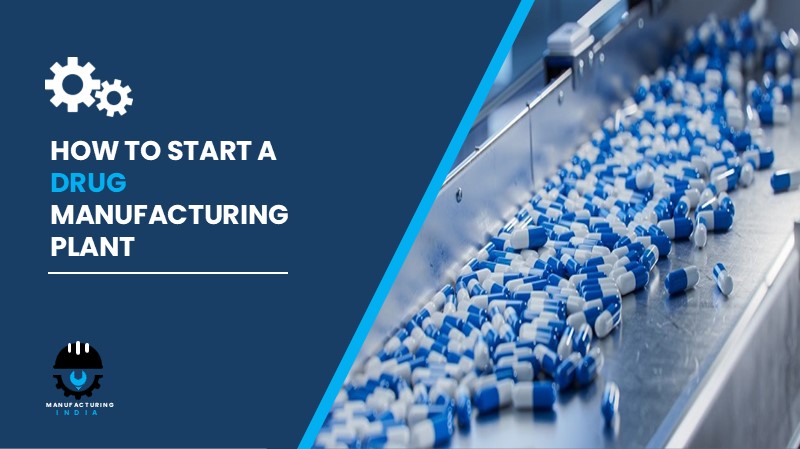
Setting up a drug manufacturing plant in India presents a compelling investment case driven by the increasing demand for healthcare products, rising incidences of chronic diseases, advances in biotechnology and biopharmaceuticals, and growing government investment in healthcare infrastructure. Drugs – chemical or biological substances used to diagnose, treat, cure, prevent, or manage diseases and medical conditions – are the foundational product category of the global healthcare economy, underpinning the treatment of every disease from infectious conditions to chronic lifestyle disorders. India is already one of the most commercially important pharmaceutical manufacturing nations globally – positioned as the world’s largest supplier of generic medicines and a rapidly growing hub for complex drug formulations, biologics, and API production. As India’s domestic healthcare demand accelerates and its export pharmaceutical reach widens, the case for new drug manufacturing capacity in the country has never been more compelling.
India’s structural advantages make this a strategically sound investment. Asia-Pacific is projected to be the fastest-growing region in the global drug industry, with India emerging as a global manufacturing hub due to low labour costs and strong infrastructure development. The International Diabetes Federation predicts that new cases of diabetes in people will continue to rise year after year, reaching 853 million by 2050 – a projection that directly underpins growing demand for anti-diabetic, cardiovascular, and chronic disease medications that form the backbone of India’s generic drug export volumes. North America accounts for 43.2% of the overall global drug market share, making it a critical export destination for Indian pharmaceutical manufacturers. The Government of India’s Make in India initiative, the Production Linked Incentive (PLI) scheme for pharmaceuticals, and the country’s deep talent pool in pharmaceutical science and process chemistry collectively strengthen the case for establishing a drug manufacturing plant in India as both a domestic supply and export-oriented industrial investment.
India’s position as Asia-Pacific’s fastest-growing pharmaceutical manufacturing hub, the International Diabetes Federation’s projection of 853 million diabetes cases by 2050, and North America’s 43.2% share of the global drug market make a drug manufacturing plant a financially exceptional and structurally well-supported investment. With gross margins of 55–65% and net margins of 25–35% across an annual capacity of 500 million tablets, the project delivers one of the strongest return profiles across all manufacturing categories.
What is a Drug?
A drug is a chemical or biological substance used to diagnose, treat, cure, prevent, or manage diseases and medical conditions. Drugs work by interacting with specific targets in the body, such as receptors, enzymes, or microorganisms, to produce a desired therapeutic effect. They may relieve symptoms, correct underlying biological imbalances, or eliminate harmful pathogens. Drugs can be derived from natural sources, synthesized chemically, or produced using biotechnology. They are available in various forms, including tablets, injections, creams, and inhalers, and must be carefully tested and regulated to ensure safety, quality, and effectiveness for human use.
The drug manufacturing process encompasses the full value chain from API production and excipient formulation through blending, granulation, tablet compression, coating, filling, and packaging – each stage governed by stringent GMP (Good Manufacturing Practice) standards and subject to regulatory oversight by national and international drug authorities. End-use industries served include healthcare, hospitals, clinics, pharmacies, and biotechnology.
The primary production method is formulation, blending, granulation, tablet compression, coating, filling, and packaging – a multi-stage pharmaceutical manufacturing process that converts active pharmaceutical ingredients (APIs) and excipients into finished dosage forms ready for healthcare delivery.
Cost of Setting Up a Drug Manufacturing Plant in India
The cost of establishing this facility depends on capacity, technology selection, plant location, degree of automation, and regulatory compliance requirements.
1. Capital Expenditure (CapEx)
Total capital investment for a drug manufacturing plant in India covers land acquisition, site preparation, civil construction, machinery, and pre-operative expenses. The cost of land and site development – including charges for land registration, boundary development, and other related expenses – forms a substantial part of the overall investment. This allocation ensures a solid foundation for safe and efficient plant operations. Investors can reduce land acquisition costs by locating the unit in a pharmaceutical manufacturing cluster, special economic zone (SEZ), or bulk drug park, which also provide shared utility infrastructure and potential state-level fiscal incentives aligned with India’s PLI scheme for pharmaceuticals.
Civil works and construction encompass the main formulation, manufacturing, and sterile production building – which must comply with WHO-GMP or Schedule M cleanroom standards applicable to the target dosage form – as well as raw material storage for API, excipients, and blister packaging foil, a quality control laboratory, a finished goods warehouse, and an administrative block. Given that drug manufacturing requires cleanroom environments, temperature-controlled storage, and contamination-controlled processing areas, civil infrastructure investment is substantially higher than for most non-pharmaceutical manufacturing operations.
Machinery costs account for the largest portion of total capital expenditure. Key machinery required includes:
- Bioreactors or chemical synthesis reactors
- Filtration and purification systems
- Drying units
- Granulators
- Tablet presses
- Capsule fillers
- Coating machines
- Automated packaging and labelling lines
All machinery must be high-quality and corrosion-resistant, tailored for drug production, and must comply with industry standards for safety, efficiency, and reliability. Other capital costs include the effluent treatment plant (ETP), advanced process monitoring systems, WFI (Water for Injection) systems, CIP/SIP (Clean-in-place/Sterilize-in-place) circuits, pre-operative expenses, trial production costs, and commissioning charges.
Request a Sample Report for In-Depth Market Insights: https://www.imarcgroup.com/drug-manufacturing-plant-project-report/requestsample
2. Operational Expenditure (OpEx)
The operating cost structure of a drug manufacturing plant is primarily driven by raw material consumption, particularly API (Active Pharmaceutical Ingredient), which accounts for approximately 40–50% of total operating expenses (OpEx). Excipients including binders, fillers, and disintegrants, and blister packaging foil are the secondary raw material inputs. Securing long-term supply agreements with reliable API producers and minimising transportation costs by selecting nearby suppliers is essential for cost stability and production continuity. Sustainability and supply chain risks must be assessed, and long-term contracts should be negotiated to stabilise pricing and ensure a steady supply of specification-compliant pharmaceutical ingredients.
Utility costs – comprising electricity, water, and steam consumed throughout formulation, granulation, coating, sterilisation, and WFI generation operations – account for 20–25% of total OpEx, reflecting the significantly elevated energy demands of pharmaceutical-grade manufacturing environments including cleanroom HVAC, WFI systems, and autoclave sterilisation operations. Other ongoing operating costs include transportation, packaging, salaries and wages, depreciation, taxes, equipment repairs and maintenance, and other miscellaneous expenses.
In the first year of operations, the operating cost for the drug manufacturing plant is projected to be significant, covering raw materials, utilities, depreciation, taxes, packing, transportation, and repairs and maintenance. By the fifth year, the total operational cost is expected to increase substantially due to factors such as inflation, market fluctuations, and potential rises in the cost of key materials. Additional factors, including supply chain disruptions, rising consumer demand, and shifts in the global economy, are expected to contribute to this increase.
3. Plant Capacity
The proposed manufacturing facility is designed with an annual production capacity of 500 million tablets, enabling economies of scale while maintaining operational flexibility. Capacity can be customised per investor requirements based on target generic, branded, or export pharmaceutical market segments, available capital, and chosen dosage form technology. Profitability improves materially with higher capacity utilisation, making domestic supply agreements with hospitals, pharmacies, and government health procurement agencies – alongside export relationships with regulated market buyers in North America and Europe – a commercial priority from the commissioning stage.
4. Profit Margins and Financial Projections
The project demonstrates exceptional profitability potential under normal operating conditions. Gross profit margins typically range between 55–65% – among the highest in Indian manufacturing – supported by stable demand and value-added pharmaceutical applications. Net profit margins range between 25–35%. A comprehensive financial model covering NPV (net present value), IRR (internal rate of return), payback period, liquidity analysis, uncertainty analysis, sensitivity analysis, and a full five-year profit and loss account provides investors with a rigorous analytical framework for assessing financial viability and long-term sustainability across different capacity and pricing scenarios.
Why Set Up a Drug Manufacturing Plant in India?
Growing Healthcare Demand Anchoring Structural Growth. The increasing global healthcare needs, driven by an ageing population and a rise in chronic diseases, make drug manufacturing a critical industry with strong growth prospects. The International Diabetes Federation predicts that new cases of diabetes in people will continue to rise year after year, reaching 853 million by 2050 – directly driving demand for anti-diabetic, cardiovascular, and metabolic disease medications that represent India’s largest generic drug export categories. This demographic and epidemiological trajectory ensures structurally growing and durable demand for domestically manufactured pharmaceuticals.
Technological Advancements Opening New Manufacturing Opportunities. New technologies in drug delivery systems, biologics, and personalised medicine are opening significant opportunities for innovation in drug manufacturing. The increasing importance of biologics and personalised medicine is expected to further accelerate market growth – creating opportunities for Indian drug manufacturers to move up the pharmaceutical value chain from basic generics into complex injectables, biosimilars, and specialty dosage forms that command significantly higher selling prices and margins.
Asia-Pacific Leadership and India’s Global Manufacturing Hub Status. Asia-Pacific is projected to be the fastest-growing region in the global drug industry, with China and India emerging as global manufacturing hubs due to low labour costs and strong infrastructure development. North America accounts for 43.2% of the overall global drug market share – making it the single most important regulated market for Indian pharmaceutical exporters. India’s established WHO-GMP, US-FDA, and EU-GMP approved manufacturing infrastructure gives domestic drug manufacturers an internationally recognised quality credential that creates direct access to premium regulated market export revenues.
Government Support Driving Investment and Demand. Governments across the globe are investing in healthcare infrastructure, improving the demand for pharmaceutical products, and providing incentives for local drug production. India’s PLI scheme for pharmaceuticals provides financial incentives for investment in key starting materials (KSMs), drug intermediates, and APIs – reducing effective capital cost and improving IRR for qualifying domestic drug manufacturers. The National Health Mission and Ayushman Bharat programme are simultaneously expanding domestic government healthcare procurement channels.
Sustainability and Regulatory Framework Protecting Margins. Strict regulatory frameworks like GMP and environmental guidelines ensure that drug manufacturers maintain high-quality standards and sustainability in production processes. These regulatory barriers create durable competitive advantages for compliant manufacturers – protecting margins from low-quality competition and ensuring that well-invested, certified drug manufacturing plants can sustain premium pricing across both domestic institutional and international export channels.
Active Global Industry Developments Confirming Investment Momentum. In February 2025, Eli Lilly and Company announced plans to bolster its domestic medicine production across therapeutic areas by building four new pharmaceutical manufacturing sites in the United States, bringing the company’s total US capital expansion commitments to more than USD 50 billion since 2020. In December 2024, Sanofi planned to invest around 1 billion euros (USD 1.05 billion) to build a new insulin production base in Beijing – which would mark the French drugmaker’s largest single investment in China. These developments confirm that the world’s leading pharmaceutical companies are actively committing to large-scale drug manufacturing capacity expansion, validating the long-term commercial confidence in the global drug production category.
Manufacturing Process – Step by Step
The drug manufacturing process uses formulation, blending, granulation, tablet compression, coating, filling, and packaging as the primary production method. Each stage is precision-controlled under GMP conditions to ensure drug potency, purity, uniformity, and full compliance with the safety and efficacy standards required by healthcare, hospital, clinic, pharmacy, and biotechnology customers.
- Raw Material Receipt and Inspection: API, excipients including binders, fillers, and disintegrants, and blister packaging foil are received at the facility and subjected to incoming quality checks for identity, purity, particle size, and microbiological compliance before entering the GMP production area.
- API Production or Procurement: API is either synthesised in-house using bioreactors or chemical synthesis reactors, or procured from qualified API suppliers meeting the required pharmacopoeial grade specification. Incoming API is tested against full analytical specifications before release for formulation.
- Formulation and Blending: API and excipients are weighed and blended in the precise proportions specified by the drug formulation to achieve the target assay value, blend uniformity, and flowability specification required for the downstream granulation and compression stages.
- Granulation: Blended powder is processed through granulators using wet granulation or dry granulation techniques to improve the flowability, compressibility, and content uniformity of the drug blend, producing granules of the required particle size distribution for tablet compression.
- Drying: Wet granules are processed through drying units to reduce moisture content to within the limit of dryness specified by the formulation, ensuring blend stability and tablet compression performance.
- Tablet Compression: Dried granules are compressed into tablets of the specified weight, hardness, thickness, and friability using tablet presses operating under precise compression force and die fill controls to ensure uniformity across the production batch.
- Tablet Coating: Compressed tablets are coated in coating machines with functional or aesthetic film coatings – including immediate-release, sustained-release, or enteric polymer coatings – to achieve the target drug release profile, moisture protection, and patient acceptability specification.
- Capsule Filling (where applicable): For capsule dosage forms, API and excipient blends or granules are filled into hard gelatin or HPMC capsule shells using capsule fillers operating under controlled fill weight and capsule closure quality parameters.
- Sterile Manufacturing (where applicable): For injectable and sterile dosage forms, aseptic filling lines, cleanroom equipment, and contamination-controlled environments are used to produce sterile vials, ampoules, or prefilled syringes compliant with sterility assurance level requirements.
- Quality Testing: Finished drug products are subjected to full pharmacopoeial testing – including assay, dissolution, content uniformity, sterility (where applicable), and microbiological limit testing – before release for packaging and dispatch.
- Packaging and Labelling: Approved drug products are packed into blister packs, bottles, or vials using automated packaging and labelling lines equipped with serialisation and tamper-evident systems, and dispatched to end-use customers across healthcare, hospitals, clinics, pharmacies, and biotechnology sectors.
Key Applications
The drug manufacturing plant serves a diverse and clinically critical range of end-use sectors across India’s healthcare economy.
- Active Pharmaceutical Ingredient (API) Production: Reaction vessels, transfer lines, and controlled processing systems used in the synthesis and purification of drug substance – the starting point for all downstream drug product formulation.
- Formulation and Compounding: Mixing, granulation, and blending of solid, liquid, and semi-solid dosage forms – including tablets, capsules, syrups, creams, and gels – for therapeutic application across all disease categories.
- Sterile Manufacturing: Aseptic filling lines, cleanroom equipment, and contamination-controlled environments for producing injectable drugs, biologics, ophthalmic preparations, and other sterile dosage forms requiring the highest quality and safety standards.
- Packaging and Labelling: Blister packaging, vial filling, serialisation, and tamper-evident systems ensuring product integrity, traceability, and regulatory compliance across domestic distribution and export pharmaceutical supply chains.
- WFI and Utility Systems: Water for Injection (WFI) systems, CIP/SIP (Clean-in-place/Sterilize-in-place) circuits, and peristaltic pump transfer systems supporting pharmaceutical-grade water supply and equipment sterilisation throughout the facility.
- Bioreactor Feeding and Biologics Manufacturing: Bioreactor feeding lines and sterile vial filling for biologics, biosimilars, and biotechnology-derived drug products – a rapidly growing application segment aligned with the increasing importance of biologics and personalised medicine in India’s pharmaceutical export portfolio.
Leading Manufacturers
The global drug industry is served by several established multinational manufacturers with extensive production capacities and diverse application portfolios. Key players operating in this market include:
- Pfizer Inc.
- Johnson & Johnson
- Novartis AG
- Bristol-Myers Squibb
- GSK (GlaxoSmithKline)
All of these manufacturers serve end-use sectors including healthcare, hospitals, clinics, pharmacies, and biotechnology – the same markets that a domestic Indian drug manufacturing plant can target, with India’s large domestic generics sector and internationally regulated export market providing a dual-channel revenue base unmatched by most other pharmaceutical markets.
Timeline to Start the Plant
Investors should plan for a structured pre-production and commissioning phase covering the following key stages:
- Feasibility study and project report preparation
- Land acquisition and site development
- Regulatory approvals and environmental clearances
- Factory licence and fire safety compliance
- Machinery procurement and installation
- Raw material supplier agreements and supply chain setup
- Trial production and quality testing
- Commercial production launch
Licences and Regulatory Requirements
Starting a drug manufacturing unit in India requires several approvals:
- Business registration (Proprietorship, LLP, or Private Limited Company)
- Factory Licence under the Factories Act
- Environmental Clearance from the State Pollution Control Board
- GST Registration
- Fire Safety NOC
- Manufacturing licence from the Central Drugs Standard Control Organisation (CDSCO) under the Drugs and Cosmetics Act 1940 and Schedule M GMP compliance
- Effluent Treatment Plant (ETP) operational clearance
- Occupational Health and Safety compliance
Key Challenges to Consider
High Capital Requirements. Establishing a fully equipped drug manufacturing plant – with bioreactors or chemical synthesis reactors, filtration and purification systems, drying units, granulators, tablet presses, capsule fillers, coating machines, automated packaging and labelling lines, WFI systems, and CIP/SIP circuits – at the 500 million tablet annual capacity range requires very significant upfront capital investment. Access to PLI scheme incentives for pharmaceutical manufacturing, MSME credit-linked schemes, and bulk drug park infrastructure support can help manage this requirement.
Raw Material Price Volatility. API – accounting for 40–50% of total OpEx – is subject to global supply chain concentration risks, particularly from China-based API producers, and price fluctuations linked to chemical intermediate and solvent market conditions. Long-term procurement contracts with qualified API suppliers, API backward integration strategies, and India’s PLI scheme for KSMs and drug intermediates are the primary risk mitigation measures for managing this dominant cost driver.
High Utility Cost Intensity. Utilities – at 20–25% of total OpEx – represent a materially elevated cost component driven by the energy demands of pharmaceutical cleanroom HVAC systems, WFI generation, sterilisation operations, and process monitoring equipment. Securing reliable and cost-competitive electricity and steam supply is a critical site selection criterion for managing operating cost efficiency.
Stringent Regulatory Compliance. Drug manufacturing facilities must comply with Schedule M GMP norms under the Drugs and Cosmetics Act, CDSCO manufacturing licence requirements, environmental compliance for pharmaceutical effluent management, and – for export-oriented units – WHO-GMP, US-FDA, or EU-GMP certification. Maintaining continuous regulatory compliance and quality system documentation throughout operations requires dedicated regulatory affairs and quality assurance personnel and represents a significant ongoing cost.
Competition from Established Global and Domestic Players. Established multinational manufacturers – including Pfizer Inc., Johnson & Johnson, Novartis AG, Bristol-Myers Squibb, and GSK – set high benchmarks for product quality, regulatory track record, and brand equity. Indian manufacturers must compete through cost-competitive generic formulation, regulatory compliance excellence, and the ability to target regulated market export channels where India’s cost advantage and quality credentials are most commercially powerful.
Skilled Manpower. Operating bioreactors, tablet presses, sterile filling lines, and quality control laboratories in a GMP pharmaceutical manufacturing environment requires certified pharmacists, pharmaceutical chemists, quality assurance specialists, and regulatory affairs professionals. Recruiting, training, and retaining qualified pharmaceutical technical staff is an ongoing operational challenge in India’s competitive pharmaceutical manufacturing labour market.
Frequently Asked Questions
1. How much does it cost to set up a drug manufacturing plant in India?
Total setup cost depends on plant capacity, dosage form type, location, and automation level. Key cost components include land and site development, GMP-compliant civil construction including cleanrooms, machinery (bioreactors or chemical synthesis reactors, filtration and purification systems, drying units, granulators, tablet presses, capsule fillers, coating machines, automated packaging and labelling lines), WFI systems, and pre-operative expenses. A detailed feasibility study is recommended to generate accurate project-specific cost estimates.
2. Is drug manufacturing profitable in India in 2026?
Yes. The project delivers exceptional financial performance, with gross margins of 55–65% and net profit margins of 25–35% under normal operating conditions – among the strongest return profiles in Indian manufacturing. North America accounts for 43.2% of the overall global drug market, and Asia-Pacific – led by India – is the fastest-growing region, confirming the scale and trajectory of the export opportunity available to Indian drug manufacturers.
3. What machinery is required for a drug manufacturing plant in India?
Essential equipment includes bioreactors or chemical synthesis reactors, filtration and purification systems, drying units, granulators, tablet presses, capsule fillers, coating machines, and automated packaging and labelling lines. Supporting equipment includes WFI systems, CIP/SIP circuits, and peristaltic pump transfer systems.
4. What licences and approvals are required to start a drug manufacturing plant in India?
Required approvals include business registration, Factory Licence, Environmental Clearance from the State Pollution Control Board, GST Registration, Fire Safety NOC, a manufacturing licence from CDSCO under the Drugs and Cosmetics Act with Schedule M GMP compliance, ETP operational clearance, and Occupational Health and Safety compliance.
5. What raw materials are needed for drug manufacturing?
The primary raw materials are API (Active Pharmaceutical Ingredient), excipients including binders, fillers, and disintegrants, and blister packaging foil. API is the dominant cost driver, accounting for 40–50% of total operating expenses, and must be sourced from suppliers meeting pharmacopoeial grade specification and GMP qualification requirements.
6. What are the environmental compliance requirements for a drug manufacturing plant in India?
The facility must obtain Environmental Clearance from the State Pollution Control Board, operate an approved ETP for pharmaceutical effluent management, and install advanced monitoring systems to detect leaks or process deviations. Effluent treatment systems are necessary to minimise environmental impact and ensure compliance with emission standards applicable to pharmaceutical manufacturing operations.
7. What is the best location to set up a drug manufacturing plant in India?
The location must offer easy access to key raw materials such as API, excipients, and blister packaging foil, while proximity to target markets minimises distribution costs. The site must have robust infrastructure including reliable transportation, utilities, and waste management systems. Established pharmaceutical manufacturing clusters in Hyderabad (Genome Valley), Ahmedabad, Mumbai, Pune, and Chennai – which offer deep API and excipient supply chains, skilled pharmaceutical workforces, and regulatory infrastructure – are the strongest candidates.
8. What is the break-even period for this type of plant in India?
The break-even period depends on plant capacity, total capital investment, product selling price across generic and branded segments, and capacity utilisation rate. A comprehensive financial analysis covering NPV, IRR, payback period, and uncertainty and sensitivity analysis is the most reliable method for generating project-specific break-even timelines.
9. What government incentives are available for manufacturers in India?
Drug manufacturers in India can access the Production Linked Incentive (PLI) scheme for pharmaceuticals – covering bulk drugs and finished dosage forms – MSME credit-linked capital subsidy schemes, bulk drug park infrastructure support, and export promotion incentives administered by Pharmexcil and the Ministry of Commerce. Governments may also offer capital subsidies, tax exemptions, reduced utility tariffs, export benefits, or interest subsidies under national or regional industrial policies to promote pharmaceutical manufacturing.
Key Takeaways for Investors
A drug manufacturing plant in India offers an exceptional investment opportunity anchored by growing demand across healthcare, hospitals, clinics, pharmacies, and biotechnology – all of which depend on consistently manufactured, regulatory-compliant pharmaceutical products as the foundational input of patient care. The project delivers outstanding financial performance, with gross margins of 55–65% and net margins of 25–35% at an annual capacity of 500 million tablets – representing the strongest return profile of any manufacturing category in this series. North America accounts for 43.2% of the overall global drug market, and Asia-Pacific – led by India – is the fastest-growing pharmaceutical production region, positioning domestic Indian drug manufacturers at the intersection of the world’s most commercially valuable pharmaceutical import market and its most cost-competitive and quality-capable export hub. The International Diabetes Federation’s projection of 853 million diabetes cases by 2050, combined with Eli Lilly’s USD 50 billion US manufacturing commitment since 2020 and Sanofi’s USD 1.05 billion Beijing insulin plant announced in December 2024, confirms that the long-term demand sustainability for domestically produced pharmaceutical drugs is structurally sound across all investment planning horizons.
About the Author