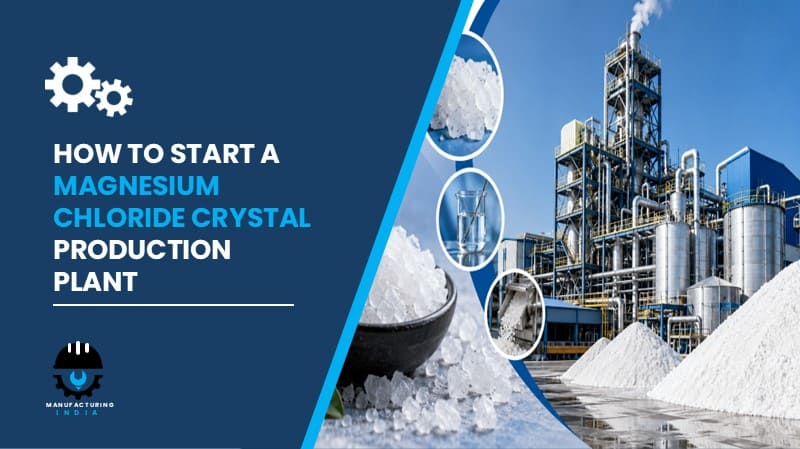
A magnesium chloride crystal production plant setup in India presents a compelling investment case for entrepreneurs eyeing the specialty inorganic chemicals space. Demand is anchored by chemical manufacturing, de-icing & dust control, construction, water treatment, agriculture, and oil & gas drilling – sectors that continue to expand as India’s industrial base matures. Prized for high solubility, hygroscopic nature, and effectiveness at low temperatures, these crystals have become a preferred alternative to conventional salts.
India’s rapid urbanisation, expanding infrastructure investment, and the Make in India push toward specialty chemical self-reliance make this an opportune moment to build production capacity. States with strong chemical clusters and raw material logistics, such as Gujarat and Maharashtra, offer a strategically sound base, combining cost-competitive land and labour with proximity to end-use industries.
This investment benefits from supportive policy tailwinds, cost-competitive inputs, and steady demand from construction, water treatment, and chemical processing, with gross margins in the 22-30% range supporting a viable break-even path for well-capitalised investors.
What is Magnesium Chloride Crystal?
Magnesium chloride crystals are a highly water-soluble inorganic salt with the chemical formula MgCl₂. Primarily extracted from seawater or brine, these odorless, colorless-to-white crystals naturally form a hexahydrate structure (MgCl₂ · 6H₂O). Due to their hygroscopic nature – meaning they easily absorb moisture from the air – they are frequently used for dust control, soil stabilization, and as an eco-friendly road deicer. Beyond industrial and environmental uses, high-purity crystalline grades are widely utilized as a magnesium dietary supplement, in pharmaceutical formulations, and as a natural coagulant in food preparation such as tofu.
The magnesium chloride crystal production process relies on crystallization, centrifugation, drying, and screening as the core unit operations, serving end-use industries including chemical manufacturing, de-icing & dust control, construction, water treatment, agriculture, and oil & gas drilling.
Cost of Setting Up a Magnesium Chloride Crystal Production Plant in India
Cost depends on capacity, technology, automation level, location, and regulatory compliance requirements.
1. Capital Expenditure (CapEx)
Land and site development form a substantial part of the overall investment, covering land registration, boundary development, and related charges; investors can evaluate SEZs or dedicated chemical industrial estates to streamline approvals. Civil works and construction costs cover the production shed, quality control lab, raw material and finished-goods storage, and the administrative block.
Key machinery required includes:
- Evaporators
- Crystallizers
- Centrifuges
- Dryers
- Clarifiers
- Filtration units
- Calcination kilns
- Packaging machines
Machinery costs account for the largest portion of total capital expenditure, and equipment must be corrosion-resistant to withstand the chemical nature of processing. Other capital costs include effluent treatment plant (ETP) installation, pre-operative expenses, commissioning costs, and applicable import duties on specialized equipment.
Request a Sample Report for In-Depth Market Insights: https://www.imarcgroup.com/magnesium-chloride-crystal-manufacturing-plant-project-report/requestsample
2. Operational Expenditure (OpEx)
Raw material cost is the single largest OpEx component, with magnesium hydroxide/oxide, hydrochloric acid, and water accounting for approximately 52-62% of total operating expenses. Securing long-term supplier contracts helps stabilize pricing and mitigate volatility risk.
Utility cost – electricity, water, and steam – contributes roughly 9-13% of OpEx. Other operating costs include transportation, packaging, salaries, maintenance, depreciation, and taxes. By the fifth year, total operational cost is expected to rise substantially due to inflation, market fluctuations, and rising raw material costs, alongside supply chain disruptions.
3. Plant Capacity
The proposed facility is designed around an annual production capacity of 40,000 MT, enabling economies of scale while retaining operational flexibility. Capacity can be customized to match individual investor requirements, and profitability generally improves as capacity utilisation increases toward optimal levels.
4. Profit Margins and Financial Projections
The project demonstrates healthy profitability potential under normal operating conditions. Gross profit margins typically range between 22-30%, while net profit margins fall between 13-19%. Financial projections incorporate net present value (NPV), internal rate of return (IRR), and payback period analysis, developed from realistic assumptions on capital investment, operating costs, capacity utilisation, pricing trends, and demand outlook.
Why Set Up a Magnesium Chloride Crystal Plant in India?
Essential Industrial and Chemical Raw Material. Magnesium chloride crystals are widely used in de-icing formulations, dust control, wastewater treatment, magnesium metal production, construction materials, pharmaceuticals, and chemical processing, giving diverse industrial demand.
Moderate but Justifiable Entry Barriers. While the underlying technology is relatively established, achieving consistent purity, moisture control, and crystal size uniformity requires technical expertise, creating an advantage for well-prepared operators.
Megatrend Alignment. Growing infrastructure development, increasing water treatment requirements, expansion of magnesium-based products, and rising industrial activity are driving steady demand across multiple sectors.
Policy and Infrastructure Push. Government investments in infrastructure construction, water treatment facilities, and industrial development indirectly support demand for the end product used in construction, dust control, and treatment processes.
Active Industry Investment. In April 2025, Village Naturals Therapy launched two new bath solutions – Muscle Magnesium Bath Flakes and Calm Magnesium Bath Flakes – both harnessing magnesium chloride infused with essential oils for relaxation and muscle recovery, reflecting expanding commercial applications.
Local Supply Chain Preference. Industrial consumers increasingly prefer reliable domestic suppliers with consistent quality, competitive pricing, and timely deliveries, creating opportunities for regional producers with secure sourcing and strong relationships.
Manufacturing Process – Step by Step
The magnesium chloride crystal production process uses crystallization, centrifugation, drying, and screening as the primary production method.
- Raw Material Intake: Magnesium hydroxide/oxide, hydrochloric acid, and water are staged per mass-balance requirements.
- Crystallization: The reacted solution is processed through evaporators and crystallizers.
- Centrifugation: Centrifuges separate the crystals from the mother liquor.
- Drying: Dryers reduce residual moisture to meet specifications.
- Clarification and Filtration: Clarifiers and filtration units refine purity.
- Calcination (where required): Calcination kilns process specific grades.
- Quality Assurance: Technical tests confirm purity, moisture, and crystal-size criteria.
- Packaging and Dispatch: Packaging machines prepare the finished product for dispatch to end-use customers.
Key Applications
The finished product serves a wide base of industrial and environmental applications:
- De-Icing & Dust Control: Used in road de-icing formulations and dust suppression on unpaved roads.
- Chemical Processing: Serves as a raw material for magnesium compounds, catalysts, and specialty chemical formulations.
- Construction: Applied in magnesium oxychloride cement, flooring materials, and fire-resistant building products.
- Water Treatment: Used in wastewater treatment, sludge conditioning, and mineral supplementation in treatment systems.
- Magnesium Metal Production: Acts as a feedstock input for magnesium metal extraction.
- Agriculture: Utilized in animal feed supplements.
- Oil & Gas Drilling: Functions as a drilling fluid additive.
Leading Manufacturers
The global industry is served by several established multinational players with extensive production capacities and diverse application portfolios. Key players include:
- Israel Chemicals Ltd. (ICL)
- K+S Aktiengesellschaft
- Compass Minerals International, Inc.
- Nedmag B.V.
- Intrepid Potash, Inc.
Timeline to Start the Plant
- Feasibility study and project report preparation
- Land acquisition and site development
- Regulatory approvals and environmental clearances
- Factory licence and fire safety compliance
- Machinery procurement and installation
- Raw material supplier agreements and supply chain setup
- Trial production and quality testing
- Commercial production launch
Licences and Regulatory Requirements
Starting a magnesium chloride crystal production unit in India requires several approvals:
- Business registration (Proprietorship, LLP, or Pvt Ltd)
- Factory Licence under the Factories Act
- Environmental Clearance from State Pollution Control Board
- GST Registration
- Fire Safety NOC
- Hazardous/Chemical compliance (given the use of hydrochloric acid as a raw material)
- Effluent Treatment Plant (ETP) operational clearance
- Occupational Health and Safety compliance
Key Challenges to Consider
High Capital Requirements: Machinery costs – including evaporators, crystallizers, centrifuges, and calcination kilns – represent the largest share of capital expenditure, requiring significant upfront investment.
Raw Material Price Volatility: Magnesium hydroxide/oxide and hydrochloric acid together drive 52-62% of OpEx, so price swings can materially affect margins.
Regulatory Compliance: Environmental clearances, effluent treatment mandates, and hazardous chemical handling protocols demand ongoing compliance investment.
Consistent Quality Standards: Achieving purity, moisture control, and crystal size uniformity requires technical expertise and disciplined process control.
Competition: Established players such as Israel Chemicals Ltd. (ICL), K+S Aktiengesellschaft, and Compass Minerals International, Inc. compete across global markets, requiring new entrants to differentiate on quality and reliability.
Skilled Manpower: Operating specialized, corrosion-resistant machinery and maintaining quality assurance systems requires trained technical staff.
Frequently Asked Questions
1. How much does it cost to set up a magnesium chloride crystal production plant in India?
Cost depends on capacity, technology, automation, and location, with machinery and land/site development forming the largest components of capital expenditure.
2. Is magnesium chloride crystal production profitable in India in 2026?
Yes, the project demonstrates healthy profitability, with gross margins of 22-30% and net margins of 13-19% under normal operating conditions.
3. What machinery is required for a magnesium chloride crystal plant in India?
Essential machinery includes evaporators, crystallizers, centrifuges, dryers, clarifiers, filtration units, calcination kilns, and packaging machines.
4. What licences and approvals are required to start a magnesium chloride crystal plant in India?
Requirements include business registration, Factory Licence, Environmental Clearance, GST Registration, Fire Safety NOC, hazardous chemical compliance, ETP clearance, and occupational health and safety compliance.
5. What raw materials are needed for magnesium chloride crystal production?
The primary raw materials are magnesium hydroxide/oxide, hydrochloric acid, and water.
6. What are the environmental compliance requirements for a magnesium chloride crystal plant in India?
Requirements include Environmental Clearance from the State Pollution Control Board, an operational ETP, and adherence to hazardous chemical handling and emission standards.
7. What is the best location to set up a magnesium chloride crystal plant in India?
Locations offering easy access to raw materials plus robust transportation, utility, and waste management infrastructure, such as chemical clusters in Gujarat and Maharashtra, are best suited.
8. What is the break-even period for this type of plant in India?
Break-even depends on capacity utilisation, pricing trends, and cost structure; financial projections incorporate NPV, IRR, and payback period analysis based on realistic operating assumptions.
9. What government incentives are available for manufacturers in India?
Government investments in infrastructure construction, water treatment facilities, and industrial development indirectly support demand and create a favourable policy environment for producers.
Key Takeaways for Investors
This opportunity taps into steady demand from chemical manufacturing, de-icing & dust control, construction, water treatment, agriculture, and oil & gas drilling sectors. Financial viability holds across a range of capacities, with the proposed 40,000 MT annual facility supporting gross margins of 22-30% and net margins of 13-19%. India’s domestic chemicals market, valued at USD 220 Billion in 2023, is projected to grow to around USD 400-450 Billion by 2030 per NITI Aayog estimates, while Asia-Pacific already accounts for over 40% of the global market for this hexahydrate-forming salt. With infrastructure investment, water treatment expansion, and specialty chemical demand all trending upward, a well-executed plant is positioned for sustained long-term demand.
About the Author