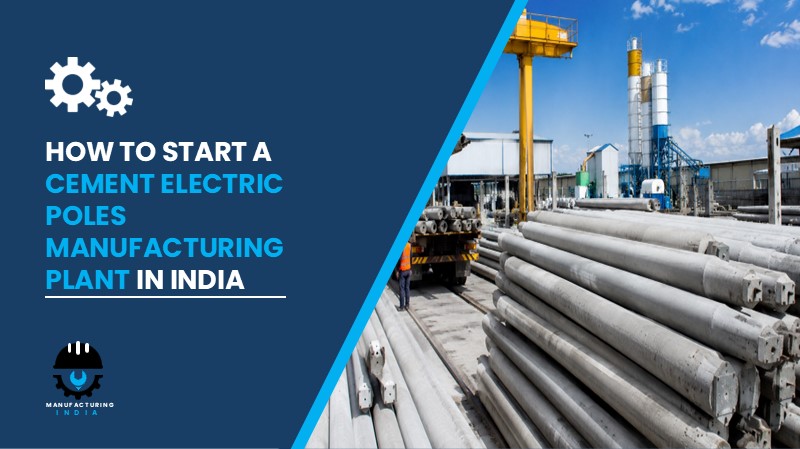
Setting up a cement electric poles manufacturing plant in India presents a compelling investment opportunity, driven by expanding power distribution networks, rural electrification initiatives, urban infrastructure development, railway electrification projects, and growing investments in transmission and utility modernization. Cement electric poles serve as essential infrastructure components for supporting overhead power lines, street lighting, telecommunication networks, and public utility systems, making them indispensable to the country’s expanding electricity ecosystem. As India continues to strengthen its power infrastructure and improve grid reliability, the demand for durable, low-maintenance, and cost-effective prestressed concrete poles is expected to create significant opportunities for domestic manufacturers.
India’s rapid urbanization, sustained infrastructure growth, and the government’s push for domestic manufacturing under Make in India create a favorable backdrop for new capacity. Regions with strong industrial ecosystems and established cement and steel supply chains are well suited to host such a facility, and stable institutional demand from utilities makes India a strategically sound environment for this investment.
This investment is supported by expanding power infrastructure programs, grid modernization initiatives, and steady institutional procurement from utilities. With gross margins of 30-40% and net margins of 15-20%, alongside cost-competitive raw material access, a well-planned facility can achieve reasonable break-even viability serving power, telecommunication, and railway electrification sectors.
What is Cement Electric Poles Manufacturing?
Cement electric poles are reinforced concrete or prestressed concrete structures that support overhead power lines and distribution cables. The two primary variants are reinforced concrete poles and prestressed concrete poles, suited to different load and durability needs. They are constructed from cement, aggregates, water, and steel reinforcement or prestressing wires to achieve strength and durability, functioning as essential components in networks that power street lighting, telecommunication lines, and railway electrification.
The cement electric poles manufacturing process involves batching and mixing concrete, preparing reinforcement cages, assembling molds, pouring concrete, compacting through vibration or centrifugal spinning, curing, demolding, surface finishing, and quality inspection before dispatch.
Cement electric poles serve power distribution companies, electrical contractors, infrastructure developers, telecommunication providers, municipal authorities, and railway electrification agencies.
Cost of Setting Up a Cement Electric Poles Manufacturing Plant in India
The overall cost of setting up a cement electric poles manufacturing plant depends on capacity, technology, location, automation, and compliance.
1. Capital Expenditure (CapEx)
Land and site development form a key part of the initial investment, covering land acquisition, registration charges, and site preparation, with options across industrial estates. Civil works and construction costs cover the production shed, quality control laboratory, storage areas, and administrative block.
Machinery costs account for the largest share of total capital expenditure. Key machinery required includes:
- Concrete batching plants
- Mixers
- Reinforcement cage fabrication equipment
- Pole molds
- Vibration tables or spinning machines
- Curing chambers
- Lifting equipment
- Quality testing apparatus
Other capital costs include effluent treatment plant (ETP) installation, pre-operative expenses, commissioning, and applicable import duties on specialized equipment.
Request a Sample Report for In-Depth Market Insights: https://www.imarcgroup.com/cement-electric-poles-manufacturing-plant-project-report/requestsample
2. Operational Expenditure (OpEx)
Raw material cost is the largest component of operating expenditure, accounting for approximately 55-65% of total OpEx. Core raw materials include cement, aggregates (sand and gravel/stone), water, and high-tensile steel wires or galvanized iron wires. Long-term supplier contracts help stabilize pricing and mitigate volatility.
Utility cost, comprising electricity, water, and steam for curing, accounts for approximately 15-20% of OpEx. Other costs include transportation, packaging, salaries, maintenance, depreciation, and taxes. By year five, total operational cost is expected to rise substantially due to inflation and market fluctuations.
3. Plant Capacity
A typical facility is designed with an annual capacity ranging between 50,000 and 150,000 poles, enabling economies of scale while maintaining flexibility. Capacity can be customized based on investor requirements, and profitability generally improves with higher capacity utilization.
4. Profit Margins and Financial Projections
Financial projections are developed around capital investment, operating costs, capacity utilization, pricing trends, and demand outlook, covering income and expenditure projections, break-even points, NPV, IRR, and payback period. The plant demonstrates healthy profitability, with gross margins typically ranging between 30-40% and net margins between 15-20%.
Why Set Up a Cement Electric Poles Plant in India?
Expanding Power Infrastructure: Investments in grid expansion and modernization enhance the reliability and coverage of power networks, creating sustained procurement opportunities for concrete poles.
Government Electrification Initiatives: Programs providing reliable electricity to rural and urban areas ensure steady demand from utilities and public agencies.
Durable and Low Maintenance: Cement poles offer a longer service life and require less upkeep than wooden poles, supporting their growing preference in new and replacement projects.
Rising Urbanization: Growing urban areas increase demand for dependable street lighting and distribution networks as municipal authorities expand public infrastructure.
Active Industry Investment: In February 2026, the Karnataka Electricity Regulatory Commission (KERC) planned to publish a draft amendment simplifying the Conditions of Supply for electricity distribution licenses, aimed at improving reliability through concrete electricity poles. In April 2025, an African Development Bank-funded project scheduled the installation of 50,000 concrete poles to replace aging wooden poles, illustrating the scale of procurement programs shaping demand.
Stable Institutional Demand: Utilities and public sector agencies consistently procure cement poles, ensuring steady demand. Per the CEA’s National Electricity Plan (NEP) – Transmission, approximately 114,687 ckt km of transmission lines and 776,330 MVA of transformation capacity at 220 kV and higher are planned to be added between 2022 and 2027.
Manufacturing Process – Step by Step
The cement electric poles manufacturing process uses batching, mixing, molding, and curing operations as the primary production method.
- Raw Material Batching and Mixing: Cement, aggregates, and water are proportioned and mixed to form the concrete base.
- Preparation of Reinforcement Cages: Steel reinforcement or prestressing wires are shaped into cages for structural strength.
- Mold Assembly: Reinforcement cages are placed inside prepared pole molds.
- Concrete Pouring: The concrete mix is poured into the molds.
- Vibration or Centrifugal Spinning: Vibration tables or spinning machines compact the concrete and remove trapped air.
- Curing: Poles undergo steam or water curing to achieve required strength.
- Demolding: Poles are removed from molds after curing.
- Surface Finishing: Finishing work improves surface quality and appearance.
- Quality Inspection: Poles are tested for load capacity and quality before approval.
- Storage and Dispatch: Finished poles are stored and dispatched to power distribution companies, electrical contractors, and other end-use industries.
Key Applications
Cement electric poles serve several critical infrastructure segments across power and communication networks.
- Power Distribution Networks: Installed for supporting low and medium voltage overhead lines.
- Rural Electrification Projects: Used in expanding electricity access to remote areas.
- Street Lighting Systems: Deployed by municipalities for urban and highway lighting.
- Telecommunication Infrastructure: Utilized for mounting communication cables and related equipment.
Leading Manufacturers
The global cement electric poles industry is served by established players with extensive capacities and diverse application portfolios.
- StressCrete Ltd
- Valmont Industries
- Utility Structures Inc
- Humes
- Rocla
- HBL Power Systems Limited
- Ameron Pole
- Nippon Concrete Industries
Timeline to Start the Plant
- Feasibility study and project report preparation
- Land acquisition and site development
- Regulatory approvals and environmental clearances
- Factory licence and fire safety compliance
- Machinery procurement and installation
- Raw material supplier agreements and supply chain setup
- Trial production and quality testing
- Commercial production launch
Licences and Regulatory Requirements
Starting a cement electric poles manufacturing unit in India requires several approvals:
- Business registration (Proprietorship, LLP, or Pvt Ltd)
- Factory Licence under the Factories Act
- Environmental Clearance from State Pollution Control Board
- GST Registration
- Fire Safety NOC
- Effluent Treatment Plant (ETP) operational clearance
- Occupational Health and Safety compliance
Key Challenges to Consider
High Capital Requirements: Machinery costs account for the largest portion of capital expenditure, making funding for equipment, land, and civil works a hurdle for new entrants.
Raw Material Price Volatility: Cement, aggregates, and steel reinforcement bars face price fluctuations, and since raw materials account for 55-65% of operating expenses, volatility directly affects profitability.
Regulatory Compliance: Securing environmental clearances, factory licenses, and fire safety certifications requires coordination across local, state, and national authorities.
Competition: Established players such as StressCrete Ltd, Valmont Industries, Utility Structures Inc, Humes, Rocla, HBL Power Systems Limited, Ameron Pole, and Nippon Concrete Industries set significant benchmarks.
Skilled Manpower: Recruiting skilled labor for equipment operation, quality assurance, and technical testing is essential to consistent production.
Operational Risk Management: Managing supply chain disruptions and compliance with technical tests adds ongoing complexity.
Frequently Asked Questions
1. How much does it cost to set up a cement electric poles manufacturing plant in India?
Capital requirements include land acquisition, construction, equipment, installation, pre-operative expenses, and working capital, varying with capacity and location.
2. Is cement electric poles manufacturing profitable in India in 2026?
Profitability depends on demand, efficiency, pricing, and raw material cost management, with gross margins typically 30-40% and net margins 15-20%.
3. What machinery is required for a cement electric poles plant in India?
Key machinery includes concrete batching plants, mixers, reinforcement cage fabrication equipment, pole molds, vibration tables or spinning machines, curing chambers, lifting equipment, and quality testing apparatus.
4. What licences and approvals are required to start a cement electric poles plant in India?
Requirements include business registration, environmental clearances, factory licenses, fire safety certifications, and other permits, varying by location.
5. What raw materials are needed for cement electric poles manufacturing?
Manufacturing requires cement, aggregates (sand and gravel/stone), water, and high-tensile steel wires or galvanized iron wires, combined to form high-strength reinforced concrete.
6. What are the environmental compliance requirements for a cement electric poles plant in India?
Requirements include environmental clearance from the State Pollution Control Board and ETP operational clearance, along with emission and waste management standards.
7. What is the best location to set up a cement electric poles plant in India?
The location must offer access to cement, aggregates, and steel reinforcement bars, proximity to target markets, transportation infrastructure, and compliance with local zoning laws.
8. What is the break-even period for this type of plant in India?
Break-even typically ranges from 3 to 6 years, depending on scale, compliance costs, raw material pricing, and market demand.
9. What government incentives are available for manufacturers in India?
Governments may offer capital subsidies, tax exemptions, reduced utility tariffs, export benefits, or interest subsidies under national or regional industrial policies.
Key Takeaways for Investors
This investment represents a substantial opportunity in India, supported by demand from power distribution companies, electrical contractors, infrastructure developers, telecommunication providers, municipal authorities, and railway electrification agencies. The plant demonstrates financial viability across capacities ranging from 50,000 to 150,000 poles annually, with gross margins of 30-40% and net margins of 15-20% offering an attractive return profile at various scales. With Asia Pacific commanding the largest revenue share of the global market at 38.6%, and approximately 114,687 ckt km of transmission lines plus 776,330 MVA of transformation capacity planned for addition between 2022 and 2027 under the CEA’s National Electricity Plan, sustained infrastructure expansion supports long-term demand across India’s power, telecommunication, and railway electrification sectors.
About the Author