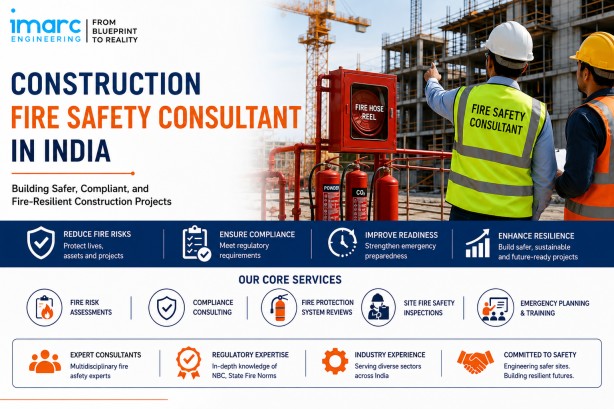
Construction Fire Safety Consultant in India
India’s construction sector is witnessing unprecedented growth across residential, commercial, industrial, healthcare, logistics, and infrastructure projects. As developments become larger and technically more complex, fire safety has evolved from a post-construction compliance requirement into a core project management discipline.
Recent fire incidents, stricter regulatory enforcement, and increasing scrutiny by fire authorities have highlighted the risks associated with inadequate fire planning during construction. Delayed implementation of fire protection measures often results in project disruptions, approval delays, financial losses, reputational damage, and significant risks to human life.
Construction environments are inherently dynamic. Temporary electrical systems, welding operations, combustible materials, diesel storage, evolving site layouts, and multiple contractors create continuously changing fire hazards that require proactive management rather than reactive correction.
Engaging a construction fire safety consultant early in the project helps organizations identify fire risks, strengthen regulatory compliance, and implement preventive measures throughout the construction lifecycle.
Key Fire Safety Regulations Applicable During Construction Projects in India
Fire safety during construction is governed by a combination of national codes, state regulations, and project-specific statutory requirements. While compliance obligations vary depending on the type and scale of the project, integrating fire safety planning early helps minimize regulatory delays, reduce project risks, and support safe execution.
Some of the key regulations and authorities include:
| Regulation / Authority | Relevance |
| National Building Code (NBC) 2016 – Part 4 | Provides guidelines for fire prevention, life safety, fire detection, suppression systems, and emergency evacuation. |
| State Fire Service Departments | Review fire safety measures and issue Fire NOCs in accordance with state regulations. |
| Local Development Authorities | Verify compliance with approved fire safety provisions before occupancy approvals. |
| Factories Act and State Factory Rules (where applicable) | Require appropriate fire protection measures for industrial construction projects. |
| PESO (where applicable) | Regulates facilities handling petroleum products, LPG, compressed gases, and other hazardous materials. |
By incorporating these requirements during the planning and construction phases, developers and contractors can strengthen regulatory compliance, improve workforce safety, and reduce the likelihood of costly project delays or fire-related incidents.
Why Construction Fire Safety Has Become a Strategic Business Priority
Modern construction projects involve thousands of interconnected activities occurring simultaneously. Every phase introduces new fire hazards that demand continuous assessment and control.
Organizations commonly face challenges such as:
- Temporary electrical installations creating ignition risks
- Welding, cutting, and other hot work operations
- Storage of combustible construction materials
- Diesel generators and fuel handling areas
- Paints, solvents, gases, and chemical storage
- Poor housekeeping and combustible waste accumulation
- Frequently changing evacuation routes
- Multiple contractors working simultaneously
- Limited emergency preparedness during construction
- Inconsistent fire safety practices across subcontractors
Many organizations invest heavily in occupational health and safety while underestimating project-specific fire risks. However, effective construction fire safety requires dedicated planning, engineering controls, continuous monitoring, and emergency preparedness throughout every stage of execution.
Organizations that integrate fire safety early experience smoother project execution, fewer operational disruptions, stronger regulatory compliance, and significantly lower risk exposure.
IMARC Engineering’s Construction Fire Safety Consulting Framework
IMARC Engineering adopts a lifecycle-based consulting methodology that integrates fire safety into every phase of construction , from project planning and design through execution, commissioning, and final handover.
Stage 1: Comprehensive Construction Fire Risk Assessment
Every engagement begins with a systematic evaluation of project-specific fire hazards, operational risks, and regulatory requirements.
Our Assessment Covers
- Project type and occupancy profile
- Construction methodology review
- Temporary structures and utilities
- Material storage and handling practices
- Electrical installation risks
- Hot work activities
- Fuel and combustible storage
- Site accessibility for emergency response
- Existing emergency preparedness capabilities
Business Outcomes
- Complete visibility of project fire risks
- Prioritized mitigation roadmap
- Early identification of compliance gaps
- Reduced likelihood of fire-related disruptions
Stage 2: Fire Safety Strategy and Regulatory Compliance Planning
Following the risk assessment, our consultants develop a comprehensive fire safety framework aligned with applicable National Building Code (NBC), State Fire Service requirements, and project-specific statutory obligations.
Consulting Services Include
- Construction Fire Safety Management Plan
- Fire Prevention Strategy
- Emergency Response Planning
- Fire Evacuation Procedures
- Temporary Fire Protection Planning
- Fire Equipment Planning
- Fire Water Supply Assessment
- Site Layout Fire Safety Review
- Regulatory documentation support
Business Outcomes
- Improved regulatory readiness
- Faster statutory approvals
- Structured project governance
- Reduced compliance risks
Stage 3: Fire Protection System Engineering Review
Effective fire protection requires both temporary and permanent systems to function reliably throughout construction.
IMARC Engineering evaluates the adequacy, placement, accessibility, and performance of critical fire protection infrastructure.
Systems Reviewed
- Portable fire extinguishers
- Fire hydrant systems
- Automatic sprinkler systems
- Fire alarm networks
- Smoke detection systems
- Emergency lighting
- Exit signage
- Fire pumps
- Fire water tanks
- Hose reel systems
Business Outcomes
- Reliable fire protection infrastructure
- Enhanced emergency response capability
- Improved life safety performance
- Reduced operational vulnerabilities
Stage 4: Continuous Site Fire Safety Monitoring
Fire safety cannot be achieved through one-time inspections. Construction environments change daily, requiring continuous verification and corrective action.
Our consultants conduct regular site assessments to ensure fire safety measures remain effective throughout project execution.
Monitoring Activities Include
- Routine fire safety inspections
- Fire equipment verification
- Hot work permit audits
- Electrical safety inspections
- Fuel and chemical storage reviews
- Housekeeping assessments
- Contractor fire safety compliance reviews
- Fire drill observations
- Corrective action verification
Business Outcomes
- Continuous regulatory compliance
- Lower probability of fire incidents
- Stronger contractor accountability
- Improved site-wide safety performance
Stage 5: Emergency Preparedness, Workforce Training and Project Handover
The final phase ensures that project teams possess the knowledge, resources, and procedures necessary to manage fire emergencies effectively before project completion.
Key Activities
- Fire awareness training
- Fire extinguisher demonstrations
- Fire warden training
- Emergency evacuation drills
- Mock emergency exercises
- Incident reporting procedures
- Final fire safety audits
- Handover documentation
Business Outcomes
- Competent emergency response teams
- Faster evacuation capability
- Sustainable fire safety culture
- Smooth transition to operational occupancy
Construction Fire Safety Consulting Lifecycle
| Project Phase | Consulting Focus | IMARC Engineering’s Role | Business Value |
| Risk Assessment | Fire hazard identification | Comprehensive fire risk evaluation | Lower project risks |
| Planning | Fire strategy development | Regulatory compliance planning | Faster approvals |
| System Review | Fire protection evaluation | Engineering design verification | Reliable fire protection |
| Site Monitoring | Continuous inspections | Compliance monitoring | Reduced fire incidents |
| Emergency Planning | Preparedness development | Emergency response planning | Improved resilience |
| Training | Workforce competency | Fire awareness and mock drills | Strong safety culture |
| Final Audit | Compliance verification | Handover and certification support | Successful project completion |
Sector-Specific Fire Safety Consulting Expertise
Every construction sector presents distinct fire risks. IMARC Engineering develops customized fire safety strategies aligned with project characteristics and operational requirements.
1. Industrial Facilities
Assessment of process hazards, hazardous material handling, temporary utilities, fire compartmentation, and industrial emergency response planning.
2. Commercial Buildings
Evaluation of occupant evacuation strategies, smoke management systems, fire detection integration, and life safety compliance.
3. Residential Developments
Planning for hydrant systems, emergency exits, basement fire protection, fire alarms, stairwell safety, and occupant evacuation.
4. Healthcare Infrastructure
Specialized consulting covering fire zoning, compartmentation, medical gas safety, emergency power systems, and patient evacuation strategies.
5. Warehouses and Logistics Parks
Risk assessment for combustible inventory, storage configurations, sprinkler adequacy, fire detection systems, and emergency access.
6.Infrastructure Projects
Customized fire engineering solutions for airports, metro systems, tunnels, bridges, transport hubs, and utility infrastructure.
Business Value of Professional Construction Fire Safety Consulting
Organizations implementing structured fire safety programs benefit from improved operational performance beyond regulatory compliance.
Key business advantages include:
- Reduced fire incidents during construction
- Improved statutory compliance
- Faster regulatory approvals
- Lower operational risk exposure
- Better contractor coordination
- Stronger emergency preparedness
- Reduced insurance liabilities
- Protection of workforce and assets
- Enhanced business continuity
- Greater stakeholder confidence
Fire safety is increasingly recognized as a strategic risk management function that directly supports project delivery, financial performance, and long-term operational resilience.
2026 Trends Transforming Construction Fire Safety
The construction industry is rapidly adopting technology-driven fire risk management solutions that enhance prevention, monitoring, and regulatory compliance.
Emerging trends include:
- AI-enabled fire detection and predictive risk monitoring
- IoT-based real-time hazard monitoring systems
- Drone-assisted construction safety inspections
- Digital permit-to-work platforms
- BIM-integrated fire safety planning
- Smart connected fire detection and alarm systems
- Adoption of fire-resistant construction materials
- Increased regulatory inspections and digital compliance reporting
Organizations that embrace these innovations are better positioned to reduce operational risks while improving project efficiency and regulatory preparedness.
Why Choose IMARC Engineering?
Construction fire safety requires far more than periodic inspections. It demands engineering expertise, regulatory understanding, and practical construction experience to manage risks throughout the project lifecycle.
IMARC Engineering delivers integrated fire safety consulting that supports developers, EPC contractors, architects, industrial organizations, infrastructure developers, and project owners in building safer, compliant, and operationally resilient facilities.
Our Core Services
- Construction fire risk assessments
- Fire safety compliance consulting
- Fire protection system reviews
- Site fire safety inspections
- Emergency response planning
- Fire safety audits
- Fire awareness training and mock drills
- Contractor fire safety management
- Regulatory documentation support
- Project commissioning assistance
Our engineering-led approach helps organizations strengthen compliance, minimize project risks, improve emergency preparedness, and create sustainable fire safety management systems from planning through project completion.
Learn how IMARC Engineering supports construction projects through fire safety consulting, risk assessments, regulatory compliance, and emergency preparedness: https://www.imarcengineering.com/contact?service=fire-and-safety-compliance-during-construction
Frequently Asked Questions
1. What does a construction fire safety consultant do?
A construction fire safety consultant identifies fire hazards, develops fire prevention strategies, reviews fire protection systems, conducts inspections, supports regulatory compliance, and enhances emergency preparedness throughout the construction lifecycle.
2. Which construction projects require fire safety consulting?
Industrial plants, commercial buildings, residential developments, warehouses, hospitals, educational institutions, hotels, infrastructure projects, and large EPC projects all benefit from professional fire safety consulting.
3. Why is fire safety important during construction?
Construction sites involve constantly changing hazards such as hot work, temporary electrical systems, combustible materials, fuel storage, and evolving site conditions. Early fire safety planning helps prevent accidents, project delays, and regulatory non-compliance.
4. What are the most common construction site fire hazards?
Common hazards include welding and cutting operations, electrical faults, temporary wiring, combustible waste, flammable liquids, fuel storage, smoking, chemical storage, and poor housekeeping practices.
5. How frequently should construction fire safety inspections be conducted?
Inspection frequency depends on project complexity and risk profile. High-risk construction projects generally require scheduled inspections, milestone-based audits, and continuous monitoring throughout execution.
6. How does IMARC Engineering support construction projects?
IMARC Engineering provides end-to-end construction fire safety consulting, including risk assessments, compliance reviews, fire protection planning, site inspections, emergency preparedness, workforce training, audits, and regulatory documentation support to help organizations deliver safer, compliant, and fire-resilient projects.
IMARC Engineering
Construction Fire Safety Consulting | Fire Risk Assessment | Fire Safety Compliance | Fire Protection System Review | Emergency Preparedness
📞 +91 120 433 0800
📧 sales@imarcengineering.com
📍 C–130, Sector 2, Noida, Uttar Pradesh 201301
🔗 LinkedIn
About the Author