Aluminum Beverage Bottle Manufacturing Plant in India
Setting up an aluminum beverage bottle manufacturing plant in India presents a compelling investment case, driven by the increasing demand for sustainable and recyclable packaging, rising consumption of ready-to-drink beverages, and the growing preference for lightweight and durable packaging solutions across the food and beverage sector. Aluminum beverage bottles are critical to India’s economy as they support the country’s rapidly expanding beverage industry, reduce dependence on single-use plastics, and align with global circular economy goals. The Indian food and beverage packaged industry is expected to grow from USD 33.7 Billion in 2023 to USD 46.3 Billion in 2028, creating significant opportunities for domestic aluminum bottle manufacturing.
India’s accelerated urbanization, expanding retail networks, and the government’s “Make in India” initiative provide strong tailwinds for domestic manufacturing. Key manufacturing states such as Gujarat, Maharashtra, Andhra Pradesh, and Tamil Nadu offer established infrastructure and access to raw materials. Ball Corporation’s recent USD 60 Million investment in its Sri City manufacturing facility in Andhra Pradesh highlights the growing confidence in India’s aluminum packaging sector. With the global aluminum beverage bottle market expected to reach USD 18.33 Billion by 2034, growing at a CAGR of 7.12%, India offers a strategically sound environment for establishing an aluminum beverage bottle manufacturing facility.
India’s aluminum beverage bottle market presents strong investment potential, bolstered by policy support like Make in India, rapid urbanization, and a booming beverage sector. With gross margins typically ranging between 30-40% and net margins of 12-18%, investors can achieve healthy profitability and a viable break-even timeline of 3-6 years.
What is an Aluminum Beverage Bottle?
Aluminum beverage bottles are rigid, lightweight containers manufactured from aluminum alloys and used primarily for packaging beverages such as carbonated drinks, bottled water, energy drinks, juices, and alcoholic beverages. These bottles provide excellent barrier properties against light, oxygen, and moisture, helping preserve flavor, carbonation, and product freshness. Aluminum beverage bottles are corrosion-resistant, highly durable, and capable of maintaining internal pressure, which makes them suitable for both carbonated and non-carbonated beverages. A key advantage is their infinite recyclability without quality loss, supporting circular packaging systems and sustainability goals. They also offer superior cooling performance compared to many alternative packaging formats and are compatible with decorative printing, embossing, and resealable closures. The aluminum beverage bottle manufacturing process uses impact extrusion, trimming, washing, printing and coating as the primary production method. Key end-use industries served include beverage production, consumer goods, hospitality, retail, sporting events, and outdoor recreation.
Cost of Setting Up an Aluminum Beverage Bottle Manufacturing Plant in India
The total cost of setting up an aluminum beverage bottle manufacturing plant in India depends on several critical factors, including plant capacity, technology, location, automation levels, and regulatory compliance requirements.
1. Capital Expenditure (CapEx)
The total capital investment required for establishing an aluminum beverage bottle manufacturing plant covers land acquisition, site preparation, and necessary infrastructure. The location must offer easy access to key raw materials such as aluminum slugs and aluminum coil, with proximity to target markets to help minimize distribution costs. The site must have robust infrastructure, including reliable transportation, utilities, and waste management systems. Machinery costs account for the largest portion of total capital expenditure. The cost of land and site development, including charges for land registration, boundary development, and other related expenses, forms a substantial part of the overall investment.
Key machinery required includes:
- Coil slitters
- Cup forming presses
- Neckers
- Trimmers
- Washers
- Coaters
- Printers
- Light testers
- Palletizing systems
Other capital costs include civil works (production shed, quality control lab, raw material and finished goods storage, administrative block), effluent treatment systems, and pre-operative and commissioning expenses.
Request a Sample Report for In-Depth Market Insights: https://www.imarcgroup.com/aluminum-beverage-bottle-manufacturing-plant-project-report/requestsample
2. Operational Expenditure (OpEx)
The operating cost structure of an aluminum beverage bottle manufacturing plant is primarily driven by raw material consumption, particularly aluminum slugs, which accounts for approximately 55-75% of total operating expenses (OpEx). Raw materials required include aluminum slugs/aluminum coil, internal coating lacquer, external coating/paint, printing inks, bottle caps (aluminum/plastic), and packaging materials. Implementing long-term contracts with reliable suppliers helps mitigate price volatility and ensure a consistent supply of materials. Utilities (electricity, water, steam) account for 10-15% of OpEx. Other OpEx components include transportation costs, packaging costs, salaries and wages, repairs and maintenance, depreciation, and taxes. By the fifth year, the total operational cost is expected to increase substantially due to factors such as inflation, market fluctuations, and potential rises in the cost of key materials.
3. Plant Capacity
The proposed manufacturing facility is designed with an annual production capacity ranging between 50–100 million bottles, enabling economies of scale while maintaining operational flexibility. Plant capacity can be customized per investor requirements. Profitability improves significantly with higher capacity utilization.
4. Profit Margins and Financial Projections
The project demonstrates healthy profitability potential under normal operating conditions. Gross profit margins typically range between 30-40%, supported by stable demand and value-added applications. Net profit margins are projected at 12-18%. Financial analysis includes comprehensive projections of net present value (NPV), internal rate of return (IRR), payback period, income projections, expenditure projections, and profit and loss accounts. The break-even period typically ranges from 3 to 6 years, depending on scale, regulatory compliance costs, raw material pricing, and market demand.
Why Set Up an Aluminum Beverage Bottle Plant in India?
Growing Demand for Sustainable Packaging: Aluminum bottles are fully recyclable and support circular economy initiatives. Governments and beverage brands are increasingly adopting recyclable packaging to reduce plastic waste and meet environmental sustainability targets. The high recycling value of aluminum—which can be recycled indefinitely without losing quality—makes it one of the most economically viable and environmentally responsible packaging materials.
Strong Growth in Ready-to-Drink Beverage Segment: The expansion of ready-to-drink beverages such as energy drinks, cold brew coffee, and functional beverages is driving demand for durable, portable, and premium packaging solutions like aluminum bottles. According to FICCI, the Indian food and beverage packaged industry is expected to grow from USD 33.7 Billion in 2023 to USD 46.3 Billion in 2028.
Superior Barrier Properties: Aluminum bottles provide excellent protection against light, oxygen, and contamination, ensuring longer shelf life and better preservation of beverage flavor and carbonation. This makes them particularly suitable for both carbonated and non-carbonated beverages.
Brand Differentiation and Premium Appeal: Aluminum bottles allow advanced printing, embossing, and custom shaping. Beverage brands use these features to enhance product visibility, premium positioning, and consumer engagement. The rising popularity of on-the-go consumption and outdoor beverage consumption further strengthens demand for lightweight, resealable containers.
Policy and Regulatory Tailwinds: The “Make in India” initiative and state-level industrial policies encourage domestic manufacturing. Governments may offer incentives such as capital subsidies, tax exemptions, reduced utility tariffs, export benefits, or interest subsidies to promote manufacturing under various national or regional industrial policies. Increasing consumer awareness regarding environmental impact and the high recycling rate of aluminum are expected to continue supporting the adoption of aluminum beverage bottles across global beverage markets.
Active Industry Investment: In November 2025, Ball Corporation invested USD 60 Million (approx 532 crore) in its Sri City manufacturing facility in Andhra Pradesh, beefing up its capacity for beverage cans manufacturing. In April 2024, BlueTriton Brands announced the release of new aluminum bottle packaging across five of its brands including Poland Spring, Deer Park, Ice Mountain, Arrowhead, and Pure Life.
Manufacturing Process – Step by Step
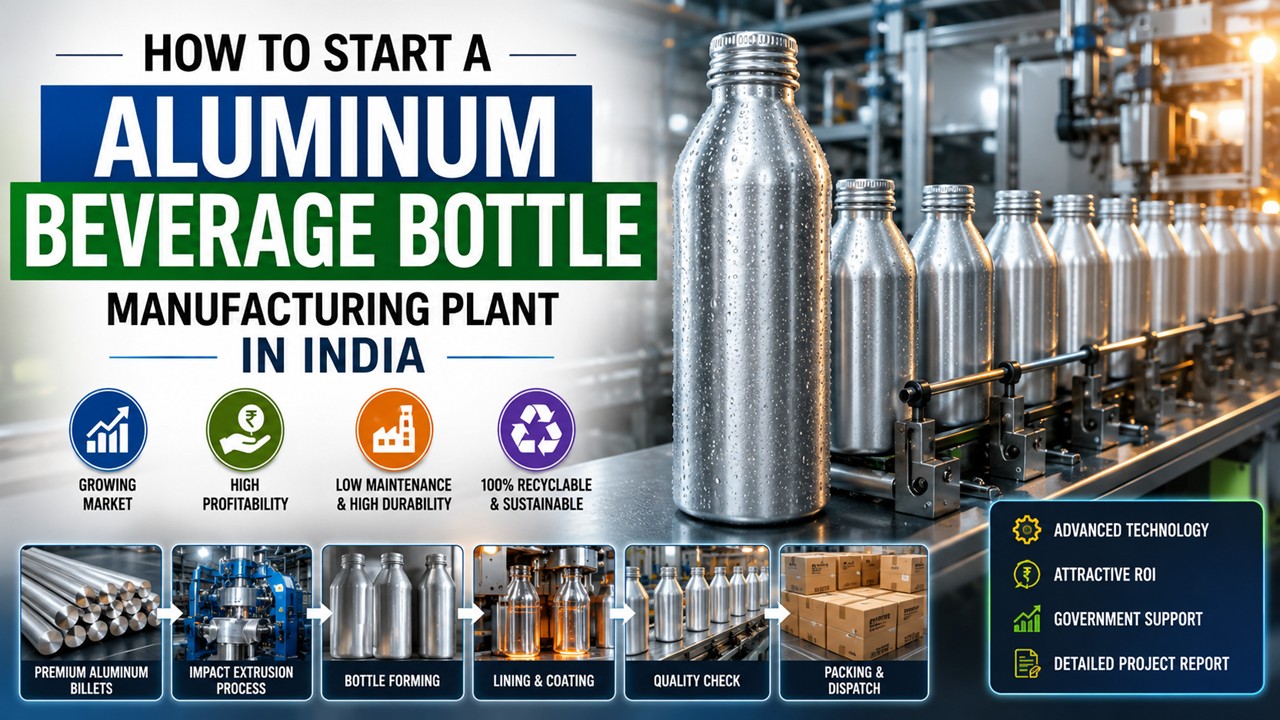
The aluminum beverage bottle manufacturing process uses impact extrusion, trimming, washing, printing and coating as the primary production method.
- Raw Material Sourcing: Reliable suppliers must be secured for raw materials like aluminum slugs/aluminum coil, internal coating lacquer, external coating/paint, printing inks, bottle caps (aluminum/plastic), and packaging materials to ensure consistent production quality. Long-term contracts should be negotiated to stabilize pricing and ensure a steady supply.
- Producing Aluminum Coil Stock: Aluminum coil stock is prepared for the forming process.
- Punching Cups: Cups are punched from aluminum coil sheets.
- Forming and Ironing: Cups are formed and ironed into bottles.
- Trimming: Bottle edges are trimmed for uniform height.
- Washing: Bottles are washed to remove residues.
- Applying Base Coat and Decorative Printing: Base coat is applied and decorative printing is performed.
- Curing Coatings: Coatings are cured in controlled heating ovens.
- Quality Assurance: A comprehensive quality management system is implemented across all stages of operations to ensure consistent product and service standards. Light testers are used for inspection. Standard operating procedures (SOPs), documentation protocols, and traceability mechanisms should be maintained to support transparency, risk management, and continuous improvement.
- Packaging and Dispatch: Inspected bottles are packed and dispatched to end-use industries including beverage production, consumer goods, hospitality, retail, sporting events, and outdoor recreation.
Key Applications
Aluminum beverage bottles serve a diverse range of industries and applications:
- Beverage Packaging: Lightweight aluminum bottles for water, soft drinks, energy drinks, and alcoholic beverages.
- Food & Beverage Industry: Durable, recyclable containers for ready-to-drink products and specialty beverages.
- Retail & Branding: Premium aluminum bottles used for branded packaging, promotional products, and limited-edition designs.
- Sustainable Packaging Solutions: Reusable and highly recyclable aluminum bottles supporting eco-friendly packaging initiatives.
Leading Manufacturers
Leading manufacturers in the global aluminum beverage bottle industry include several multinational companies with extensive production capacities and diverse application portfolios. Key players include:
- Ball Corporation
- Crown Holdings Inc.
- Ardagh Metal Packaging
- CCL Container
- Envases Group
- Alucon Public Company Limited
- CANPACK
- Amcor Limited
These key players serve end-use sectors such as beverage production, consumer goods, hospitality, retail, sporting events, and outdoor recreation.
Timeline to Start the Plant
- Feasibility study and project report preparation
- Land acquisition and site development
- Regulatory approvals and environmental clearances
- Factory licence and fire safety compliance
- Machinery procurement and installation
- Raw material supplier agreements and supply chain setup
- Trial production and quality testing
- Commercial production launch
Note: The timeline typically ranges from 12 to 24 months to start an aluminum beverage bottle manufacturing plant, depending on factors like site development, machinery installation, environmental clearances, safety measures, and trial runs.
Licences and Regulatory Requirements
Starting an aluminum beverage bottle manufacturing unit in India requires several approvals:
- Business registration (Proprietorship, LLP, or Pvt Ltd)
- Factory Licence under the Factories Act
- Environmental Clearance from State Pollution Control Board
- GST Registration
- Fire Safety NOC
- Effluent Treatment Plant (ETP) operational clearance
- Occupational Health and Safety compliance
Local, state, and national regulations may apply depending on the location.
Key Challenges to Consider
- High Capital Requirements: Machinery costs for coil slitters, cup forming presses, neckers, trimmers, washers, coaters, printers, light testers, and palletizing systems represent a significant portion of capital expenditure. Land acquisition, construction, and infrastructure costs also contribute substantially to the total investment.
- Raw Material Price Volatility: Fluctuations in prices of aluminum slugs/aluminum coil, internal coating lacquer, external coating/paint, printing inks, and bottle caps directly impact margins. Raw materials account for 55-75% of operating expenses.
- Regulatory Compliance: Navigating environmental clearances, factory licences, and pollution control board regulations requires careful planning. Effluent treatment systems are necessary to minimize environmental impact and ensure compliance with emission standards.
- Competition: The market includes established global players such as Ball Corporation, Crown Holdings Inc., Ardagh Metal Packaging, CCL Container, Envases Group, Alucon Public Company Limited, CANPACK, and Amcor Limited.
- Skilled Manpower: Access to skilled workers for operating forming, ironing, necking, coating, and printing equipment is essential.
Frequently Asked Questions
- How much does it cost to set up an aluminum beverage bottle manufacturing plant in India?
The total capital investment depends on plant capacity, technology, and location, covering land acquisition, site preparation, infrastructure, and machinery costs. - Is aluminum beverage bottle manufacturing profitable in India in 2026?
Yes, gross profit margins typically range between 30-40%, with net profit margins of 12-18%, indicating healthy profitability potential. - What machinery is required for an aluminum beverage bottle plant in India?
Essential equipment includes coil slitters, cup forming presses, neckers, trimmers, washers, coaters, printers, light testers, and palletizing systems. - What licences and approvals are required to start an aluminum beverage bottle plant in India?
Required approvals include business registration, Factory Licence under the Factories Act, Environmental Clearance from State Pollution Control Board, GST Registration, Fire Safety NOC, and ETP operational clearance. - What raw materials are needed for aluminum beverage bottle manufacturing?
Raw materials required include aluminum slugs/aluminum coil, internal coating lacquer, external coating/paint, printing inks, bottle caps (aluminum/plastic), and packaging materials. - What are the environmental compliance requirements for an aluminum beverage bottle plant in India?
Facilities must implement effluent treatment systems, obtain environmental clearance from the State Pollution Control Board, and comply with emission standards. - What is the best location to set up an aluminum beverage bottle plant in India?
The location must offer easy access to key raw materials such as aluminum slugs and aluminum coil, with proximity to target markets to minimize distribution costs. Key manufacturing states include Gujarat, Maharashtra, Andhra Pradesh, and Tamil Nadu. - What is the break-even period for this type of plant in India?
The break-even period typically ranges from 3 to 6 years, depending on scale, regulatory compliance costs, raw material pricing, and market demand. - What government incentives are available for manufacturers in India?
Governments may offer incentives such as capital subsidies, tax exemptions, reduced utility tariffs, export benefits, or interest subsidies to promote manufacturing under various national or regional industrial policies.
Key Takeaways for Investors
Setting up an aluminum beverage bottle manufacturing plant in India offers a compelling investment opportunity, driven by strong demand from beverage production, consumer goods, hospitality, retail, sporting events, and outdoor recreation sectors. The project demonstrates healthy financial viability across various plant capacities (50–100 million bottles annually), with gross profit margins ranging between 30-40% and net margins of 12-18%. The global aluminum beverage bottle market was valued at USD 9.87 Billion in 2025 and is expected to reach USD 18.33 Billion by 2034, exhibiting a CAGR of 7.12% from 2026 to 2034. With India’s food and beverage packaged industry projected to grow from USD 33.7 Billion in 2023 to USD 46.3 Billion in 2028, increasing consumer awareness regarding environmental impact, and the high recycling rate of aluminum supporting adoption across global beverage markets, the aluminum beverage bottle industry is poised for continued expansion, making now an opportune time for investors to enter this dynamic market.
About the Author