Setting up a cashew nut processing plant in India presents a compelling investment case driven by the rising global consumption of healthy snack foods, expanding food processing industries, and increasing demand for value-added nut products across retail and foodservice channels. Cashew nuts – edible seeds extracted from the cashew tree (Anacardium occidentale) grown primarily in tropical countries – have a subtle taste and soft texture, a high energy level, and a favourable nutritional and lipid profile that places them firmly within the fast-growing healthy snacking and plant-based nutrition megatrends. India is already one of the world’s most important cashew-producing and processing nations, with a domestic food manufacturing market expected to grow from USD 307 billion in 2023 to USD 700 billion in 2030 according to IBEF – a trajectory that creates an expanding ecosystem of food processing, bakery, confectionery, and dairy alternative companies requiring consistent supplies of graded processed cashew kernels.
India’s structural advantages make this a strategically sound investment. The country’s geo-proximity to cashew orchard clusters in Maharashtra, Goa, Kerala, Karnataka, Andhra Pradesh, and Odisha reduces distribution costs, improves freshness and steadiness of the supply stream, and gives sub-regional processors with organised operations a clear competitive entering wedge over processors dependent on imported raw nuts. Government initiatives in agro-processing, rural employment, food export promotion, and value-addition under Make in India, MSME schemes, and export incentive frameworks all support cashew nut processing plant investment in India – specifically by encouraging domestic processing of raw cashew nuts rather than export in unprocessed form. The global cashew nut market was valued at USD 7.98 billion in 2025 and is expected to reach USD 11.07 billion by 2034 at a CAGR of 3.7% from 2026 to 2034 according to IMARC Group estimates.
India’s geo-proximity to tropical cashew orchards, IBEF’s projection of the Indian food manufacturing market reaching USD 700 billion by 2030, government agro-processing support, and a global cashew market growing from USD 7.98 billion in 2025 to USD 11.07 billion by 2034 make a cashew nut processing plant a commercially well-anchored agro-food investment. With gross margins of 10–20% and net margins of 4–8% across a capacity of 10,000–20,000 MT annually, the project delivers consistent export-oriented returns aligned with India’s agro-processing value addition agenda.
What is a Cashew Nut?
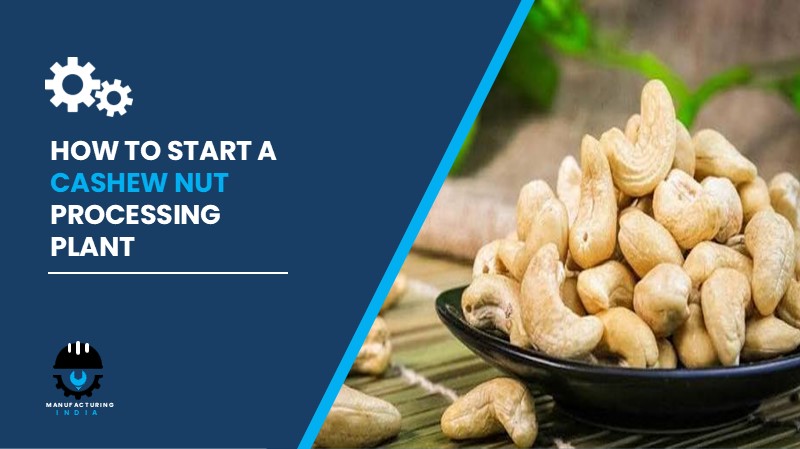
Cashew nuts belong to the category of edible seeds and are extracted from the cashew tree (Anacardium occidentale) that is mainly grown in tropical countries. Cashew nuts and products made from them are considered healthy due to favourable nutritional and lipid profiles. They have a subtle taste and soft texture and carry a high energy level. Cashew nuts have many uses – primarily as a snack nut or for food processing. In food processing industries, these nuts can be used as a healthy alternative to other nuts across multiple product categories.
Commercially available processed cashew kernels are extracted from raw nuts through shell separation and peeling – a technically demanding multi-stage process that requires specialised machinery, skilled labour, strict quality control, and food safety certifications. The product spans applications including nut mixes, dessert garnishes, plant-based cheeses, butter alternatives, cereal inclusions, and protein fortification – making it one of the most versatile tree nut ingredients in the food industry.
The primary production method is cleaning, conditioning (roasting or steaming), shelling, drying, peeling, grading, and packaging – a multi-stage agro-processing operation. End-use industries served include food and beverages, confectionery, bakery, dairy alternatives, retail snack foods, and foodservice.
Cost of Setting Up a Cashew Nut Processing Plant in India
The cost of establishing this facility depends on capacity, technology selection, plant location, degree of automation, and regulatory compliance requirements.
1. Capital Expenditure (CapEx)
Total capital investment for a cashew nut processing plant in India covers land acquisition, site preparation, civil construction, machinery, and pre-operative expenses. The cost of land and site development – including charges for land registration, boundary development, and other related expenses – forms a substantial part of the overall investment. This allocation ensures a solid foundation for safe and efficient plant operations. Investors can reduce land acquisition costs by locating the unit in an agro-processing zone, food park, or Special Economic Zone (SEZ), which also provide shared utility infrastructure and potential state-level fiscal incentives aligned with India’s agro-processing development agenda.
Civil works and construction encompass the main cleaning, conditioning, shelling, and grading production building, raw material storage for raw cashew nuts, a finished goods warehouse with appropriate humidity and cold storage provisions, a quality control laboratory, and an administrative block. Given that cashew nut processing requires moisture-controlled environments during drying and storage, and that raw cashew nuts carry the corrosive cashew nut shell liquid (CNSL), civil infrastructure must incorporate appropriate chemical-resistant flooring, ventilation, and food-grade construction standards.
Machinery costs account for the largest portion of total capital expenditure. Key machinery required includes:
- Steaming units
- Mechanical shellers
- Cashew kernel dryers
- Peeling and grading machines
- Colour sorters
- Moisture testing units
- Roasting systems
- Vacuum packaging machines
- Cold storage facilities
All machinery must be high-quality and corrosion-resistant, tailored for cashew nut processing, and must comply with industry standards for safety, efficiency, and reliability. Other capital costs include the effluent treatment plant (ETP), advanced process monitoring systems, pre-operative expenses, trial production costs, and commissioning charges.
Request a Sample Report for In-Depth Market Insights: https://www.imarcgroup.com/cashew-nut-processing-plant-project-report/requestsample
2. Operational Expenditure (OpEx)
The operating cost structure of a cashew nut processing plant is heavily dominated by raw material consumption. Raw cashew nuts account for approximately 85–90% of total operating expenses (OpEx) – the defining characteristic of cashew processing economics, reflecting the high intrinsic value of the agricultural raw material relative to the processing value-add. Securing long-term supply agreements with reliable raw cashew nut suppliers located in proximity to India’s major cashew growing regions is essential for cost stability, kernel quality, and production continuity. Minimising transportation costs by selecting nearby suppliers is essential, and long-term contracts should be negotiated to stabilise pricing and ensure a steady supply across seasonal harvest cycles.
Utility costs – comprising electricity for steaming units, cashew kernel dryers, peeling and grading machines, colour sorters, roasting systems, and vacuum packaging machines, as well as water – account for 5–8% of total OpEx. Other ongoing operating costs include transportation, packaging, salaries and wages (including skilled peeling and grading labour), depreciation, taxes, equipment repairs and maintenance, and other miscellaneous expenses.
In the first year of operations, the operating cost for the cashew nut processing plant is projected to be significant, covering raw materials, utilities, depreciation, taxes, packing, transportation, and repairs and maintenance. By the fifth year, the total operational cost is expected to increase substantially due to factors such as inflation, market fluctuations, and potential rises in the cost of key materials. Additional factors, including supply chain disruptions, rising consumer demand, and shifts in the global economy, are expected to contribute to this increase.
3. Plant Capacity
The proposed processing facility is designed with an annual production capacity ranging between 10,000 and 20,000 MT, enabling economies of scale while maintaining operational flexibility. Capacity can be customised per investor requirements based on target domestic retail, foodservice, export, or industrial ingredient market segments, available capital, and degree of automation. Profitability improves materially with higher capacity utilisation, making domestic supply agreements with food manufacturers, confectionery companies, and organised retail chains – alongside export relationships with international nut buyers in North America, Europe, and the Middle East – a commercial priority from the commissioning stage.
4. Profit Margins and Financial Projections
The project demonstrates consistent profitability potential under normal operating conditions. Gross profit margins typically range between 10–20%, supported by stable demand and value-added grading and packaging applications. Net profit margins range between 4–8%. A comprehensive financial model covering NPV (net present value), IRR (internal rate of return), payback period, liquidity analysis, uncertainty analysis, sensitivity analysis, and a full five-year profit and loss account provides investors with a rigorous analytical framework for assessing financial viability and long-term sustainability across different capacity and pricing scenarios.
Why Set Up a Cashew Nut Processing Plant in India?
Rising Global Consumption of Healthy Snack Foods Driving Structural Demand. The cashew nut market is driven by rising global consumption of nuts due to increasing health awareness and preference for nutrient-rich foods. The rising middle-class population and urbanisation in major regions – including the US, Europe, and Asia – have fuelled demand for processed cashew kernels through retail snack, health food, and premium gifting channels. This demographic and lifestyle trend ensures structurally growing and durable demand for consistently graded, safely packaged Indian-origin cashew kernels across both domestic and international procurement channels.
Expanding Food Processing Ecosystem Creating Ingredient Demand. Expansion of the food processing, bakery, and confectionery industries has increased demand for cashew kernels as ingredients. The Indian food manufacturing market is expected to grow from USD 307 billion in 2023 to USD 700 billion in 2030 according to IBEF – a trajectory that directly expands the domestic procurement base for processed cashew kernels as ingredient inputs in biscuits, chocolates, mithai, ice cream, breakfast cereals, and packaged snack categories.
Plant-Based and Vegan Diet Growth Accelerating Cashew Applications. Growth in plant-based and vegan diets has further accelerated the use of cashews in dairy alternatives such as milk, cheese, and spreads. This megatrend – well-established in North America and Europe and rapidly growing in India’s urban consumer segment – directly expands the application footprint of processed cashew kernels into new, higher-value product categories where quality and traceability of the nut input are key procurement criteria.
Government Agro-Processing Support Providing Policy Tailwinds. The initiatives undertaken by the government in agro-processing, employment in rural areas, export of food, and value-addition under Make in India, MSME schemes, and export incentive frameworks support cashew nut processing investment and enhance the processing of cashew nuts domestically rather than exporting raw form. This policy environment creates measurable commercial advantages for organised, compliant domestic processors relative to unprocessed raw nut exports.
Technology Improvements Enhancing Product Quality and Market Access. Improvements in processing technology, grading efficiency, and packaging solutions have enhanced product quality and shelf life, supporting wider market penetration through retail and foodservice channels. Modern mechanical shellers, colour sorters, and vacuum packaging systems reduce breakage rates, improve kernel grade consistency, and extend product shelf life – directly enabling Indian processors to meet the quality and food safety certification requirements of premium international buyers.
Active Global Investment Confirming Supply Chain Expansion Momentum. In October 2025, Mozambique planned to invest USD 374 million to develop the cashew sector and raise annual production from the current 158,000 tonnes to 689,000 by 2034 – a development that highlights the global commercial confidence in cashew sector investment and the growing international competition for raw cashew supply that Indian processors must plan for through strong domestic sourcing relationships and forward procurement contracting.
Manufacturing Process – Step by Step
The cashew nut processing process uses cleaning, conditioning (roasting or steaming), shelling, drying, peeling, grading, and packaging as the primary production method. Each stage is precision-controlled to ensure kernel integrity, moisture specification compliance, and full adherence to the food safety and grading standards required by retail snack, foodservice, confectionery, and export customers.
- Raw Material Receipt and Inspection: Raw cashew nuts are received at the facility and subjected to incoming quality checks for nut count, moisture content, foreign matter, and microbiological compliance before entering the processing line.
- Cleaning: Raw cashew nuts pass through cleaning systems to remove dust, stones, foreign matter, and sub-specification nuts, ensuring only clean, grade-compliant raw material enters the conditioning stage.
- Conditioning (Roasting or Steaming): Cleaned raw cashew nuts are processed through steaming units – or roasting systems for alternative conditioning methods – under controlled time, temperature, and pressure conditions to soften and loosen the cashew nut shell for efficient shelling without damaging the kernel inside.
- Shelling: Conditioned nuts are fed through mechanical shellers that crack and remove the outer shell from the cashew kernel. Shelling yield and kernel breakage rate are critical performance parameters that directly determine processing efficiency and finished product grade distribution.
- Drying: Shelled cashew kernels – still enclosed in the testa (inner skin) – are processed through cashew kernel dryers to reduce moisture content to within the target specification, stabilising the kernel for safe downstream peeling and storage.
- Peeling: Dried kernels are processed through peeling and grading machines to remove the testa skin, revealing the finished white or scorched white cashew kernel. Peeling quality directly determines the proportion of premium whole white (W-grade) kernels versus lower-value broken or scorched grades in the output mix.
- Grading and Colour Sorting: Peeled kernels are graded by size and quality using automated grading machines and colour sorters that classify output into internationally recognised grade categories – including W180, W210, W240, W320, W450, and broken grades – based on kernel count per pound, colour, and physical integrity.
- Quality Inspection and Moisture Testing: Graded cashew kernels are evaluated using moisture testing units and analytical inspection for kernel count, moisture content, microbiological compliance, and physical quality before release for packaging.
- Roasting (where applicable): For roasted and salted kernel product lines, graded kernels are processed through roasting systems under controlled temperature and time conditions to achieve the target colour development, flavour, and crunch specification for retail snack applications.
- Vacuum Packaging and Dispatch: Approved kernels are filled into vacuum packaging using vacuum packaging machines – in consumer retail packs or export bulk packs – and stored in cold storage facilities before dispatch to end-use customers across the food and beverage industry, confectionery, bakery, dairy alternatives, retail snack foods, and foodservice sectors.
Key Applications
The cashew nut processing plant serves a diverse and commercially significant range of end-use industries across India’s food processing and export economy.
- Food and Beverage Industry: Processed cashew kernels are used extensively as ingredients in biscuits, cakes, mithai, namkeen, ice cream, and ready-to-eat packaged snack products – the largest domestic procurement volume channel for Indian cashew processors.
- Confectionery and Bakery: Cashew kernels serve as premium inclusions in chocolate confectionery, nut bars, granola, and bakery products – where grading consistency, kernel integrity, and food safety certification are key supplier qualification criteria.
- Dairy Alternatives: Whole and broken cashew kernels are used to produce cashew milk, cashew cheese, and cashew-based spreads – a rapidly growing application driven by the plant-based and vegan diet megatrend across urban Indian and international consumer segments.
- Retail Snack Foods: Graded, roasted, and salted cashew kernels packaged in consumer retail formats are supplied to modern retail chains, e-commerce grocery platforms, and organised snack food brands – a growing channel for both branded and private-label domestic processors.
- Foodservice: Processed cashew kernels are supplied to hotel kitchens, restaurants, and catering operations for use in Indian cuisine, desserts, and garnishing applications – a consistent institutional procurement channel across India’s hospitality sector.
- Nut Mixes, Protein Fortification, and Cereal Inclusions: Cashew kernel pieces and splits are used in trail mix formulations, protein-enriched breakfast cereals, and functional food products where nut protein content and flavour are valued nutritional attributes.
Leading Processors
The global cashew nut processing industry is served by several established processors with extensive production capacities and diverse application portfolios. Key players operating in this market include:
- Olam Group
- Alphonsa Cashew Industries
- Agrocel Industries
- Achal Cashew Industries
- Ruchira Green Earth
All of these processors serve end-use sectors including food and beverages, confectionery, bakery, dairy alternatives, retail snack foods, and foodservice – the same markets that a domestic Indian cashew nut processing plant can target across both domestic and export distribution channels.
Timeline to Start the Plant
Investors should plan for a structured pre-production and commissioning phase covering the following key stages:
- Feasibility study and project report preparation
- Land acquisition and site development
- Regulatory approvals and environmental clearances
- Factory licence and fire safety compliance
- Machinery procurement and installation
- Raw material supplier agreements and supply chain setup
- Trial production and quality testing
- Commercial production launch
Licences and Regulatory Requirements
Starting a cashew nut processing unit in India requires several approvals:
- Business registration (Proprietorship, LLP, or Private Limited Company)
- Factory Licence under the Factories Act
- Environmental Clearance from the State Pollution Control Board
- GST Registration
- Fire Safety NOC
- FSSAI (Food Safety and Standards Authority of India) food business operator licence for processed nut and food ingredient products
- Effluent Treatment Plant (ETP) operational clearance
- Occupational Health and Safety compliance
Key Challenges to Consider
High Capital Requirements. Establishing a fully equipped cashew nut processing plant – with steaming units, mechanical shellers, cashew kernel dryers, peeling and grading machines, colour sorters, moisture testing units, roasting systems, vacuum packaging machines, and cold storage facilities – at the 10,000–20,000 MT annual capacity range requires significant upfront capital investment. Access to agro-processing MSME credit-linked schemes, Pradhan Mantri Kisan Sampada Yojana grants, and state government agro-processing investment incentives can help bridge funding requirements.
Raw Material Price Volatility. Raw cashew nuts – accounting for 85–90% of total OpEx – are an agricultural commodity subject to significant price fluctuations driven by annual harvest variability, weather events in producing countries, and global raw nut supply-demand dynamics. This dominant cost proportion means that even modest raw nut price movements can materially compress processing margins. Long-term procurement contracts with reliable domestic cashew farmers and sourcing cooperatives, and forward purchasing during harvest season, are the primary risk mitigation strategies for protecting margin stability.
Yield Management and Kernel Grade Distribution. The commercial outcome of cashew processing is heavily determined by kernel yield (the weight of finished kernels as a proportion of raw nut input) and the grade distribution of that yield – particularly the proportion of premium whole white W-grade kernels versus lower-value broken and scorched grades. Skilled labour, well-maintained mechanical shellers, and tightly controlled drying parameters are the primary determinants of yield and grade performance, making workforce quality and machinery maintenance critical operational priorities.
Regulatory Compliance. Cashew nut processing facilities must comply with FSSAI food safety standards for processed nut products, including traceability, allergen management, and microbiological testing protocols. For export-oriented units, compliance with US-FDA, EU food safety, and international buyer-specific quality certifications (HACCP, ISO 22000, BRC) adds to ongoing operational overhead but also creates access to premium international procurement channels.
Competition from Established Processors and International Exporters. Established processors including Olam Group, Alphonsa Cashew Industries, Agrocel Industries, Achal Cashew Industries, and Ruchira Green Earth hold strong market positions across domestic and international cashew procurement channels. New entrants must compete through consistent grade quality, food safety certification, competitive pricing, and the ability to serve both domestic institutional buyers and international export customers with reliable and traceable supply.
Skilled Manpower for Peeling and Grading. Manual peeling and quality sorting operations continue to rely on skilled, experienced workers in many Indian processing facilities. Recruiting, training, and retaining qualified cashew processing workers – particularly for testa peeling quality and kernel grade sorting – is a recurring operational challenge, particularly in coastal cashew processing clusters where experienced labour demand is high and worker mobility is significant.
Frequently Asked Questions
1. How much does it cost to set up a cashew nut processing plant in India?
Total setup cost depends on plant capacity, location, machinery selection, and automation level. Key cost components include land and site development, food-grade civil construction, machinery (steaming units, mechanical shellers, cashew kernel dryers, peeling and grading machines, colour sorters, moisture testing units, roasting systems, vacuum packaging machines, cold storage facilities), and pre-operative expenses. A detailed feasibility study is recommended to generate accurate project-specific cost estimates.
2. Is cashew nut processing profitable in India in 2026?
Yes. The project delivers consistent financial performance, with gross margins of 10–20% and net profit margins of 4–8% under normal operating conditions. The global cashew nut market was valued at USD 7.98 billion in 2025 and is projected to reach USD 11.07 billion by 2034 at a CAGR of 3.7% according to IMARC Group, with India’s food manufacturing market growing from USD 307 billion in 2023 to USD 700 billion in 2030 per IBEF providing strong domestic and export demand growth.
3. What machinery is required for a cashew nut processing plant in India?
Essential equipment includes steaming units, mechanical shellers, cashew kernel dryers, peeling and grading machines, colour sorters, moisture testing units, roasting systems, vacuum packaging machines, and cold storage facilities.
4. What licences and approvals are required to start a cashew nut processing plant in India?
Required approvals include business registration, Factory Licence, Environmental Clearance from the State Pollution Control Board, GST Registration, Fire Safety NOC, FSSAI food business operator licence for processed nut products, ETP operational clearance, and Occupational Health and Safety compliance.
5. What raw materials are needed for cashew nut processing?
The primary raw material is raw cashew nuts, which dominate operating costs at 85–90% of total OpEx. Raw cashew nuts must be sourced from reliable suppliers meeting the nut count, moisture, and grade specification requirements for the target kernel grade output mix.
6. What are the environmental compliance requirements for a cashew nut processing plant in India?
The facility must obtain Environmental Clearance from the State Pollution Control Board, operate an approved ETP, and install advanced monitoring systems to detect deviations in the process. Effluent treatment systems are necessary to minimise environmental impact from CNSL-contaminated process water and other cashew processing effluents. FSSAI traceability and quality documentation must be maintained throughout operations.
7. What is the best location to set up a cashew nut processing plant in India?
The location must offer easy access to raw cashew nuts, while proximity to target domestic and export markets minimises distribution costs. The site must have robust infrastructure including reliable transportation, utilities, and waste management systems. India’s established cashew processing clusters in Kerala, Goa, Maharashtra, Karnataka, and Andhra Pradesh – which combine raw nut supply proximity with skilled processing labour and export port access – are the strongest location candidates.
8. What is the break-even period for this type of plant in India?
The break-even period depends on plant capacity, total capital investment, kernel selling price across grade mix, and capacity utilisation rate. A comprehensive financial analysis covering NPV, IRR, payback period, and uncertainty and sensitivity analysis is the most reliable method for generating project-specific break-even timelines.
9. What government incentives are available for manufacturers in India?
Cashew nut processors in India can access agro-processing grants under Pradhan Mantri Kisan Sampada Yojana (PMKSY), MSME credit-linked capital subsidy schemes, state government agro-processing investment promotion subsidies, and export promotion incentives including MEIS/RODTEP benefits for processed cashew kernel exports administered by the Agricultural and Processed Food Products Export Development Authority (APEDA). Governments may also offer capital subsidies, tax exemptions, and interest subsidies to promote agro-processing value addition under national or regional agricultural development policies.
Key Takeaways for Investors
A cashew nut processing plant in India offers a well-grounded agro-food investment opportunity anchored by growing demand across food and beverages, confectionery, bakery, dairy alternatives, retail snack foods, and foodservice – all of which require consistently graded, food-safety-certified processed cashew kernels as critical ingredients or finished snack products. The project delivers consistent financial returns across the 10,000–20,000 MT annual capacity range, with gross margins of 10–20% and net margins of 4–8% supported by India’s geo-proximity to cashew orchard clusters and a food manufacturing market expanding from USD 307 billion in 2023 to USD 700 billion in 2030 per IBEF. According to IMARC Group estimates, the global cashew nut market is set to grow from USD 7.98 billion in 2025 to USD 11.07 billion by 2034 at a CAGR of 3.7%, and the October 2025 Mozambique USD 374 million cashew sector investment plan – targeting production growth from 158,000 to 689,000 tonnes by 2034 – confirms the scale of global commercial and government confidence in cashew supply chain development. For Indian processors with organised operations, strong farmer relationships, and food safety certification, the long-term demand sustainability for domestically processed cashew kernels is structurally sound across all investment planning horizons.
About the Author