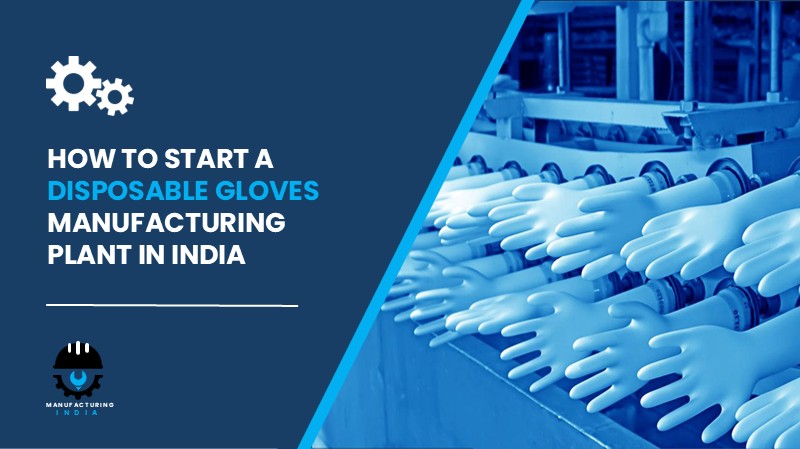
Disposable Gloves Manufacturing Plant Setup in India
Setting up a disposable gloves manufacturing plant in India presents a compelling investment case, driven by increasing awareness of hygiene, rising concerns about health and safety across industries such as healthcare, food processing, and pharmaceuticals, and the growing adoption of disposable gloves in response to global health events. Disposable gloves are critical to India’s economy as they serve as essential personal protective equipment (PPE) across multiple sectors, ensuring safety in medical examinations, food handling, laboratory testing, and industrial cleaning. The global disposable gloves market, valued at USD 19.80 Billion in 2025, is expected to reach USD 44.33 Billion by 2034, exhibiting a CAGR of 9.4%.
India’s accelerated healthcare infrastructure expansion, growing food processing industry, and the government’s “Make in India” initiative provide strong tailwinds for domestic manufacturing. Key manufacturing states such as Gujarat, Maharashtra, Tamil Nadu, and Uttar Pradesh offer established infrastructure and access to raw materials. Between 2015 and 2024, an additional 1.6 billion people were provided with basic hygiene services, resulting in global coverage rising from 66% to 80%. With stringent government regulations and safety standards at the workplace in various industries making gloves a requirement for safety during operations, India offers a strategically sound environment for establishing a disposable gloves manufacturing facility.
India’s disposable gloves market presents strong investment potential, bolstered by policy support like Make in India, rapid healthcare expansion, and growing hygiene awareness across multiple industries. With gross margins typically ranging between 20-30% and net margins of 8-15%, investors can achieve healthy profitability and a viable break-even timeline of 3 to 6 years.
What are Disposable Gloves?
Disposable gloves are single-use protective gloves manufactured from materials such as latex, nitrile, vinyl, and polyethylene. They are designed for short-term use to protect hands from contaminants, chemicals, biological agents, and infectious materials. Latex gloves are known for their excellent elasticity, comfort, and tactile sensitivity, while nitrile gloves offer superior puncture resistance and chemical protection. Vinyl gloves are a cost-effective option for low-risk tasks but provide lower durability, and polyethylene gloves are commonly used for basic food handling applications. Since these gloves are discarded after use, they play a vital role in preventing cross-contamination and maintaining safety standards in controlled environments. The disposable gloves manufacturing process uses raw material selection, preparation of glove molds, dipping molds into liquid glove materials, followed by curing, drying, stripping, inspection, quality control, and final packaging and sterilization as the primary production method. Key end-use industries served include healthcare and medical services, foodservice and hospitality, pharmaceuticals, laboratories and research facilities, and cleaning and janitorial services.
Cost of Setting Up a Disposable Gloves Manufacturing Plant in India
The total cost of setting up a disposable gloves manufacturing plant in India depends on several critical factors, including plant capacity, technology, location, automation levels, and regulatory compliance requirements.
1. Capital Expenditure (CapEx)
The total capital investment required for establishing a disposable gloves manufacturing plant covers land acquisition, site preparation, and necessary infrastructure. The location must offer easy access to key raw materials such as nitrile/latex compound, coagulants, curing ovens, and packaging, with proximity to target markets to minimize distribution costs. The site must have robust infrastructure, including reliable transportation, utilities, and waste management systems. Machinery costs account for the largest portion of total capital expenditure. The cost of land and site development, including charges for land registration, boundary development, and other related expenses, forms a substantial part of the overall investment.
Key machinery required includes:
- Dipping tanks for mold immersion
- Drying and curing ovens
- Glove stripping machines
- Quality control and inspection machines like tensile strength testers and pinhole detectors
- Packaging machines
- Sterilization units for medical-grade gloves
Other capital costs include civil works (production shed, quality control lab, raw material and finished goods storage, administrative block), effluent treatment systems, and pre-operative and commissioning expenses.
Request a Sample Report for In-Depth Market Insights: https://www.imarcgroup.com/disposable-gloves-manufacturing-plant-project-report/requestsample
2. Operational Expenditure (OpEx)
The operating cost structure of a disposable gloves manufacturing plant is primarily driven by raw material consumption, particularly nitrile/latex compound, which accounts for approximately 60-70% of total operating expenses (OpEx). Raw materials required include nitrile/latex compound, coagulants, curing ovens, and packaging. For nitrile gloves, a common raw material is acrylonitrile butadiene rubber, while vinyl gloves are made from PVC and latex gloves are derived from the natural rubber tree, Hevea brasiliensis. Additives such as sulfur, zinc oxide, accelerators, and pigments are also required. Implementing long-term contracts with reliable suppliers helps mitigate price volatility and ensure consistent supply of materials. Utilities (electricity, water, steam) account for 15-20% of OpEx. Other OpEx components include transportation costs, packaging costs, salaries and wages, repairs and maintenance, depreciation, and taxes. By the fifth year, the total operational cost is expected to increase substantially due to factors such as inflation, market fluctuations, and potential rises in the cost of key materials.
3. Plant Capacity
The proposed manufacturing facility is designed with an annual production capacity ranging between 500 million – 1 billion pairs, enabling economies of scale while maintaining operational flexibility. Plant capacity can be customized per investor requirements. Profitability improves significantly with higher capacity utilization.
4. Profit Margins and Financial Projections
The project demonstrates healthy profitability potential under normal operating conditions. Gross profit margins typically range between 20-30%, supported by stable demand and value-added applications. Net profit margins are projected at 8-15%. Financial analysis includes comprehensive projections of net present value (NPV), internal rate of return (IRR), payback period, income projections, expenditure projections, and profit and loss accounts.
Why Set Up a Disposable Gloves Plant in India?
Increasing Hygiene and Safety Awareness: Growing awareness of hygiene, particularly in healthcare and food industries, drives demand for disposable gloves to ensure protection and prevent the spread of infectious diseases.
Essential Protective Gear in Healthcare: Disposable gloves are a critical component of infection control in healthcare settings, protecting both healthcare workers and patients from cross-contamination.
Adoption in Diverse Industries: Beyond healthcare, the rising adoption of disposable gloves in foodservice, pharmaceuticals, and cleaning services ensures consistent demand.
Regulatory Compliance and Standardization: Stringent regulations in food safety, healthcare, and industrial environments require the use of protective gloves, increasing demand for disposable gloves that comply with health and safety standards.
Policy and Regulatory Tailwinds: The “Make in India” initiative and state-level industrial policies encourage domestic manufacturing. Governments may offer incentives such as capital subsidies, tax exemptions, reduced utility tariffs, export benefits, or interest subsidies to promote manufacturing under various national or regional industrial policies.
Cost-Competitive Manufacturing: India offers competitive advantages in land, labour, and supply chain costs. The global industrial growth, especially in emerging markets, is a major factor leading to the rise in demand for the market.
Active Industry Investment: In October 2025, Shield Scientific launched two high-performance gloves in its chemical protection range designed to improve comfort, fit, and usability for workers in cleanrooms and industrial environments. In April 2025, INTCO Medical launched Syntex Synthetic Disposable Latex Gloves, offering high elasticity, puncture and chemical resistance, and a natural-latex feel without allergy risks.
Manufacturing Process – Step by Step
The disposable gloves manufacturing process uses raw material selection, preparation of glove molds, dipping molds into liquid glove materials, followed by curing, drying, stripping, inspection, quality control, and final packaging and sterilization as the primary production method.
- Raw Material Preparation: Raw materials such as nitrile/latex compound, coagulants, and additives are prepared using paddle mixers and pot mills with jars.
- Cleaning and Preparing Glove Formers: Glove formers (molds) are thoroughly cleaned and prepared for the dipping process.
- Coagulant Dipping: Formers are dipped into a coagulant solution to prepare the surface for latex adherence.
- Latex Dipping: Coated formers are dipped into the latex mixture.
- Leaching: Dipped formers undergo leaching to remove impurities and residues.
- Vulcanizing: Gloves are vulcanized for strength and elasticity.
- Stripping: Finished gloves are stripped from the formers.
- Testing and Quality Inspection: Gloves undergo testing, quality inspection, and defect removal using tensile strength testers and pinhole detectors.
- Packaging and Sterilization: Gloves are packaged using packaging machines, and medical-grade gloves undergo sterilization.
- Distribution: Finished gloves are dispatched to end-use industries including healthcare and medical services, foodservice and hospitality, pharmaceuticals, laboratories and research facilities, and cleaning and janitorial services.
Key Applications
Disposable gloves serve a diverse range of industries and applications:
- Healthcare and Medical Industry: Used extensively for medical examinations, surgical procedures, and in healthcare settings to prevent contamination and cross-contamination between patients and healthcare workers.
- Foodservice and Hospitality: Used in food handling and preparation, ensuring hygiene and preventing contamination from foodborne pathogens in restaurants, catering services, and food production facilities.
- Pharmaceutical Industry: Used in pharmaceutical manufacturing, research, and laboratory settings to maintain cleanliness and prevent contamination during drug production or handling of chemicals.
- Laboratory and Research: Necessary to handle biological samples, chemicals, and other hazardous materials safely.
- Cleaning and Janitorial Services: Used to protect workers from cleaning agents, dirt, and debris while maintaining sanitation standards.
Leading Manufacturers
Leading manufacturers in the global disposable gloves industry include several multinational companies with extensive production capacities and diverse application portfolios. Key players include:
- Ansell Ltd
- Top Glove Corporation Bhd
- Hartalega Holdings Berhad
- Supermax Corporation Berhad
- Kossan Rubber Industries Bhd
- Ammex Corporation
- Kimberly-Clark Corporation
- Sempermed USA, Inc
- MCR Safety
These key players serve end-use sectors such as healthcare and medical services, foodservice and hospitality, pharmaceuticals, laboratories and research facilities, and cleaning and janitorial services.
Timeline to Start the Plant
- Feasibility study and project report preparation
- Land acquisition and site development
- Regulatory approvals and environmental clearances
- Factory licence and fire safety compliance
- Machinery procurement and installation
- Raw material supplier agreements and supply chain setup
- Trial production and quality testing
- Commercial production launch
Usually, the timeline can range from 12 to 24 months to start a disposable gloves manufacturing plant, depending on factors like site development, machinery installation, environmental clearances, safety measures, and trial runs.
Licences and Regulatory Requirements
Starting a disposable gloves manufacturing unit in India requires several approvals:
- Business registration (Proprietorship, LLP, or Pvt Ltd)
- Factory Licence under the Factories Act
- Environmental Clearance from State Pollution Control Board
- GST Registration
- Fire Safety NOC
- Effluent Treatment Plant (ETP) operational clearance
- Occupational Health and Safety compliance
- Industry-specific permits for medical-grade gloves
Local, state, and national regulations may apply depending on the location.
Key Challenges to Consider
- High Capital Requirements: Machinery costs for dipping tanks, drying and curing ovens, glove stripping machines, quality control equipment, packaging machines, and sterilization units represent a significant portion of capital expenditure.
- Raw Material Price Volatility: Fluctuations in prices of nitrile/latex compound, coagulants, curing ovens, and packaging materials directly impact margins. Raw materials account for 60-70% of operating expenses.
- Regulatory Compliance: Navigating environmental clearances, factory licences, and pollution control board regulations requires careful planning. Effluent treatment systems are necessary to minimize environmental impact and ensure compliance with emission standards.
- Competition: The market includes established global players such as Ansell Ltd, Top Glove Corporation Bhd, Hartalega Holdings Berhad, Supermax Corporation Berhad, Kossan Rubber Industries Bhd, and Kimberly-Clark Corporation.
- Skilled Manpower: Access to skilled workers for operating dipping, curing, stripping, and quality control equipment is essential.
- Technology and Innovation Pressure: Continuous advancements in glove manufacturing technology require ongoing capital reinvestment to remain competitive.
Frequently Asked Questions
- How much does it cost to set up a disposable gloves manufacturing plant in India?
The total capital investment depends on plant capacity, technology, and location, covering land acquisition, site preparation, infrastructure, and machinery costs. - Is disposable gloves manufacturing profitable in India in 2026?
Yes, gross profit margins typically range between 20-30%, with net profit margins of 8-15%, indicating healthy profitability potential. - What machinery is required for a disposable gloves plant in India?
Essential equipment includes dipping tanks for mold immersion, drying and curing ovens, glove stripping machines, quality control and inspection machines like tensile strength testers and pinhole detectors, packaging machines, and sterilization units for medical-grade gloves. - What licences and approvals are required to start a disposable gloves plant in India?
Required approvals include business registration, Factory Licence under the Factories Act, Environmental Clearance from State Pollution Control Board, GST Registration, Fire Safety NOC, ETP operational clearance, and industry-specific permits. - What raw materials are needed for disposable gloves manufacturing?
Raw materials required include nitrile/latex compound, coagulants, curing ovens, packaging, natural rubber latex, synthetic polymers like nitrile rubber (NBR) or polyvinyl chloride (PVC), and additives such as sulfur, zinc oxide, accelerators, and pigments. - What are the environmental compliance requirements for a disposable gloves plant in India?
Facilities must implement effluent treatment systems, obtain environmental clearance from the State Pollution Control Board, and comply with emission standards. - What is the best location to set up a disposable gloves plant in India?
The location must offer easy access to key raw materials such as nitrile/latex compound and proximity to target markets to minimize distribution costs. - What is the break-even period for this type of plant in India?
Break-even typically ranges from 3 to 6 years, depending on scale, regulatory compliance costs, raw material pricing, and market demand. - What government incentives are available for manufacturers in India?
Governments may offer incentives such as capital subsidies, tax exemptions, reduced utility tariffs, export benefits, or interest subsidies to promote manufacturing under various national or regional industrial policies.
Key Takeaways for Investors
Setting up a disposable gloves manufacturing plant in India offers a compelling investment opportunity, driven by strong demand from healthcare and medical services, foodservice and hospitality, pharmaceuticals, laboratories and research facilities, and cleaning and janitorial services. The project demonstrates healthy financial viability across various plant capacities (500 million – 1 billion pairs annually), with gross profit margins ranging between 20-30% and net margins of 8-15%. The global disposable gloves market, valued at USD 19.80 Billion in 2025, is expected to reach USD 44.33 Billion by 2034, exhibiting a CAGR of 9.4%. With increasing hygiene awareness, regulatory compliance requirements, and expanding applications across diverse industries, the disposable gloves industry is poised for continued expansion, making now an opportune time for investors to enter this dynamic market.
About the Author