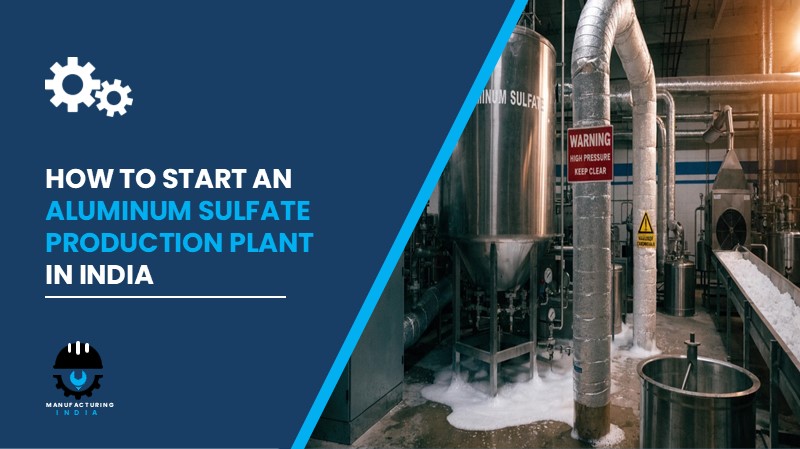
Setting up an aluminum sulfate production plant in India presents a compelling investment case for entrepreneurs targeting some of India’s largest and steadiest industrial demand sectors. Aluminum sulfate is a chemical compound widely used as a coagulant in water treatment plants, a sizing agent in paper production, a mordant in textile processing, and a chemical intermediate in various industrial processes. Because water treatment, paper, textile, and chemical industries all depend on a consistent supply of this compound, an aluminum sulfate production plant is positioned to serve demand that grows alongside urban water infrastructure and industrial output.
India’s momentum toward urbanisation, expanding infrastructure, and government-backed production programs adds further weight to this case. Rising urbanization and stricter water quality regulations are boosting demand for water treatment chemicals, while expansion of the textile and paper sectors reinforces the case for local production. Given industrial land availability, a skilled workforce, and policy support for domestic production, India is a strategically sound base for this facility, serving domestic industry and export markets.
The investment case for this facility rests on policy tailwinds, cost-competitive economics, and steady demand from water treatment, paper, textile, and chemical sectors. With gross margins of 30-40% and net margins of 15-22%, the project demonstrates healthy profitability and a viable path to break-even under normal operating conditions.
What is Aluminum Sulfate?
Aluminum sulfate is a chemical compound widely used as a coagulant in water treatment plants, a sizing agent in paper production, a mordant in textile processing, and a chemical intermediate in industrial processes. It is produced by reacting alumina or aluminum hydroxide with sulfuric acid, resulting in a white crystalline or powdered substance with high solubility in water. It is valued for its stability, solubility, and consistent performance, ensuring effective coagulation in water treatment while improving paper quality by controlling fiber swelling and retention.
Variants include hydrated and anhydrous forms, tailored for specific industrial applications, making it a core raw material in industrial production and municipal water treatment. The aluminum sulfate production process is built on bauxite or alumina processing, reaction with sulfuric acid, crystallization, filtration, drying, and packaging, serving water treatment, paper, textile, chemical, and construction applications.
Cost of Setting Up an Aluminum Sulfate Production Plant in India
The cost of setting up an aluminum sulfate production plant depends on capacity, technology, location, automation level, and regulatory compliance requirements.
1. Capital Expenditure (CapEx)
Capital investment begins with land acquisition and site preparation, pursued through an industrial estate or SEZ allotment to reduce upfront costs and speed approvals. Civil works cover the production shed, laboratory, storage areas, and administrative block.
Machinery costs account for the largest portion of capital expenditure for an aluminum sulfate production plant, since equipment must be corrosion-resistant and tailored for production. Key machinery required includes:
- Corrosion-resistant reactors
- Crystallizers
- Filters
- Dryers
- Packaging machinery
Beyond land, civil works, and machinery, other capital costs include ETP installation, pre-operative expenses, commissioning costs, and import duties on specialized equipment.
Request a Sample Report for In-Depth Market Insights: https://www.imarcgroup.com/aluminum-sulfate-manufacturing-plant-project-report/requestsample
2. Operational Expenditure (OpEx)
The operating cost structure is primarily driven by raw material consumption. Raw materials required include aluminum hydroxide and sulfuric acid, with aluminum hydroxide alone accounting for approximately 60-70% of operating expenses. Long-term supplier contracts are therefore essential to mitigate price volatility and secure consistent supply.
Utility costs, covering electricity, water, and steam, account for roughly 20-25% of operating expenses. Other operating costs include transportation, packaging, salaries and wages, maintenance, depreciation, and taxes. By the fifth year of operations, total operational cost is expected to increase substantially due to inflation, market fluctuations, rising raw material costs, and supply chain disruptions.
3. Plant Capacity
The proposed facility is designed with an annual capacity ranging between 50,000 and 150,000 tons, enabling economies of scale with operational flexibility. Capacity can be customized to investor requirements, and profitability generally improves with higher utilisation.
4. Profit Margins and Financial Projections
Financial projections are built on capital investment, operating costs, capacity utilisation, pricing trends, and demand outlook, covering NPV, IRR, and payback period alongside profitability metrics. Gross margins typically range between 30-40%, while net margins range between 15-22%, reflecting healthy profitability under normal operating conditions.
Why Set Up an Aluminum Sulfate Plant in India?
High Industrial Demand Across Core Sectors: Aluminum sulfate is widely used across water treatment, paper, textile, and chemical sectors, ensuring stable, diversified demand.
Versatile, Revenue-Diversifying Applications: Because aluminum sulfate serves coagulation, paper sizing, textile dyeing and finishing, and industrial chemical processes, a single facility can supply several end-use industries at once.
Policy and Regulatory Tailwinds: Union Budget 2025-26 allocated INR 5,272 crore (USD 607 million) to the Ministry of Textiles, a 19% increase from the previous year. A five-year Cotton Mission aims to raise cotton output, cut import reliance, and strengthen MSME-led textile competitiveness, expected to drive demand for aluminum sulfate in processing applications.
Cost-Competitive, Scalable Production: Production technology allows modular expansion with efficient resource use, while moderate raw material costs combined with strong demand result in healthy profit margins.
Established Technology and Reliability: Established chemical reaction processes ensure consistent product quality, giving investors a technologically reliable foundation for scaling operations.
Rising Water Treatment and Paper Demand: Rising urbanization and stricter water quality regulations are boosting demand for water treatment chemicals, while growing use of paper and cardboard products supports steady offtake.
Production Process – Step by Step
The aluminum sulfate production process uses reaction of alumina or aluminum hydroxide with sulfuric acid as the primary production method, supported by a series of unit operations.
- Raw Material Preparation: Aluminum hydroxide and sulfuric acid are prepared and measured per mass balance requirements.
- Reaction with Sulfuric Acid: Alumina or aluminum hydroxide is reacted with sulfuric acid inside corrosion-resistant reactors.
- Crystallization: The reaction output is processed through crystallizers to form aluminum sulfate crystals.
- Filtration: The crystallized material passes through filters to separate product from residual liquid.
- Drying: Dryers remove remaining moisture to produce a stable crystalline or powdered form.
- Quality Assurance Checks: Technical tests confirm the product meets required specifications.
- Packaging and Dispatch: Packaging machinery prepares the finished product for dispatch to water treatment, paper, textile, chemical, and construction end-use industries.
Key Applications
The plant’s output serves several major industrial and municipal applications:
- Water Treatment Industry: Ensures efficient coagulation and sedimentation, improving water clarity and safety.
- Paper Production: Enhances sizing, fiber retention, and smoothness in papermaking.
- Textile Industry: Acts as a mordant to fix dyes and improve colorfastness.
- Chemical Industry: Serves as a raw material in industrial chemical processes and construction materials.
Leading Producers
Leading producers in the global industry operate extensive capacities and diverse portfolios. Key players include:
- Chemtrade Logistics
- USALCO
- Kemira Oyj
- Affinity Chemical
- Nippon Light Metal Company, Ltd.
- GAC Chemical Corporation
- Feralco AB
Timeline to Start the Plant
- Feasibility study and project report preparation
- Land acquisition and site development
- Regulatory approvals and environmental clearances
- Factory licence and fire safety compliance
- Machinery procurement and installation
- Raw material supplier agreements and supply chain setup
- Trial production and quality testing
- Commercial production launch
Licences and Regulatory Requirements
Starting an aluminum sulfate production unit in India requires several approvals:
- Business registration (Proprietorship, LLP, or Pvt Ltd)
- Factory Licence under the Factories Act
- Environmental Clearance from State Pollution Control Board
- GST Registration
- Fire Safety NOC
- Hazardous/Chemical compliance for sulfuric acid handling
- Effluent Treatment Plant (ETP) operational clearance
- Occupational Health and Safety compliance
Key Challenges to Consider
High Capital Requirements: Machinery costs account for the largest share of capital expenditure for an aluminum sulfate production plant, so investors must budget carefully for reactors, crystallizers, filters, dryers, and packaging equipment.
Raw Material Price Volatility: Aluminum hydroxide and sulfuric acid drive the bulk of operating expenses, so feedstock price swings can affect margins if long-term supply contracts are not secured.
Regulatory Compliance: Safety protocols, effluent treatment systems, and emission standards must be maintained throughout production, requiring ongoing monitoring.
Technology and Process Reliability Pressure: Since established chemical reaction processes underpin consistent quality, any deviation in equipment performance can affect output and customer confidence.
Competition from Established Global Players: Chemtrade Logistics, USALCO, Kemira Oyj, Affinity Chemical, Nippon Light Metal Company Ltd., GAC Chemical Corporation, and Feralco AB all operate extensive capacities, so new entrants must compete on quality, reliability, and cost.
Skilled Manpower: Operating reactors, crystallizers, and quality assurance systems requires trained technical staff, making workforce development an ongoing consideration.
Frequently Asked Questions
1. How much does it cost to set up an aluminum sulfate production plant in India?
The total cost depends on capacity, technology, automation level, and location, covering land, civil works, machinery, and other capital costs alongside ongoing operating expenses.
2. Is aluminum sulfate production profitable in India in 2026?
The project demonstrates healthy profitability, with gross margins of 30-40% and net margins of 15-22% under normal operating conditions.
3. What machinery is required for an aluminum sulfate plant in India?
Key machinery includes corrosion-resistant reactors, crystallizers, filters, dryers, and packaging machinery.
4. What licences and approvals are required to start an aluminum sulfate plant in India?
Requirements include business registration, a Factory Licence, Environmental Clearance, GST Registration, Fire Safety NOC, hazardous/chemical compliance, ETP operational clearance, and occupational health and safety compliance.
5. What raw materials are needed for aluminum sulfate production?
The primary raw materials are aluminum hydroxide (or alumina) and sulfuric acid.
6. What are the environmental compliance requirements for an aluminum sulfate plant in India?
Plants require Environmental Clearance from the State Pollution Control Board, an operational Effluent Treatment Plant, and adherence to emission and safety monitoring standards.
7. What is the best location to set up an aluminum sulfate plant in India?
The location should offer easy access to aluminum hydroxide and sulfuric acid supplies, proximity to target markets, and robust transportation, utility, and waste management infrastructure.
8. What is the break-even period for this type of plant in India?
Break-even timing depends on capacity utilisation, pricing, and cost management, assessed through payback period and NPV analysis.
9. What government incentives are available for manufacturers in India?
The Union Budget 2025-26 allocated INR 5,272 crore (USD 607 million) to the Ministry of Textiles, a 19% increase from the previous year, alongside a five-year Cotton Mission supporting MSME-led textile competitiveness and related demand.
Key Takeaways for Investors
This investment is well-positioned to serve the water treatment, paper production, textile processing, and chemical industries, all of which depend on this compound as a coagulant, sizing agent, mordant, and chemical intermediate. Financial viability holds across capacities ranging from 50,000 to 150,000 tons annually, supported by gross margins of 30-40% and net margins of 15-22%, alongside NPV, IRR, and payback period metrics that confirm the strength of the underlying project economics. The global market was valued at USD 1,043.49 Million in 2025 and is projected to reach USD 1,373.46 Million by 2034, growing at a CAGR of 3.1% from 2026 to 2034. With continued urbanisation, stricter water treatment regulation, budget-backed textile sector expansion, and steady paper industry growth, demand for aluminum sulfate production capacity in India is set to remain durable over the long term, supporting a sound investment outlook for stakeholders evaluating this opportunity.
About the Author