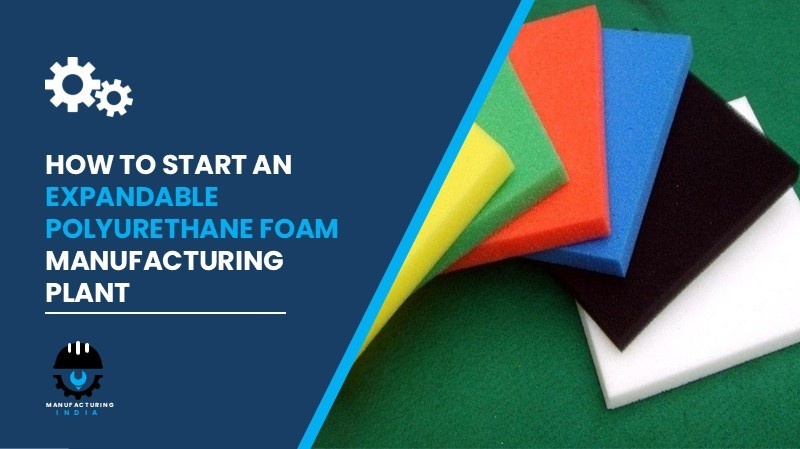
An expandable polyurethane foam manufacturing plant setup in India presents a compelling investment case, driven by rising demand for energy-efficient building insulation, expanding construction activities, increasing automotive lightweighting requirements, and growing appliance manufacturing. Expandable polyurethane foam is used for insulation, sealing, filling gaps, and structural reinforcement across construction, automotive, home appliance, packaging, and industrial insulation sectors, making it a foundational material for India’s fast-growing built environment.
India’s urbanisation, expanding infrastructure pipeline, and the Make in India initiative create strong tailwinds for local production, with manufacturing hubs across Gujarat and Maharashtra well positioned to serve domestic and export demand. Given diversified end-use consumption across construction, refrigeration, and automotive industries, this investment is strategically sound for long-term structural demand.
This expandable polyurethane foam manufacturing plant investment case is anchored in supportive government policy, cost-competitive local production, diversified demand across construction, refrigeration, automotive, and packaging sectors, healthy gross margins of 30-40%, and a viable break-even path supported by growing consumption.
What is Expandable Polyurethane Foam?
Expandable polyurethane foam is a reactive polymer-based material formed through the chemical reaction of polyols and isocyanates in the presence of blowing agents. Upon application, the foam expands and cures to form a lightweight, rigid or semi-rigid cellular structure. The material offers excellent thermal insulation, air sealing, sound absorption, and moisture resistance properties, making it valuable wherever gap-filling and insulation performance matter.
Expandable polyurethane foam is available in one-component (moisture-cured) and two-component systems, and is commonly supplied in aerosol cans or industrial dispensing systems. The expandable polyurethane foam manufacturing process is a multi-step production method involving raw material procurement, metering and mixing, and foam formulation and stabilization. This expandable polyurethane foam manufacturing plant serves end-use industries including construction and building, automotive manufacturing, home appliances, packaging, and industrial insulation.
Cost of Setting Up an Expandable Polyurethane Foam Manufacturing Plant in India
The total cost of setting up this plant depends on capacity, technology, location, automation level, and regulatory compliance requirements.
1. Capital Expenditure (CapEx)
Capital investment for this facility covers land and site development, including land registration and boundary development, with SEZs and industrial estates offering options to optimise cost and compliance timelines. Civil works and construction costs cover the production shed, quality-testing laboratory, storage areas, and the administrative block.
Machinery represents the largest share of capital expenditure. Key machinery required includes:
- Metering and mixing systems
- High-pressure dispensing machines
- Aerosol filling lines
- Pressurization equipment
- Quality testing instruments
- Packaging and labeling machines
Other capital costs include effluent treatment plant (ETP) installation, pre-operative expenses, and commissioning, along with applicable import duties on specialised machinery.
Request a Sample Report for In-Depth Market Insights: https://www.imarcgroup.com/expandable-polyurethane-foam-manufacturing-plant-project-report/requestsample
2. Operational Expenditure (OpEx)
Raw material cost is the single largest component of operating expenditure for this facility, with polyol, isocyanate, blowing agent, and catalyst accounting for approximately 70-80% of total OpEx. Investors are advised to negotiate long-term supplier contracts to mitigate raw material price volatility and secure consistent supply.
Utility costs – covering electricity, water, and steam – account for approximately 10-15% of operating expenditure. Other operating costs include transportation, packaging, salaries and wages, maintenance, depreciation, and taxes. By the fifth year of operations, total operating cost is expected to increase substantially due to inflation, market fluctuations, supply chain disruptions, and rising input costs.
3. Plant Capacity
The proposed expandable polyurethane foam manufacturing plant is designed with an annual production capacity ranging between 5,000-20,000 MT, enabling economies of scale while maintaining operational flexibility. Capacity can be customized to individual investor requirements, and profitability generally improves with higher capacity utilisation.
4. Profit Margins and Financial Projections
Financial projections for this type of plant are based on capital investment, operating costs, capacity utilisation, pricing trends, and demand outlook, and include ROI, net present value (NPV), and payback period analysis. Under normal operating conditions, gross profit margins typically range between 30-40%, while net profit margins range between 15-25%.
Why Set Up an Expandable Polyurethane Foam Plant in India?
High Insulation Efficiency Supporting Green Construction: Expandable polyurethane foam supports energy-saving building standards through high insulation efficiency, aligning with India’s growing focus on green construction practices.
Lightweight and Durable Performance: The foam’s lightweight and durable properties enhance structural performance in end products without adding significant weight, a valued trait across automotive and appliance manufacturing.
Rising Construction Activity: Urbanisation and infrastructure expansion continue to increase demand for insulation and sealing materials, directly benefiting this expandable polyurethane foam manufacturing plant.
Diversified, Versatile Demand Base: The product serves multiple industries, with demand distributed across construction (25%), refrigeration (25%), automotive (20%), and textile and other industries (30%), providing stable and widespread consumption.
Active Industry Investment and Innovation: In February 2026, Covestro Korea announced the launch of “CQ Configurator,” a digital solution offering real-time sustainability evaluations during the polyurethane foam design process – signalling continued global investment in formulation technology relevant to this plant.
Technological Formulation Improvements: Low-VOC and eco-friendly formulations, including low-global warming potential (GWP) blowing agents, are expanding regulatory compliance and market growth prospects for the plant.
Manufacturing Process – Step by Step
The expandable polyurethane foam manufacturing process uses a multi-step reactive polymer process as the primary production method.
- Raw Material Procurement: Sourcing of polyol, isocyanate, blowing agent, and catalyst from qualified suppliers.
- Metering and Mixing: Precise metering and mixing of components using dedicated metering and mixing systems.
- Incorporation of Blowing Agents and Catalysts: Controlled addition of blowing agents and catalysts to initiate the expansion reaction.
- Foam Formulation and Stabilization: Formulating and stabilising the foam structure for consistent cell quality.
- Filling: Filling the formulated foam into aerosol cans or bulk containers using aerosol filling lines.
- Valve Fitting and Pressurization: Fitting valves and pressurising containers using dedicated pressurization equipment.
- Quality Testing: Testing output using quality testing instruments to confirm product specifications.
- Packaging: Packaging and labeling finished units using packaging and labeling machines ahead of dispatch to construction, automotive, appliance, and packaging end-use industries.
Key Applications
Expandable polyurethane foam serves a wide range of industries requiring insulation, sealing, and cushioning performance.
- Construction Industry: Used for sealing gaps around doors, windows, and joints to enhance energy efficiency and structural stability.
- Automotive Industry: Applied for vibration dampening, insulation, and cavity filling in vehicle assemblies.
- Home Appliances: Utilised in refrigerators and freezers for thermal insulation purposes.
- Packaging Industry: Provides protective cushioning and shock absorption for delicate goods.
- Industrial Applications: Used for pipeline insulation and structural reinforcement in industrial facilities.
Leading Manufacturers
The global expandable polyurethane foam industry is served by several multinational companies with extensive production capacities and diverse application portfolios, spanning construction and building, automotive manufacturing, home appliances, packaging, and industrial insulation end-use sectors. (Note: the source report does not list specific manufacturer names for this product; company-level detail is available only via IMARC’s paid sample report.)
Timeline to Start the Plant
- Feasibility study and project report preparation
- Land acquisition and site development
- Regulatory approvals and environmental clearances
- Factory licence and fire safety compliance
- Machinery procurement and installation
- Raw material supplier agreements and supply chain setup
- Trial production and quality testing
- Commercial production launch
Licences and Regulatory Requirements
Starting an expandable polyurethane foam manufacturing unit in India requires several approvals:
- Business registration (Proprietorship, LLP, or Pvt Ltd)
- Factory Licence under the Factories Act
- Environmental Clearance from State Pollution Control Board
- GST Registration
- Fire Safety NOC
- Hazardous/Chemical compliance for isocyanate and blowing agent handling
- Effluent Treatment Plant (ETP) operational clearance
- Occupational Health and Safety compliance
Key Challenges to Consider
High Capital Requirements: Machinery costs, particularly for metering, mixing, and dispensing systems, form a substantial share of upfront investment.
Raw Material Price Volatility: Polyol, isocyanate, blowing agent, and catalyst prices can fluctuate, directly affecting OpEx given raw materials account for 70-80% of operating costs.
Regulatory Compliance: Environmental clearances, hazardous chemical handling norms, and effluent treatment requirements demand ongoing compliance attention.
Technology and Formulation Pressure: Low-VOC and low-GWP formulation requirements are pushing plants toward continuous process innovation.
Industry Competition: The plant must compete against established multinational players with extensive production capacities across the same end-use sectors.
Skilled Manpower: Operating metering, mixing, and quality-testing systems reliably requires trained technical personnel.
Frequently Asked Questions
1. How much does it cost to set up an expandable polyurethane foam manufacturing plant in India?
Cost depends on capacity, technology, automation level, and location; CapEx covers land, civil works, machinery, and other capital costs.
2. Is expandable polyurethane foam manufacturing profitable in India in 2026?
Yes, the plant demonstrates healthy profitability potential, with gross margins of 30-40% and net margins of 15-25% under normal operating conditions.
3. What machinery is required for an expandable polyurethane foam plant in India?
Key machinery includes metering and mixing systems, high-pressure dispensing machines, aerosol filling lines, pressurization equipment, quality testing instruments, and packaging and labeling machines.
4. What licences and approvals are required to start an expandable polyurethane foam plant in India?
Requirements include business registration, Factory Licence, Environmental Clearance, GST Registration, Fire Safety NOC, hazardous chemical compliance, and ETP clearance.
5. What raw materials are needed for expandable polyurethane foam manufacturing?
Core raw materials include polyol, isocyanate, blowing agent, and catalyst, with polyol forming the largest cost share.
6. What are the environmental compliance requirements for an expandable polyurethane foam plant in India?
Plants require State Pollution Control Board clearance, an operational effluent treatment plant, and hazardous chemical handling compliance.
7. What is the best location to set up an expandable polyurethane foam plant in India?
Locations offering easy access to polyol, isocyanate, blowing agent, and catalyst suppliers, along with strong infrastructure and proximity to target markets, are best suited.
8. What is the break-even period for this type of plant in India?
Break-even depends on capacity utilisation, pricing, and cost trends; the plant’s financial analysis covers payback period and net present value to assess this.
9. What government incentives are available for manufacturers in India?
Incentives are typically tied to the Make in India initiative and state-level industrial policies supporting manufacturing investment.
Key Takeaways for Investors
This expandable polyurethane foam manufacturing plant taps into diversified demand across construction, refrigeration, automotive, and packaging sectors, supported by rising insulation and energy-efficiency requirements. Financial viability holds across the proposed 5,000-20,000 MT/year capacity range, with gross margins of 30-40% and net margins of 15-25% under normal operating conditions. With Asia-Pacific holding over 44.0% share of the global expandable polyurethane foam market and demand distributed across construction (25%), refrigeration (25%), automotive (20%), and other industries (30%), the plant is positioned for sustained, diversified long-term demand.
About the Author