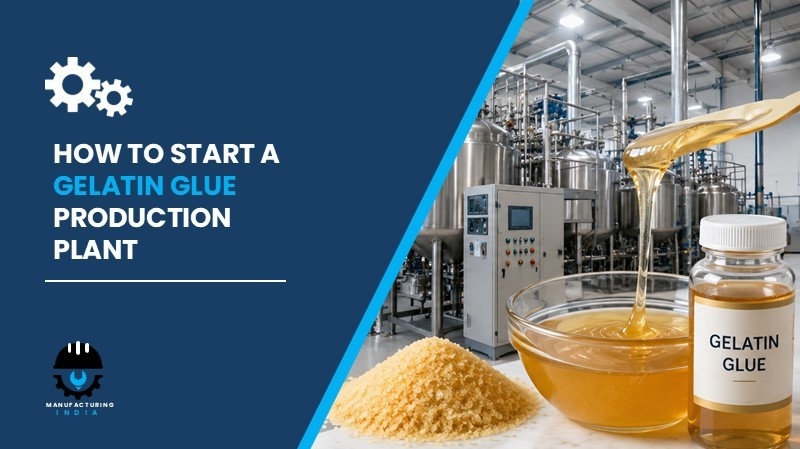
A gelatin glue production plant setup in India presents a compelling investment case for entrepreneurs eyeing the country’s diverse industrial base. Gelatin glue, a natural adhesive prized for its bonding strength on porous materials, is consumed across woodworking, bookbinding, match production, abrasive paper, textiles, and print & packaging, giving it a broad and dependable demand base rather than a niche role.
India’s fast-expanding industrial and infrastructure landscape adds further weight to the opportunity. Rising urbanisation, growing furniture and packaging output, and continued policy support under initiatives such as Make in India strengthen the case for local adhesive production. Investors can locate the facility within notified industrial estates for ready infrastructure and streamlined clearances, making India a strategically sound base.
This investment combines steady multi-sector demand with supportive industrial policy, competitive raw material access, and healthy reported margins, creating a financially viable and reasonably fast break-even proposition for investors who plan capacity and location carefully.
What is Gelatin Glue?
Gelatin glue, also referred to as animal glue or protein glue, is a natural, eco-friendly adhesive derived from collagen, typically sourced from the bones, hides, and connective tissues of cattle and pigs. It is produced by boiling these tissues until they transform into a soluble, biodegradable protein adhesive. The material is valued for its strong adhesion to porous materials like wood, paper, and leather, making it a preferred choice in bookbinding, furniture restoration, and woodworking. Applied warm, it sets rapidly on cooling and forms strong, durable bonds reversible with heat or water. Modern technical-grade variants incorporate modifiers that improve flexibility and performance.
Production is built around rendering, filtration, drying, and blending as the primary unit operations. The finished adhesive is dispatched to end-use industries including woodworking, bookbinding, match production, abrasive paper, textiles, and print & packaging.
Cost of Setting Up a Gelatin Glue Production Plant in India
The overall cost of a gelatin glue production plant depends on capacity, technology, location, automation, and regulatory compliance.
1. Capital Expenditure (CapEx)
Capital investment covers land and site development, including registration and boundary development charges; costs can be optimised by locating within an industrial estate or SEZ. Civil works costs cover the production shed, laboratory, storage, and administrative block. Machinery represents the largest share of capital expenditure. Key machinery required includes:
- Crushers
- Degreasing units
- Lime soaking tanks
- Neutralization vessels
- Extraction kettles
- Filtration systems
- Evaporators
- Drying machines
- Packaging equipment
Other capital costs cover the effluent treatment plant (ETP), pre-operative expenses, and commissioning activities, essential for a compliant, efficient facility.
Request a Sample Report for In-Depth Market Insights: https://www.imarcgroup.com/gelatin-glue-manufacturing-plant-project-report/requestsample
2. Operational Expenditure (OpEx)
Raw material cost is the largest component of operating expenditure, with animal bones/hides, hydrochloric acid/lime, and water accounting for approximately 45-55% of total OpEx. Long-term supplier contracts help mitigate price volatility and ensure steady supply. Utility costs, covering electricity, water, and steam, contribute another 10-14%. Beyond these, the cost structure includes transportation, packaging, salaries, depreciation, taxes, and maintenance. First-year operating costs are projected to rise substantially by year five, driven by inflation, market fluctuations, and raw material cost increases.
3. Plant Capacity
A gelatin glue production plant is typically designed around an annual capacity of 10,000 MT, allowing economies of scale while preserving operational flexibility. Capacity can be customised to investor requirements, and profitability generally improves as capacity utilisation increases, spreading fixed costs over greater output.
4. Profit Margins and Financial Projections
Financial projections for the facility are built on capital investment, operating costs, capacity utilisation, pricing trends, and demand outlook, and typically include net present value (NPV), internal rate of return (IRR), and payback period as core viability metrics. Reported gross profit margins for the segment range between 26-34%, supported by stable demand and value-added applications, while net profit margins range between 15-21%.
Why Set Up a Gelatin Glue Plant in India?
Several factors make India an attractive base for this production:
Essential Industrial Adhesive Component: Gelatin glue is a critical bonding agent across woodworking, packaging, bookbinding, textiles, abrasives, and specialty applications, positioning it as a reliable material in production.
Moderate but Defensible Entry Barriers: While gelatin glue production is not as capital-intensive as advanced chemical industries, quality control, processing expertise, viscosity standards, and application-specific formulations create meaningful entry barriers favouring experienced producers.
Megatrend Alignment: Growing demand from packaging, furniture, and handicrafts, along with rising preference for biodegradable and non-synthetic alternatives, is driving steady consumption of natural adhesives like gelatin glue.
Policy and Sustainability Push: Environmental regulations and sustainability initiatives encouraging bio-based, recyclable materials indirectly boost demand for gelatin glue as industries shift from synthetic, petroleum-based adhesives.
Active Industry Investment: In May 2025, Darling Ingredients Inc. signed a non-binding term sheet with Tessenderlo Group to combine their collagen and gelatin segments into a new company, Nextida, aimed at building a top-tier collagen-based health and nutrition business.
Local Supply Chain Preference: Producers and artisans increasingly prefer dependable local suppliers to ensure consistent quality and manage sourcing efficiently, creating opportunities for regional gelatin glue producers. This trend is reinforced by India’s furniture sector, valued at approximately USD 23.12 Billion in 2022 and projected to grow at a CAGR of 10.9% to reach USD 32.7 Billion by 2026, per IBEF estimates.
Production Process – Step by Step
The gelatin glue production process uses rendering, filtration, drying, and blending as the primary production method.
- Raw Material Preparation: Bones, hides, and connective tissues are sourced and reduced in size using crushers.
- Degreasing: Material passes through degreasing units to remove fats and impurities.
- Lime Soaking: Material is treated in lime soaking tanks as part of collagen conditioning.
- Neutralization: Neutralization vessels balance the treated material before extraction.
- Rendering and Extraction: Extraction kettles render the material, converting collagen into a soluble adhesive base.
- Filtration: Filtration systems remove residual solids from the extracted liquid.
- Evaporation and Drying: Evaporators concentrate the liquid, and drying machines convert it into final form.
- Blending and Quality Testing: The product is blended to specification, with quality assurance criteria and technical tests applied.
- Packaging and Dispatch: Finished gelatin glue is packaged and dispatched to end-use industries such as woodworking, bookbinding, match production, abrasive paper, textiles, and print & packaging.
Key Applications
A gelatin glue production plant serves a wide set of industrial and consumer-facing applications:
- Woodworking and Furniture: Adhesive sizing and structural bonding of wood components.
- Bookbinding: Book spine gluing in traditional and restoration work.
- Match Production: Used in match head compositions.
- Abrasive Paper: Coating for sandpaper production.
- Textiles: Used in textile finishing processes.
- Print and Packaging: Cardboard sealing in packaging operations.
- Food Industry: Confectionery, desserts, and dairy products as a stabilizing or gelling agent.
- Pharmaceuticals: Capsules and tablets as a binding or coating agent.
- Cosmetics: Creams, lotions, face masks, and hair care products for texture and film-forming properties.
- Industrial Uses: Adhesives, photographic films, and biodegradable packaging materials.
Leading Producers
The global gelatin glue industry is led by multinational companies with extensive production capacities. Key players include:
- Gelita AG
- Rousselot (Darling Ingredients)
- PB Leiner (Tessenderlo Group)
- Nitta Gelatin Inc.
- Weishardt Group
Timeline to Start the Plant
Setting up a gelatin glue production plant typically follows these phases:
- Feasibility study and project report preparation
- Land acquisition and site development
- Regulatory approvals and environmental clearances
- Factory licence and fire safety compliance
- Machinery procurement and installation
- Raw material supplier agreements and supply chain setup
- Trial production and quality testing
- Commercial production launch
Licences and Regulatory Requirements
Starting a gelatin glue unit in India requires several approvals:
- Business registration (Proprietorship, LLP, or Pvt Ltd)
- Factory Licence under the Factories Act
- Environmental Clearance from State Pollution Control Board
- GST Registration
- Fire Safety NOC
- Hazardous/Chemical compliance (relevant due to hydrochloric acid/lime use in processing)
- Effluent Treatment Plant (ETP) operational clearance
- Occupational Health and Safety compliance
Key Challenges to Consider
Investors evaluating a gelatin glue production plant should weigh the following factors:
High Capital Requirements: Machinery such as extraction kettles, evaporators, and drying units forms a significant share of upfront capital, requiring careful planning.
Raw Material Price Volatility: Animal bones/hides and hydrochloric acid/lime prices can fluctuate, directly affecting the 45-55% share raw materials hold in operating costs.
Regulatory Compliance: Environmental clearances, effluent treatment obligations, and hazardous material handling requirements demand ongoing compliance investment.
Technology and Innovation Pressure: Ongoing innovations aimed at improving performance, moisture resistance, and shelf life mean producers must continually refine formulations.
Competition: Established global players such as Gelita AG, Rousselot, and PB Leiner set a high bar that new entrants must plan against.
Skilled Manpower: Consistent quality control and viscosity standards require trained technical staff familiar with rendering and extraction equipment.
Frequently Asked Questions
1. How much does it cost to set up a gelatin glue production plant in India?
Cost depends on land, civil works, machinery, and other capital costs, which vary by capacity, technology, and location.
2. Is gelatin glue production profitable in India in 2026?
Yes, the segment reports gross margins of 26-34% and net margins of 15-21% under normal operating conditions.
3. What machinery is required for a gelatin glue plant in India?
Key machinery includes crushers, degreasing units, lime soaking tanks, neutralization vessels, extraction kettles, filtration systems, evaporators, drying machines, and packaging equipment.
4. What licences and approvals are required to start a gelatin glue plant in India?
Requirements include business registration, a Factory Licence, Environmental Clearance, GST Registration, Fire Safety NOC, hazardous/chemical compliance, ETP clearance, and Occupational Health and Safety compliance.
5. What raw materials are needed for gelatin glue production?
The gelatin glue production process primarily uses animal bones/hides, hydrochloric acid/lime, and water.
6. What are the environmental compliance requirements for a gelatin glue plant in India?
Plants require Environmental Clearance from the State Pollution Control Board, an operational Effluent Treatment Plant, and adherence to emission standards.
7. What is the best location to set up a gelatin glue plant in India?
A site with easy access to raw materials, proximity to target markets, and robust transport and utility infrastructure is ideal.
8. What is the break-even period for this type of plant in India?
Break-even timing depends on capacity utilisation, pricing, and cost structure; a full analysis including payback period and NPV is covered in a feasibility report.
9. What government incentives are available for producers in India?
Broader industrial policy support, including streamlined approvals through industrial estates and domestic-production initiatives, benefits new units, though specifics should be verified with the relevant authorities.
Key Takeaways for Investors
This investment opportunity taps into steady demand from woodworking, bookbinding, match production, abrasive paper, textiles, and print & packaging, alongside food, pharmaceutical, and cosmetics applications. The project demonstrates financial viability across capacities, with reported gross margins of 26-34% and net margins of 15-21% at an indicative 10,000 MT annual scale. With the global gelatin glue market valued at USD 1.50 Billion in 2025 and projected to reach USD 2.45 Billion by 2034 at a 5.6% CAGR, alongside India’s furniture sector growing toward USD 32.7 Billion by 2026, demand for this facility appears well positioned for the long term.
About the Author