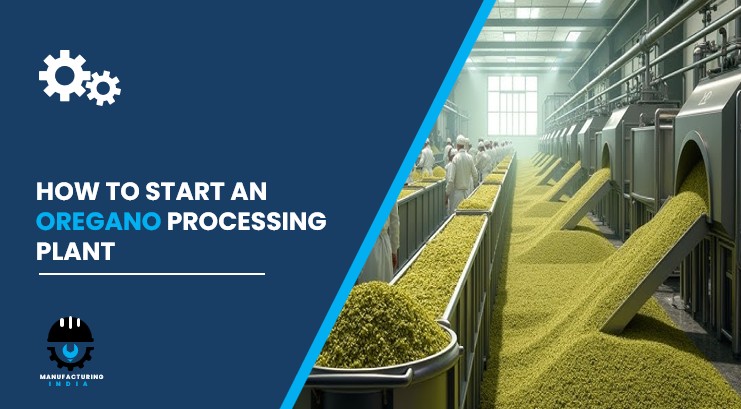
Setting up an oregano processing plant in India represents an attractive investment proposition underpinned by robust and structurally growing demand for natural, functional herbs across the culinary, pharmaceutical, and cosmetic industries. As urbanisation accelerates, disposable incomes rise, and consumer preference shifts toward clean-label, herb-based ingredients with recognised functional benefits, oregano available in whole leaf, crushed, and powdered forms occupies an increasingly important position across food processing, herbal supplement, and personal care applications. This growth trajectory, combined with the crop’s wide cultivation base across Mediterranean, West Asian, and other temperate growing regions, and strong compatibility with value-added product formats, creates a favourable manufacturing environment for new entrants with efficient cleaning, drying, and grinding systems.
What is Oregano?
Oregano is an aromatic culinary herb derived primarily from the dried leaves of plants belonging to the Origanum family, most commonly Origanum vulgare. The herb’s distinctive taste and its essential oil content, which imparts a characteristic flavour and aroma to food products, are the principal drivers of its commercial demand. Oregano is used extensively in pizzas, pasta sauces, soups, marinades, processed meat products, and proprietary spice blends, making it one of the most widely used culinary herbs across global cuisines.
Beyond food applications, oregano is also incorporated into nutraceutical formulations, herbal remedies, and natural preservative systems owing to its recognised antioxidant and antimicrobial properties. In commercial processing operations, harvested oregano undergoes a defined sequence of cleaning, drying, grinding, sieving, and packaging steps to meet quality, safety, and shelf-life requirements before being offered to the market in whole leaf, crushed, or fine powder formats suited to industrial, food service, and retail consumption.
The global oregano market was valued at approximately USD 560.10 Million in 2025. According to IMARC Group estimates, the market is expected to reach USD 970.66 Million by 2034, exhibiting a CAGR of 6.3% from 2026 to 2034, supported by rising demand for natural herbs, the expansion of processed and packaged food categories, and growing consumer preference for herbal ingredients with functional benefits.
Cost of Setting Up an Oregano Processing Plant
The total capital investment required to establish an oregano processing plant is shaped by several key parameters: annual processing capacity (typically ranging from 1,000 to 3,000 MT per annum), the level of automation across cleaning, drying, and grinding sections, facility specification, raw material sourcing strategy, product mix between whole leaf, crushed, and powdered formats, and applicable food safety and export compliance requirements. Below is a structured breakdown of the major cost components.
1. Capital Expenditure (CapEx)
Total capital investment in an oregano processing plant covers the following major heads:
Land and Site Development
This encompasses land acquisition or lease, site preparation, boundary development, and utilities connectivity. Site selection should prioritise proximity to oregano-growing regions or aggregation centres to ensure a steady, low-transport-cost supply of fresh-cut herb, which begins losing essential oil content soon after harvest if not processed promptly. Access to reliable power for drying and grinding operations, strong road logistics for inbound raw material and outbound finished product, availability of process water of suitable quality, and a trained workforce for plant operations and quality control are critical site selection criteria. Compliance with industrial zoning regulations, food safety manufacturing standards, and effluent and emission compliance frameworks must be assessed from project initiation.
Civil Works and Construction
Building costs cover the main processing facility including the raw material reception and cleaning section, drying house, grinding and milling area, sieving and grading section, packaging and dispatch infrastructure, quality control laboratory, administrative block, and utility infrastructure including power backup, dust extraction systems, and effluent management. Construction must comply with applicable factory act requirements, food safety manufacturing standards, and relevant hygienic design guidelines for dry-herb processing facilities.
Machinery and Equipment
Machinery represents the single largest CapEx component. Key equipment required for an oregano processing plant includes:
- Raw Material Reception and Cleaning Systems: Intake hoppers, destoners, air classifiers, and conveying systems to remove soil, stones, and foreign matter from freshly harvested oregano prior to processing
- Washing Units: Water-based or air-based washing systems to remove residual dust, dirt, and surface contaminants from harvested leaves while minimising loss of essential oil content
- Drying and Dehydration Systems: Tray dryers, tunnel dryers, or belt dryers with controlled temperature and airflow to reduce moisture content while preserving colour, aroma, and volatile oil concentration
- Grinding and Crushing Mills: Hammer mills, pin mills, or cutting mills sized to produce crushed or fine powder oregano formats according to target product specifications
- Sieving and Grading Equipment: Vibratory sieves and classifiers to separate the ground product into uniform particle-size fractions and remove stem and fibrous material
- Metal Detection and Foreign Material Removal: Metal detectors, optical sorters, and de-stoners installed at critical control points to safeguard product purity and food safety compliance
- Storage Silos and Bins: Moisture-controlled storage silos and bins for holding dried leaf and ground product prior to packaging, designed to prevent moisture regain and quality degradation
- Automated Packaging Lines: Filling, weighing, sealing, and labelling lines for retail sachets, pouches, jars, and bulk bags, along with bulk loading facilities for institutional and export dispatch
- Quality Control Laboratory Equipment: Equipment for moisture content, volatile oil content, ash content, microbial load, and other analytical tests to verify compliance with food safety and quality standards
- Material Handling and Warehousing: Conveyors, bucket elevators, and finished goods warehousing with FIFO stock management for raw material and processed oregano
Other Capital Costs
These include pre-operative expenses, commissioning charges, import duties on specialised drying and grinding equipment, staff training and competency development, initial raw material and consumable inventory for production commissioning, regulatory compliance setup including food safety licensing, and quality management system establishment costs.
Request a Sample Report for In-Depth Market Insights: https://www.imarcgroup.com/oregano-processing-plant-project-report/requestsample
2. Operational Expenditure (OpEx)
Raw materials principally fresh or dried oregano procured from growers and aggregators, along with packaging consumables constitute the dominant operating cost, typically representing 70–80% of total OpEx. Utility costs, driven primarily by drying operations, grinding equipment power consumption, and facility climate control, account for 10–15% of OpEx. Labour, maintenance, quality control, packaging, transportation, depreciation, taxes, and overhead costs constitute the remainder of the operating cost base.
3. Plant Capacity
The proposed oregano processing facility is designed with an annual processing capacity ranging between 1,000–3,000 MT, enabling economies of scale while maintaining operational flexibility. This capacity range supports a diversified product portfolio of whole leaf, crushed, and powdered oregano, serving food processing customers, herbal supplement manufacturers, cosmetic formulators, and retail and export channels.
4. Profit Margins and Financial Projections
The project demonstrates healthy profitability potential under normal operating conditions. Financial projections encompass capital investment, operating costs, capacity utilisation ramp-up schedule, product mix between whole leaf, crushed, and powdered formats, and forward demand outlook underpinned by rising demand for natural herbs and functional ingredients. A comprehensive feasibility analysis includes sensitivity analysis, Net Present Value (NPV), Internal Rate of Return (IRR), and Payback Period calculations. Gross profit margins for oregano processing typically range from 35–45%, supported by stable demand and value-added applications. Net profit margins of 15–20% are achievable with disciplined cost management, optimal capacity utilisation, and effective product-mix optimisation.
Why Set Up an Oregano Processing Plant?
Growing Demand for Natural and Clean-Label Ingredients
Oregano processing directly addresses consumer demand for herbal, functional, and clean-label products, which continues to expand across packaged foods, herbal supplements, and natural personal care categories. As consumers increasingly scrutinise ingredient lists and seek recognisable, minimally processed inputs, processed oregano in its various formats is well positioned to benefit from this structural shift toward natural formulations.
Consistent Quality and Extended Shelf Life
Properly processed oregano delivers consistent aroma, taste, and functional properties across batches and geographies, a critical requirement for food manufacturers and supplement formulators sourcing at scale. Controlled drying and moisture management extend shelf life significantly relative to fresh herb, enabling wider distribution and more predictable inventory management for downstream buyers.
Expanding Food Processing and Herbal Industry Demand
Growth in packaged sauces, ready-to-eat meals, spice blends, and herbal teas is driving consistent industrial demand for processed oregano. Its well-established flavour profile and compatibility with a wide range of cuisines make it a staple ingredient across food service and packaged food manufacturing, positioning oregano processors favourably within the broader growth of the processed food sector.
Product Customisation and Value-Added Opportunities
Manufacturers can produce organic-certified, single-origin, custom-blended, and fine powder variants to serve niche and premium market segments. This flexibility allows processors to capture higher margins through differentiated product positioning, in addition to serving conventional bulk food processing and retail demand.
Scalable and Cost-Efficient Production
Oregano processing involves a moderately capital-intensive investment relative to more complex extraction-based herb and spice operations, and capacity can be scaled incrementally as demand grows. This allows new entrants to enter at a manageable investment level and expand drying and grinding capacity in phases while maintaining quality and operational efficiency.
Rising Health-Driven Consumption Patterns
According to Tastewise’s Functional Nutrition in 2025 Survey, 61.59% of consumers prefer functional foods, often enriched with herbal botanicals, to boost energy and focus. This health-driven behaviour is influencing ingredient choices across food and supplement categories and contributing to growing demand for oregano, a herb recognised for both its culinary and functional nutritional benefits.
Diversified End-Use Base Supporting Demand Resilience
Oregano’s applications span food processing, pharmaceutical and nutraceutical formulations, herbal supplement production, and cosmetic and personal care manufacturing. This diversified end-use base provides a degree of resilience against demand volatility in any single application segment, supporting more stable offtake for processors across market cycles.
Manufacturing Process Overview
The oregano processing operation transforms freshly harvested herb into shelf-stable, market-ready leaf, crushed, and powdered formats through a sequence of cleaning, drying, grinding, and packaging operations. The key process stages are:
- Raw Material Reception and Inspection: Freshly harvested or partially dried oregano received from growers and aggregators is inspected and weighed on arrival. Moisture content and visual quality parameters are verified, as fresh material deteriorates and loses essential oil content rapidly without prompt processing.
- Cleaning and Washing: Received material is cleaned to remove soil, stones, and foreign matter, and where required, washed to eliminate residual dust and surface contaminants while minimising handling damage to the leaf structure.
- Drying and Dehydration: Cleaned oregano is dried using controlled tray, tunnel, or belt drying systems to reduce moisture content to safe storage levels while preserving colour, aroma, and volatile oil concentration. Drying temperature and airflow are carefully managed, as excessive heat degrades essential oil content and product quality.
- Grinding or Crushing: Dried oregano is processed through hammer mills, pin mills, or cutting mills to produce crushed or fine powder formats according to target product specifications and customer requirements.
- Sieving and Quality Inspection: Ground material passes through vibratory sieves and classifiers to achieve uniform particle size and remove stem and fibrous residue, with in-process quality checks conducted at each stage.
- Metal Detection and Foreign Material Removal: Processed material passes through metal detectors and optical sorting systems at critical control points to eliminate foreign material and safeguard food safety compliance.
- Quality Control Testing: Finished product is tested for moisture content, volatile oil content, ash content, microbial load, and other parameters to verify compliance with applicable food safety and quality standards before release for packaging.
- Packing and Labelling: Quality-approved oregano is packed into retail sachets, pouches, and jars for household and food service sale, or into bulk bags for industrial, institutional, and export dispatch, with labelling completed in accordance with applicable regulatory requirements.
Key Applications of Oregano
The oregano market serves several major end-use segments across food processing, pharmaceutical, cosmetic, and retail sectors:
- Food Processing and Culinary Industry: Maintains consistent flavouring and seasoning quality for packaged foods, sauces, spice blends, and ready-to-eat products, and is a staple ingredient in pizza, pasta, and Mediterranean-style cuisines.
- Pharmaceutical and Nutraceutical Sector: Provides raw material for herbal supplements, capsules, and medicinal formulations leveraging oregano’s recognised antioxidant and antimicrobial properties.
- Cosmetic and Personal Care Products: Used as a natural ingredient in creams, lotions, and essential oil-based formulations targeting the growing natural and herbal personal care segment.
- Herbal Teas and Beverages: Dried oregano leaf is used in herbal tea blends and infusions marketed for their functional and wellness-oriented positioning.
- Retail and Household Use: Processed oregano leaves and powders are supplied for domestic cooking and seasoning, sold through grocery and specialty retail channels in various pack sizes.
Global Oregano Market Outlook
The global oregano market was valued at approximately USD 560.10 Million in 2025. According to IMARC Group estimates, the market is expected to reach USD 970.66 Million by 2034, exhibiting a CAGR of 6.3% from 2026 to 2034. The oregano market benefits from multiple structural demand drivers:
- Rising demand for natural herbs and clean-label ingredients across culinary, pharmaceutical, and cosmetic applications
- Continued growth in processed and packaged food products incorporating oregano as a standard seasoning and flavouring ingredient
- Growing consumer preference for herbal ingredients with recognised functional and nutritional benefits
- Expanding herbal supplement and nutraceutical sectors leveraging oregano’s antioxidant and antimicrobial properties
- Increasing use of oregano-based natural flavouring ingredients developed to extend shelf life in meat, plant-based, and ready-meal products
- Ongoing varietal development and agronomic research improving oregano yield, quality, and consistency for commercial processors
- Rising health-driven consumption patterns, with a majority of consumers favouring functional foods enriched with herbal botanicals
Major players in the global oregano processing industry include Spice Islands, Badia, Roopak Spices, Schwartz Spices, and Easy Life’s, serving end-use sectors such as food processing, culinary, herbal supplement, and cosmetic industries.
Latest Industry Developments
- May 2025: Galactic introduced Galimax Flavor O-50, a new oregano-based natural flavouring ingredient that delivers a rich herbal aroma and savoury profile for meat, plant-based proteins, sauces, and ready meals while helping keep products fresh for longer. The clean-label oregano infusion was developed using real oregano leaves and fermentation-inspired techniques to meet growing demand for natural ingredients and reduce food waste.
- April 2025: The Agricultural University of Athens hosted a conference at its Library Auditorium to present ‘Arethousa’, a Greek oregano variety developed from medicinal and aromatic plant research. Developed by the Institute for the Study and Promotion of Medicinal and Aromatic Plants, Office of Innovation, Entrepreneurship and Technology Transfer of ELKE AUA “InnovinAgri”, Arethousa is targeted for commercial propagation through collaboration between the university and industry partners.
Licenses and Regulatory Requirements
Establishing an oregano processing unit requires a range of approvals and certifications, which may vary by country and jurisdiction, including:
- Business registration and company incorporation under applicable company law
- Factory License under applicable factories act provisions for manufacturing operations
- Food Safety License for manufacturing and sale of processed herb and spice products (such as an FSSAI license in India or the equivalent national food safety authority licence elsewhere)
- Good Manufacturing Practice (GMP) compliance for food and herbal processing facilities
- ISO 22000 / HACCP Food Safety Management System Certification for food safety infrastructure compliance
- ISO 9001:2015 Quality Management System Certification for quality management infrastructure compliance
- Organic certification, where applicable, for processors targeting certified-organic product lines
- Pollution Control Board or equivalent environmental clearances for manufacturing operations
- Weights and Measures (Legal Metrology) registration for packaged commodity labelling and net quantity declaration
- Export-Import Code and phytosanitary certification for international market access
- Trademark and Brand Registration for proprietary branded product launch
- Occupational Health and Safety management compliance for manufacturing worker safety
Key Challenges to Consider
Raw Material Seasonality and Quality Variability
Oregano, which accounts for 70–80% of total operating costs, is subject to seasonal harvest cycles, and its essential oil content, colour, and aroma can vary significantly depending on growing conditions, harvest timing, and the interval between harvesting and processing. Inconsistent raw material supply or delayed processing can materially affect finished product quality and yield. Securing long-term supply arrangements with growers located in close proximity to the processing facility, and investing in efficient drying capacity, are critical operational priorities.
Moisture and Essential Oil Retention During Drying
Drying is the most quality-sensitive step in oregano processing, as excessive temperature or prolonged drying time degrades volatile essential oil content and colour. Maintaining consistent product quality across batches requires precise control of drying temperature, airflow, and duration, along with regular calibration and monitoring of drying equipment.
Price Volatility and Competing Herb Substitution
Oregano prices and demand are influenced by the relative pricing and availability of substitute culinary herbs, which are subject to seasonal supply fluctuations and shifting consumer preferences. Periods of favourable substitute herb pricing can compress oregano demand and margins, requiring processors to manage cost structures and product differentiation to maintain profitability through market cycles.
Quality Certification and Food Safety Compliance Maintenance
Maintaining food safety licensing and quality management system certifications requires ongoing investment in quality laboratory infrastructure, process monitoring, and surveillance audit preparedness. Producing oregano that consistently meets moisture content, microbial load, and volatile oil specifications across all production batches requires disciplined process control and incoming raw material quality management, as any food safety compliance lapse can disrupt market access and damage brand reputation.
Adulteration and Traceability Concerns
The global herb and spice industry faces ongoing scrutiny around adulteration risks, where lower-cost fillers or substitute plant material are blended into processed herbs. Processors must invest in robust supplier verification, incoming material testing, and traceability systems to protect product authenticity and maintain buyer and regulatory confidence.
Frequently Asked Questions (FAQs)
1. How much does it cost to set up an oregano processing plant?
The total investment depends on plant capacity (1,000–3,000 MT per annum), automation level, facility specification, location, and target market certifications. Costs cover land, civil construction (cleaning and drying sections, grinding and sieving area, storage, quality laboratory, utilities), machinery (cleaning systems, dryers, mills, sieves, packaging lines), quality certifications, working capital, and regulatory compliance. A comprehensive feasibility study from IMARC Group provides detailed, capacity-specific cost estimates covering all CapEx and OpEx components.
2. Is oregano processing a profitable business in 2026?
Yes. Sustained demand from the food processing, pharmaceutical, and cosmetic industries, combined with gross margins of 35–45% and net profit margins of 15–20%, make oregano processing financially attractive. Product customisation into organic, single-origin, and fine powder variants offers meaningful margin enhancement opportunities above what conventional bulk sales alone would generate.
3. What machinery and equipment are required for an oregano processing plant?
Key equipment includes raw material reception and cleaning systems, washing units, drying and dehydration systems, grinding and crushing mills, sieving and grading equipment, metal detection systems, storage silos, quality control laboratory equipment, and automated packaging lines for retail and bulk dispatch.
4. What licenses and approvals are required?
Required approvals include company registration, Factory License, a food safety license for manufacturing and sale of processed herb products, Good Manufacturing Practice compliance, and ISO 22000/HACCP food safety management system certification. A valid food safety license is a mandatory legal prerequisite for manufacturing and selling processed food and herb products in most jurisdictions.
5. How long does it take to commission an oregano processing plant?
Typically, 8–14 months from project initiation to commercial production launch, depending on project scale, facility construction timeline, equipment procurement lead times, regulatory approvals, and food safety licensing and certification timelines, which should be initiated early in the project to avoid delays to commercial launch.
6. What are the key raw materials for oregano processing?
The primary raw material is fresh or partially dried oregano sourced from growers and aggregators, which should be processed promptly after harvest to preserve essential oil content and colour. Other key inputs include packaging materials such as sachets, pouches, jars, and bulk bags for finished product.
7. What is the break-even period for an oregano processing plant?
The break-even period generally depends on capacity utilisation ramp-up trajectory, the product mix between whole leaf, crushed, and powdered formats, raw material supply consistency, and offtake arrangements. Securing long-term supply agreements with growers and stable offtake arrangements with food processors and retailers significantly improves revenue predictability and supports faster break-even achievement.
8. What are the main forms of processed oregano and their applications?
The three principal forms are whole leaf oregano (used in retail packs and premium culinary applications), crushed oregano (widely used in food service, pizza, and packaged food manufacturing), and fine powder oregano (used in spice blends, seasoning mixes, and select pharmaceutical and cosmetic formulations).
9. What government incentives are available for oregano processors?
Processors may benefit from food processing sector incentive schemes, agricultural and agro-processing investment incentives, infrastructure support under food park and cluster development schemes, and export promotion benefits for processed herbs and spices, depending on the jurisdiction in which the plant is established.
10. How does oregano processing compare to other herb and spice processing in terms of setup?
Compared to more complex extraction-based herb processing, oregano processing benefits from a comparatively straightforward cleaning, drying, and grinding process flow, with lower capital intensity and shorter commissioning timelines. Processors with experience in other dried herb or spice processing can readily adapt existing technical capabilities to oregano with targeted investment in drying and particle-size control infrastructure.
Key Takeaways for Investors
The oregano processing industry represents a structurally attractive investment opportunity positioned at the intersection of rising global demand for natural herbs, expanding processed food and packaged food sectors, and the growing herbal supplement and clean-label cosmetics revolution. Stable demand from food processing, pharmaceutical, cosmetic, and retail channels provides resilience against single-segment demand volatility, while product customisation into organic, single-origin, and fine powder formats offers meaningful margin enhancement beyond conventional bulk sales. The comparatively moderate capital intensity and shorter commissioning timeline of oregano processing relative to more complex herb and spice operations allows new entrants to enter the market efficiently, while continued innovation in oregano-based natural flavouring ingredients and ongoing varietal development reflect strong confidence in the long-term growth and profitability of the category.
About the Author