Corn Oil Manufacturing Plant in India
Setting up a corn oil manufacturing plant in India presents a compelling investment case, driven by the rising consumer preference for healthy cooking oils, expanding applications in the food processing sector, and growing use in cosmetic and personal care products. Corn oil is critical to India’s economy as a versatile vegetable oil derived from corn germ, serving the edible oils industry, food processing sector, and oleochemical industries. The global corn oil market size was valued at USD 6.9 Billion in 2025 and is expected to reach USD 11.9 Billion by 2034, exhibiting a CAGR of 6.20%.
India’s accelerated urbanization, rising disposable incomes, and the government’s “Make in India” initiative provide strong tailwinds for domestic manufacturing. Key manufacturing states such as Gujarat, Maharashtra, Madhya Pradesh, and Karnataka offer established infrastructure and access to raw materials like corn germ. The increasing use of polyunsaturated oils in diets together with growing urbanization results in higher demand from India, the United States, and China. The corn processing industry experiences both innovation and expansion due to the increasing need for renewable fuels and products with added value from agricultural sources. With the food processing industry serving as the main market for corn oil products while the cosmetics and oleochemical sectors present new opportunities for business growth, India offers a strategically sound environment for establishing a corn oil manufacturing facility.
India’s corn oil market presents strong investment potential, bolstered by policy support like Make in India, rapid urbanization, and growing health-conscious consumer base. With gross margins typically ranging between 20-30% and net margins of 8-15%, investors can achieve healthy profitability and a viable break-even timeline.
What is Corn Oil?
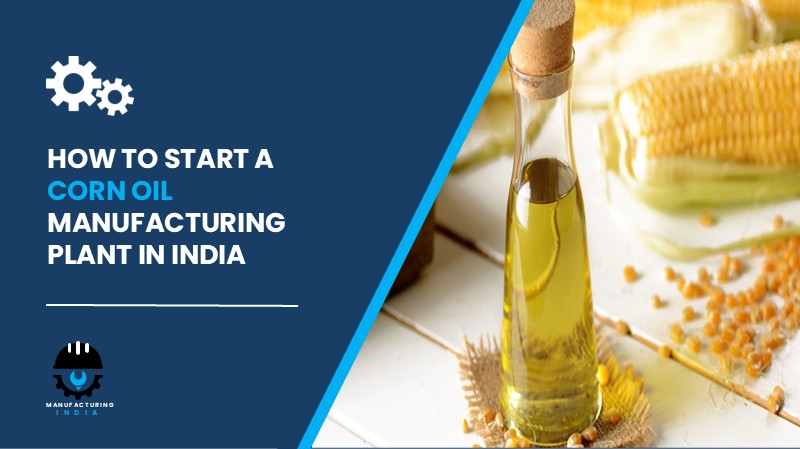
Corn oil is a vegetable oil that comes from the germ of corn kernels, featuring a lightweight texture, a high smoke point, and a mild taste. The product contains numerous polyunsaturated fatty acids with linoleic acid as the main component, which makes it suitable for cooking, frying, and baking purposes. Corn oil contains vitamin E as a natural antioxidant, which makes it appropriate for use in healthy cooking methods. The product serves multiple purposes as it can be used to create margarines, salad dressings, and personal care items which include soaps and cosmetics. The corn oil manufacturing process uses oil extraction, refining, bleaching, deodorization, and packaging as the primary production method. Key end-use industries served include food processing, cosmetics and personal care, and edible oils.
Cost of Setting Up a Corn Oil Manufacturing Plant in India
The total cost of setting up a corn oil manufacturing plant in India depends on several critical factors, including plant capacity, technology, location, automation levels, and regulatory compliance requirements.
1. Capital Expenditure (CapEx)
The total capital investment required for establishing a corn oil manufacturing plant covers land acquisition, site preparation, and necessary infrastructure. The location must offer easy access to key raw materials such as corn germ, hexane, and refining chemicals, with proximity to target markets to minimize distribution costs. The site must have robust infrastructure, including reliable transportation, utilities, and waste management systems. Machinery costs account for the largest portion of total capital expenditure. The cost of land and site development, including charges for land registration, boundary development, and other related expenses, forms a substantial part of the overall investment.
Key machinery required includes:
- Corn degermers
- Oil expellers or solvent extractors
- Bleaching units
- Neutralizers
- Deodorization systems
- Filtration units
- Packaging lines
Other capital costs include civil works (production shed, quality control lab, raw material and finished goods storage, administrative block), effluent treatment systems, and pre-operative and commissioning expenses.
Request a Sample Report for In-Depth Market Insights: https://www.imarcgroup.com/corn-oil-manufacturing-plant-project-report/requestsample
2. Operational Expenditure (OpEx)
The operating cost structure of a corn oil manufacturing plant is primarily driven by raw material consumption, particularly corn germ, which accounts for approximately 80-85% of total operating expenses (OpEx). Raw materials required include corn germ, hexane, and refining chemicals. Implementing long-term contracts with reliable suppliers helps mitigate price volatility and ensure consistent supply of materials. Utilities (electricity, water, steam) account for 5-10% of OpEx. Other OpEx components include transportation costs, packaging costs, salaries and wages, repairs and maintenance, depreciation, and taxes. By the fifth year, the total operational cost is expected to increase substantially due to factors such as inflation, market fluctuations, and potential rises in the cost of key materials.
3. Plant Capacity
The proposed manufacturing facility is designed with an annual production capacity ranging between 50,000 – 200,000 MT, enabling economies of scale while maintaining operational flexibility. Plant capacity can be customized per investor requirements. Profitability improves significantly with higher capacity utilization.
4. Profit Margins and Financial Projections
The project demonstrates healthy profitability potential under normal operating conditions. Gross profit margins typically range between 20-30%, supported by stable demand and value-added applications. Net profit margins are projected at 8-15%. Financial analysis includes comprehensive projections of net present value (NPV), internal rate of return (IRR), payback period, income projections, expenditure projections, and profit and loss accounts.
Why Set Up a Corn Oil Plant in India?
Growing Edible Oils Demand: Households and food industries require corn oil as consumers now prefer healthier polyunsaturated oils. The increasing use of polyunsaturated oils in diets together with growing urbanization and rising disposable incomes results in higher demand from India, the United States, and China.
Market Trend Alignment: The global demand for corn oil grows steadily as people become more health conscious and processed food consumption increases and the cosmetic industry expands. The food processing industry serves as the main market for its products while the cosmetics and oleochemical sectors present new opportunities for business growth.
Moderate Entry Barriers: The production process needs expensive refining facilities together with quality control measures, and seasoned operators who maintain product standards and brand trust will achieve market dominance.
Government and Policy Support: The corn oil market receives indirect support through initiatives that promote domestic edible oil production, biofuel programs, and food processing sector expansion. The “Make in India” initiative and state-level industrial policies encourage domestic manufacturing.
Supply Chain Reliability: Regional producers obtain a competitive edge by maintaining steady production and cost efficiency through their ability to acquire high-quality corn kernels from both local and regional suppliers.
Active Industry Investment: In March 2025, Cargill through Saatvik Agro Processors opened a new corn milling facility in Gwalior, Madhya Pradesh, to support India’s growing confectionery, infant formula, and dairy industries. In December 2024, Godavari Biorefineries Limited announced a ₹130 crore investment to build a 200 KLPD corn/grain-based distillery, strengthening ethanol production and supporting India’s green energy transition.
Manufacturing Process – Step by Step
The corn oil manufacturing process uses oil extraction, refining, bleaching, deodorization, and packaging as the primary production method.
- Raw Material Sourcing: Reliable suppliers must be secured for raw materials like corn germ, hexane, and refining chemicals to ensure consistent production quality. Sustainability and supply chain risks must be assessed, and long-term contracts should be negotiated to stabilize pricing and ensure a steady supply.
- Corn Degerming: Corn kernels are processed through corn degermers to separate the germ from the endosperm and other components.
- Oil Extraction: Oil is extracted from the corn germ using oil expellers or solvent extractors.
- Neutralization: Extracted oil undergoes neutralization using neutralizers to remove free fatty acids.
- Bleaching: Oil is processed through bleaching units to remove color pigments and impurities.
- Deodorization: Oil undergoes deodorization using deodorization systems to remove odor-causing compounds.
- Filtration: Oil is filtered through filtration units to ensure clarity and purity.
- Packaging: Finished oil is packaged using packaging lines.
- Quality Assurance: A comprehensive quality control system is established throughout production. Analytical instruments must be used to monitor product concentration, purity, and stability.
- Dispatch: Finished corn oil is dispatched to end-use industries including food processing, cosmetics and personal care, and edible oils.
Key Applications
Corn oil serves a diverse range of industries and applications:
- Food Industry: Used for cooking, frying, and as an ingredient in processed foods.
- Cosmetics and Personal Care: Incorporated in soaps, lotions, and hair care formulations.
- Industrial: Utilized in bio-lubricants and as a raw material in oleochemicals.
- Margarine Production: Used as a key ingredient in margarine manufacturing.
- Salad Dressings: Used in the production of salad dressings.
- Skincare Products: Used in skincare formulations.
Leading Manufacturers
Leading manufacturers in the global corn oil industry include several multinational companies with extensive production capacities and diverse application portfolios. Key players include:
- Archer Daniels Midland Company (ADM)
- ACH Food Companies
- Cargill, Inc.
- Abu Dhabi Vegetable Oil Company (ADVOC)
- Elburg Global
- Conagra Brands, Inc.
- Savola Group
These key players serve end-use sectors such as food processing, cosmetics and personal care, and edible oils.
Timeline to Start the Plant
- Feasibility study and project report preparation
- Land acquisition and site development
- Regulatory approvals and environmental clearances
- Factory licence and fire safety compliance
- Machinery procurement and installation
- Raw material supplier agreements and supply chain setup
- Trial production and quality testing
- Commercial production launch
Licences and Regulatory Requirements
Starting a corn oil manufacturing unit in India requires several approvals:
- Business registration (Proprietorship, LLP, or Pvt Ltd)
- Factory Licence under the Factories Act
- Environmental Clearance from State Pollution Control Board
- GST Registration
- Fire Safety NOC
- Effluent Treatment Plant (ETP) operational clearance
- Occupational Health and Safety compliance
- Food Safety and Standards Authority of India (FSSAI) license for edible oil production
Key Challenges to Consider
- High Capital Requirements: Machinery costs for corn degermers, oil expellers or solvent extractors, bleaching units, neutralizers, deodorization systems, filtration units, and packaging lines represent a significant portion of capital expenditure.
- Raw Material Price Volatility: Fluctuations in prices of corn germ, hexane, and refining chemicals directly impact margins. Raw materials account for 80-85% of operating expenses.
- Regulatory Compliance: Navigating environmental clearances, factory licences, and pollution control board regulations requires careful planning. Effluent treatment systems are necessary to minimize environmental impact and ensure compliance with emission standards.
- Competition: The market includes established global players such as Archer Daniels Midland Company (ADM), Cargill, Inc., Conagra Brands, Inc., and Savola Group.
- Skilled Manpower: Access to skilled operators for extraction, refining, and quality control processes is essential.
- Technology and Innovation Pressure: Continuous advancements in oil extraction and refining processes require ongoing capital reinvestment to remain competitive. The development of new technologies for oil extraction and refining processes results in better yield and refined oil quality.
Frequently Asked Questions
- How much does it cost to set up a corn oil manufacturing plant in India?
The total capital investment depends on plant capacity, technology, and location, covering land acquisition, site preparation, infrastructure, and machinery costs. - Is corn oil manufacturing profitable in India in 2026?
Yes, gross profit margins typically range between 20-30%, with net profit margins of 8-15%, indicating healthy profitability potential. - What machinery is required for a corn oil plant in India?
Essential equipment includes corn degermers, oil expellers or solvent extractors, bleaching units, neutralizers, deodorization systems, filtration units, and packaging lines. - What licences and approvals are required to start a corn oil plant in India?
Required approvals include business registration, Factory Licence under the Factories Act, Environmental Clearance from State Pollution Control Board, GST Registration, Fire Safety NOC, ETP operational clearance, and FSSAI license. - What raw materials are needed for corn oil manufacturing?
Raw materials required include corn germ, hexane, and refining chemicals. - What are the environmental compliance requirements for a corn oil plant in India?
Facilities must implement effluent treatment systems, obtain environmental clearance from the State Pollution Control Board, and comply with emission standards. - What is the best location to set up a corn oil plant in India?
The location must offer easy access to key raw materials such as corn germ, hexane, and refining chemicals, with proximity to target markets to minimize distribution costs. - What is the break-even period for this type of plant in India?
Financial projections including break-even analysis are provided in detailed feasibility reports, with timelines varying based on capacity, utilization rates, and operating efficiencies. - What government incentives are available for manufacturers in India?
Investors benefit from the “Make in India” initiative, state-level industrial policies, and initiatives that promote domestic edible oil production, biofuel programs, and food processing sector expansion.
Key Takeaways for Investors
Setting up a corn oil manufacturing plant in India offers a compelling investment opportunity, driven by strong demand from food processing, cosmetics and personal care, and edible oils end-use sectors. The project demonstrates healthy financial viability across various plant capacities (50,000 – 200,000 MT annually), with gross profit margins ranging between 20-30% and net margins of 8-15%. The global corn oil market, valued at USD 6.9 Billion in 2025, is expected to reach USD 11.9 Billion by 2034, exhibiting a CAGR of 6.20% from 2026 to 2034. With increasing health consciousness, growing processed food consumption, and expanding applications across diverse industries, the corn oil industry is poised for continued expansion, making now an opportune time for investors to enter this dynamic market.
About the Author