Setting up a beef jerky manufacturing plant in India represents a highly attractive investment proposition underpinned by robust and structurally growing demand for high-protein, ready-to-eat snacks, the rising popularity of convenient on-the-go foods, and the expanding sports nutrition and fitness industry. As health-conscious consumers increasingly favour protein-rich alternatives to traditional carbohydrate-heavy snacks, and as outdoor recreation, travel, and active lifestyles continue to grow, beef jerky available in classic, organic, grass-fed, low-sodium, and preservative-free formulations occupies an increasingly important position across retail packaged snacks, sports nutrition, and travel retail channels. This growth trajectory, combined with continuous flavour innovation and expanding distribution through online grocery and convenience retail networks, creates a highly favourable manufacturing environment for new entrants with efficient processing, drying, and quality systems.
What is Beef Jerky?
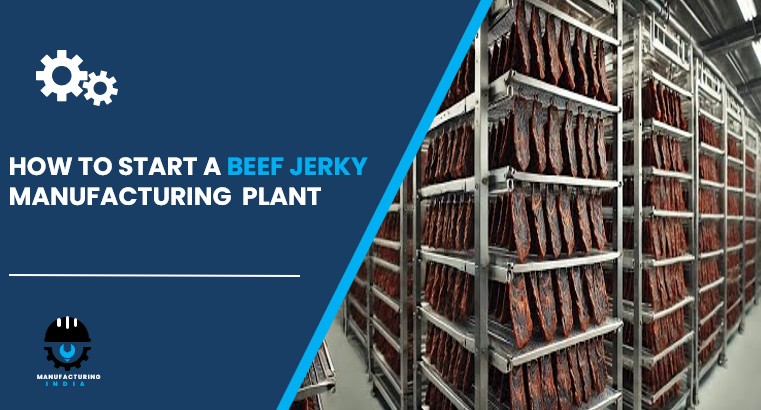
Beef jerky is a dried and seasoned meat snack produced by trimming lean beef, marinating it with spices, salt, and preservatives, and then dehydrating or smoking it to remove moisture. The drying process extends shelf life while preserving flavour and nutritional value. Beef jerky is characterised by its chewy texture, savoury taste, and high protein content, and is typically low in fat and carbohydrates, making it a popular snack among athletes, outdoor enthusiasts, and health-conscious consumers.
Modern beef jerky products are available in a wide range of flavours and formulations, including organic, grass-fed, low-sodium, and preservative-free varieties. Beyond traditional retail snacking, the product is used extensively as a portable, shelf-stable protein source for travel and outdoor recreation, and as a convenient high-protein option within sports nutrition and fitness-focused diets.
The global beef jerky market was valued at approximately USD 4.00 Billion in 2025 and is expected to reach USD 5.95 Billion by 2034, exhibiting a CAGR of 4.5% from 2026 to 2034, supported by rising demand for high-protein snacks, the growing popularity of convenient ready-to-eat foods, and expanding fitness and sports nutrition trends.
Cost of Setting Up a Beef Jerky Manufacturing Plant
The total capital investment required to establish a beef jerky manufacturing plant is shaped by several key parameters: annual production capacity (typically ranging from 1,000 to 5,000 MT per annum), the level of automation across slicing, marination, drying, and packaging sections, facility specification, raw material sourcing strategy, and applicable food safety and meat processing regulatory requirements. Below is a structured breakdown of the major cost components.
1. Capital Expenditure (CapEx)
Total capital investment in a beef jerky manufacturing plant covers the following major heads:
Land and Site Development
This encompasses land acquisition or lease, site preparation, boundary development, and utilities connectivity. Site selection should prioritise proximity to reliable beef supply sources and key raw materials such as marinades and salt/sugar to ensure a steady, low-transport-cost supply chain. Access to reliable power, water, and cold-chain infrastructure for raw material storage, strong road logistics for inbound meat and outbound finished product, and a trained workforce for plant operations and quality control are critical site selection criteria. Compliance with industrial zoning regulations, food safety manufacturing standards, and effluent and waste management compliance frameworks must be assessed from project initiation.
Civil Works and Construction
Building costs cover the main processing facility including raw material cold storage, trimming and slicing section, marination and curing area, drying and smoking chamber house, cooling and packaging hall, quality control laboratory, administrative block, and utility infrastructure including power backup, refrigeration systems, effluent treatment plant, and waste management systems. Construction must comply with applicable factory act requirements, food safety manufacturing standards, and meat processing infrastructure guidelines.
Machinery and Equipment
Machinery represents the single largest CapEx component. Key equipment required for a beef jerky manufacturing plant includes:
- Raw Material Reception and Cold Storage: Refrigerated intake docks, cold storage chambers, and conveying systems to receive and store fresh or frozen beef prior to processing
- Meat Slicers: High-precision slicing machines to trim lean beef and cut it into thin, uniform strips suited to consistent drying and texture
- Marination and Tumbling Machines: Vacuum tumblers and marination vats that infuse seasoning blends, salt, and curing agents evenly into sliced beef strips
- Curing Systems: Controlled curing chambers and equipment to stabilise marinated meat and develop flavour and preservation characteristics prior to drying
- Smoking and Drying Chambers: Industrial smokehouses and dehydration chambers that remove moisture through controlled heat, airflow, and smoke exposure to achieve target shelf-stable moisture levels
- Industrial Dehydrators: High-capacity dehydration units for continuous or batch drying operations, engineered for consistent product texture and extended shelf life
- Cooling Conveyors: Conveyor systems that cool dried jerky strips prior to cutting, portioning, and packaging to preserve product quality
- Cutting and Portioning Equipment: Automated cutting and portioning machines to prepare consistent serving sizes for retail and bulk packaging formats
- Vacuum Packaging Machines: Vacuum sealing and packaging lines for retail pouches and bulk packs that preserve shelf life and product freshness
- Quality Control Laboratory Equipment: Equipment for moisture content, water activity, microbial, and sensory testing to verify compliance with food safety and quality standards
- Material Handling and Warehousing: Conveyors, storage racks, and finished goods warehousing with FIFO stock management for raw materials and packaged product
Other Capital Costs
These include pre-operative expenses, commissioning charges, import duties on specialised processing and drying equipment, staff training and competency development, initial raw material and packaging inventory for production commissioning, regulatory compliance setup including food business licensing, meat processing establishment certification, and ISO 22000 / HACCP food safety management system establishment costs.
Request a Sample Report for In-Depth Market Insights: https://www.imarcgroup.com/beef-jerky-manufacturing-plant-project-report/requestsample
2. Operational Expenditure (OpEx)
Raw materials principally beef, along with marinades, salt, sugar, and packaging materials constitute the dominant operating cost, typically representing 70-80% of total OpEx. Utility costs, driven primarily by refrigeration, drying and smoking energy consumption, and cold storage operations, account for 10-15% of OpEx. Labour, maintenance, quality control, packaging, transportation, depreciation, taxes, and overhead costs constitute the remainder of the operating cost base.
3. Plant Capacity
The proposed beef jerky manufacturing facility is designed with an annual production capacity ranging between 1,000-5,000 MT, enabling economies of scale while maintaining operational flexibility. This capacity range supports a diversified product portfolio across classic, organic, grass-fed, low-sodium, and preservative-free formulations, serving retail packaged snack channels, sports nutrition customers, and travel retail outlets.
4. Profit Margins and Financial Projections
The project demonstrates healthy profitability potential under normal operating conditions. Financial projections encompass capital investment, operating costs, capacity utilisation ramp-up schedule, product mix across flavour and formulation variants, and forward demand outlook underpinned by rising protein-focused snacking trends. A comprehensive feasibility analysis includes sensitivity analysis, Net Present Value (NPV), Internal Rate of Return (IRR), and Payback Period calculations. Gross profit margins for beef jerky manufacturing typically range from 35-45%, supported by stable demand and value-added applications. Net profit margins of 18-25% are achievable with disciplined cost management, optimal capacity utilisation, and effective product mix management.
Why Set Up a Beef Jerky Manufacturing Plant?
Growing Demand for High-Protein, Convenient Snacks
Consumers increasingly seek protein-rich alternatives to traditional carbohydrate-heavy snack foods, driving sustained demand for beef jerky, which is widely recognised for its high protein content, low fat and carbohydrate profile, and convenient, portable format. As health-conscious and fitness-oriented consumers increasingly seek out snacks perceived to support balanced nutrition, beef jerky is transitioning from a niche specialty product toward a mainstream packaged snack choice, supporting steady volume growth across retail and travel retail channels.
Convenience and Long Shelf Life
Dehydration and smoking technology allows beef jerky to remain shelf-stable for extended periods without refrigeration, making it a highly convenient snack option for retail, travel, and outdoor use. This extended shelf life reduces spoilage risk and supports efficient distribution through online grocery platforms and convenience retail networks, improving product accessibility and reducing supply chain costs for manufacturers.
Expanding Flavour Innovation and Premiumisation
Manufacturers continuously introduce new seasoning profiles, including organic, grass-fed, low-sodium, and preservative-free variants, to attract diverse consumer preferences and support premium price positioning. This ongoing flavour and formulation innovation broadens the product’s appeal to health-conscious consumers and supports differentiation in an increasingly competitive packaged snack category.
Growing Sports Nutrition and Fitness Industry Demand
Protein-focused diets and active lifestyles drive consumption of meat-based snack products among athletes and fitness enthusiasts seeking convenient, high-protein nutrition. The increasing popularity of outdoor recreational activities and travel further boosts demand for portable, shelf-stable protein snacks, positioning beef jerky favourably within the broader sports nutrition and functional snacking category.
Expanding Retail and Travel Retail Channels
Beef jerky is widely sold as a packaged snack product through supermarkets, hypermarkets, and convenience stores, and as a portable snack in airports, hotels, and vending outlets for travellers. The expansion of online grocery platforms and convenience retail networks continues to improve product accessibility, supporting sustained volume growth across both traditional retail and travel retail channels.
Urbanisation and Rising Disposable Incomes
Approximately 45% of the world’s 8.2 billion people resided in urban areas in 2025, according to the United Nations World Urbanization Prospects 2025 report by UN DESA. Rising urban lifestyles, increasing reliance on convenient packaged foods, and growing disposable incomes among urban consumers are supporting higher consumption of high-protein packaged snacks, including beef jerky, in city-based households and travel retail channels, providing a structural demand tailwind for manufacturers with strong retail and distribution networks.
Favourable Brand Partnerships and Industry Collaborations
Leading beef jerky manufacturers have increasingly pursued co-branded product launches and celebrity or influencer partnerships to expand consumer reach and reinforce category visibility. Such collaborations illustrate the evolving marketing landscape for meat-based snacks and reflect continued brand investment interest in the category, supporting new entrants seeking to build differentiated retail propositions alongside established players.
Manufacturing Process Overview
The beef jerky manufacturing operation transforms raw beef into a dried, seasoned, shelf-stable snack product through a sequence of trimming, marination, drying, and packaging operations. The key process stages are:
- Raw Material Reception and Cold Storage: Fresh or frozen beef received from suppliers is inspected for quality and stored under controlled refrigeration to preserve freshness prior to processing.
- Trimming: Beef cuts are trimmed to remove excess fat and connective tissue, isolating lean meat suited to slicing and drying.
- Slicing: Trimmed lean beef is sliced into thin, uniform strips using precision slicing equipment to ensure consistent drying and texture.
- Marination: Sliced beef strips are marinated with seasoning blends, spices, salt, sugar, and preservatives using vacuum tumbling to ensure even flavour penetration.
- Curing: Marinated strips undergo a controlled curing period to stabilise flavour development and support preservation prior to drying.
- Drying or Smoking: Cured strips are dehydrated or smoked in industrial dehydrators or smokehouses under controlled temperature and airflow to remove moisture and achieve target shelf-stable water activity levels.
- Cooling: Dried jerky strips are cooled on conveyor systems prior to further handling to preserve product texture and quality.
- Cutting and Portioning: Cooled strips are cut and portioned into consistent serving sizes for retail pouches or bulk packaging formats.
- Quality Control: Finished jerky is tested for moisture content, water activity, microbial safety, and sensory attributes to verify compliance with food safety and quality standards before release for packaging.
- Packaging and Dispatch: Beef jerky is vacuum-packed in retail pouches or bulk packs for household, travel retail, and institutional sale, and dispatched to distributors and retail customers.
Key Applications of Beef Jerky
The beef jerky market serves several major end-use segments across food and beverage, retail, sports nutrition, and travel sectors:
- Food and Beverage Industry: Beef jerky is widely sold as a packaged snack product through supermarkets, hypermarkets, and convenience stores, forming a core segment of the broader packaged snack category.
- Retail Packaged Snack Sector: The product is positioned as a premium high-protein snack across various flavours and packaging formats, supporting differentiated retail offerings and brand premiumisation.
- Sports Nutrition and Fitness Industry: Beef jerky is consumed as a protein-rich snack by athletes and fitness enthusiasts seeking convenient nutrition, supporting its position within functional and performance-oriented snacking categories.
- Hospitality and Travel Retail: The product is sold in airports, hotels, and vending outlets as a portable, shelf-stable snack for travellers, benefiting from its long shelf life and convenient format.
Global Beef Jerky Market Outlook
The global beef jerky market was valued at approximately USD 4.00 Billion in 2025. According to IMARC Group estimates, the market is expected to reach USD 5.95 Billion by 2034, exhibiting a CAGR of 4.5% from 2026 to 2034. The beef jerky market benefits from multiple structural demand drivers:
- Rising health awareness and growing consumer preference for high-protein, low-fat, and low-carbohydrate snack alternatives across urban populations globally
- With snacks accounting for nearly 22% of total energy intake among U.S. adults and over 90% of adults consuming at least one snack daily, sustained demand for convenient, high-protein snack options
- Increasing popularity of outdoor recreational activities and travel, boosting demand for portable and shelf-stable protein snacks
- Continued product innovation, including organic, grass-fed, and low-sodium variants, expanding the product’s appeal to health-conscious consumers
- Expansion of online grocery platforms and convenience retail networks, improving product accessibility
- Growing sports nutrition and fitness industry demand for convenient, protein-rich snack alternatives
- Continued investment by established manufacturers in co-branded launches and flavour innovation, reflecting confidence in long-term category growth
Major players in the global beef jerky manufacturing industry include Jack Link’s, Conagra Brands (Slim Jim), Oberto Snacks, KRAVE Jerky, Country Archer Provisions, Old Trapper, Chef’s Cut Real Jerky, and Ayoba Foods, serving end-use sectors including the food and beverage industry, retail packaged snack sector, sports nutrition and fitness industry, and hospitality and travel retail.
Latest Industry Developments
- February 2026: Link Snacks introduced Jack Link’s Doritos Nacho Cheese flavoured beef jerky and meat sticks through its partnership with PepsiCo. The new products combine the bold taste of Doritos Nacho Cheese with Jack Link’s signature meat snacks.
- May 2025: Jack Link’s announced a new global partnership with MrBeast. Through this collaboration, the partners introduced a new range of protein-rich meat snack products, featuring co-branded multipacks containing individual portions of popular beef jerky and meat stick flavours.
Licenses and Regulatory Requirements
Establishing a beef jerky manufacturing unit requires a range of approvals and certifications, which may vary by country and jurisdiction, including:
- Business registration and company incorporation under applicable company law
- Factory License under applicable factories act provisions for manufacturing operations
- Food business operator license or registration from the applicable national food safety authority for manufacturing and sale of meat-based snack products
- Meat processing establishment license or approval, including sanitary and veterinary health certification for raw meat handling and processing
- Compliance with national meat inspection and hazard analysis requirements applicable to ready-to-eat meat snack products
- Export license and sanitary/phytosanitary certification for international market access, where applicable
- Pollution Control Board clearances Consent to Establish (CTE) and Consent to Operate (CTO) for manufacturing operations involving effluent generation
- ISO 22000 / HACCP Food Safety Management System Certification for food safety infrastructure compliance
- ISO 9001:2015 Quality Management System Certification for quality management infrastructure compliance
- Weights and Measures (Legal Metrology) registration for packaged commodity labelling and net quantity declaration
- Halal or Kosher certification, where targeting relevant export or domestic consumer segments
- Trademark and Brand Registration for proprietary branded product launch
- Occupational Health and Safety management compliance for manufacturing worker safety
Key Challenges to Consider
Raw Material Price Volatility and Supply Consistency
Beef, which accounts for 70-80% of total operating costs, is subject to global commodity price cycles, feed cost fluctuations, and cattle supply cycles that can vary significantly by region and season. Inconsistent raw material supply or price volatility can materially affect production costs and margins. Securing long-term supply arrangements with reliable meat suppliers and negotiating stable pricing contracts are critical operational priorities.
Meat Safety and Regulatory Compliance
Processing raw meat into a ready-to-eat snack product introduces food safety hazards that must be managed through rigorous sanitation protocols, temperature control, and compliance with national meat inspection and hazard analysis requirements. Any lapse in food safety compliance can disrupt market access, trigger recalls, and damage brand reputation, making continuous investment in quality assurance systems a non-negotiable operational requirement.
Competition from Substitute Protein Snacks
Beef jerky demand is influenced by competition from substitute high-protein snack formats, including plant-based jerky, protein bars, and other meat snack variants. Periods of aggressive pricing or innovation by substitute snack categories can compress beef jerky demand and pricing, requiring manufacturers to differentiate through flavour innovation, quality positioning, and brand development to maintain market share.
Shelf Life and Quality Consistency
Maintaining consistent moisture content, texture, and flavour across production batches while ensuring extended shelf stability requires disciplined process control across marination, drying, and packaging stages. Variability in raw material quality or drying process control can affect product consistency, making standardised operating procedures and quality monitoring systems essential to protecting brand reputation.
Capital Intensity of Drying and Smoking Infrastructure
Industrial dehydration and smoking equipment capable of consistent, high-volume production represents a substantial capital commitment relative to simpler snack processing operations. New entrants must carefully evaluate the phasing of investment between smaller-scale batch drying operations and fully automated continuous processing lines, based on available capital, target production volumes, and long-term growth strategy.
Frequently Asked Questions (FAQs)
1. How much does it cost to set up a beef jerky manufacturing plant?
The total investment depends on plant capacity (1,000-5,000 MT per annum), automation level, facility specification, location, and target market certifications. Costs cover land, civil construction (cold storage, marination and curing areas, drying and smoking chambers, packaging hall, quality laboratory, utilities), machinery (slicers, marination and tumbling equipment, drying and smoking chambers, cutting and packaging lines), quality certifications, working capital, and regulatory compliance. A comprehensive feasibility study from IMARC Group provides detailed, capacity-specific cost estimates covering all CapEx and OpEx components.
2. Is beef jerky manufacturing a profitable business in 2026?
Yes. Sustained demand from health-conscious and fitness-oriented consumers, the expanding retail packaged snack and travel retail sectors, and growing sports nutrition industry demand combined with gross margins of 35-45% and net profit margins of 18-25% make beef jerky manufacturing financially attractive. Continuous flavour innovation and premiumisation offer meaningful opportunities for margin enhancement above standard product sales.
3. What machinery and equipment are required for a beef jerky manufacturing plant?
Key equipment includes raw material cold storage systems, meat slicers, marination and tumbling machines, curing systems, industrial smoking and drying chambers, cooling conveyors, cutting and portioning equipment, vacuum packaging machines, quality control laboratory equipment, and material handling and warehousing systems for retail and bulk dispatch.
4. What licenses and approvals are required?
Required approvals include company registration, Factory License, food business operator license from the applicable national food safety authority, meat processing establishment license and sanitary/veterinary certification, Pollution Control Board clearances, and ISO 22000/HACCP food safety management system certification. A food business license is a mandatory legal prerequisite for manufacturing and selling ready-to-eat meat snack products.
5. How long does it take to commission a beef jerky manufacturing plant?
Typically, 9-15 months from project initiation to commercial production launch, depending on project scale, facility construction timeline, equipment procurement lead times for drying and smoking systems, regulatory approvals, and food safety certification timelines, which should be initiated early in the project to avoid delays to commercial launch.
6. What are the key raw materials for beef jerky manufacturing?
The primary raw material is lean beef sourced from meat suppliers, which must meet quality and safety standards prior to processing. Other key inputs include marinades, spices, salt, sugar, and preservatives for seasoning and curing, and packaging materials including retail pouches and bulk packs for finished product.
7. What is the break-even period for a beef jerky manufacturing plant?
The break-even period generally depends on capacity utilisation ramp-up trajectory, product mix across flavour and formulation variants, raw material supply consistency, and retail distribution arrangements. Securing long-term supply agreements with reliable meat suppliers and stable offtake arrangements with retail and travel retail distributors significantly improves revenue predictability and supports faster break-even achievement.
8. What are the main product formats for beef jerky and their applications?
The principal formats include classic seasoned jerky, organic and grass-fed variants, low-sodium formulations, and preservative-free products, sold through retail packaged snack channels, sports nutrition outlets, and travel retail. Premium and specialty formulations typically target health-conscious consumers and command higher retail price points.
9. What government incentives are available for beef jerky manufacturers?
Manufacturers may benefit from food processing sector incentive schemes, industrial investment incentives and capital subsidies for agro-processing and food manufacturing units in certain jurisdictions, and export promotion benefits for meat and meat-based snack product exports, subject to applicable national regulations.
10. How does beef jerky manufacturing compare to other meat snack processing in terms of setup?
Compared to other processed meat snack categories, beef jerky manufacturing requires specialised drying and smoking infrastructure to achieve shelf-stable moisture levels without refrigeration, along with rigorous meat safety compliance. The core processing technology is broadly similar to other cured and dried meat snack production, allowing manufacturers with experience in meat processing to adapt existing technical capabilities to beef jerky with targeted investment in drying and quality control infrastructure.
Key Takeaways for Investors
The beef jerky manufacturing industry represents a structurally resilient and financially attractive investment opportunity positioned at the intersection of rising global demand for high-protein snacks, expanding retail and travel retail channels, and the growing sports nutrition and fitness movement. Stable demand from retail packaged snack, sports nutrition, and hospitality and travel retail channels provides resilience against single-segment demand volatility, while continuous flavour innovation and premiumisation offer meaningful margin enhancement opportunities beyond standard product sales. Rising urbanisation and disposable incomes provide a structural demand tailwind for manufacturers with strong retail and distribution networks, while favourable brand partnerships and co-branded product collaborations reflect strong confidence in the long-term growth and profitability of the category. The scalable nature of the value chain from smaller-scale batch operations to fully automated continuous processing lines allows investors to phase capital deployment according to risk appetite and target market positioning.
About the Author