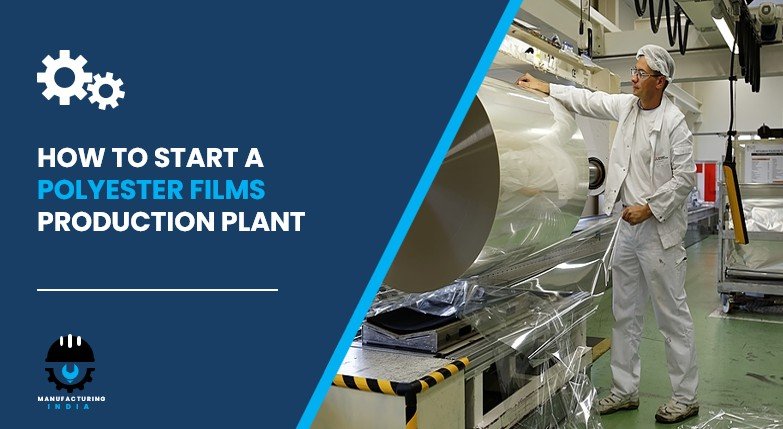
Setting up a polyester films production plant in India represents a highly attractive investment proposition underpinned by robust and structurally growing demand from the flexible packaging industry, the electronics and electrical insulation sector, the renewable energy industry, and the automotive and construction sectors. As e-commerce expands, consumer electronics proliferate, and solar power capacity additions accelerate globally, biaxially oriented polyester (BOPET) films valued for their strength, clarity, and barrier properties occupy an increasingly important position across flexible packaging, capacitor dielectrics, solar backsheets, and industrial lamination applications. This growth trajectory, combined with steady availability of PET resin feedstock and strong end-use diversification, creates a highly favourable manufacturing environment for new entrants with efficient extrusion, orientation, and finishing systems.
What are Polyester Films?
Polyester films, commonly known as BOPET (Biaxially Oriented Polyethylene Terephthalate) films or by brand names such as Mylar, are thin, high-performance thermoplastic sheets derived from PET resin. Renowned for their superior clarity, mechanical strength, and chemical stability, these versatile films can withstand extreme temperatures, making them highly durable. Key properties include high tensile strength, excellent dielectric strength for electrical insulation, and superior oxygen and moisture barrier qualities.
Polyester films are extensively used across industries for flexible packaging in food and pharmaceuticals, electronic components such as circuits and capacitors, solar panels, and medical devices. They are fully recyclable and are often customised with coatings to provide anti-static, anti-fog, or UV protection for specific functional or decorative applications.
The global polyester films market was valued at approximately USD 37.60 Billion in 2025 and is expected to reach USD 66.27 Billion by 2034, exhibiting a CAGR of 6.5% from 2026 to 2034, supported by growth in flexible packaging, renewable energy, consumer electronics, and digital printing applications.
Cost of Setting Up a Polyester Films Production Plant
The total capital investment required to establish a polyester films production plant is shaped by several key parameters: annual production capacity (typically ranging from 50,000 to 150,000 tons per annum), the extent of backward integration into PET resin polymerisation versus reliance on purchased PET chips, the level of automation across extrusion, orientation, and finishing sections, facility specification, raw material sourcing strategy, and applicable regulatory and quality compliance requirements. Below is a structured breakdown of the major cost components.
1. Capital Expenditure (CapEx)
Total capital investment in a polyester films production plant covers the following major heads:
Land and Site Development
This encompasses land acquisition or lease, site preparation, boundary development, and utilities connectivity. Site selection should prioritise proximity to PET resin (ethylene glycol and purified terephthalic acid) suppliers and to target packaging, electronics, and industrial converter markets to minimise inbound and outbound logistics costs. Access to reliable and high-quality power supply given the energy-intensive nature of extrusion and orientation processes, strong road and rail logistics, availability of process water and cooling infrastructure, and a trained technical workforce for plant operations and quality control are critical site selection criteria. Compliance with industrial zoning regulations, environmental clearance norms, fire and electrical safety standards, and effluent and emission compliance frameworks must be assessed from project initiation.
Civil Works and Construction
Building costs cover the main processing facility including the polymerisation or chip storage and drying section, extrusion and casting house, biaxial orientation and tenter frame area, coating and metallising section (where applicable), slitting and winding area, quality control laboratory, finished goods and raw material warehousing, administrative block, and utility infrastructure including power substation, boiler or thermal fluid heating systems, chilled water and cooling tower systems, compressed air systems, and effluent treatment plant. Construction must comply with applicable factory act requirements, electrical and fire safety norms for high-temperature processing equipment, and environmental infrastructure guidelines.
Machinery and Equipment
Machinery represents the single largest CapEx component. Key equipment required for a polyester films production plant includes:
- Polymerisation Systems: Esterification and polycondensation reactors that convert purified terephthalic acid (PTA) and monoethylene glycol (MEG) into PET resin chips, for plants pursuing backward integration into resin production
- Chip Cutting and Drying Systems: Chip cutters, crystallisers, and solid-state or hopper dryers that prepare PET chips to the moisture and intrinsic viscosity specifications required for film-grade extrusion
- Extrusion Systems: Screw extruders, melt filtration systems, and die assemblies that melt and cast PET resin into an amorphous cast sheet on a chill roll
- Bi-Axial Orientation Lines: Machine direction orientation (MDO) units and tenter frames for transverse direction orientation (TDO) that stretch the cast sheet simultaneously or sequentially to develop the film’s tensile strength, clarity, and barrier properties
- Heat Setting and Annealing Systems: In-line ovens that thermally stabilise the oriented film to control shrinkage and ensure dimensional stability in downstream converting applications
- Surface Treatment Systems: Corona treatment, chemical coating, and metallising units for applying anti-static, anti-fog, barrier, or reflective functional coatings depending on target application
- Thickness Gauging and Quality Monitoring Systems: In-line beta gauges, optical inspection systems, and automated defect detection equipment to verify thickness uniformity and surface quality across the film width
- Slitting and Winding Systems: Precision slitters and winders that convert master rolls into finished film rolls of specified width and length for despatch to converters
- Quality Control Laboratory Equipment: Equipment for tensile strength, dielectric strength, haze and clarity, shrinkage, and thickness testing to verify compliance with application-specific quality standards
- Material Handling and Warehousing: Conveyors, roll handling and storage systems, raw material silos, and finished goods warehousing with FIFO stock management
- Packaging Machines: Automated core winding, roll wrapping, palletising, and labelling systems for despatch of finished film rolls
Other Capital Costs
These include pre-operative expenses, commissioning charges, import duties on specialised extrusion and orientation equipment, staff training and competency development, initial raw material and consumable inventory for production commissioning, and regulatory compliance setup including environmental clearances, quality management system certification, and industry-specific product certifications.
Request a Sample Report for In-Depth Market Insights: https://www.imarcgroup.com/polyester-films-manufacturing-plant-project-report/requestsample
2. Operational Expenditure (OpEx)
Raw materials principally PET resin derived from ethylene glycol and purified terephthalic acid, along with master batches, coating chemicals, and other consumables constitute the dominant operating cost, typically representing 70–80% of total OpEx. Utility costs, driven primarily by electricity consumption of extrusion and orientation equipment, thermal energy for heat setting, and chilled water and compressed air systems, account for 10–15% of OpEx. Labour, maintenance, quality control, packaging, transportation, depreciation, taxes, and overhead costs constitute the remainder of the operating cost base.
3. Plant Capacity
The proposed polyester films production facility is designed with an annual production capacity ranging between 50,000–150,000 tons, enabling economies of scale while maintaining operational flexibility. This capacity range supports a diversified product portfolio of plain and coated BOPET films across varying thicknesses and functional grades, serving flexible packaging, electronics, renewable energy, and industrial lamination customers across domestic and export channels.
4. Profit Margins and Financial Projections
The project demonstrates healthy profitability potential under normal operating conditions. Financial projections encompass capital investment, operating costs, capacity utilisation ramp-up schedule, product mix across plain, coated, and metallised film grades, and forward demand outlook underpinned by growth in flexible packaging, electronics, and renewable energy applications. A comprehensive feasibility analysis includes sensitivity analysis, Net Present Value (NPV), Internal Rate of Return (IRR), and Payback Period calculations. Gross profit margins for polyester films production typically range from 20–30%, supported by stable demand and value-added applications. Net profit margins of 10–15% are achievable with disciplined cost management, optimal capacity utilisation, and an effective product mix skewed toward higher-value coated and specialty grades.
Why Set Up a Polyester Films Production Plant?
Crucial Industrial Material Across Multiple Sectors
Polyester films such as BOPET film serve as essential components across packaging, electrical insulation, solar panels, flexible electronics, and industrial laminates, making them indispensable for modern manufacturing and material engineering. Their combination of mechanical strength, clarity, and chemical stability allows a single material platform to serve a wide and diversified set of end-use industries, providing resilience against single-segment demand volatility.
Moderate but Justifiable Entry Barriers
While less complex than specialty chemicals, polyester film production requires significant capital investment in extrusion and biaxial orientation lines, along with stringent quality control, thickness uniformity, and surface treatment standards, creating entry barriers that favour technically capable and process-driven manufacturers. These barriers support healthier long-term margins for established, quality-focused producers relative to more commoditised plastic film categories.
Megatrend Alignment Across Packaging, Energy, and Electronics
Strong growth in flexible packaging, renewable energy particularly solar backsheet films, consumer electronics, and digital printing is driving sustained demand, with sectors such as e-commerce packaging and photovoltaics expanding at high single to double-digit rates globally. This alignment with multiple structural megatrends simultaneously reduces the project’s dependence on any single demand driver.
Policy and Infrastructure Push
Government initiatives supporting domestic manufacturing, packaging standards, renewable energy deployment, and electronics production indirectly boost demand for high-performance polyester films used in these value chains. Programmes promoting local manufacturing and clean energy deployment across major economies are expected to provide sustained tailwinds for domestic film capacity additions.
Localisation and Dependability in Supply Chains
Manufacturers and converters are increasingly prioritising reliable local suppliers to reduce lead times, manage raw material volatility in PET resin, and ensure consistent quality, creating opportunities for regional producers with efficient operations and strong customer integration. This shift favours new entrants who can build long-term relationships with converters and brand owners seeking supply chain resilience.
Growing Packaging and Electronics Industry Demand
Rising demand for flexible, lightweight, and moisture-resistant packaging materials in the food and beverage sector, combined with expanding use of polyester films in displays, solar panels, and capacitors within the electronics industry, is supporting steady volume growth. The packaging industry in India, for example, is projected to expand substantially through 2027, reinforcing the demand outlook for protective and flexible packaging films.
Manufacturing Process Overview
The polyester films production operation transforms PET resin, whether polymerised on-site from purified terephthalic acid and ethylene glycol or procured as film-grade chips, into thin, biaxially oriented film through a sequence of chip preparation, extrusion, orientation, finishing, and packaging operations. The key process stages are:
- PET Resin Preparation: Where backward integration is pursued, purified terephthalic acid (PTA) and monoethylene glycol (MEG) undergo esterification followed by polycondensation under vacuum and heat to form high-viscosity PET resin, which is chipped, crystallised, and dried to the moisture and intrinsic viscosity specification required for film-grade extrusion. Where PET chips are purchased externally, this stage is limited to chip drying and quality verification prior to extrusion.
- Extrusion and Casting: Dried PET chips are melted in a screw extruder, filtered to remove contaminants and gels, and extruded through a flat die onto a rotating chill roll to form an amorphous, unoriented cast sheet with uniform thickness and clarity.
- Machine Direction Orientation (MDO): The cast sheet is reheated and stretched in the direction of film travel between differential-speed rollers, aligning polymer chains along the machine direction and developing initial tensile strength.
- Transverse Direction Orientation (TDO): The machine-direction-oriented film enters a tenter frame where it is gripped at the edges and stretched perpendicular to the direction of travel under controlled heat, biaxially orienting the polymer structure to achieve the target strength, clarity, and barrier properties characteristic of BOPET film.
- Heat Setting and Annealing: The biaxially oriented film is thermally stabilised in an in-line oven under controlled tension to relieve internal stresses and limit shrinkage, ensuring dimensional stability during downstream converting and end-use applications.
- Surface Treatment and Coating: Depending on the target application, the film may undergo corona treatment to improve print and adhesive bonding, or be coated or metallised to impart anti-static, anti-fog, barrier, or reflective functional properties.
- Thickness Gauging and Quality Inspection: In-line beta gauges and optical inspection systems continuously monitor film thickness, uniformity and surface quality across the full film width, flagging deviations for corrective action or rejection.
- Slitting: The finished master roll is precision-slit into narrower rolls of specified width in accordance with converter and customer order requirements.
- Winding and Core Preparation: Slit film is wound onto cores under controlled tension to produce finished rolls free of wrinkles, telescoping, or winding defects.
- Quality Control: Finished film is tested for tensile strength, dielectric strength, haze and clarity, shrinkage, and thickness uniformity to verify compliance with application-specific customer and industry quality standards before release for despatch.
- Packaging and Dispatch: Finished film rolls are wrapped, labelled, and palletised for despatch to flexible packaging converters, electronics component manufacturers, solar module producers, and industrial laminators.
Major Applications of Polyester Films
- Flexible Packaging: Polyester films are widely used for food and pharmaceutical packaging owing to their excellent oxygen and moisture barrier properties, clarity, and mechanical strength, supporting extended shelf life and product protection.
- Electronics: Polyester films serve as dielectric films for capacitors, substrates for flexible printed circuits, and insulation for cables and electronic components, leveraging their high dielectric strength and thermal stability.
- Automotive: Polyester films are used in wire harness insulation, flexible laminates, and protective layers in vehicle electrical systems, benefiting from their durability and resistance to heat and chemicals.
- Renewable Energy: Polyester films are a key component of solar panel backsheets, providing weatherability, electrical insulation, and moisture barrier protection for photovoltaic modules over their operational lifetime.
- Construction: Polyester films are used for protective films, insulation layers, vapour barriers, and surface laminates in building applications.
- Telecommunication: Polyester films provide insulation for data cables, flexible substrates for electronic components, and protective layers in transmission systems.
- Graphic Arts and Release Liners: Polyester films are used as substrates for graphic arts applications and as release liners in labelling and adhesive tape manufacturing owing to their dimensional stability and smooth surface finish.
Global Polyester Films Market Outlook
The global polyester films market was valued at approximately USD 37.60 Billion in 2025. According to IMARC Group estimates, the market is expected to reach USD 66.27 Billion by 2034, exhibiting a CAGR of 6.5% from 2026 to 2034. The polyester films market benefits from multiple structural demand drivers:
- Continued growth in flexible packaging demand driven by e-commerce expansion and rising preference for lightweight, moisture-resistant food and pharmaceutical packaging
- Expanding renewable energy deployment, particularly solar photovoltaic installations, driving sustained demand for polyester-based solar backsheet films
- Growth in consumer electronics and flexible printed circuits, supporting demand for dielectric and insulation-grade polyester films
- Increasing digital printing and graphic arts applications leveraging the dimensional stability and surface properties of polyester film substrates
- Government initiatives supporting domestic manufacturing, packaging standards, and electronics production, indirectly boosting demand for high-performance polyester films
- Growing preference among converters and brand owners for reliable local suppliers to reduce lead times and manage raw material volatility
- Continued investment by established and emerging producers in capacity expansion, reflecting confidence in long-term category growth
Leading producers in the global polyester films industry include Toray Industries, DuPont Teijin Films, Mitsubishi Polyester Film, SKC Films, and Polyplex Corporation, serving end-use sectors including packaging, electrical insulation, industrial lamination, automotive, construction, and renewable energy.
Latest Industry Developments
- April 2024: UFlex announced a significant milestone in its expansion and innovation journey, successfully commencing commercialisation of poly-condensed polyester chips at its manufacturing facility in Panipat, India, reflecting continued backward integration investment in the domestic polyester film value chain.
- February 2024: Dhunseri Ventures opened a new polyester film manufacturing plant in eastern India with a capacity of 52,000 tonnes per annum, involving an investment of approximately Rs 570 crores, aimed at meeting increasing demand from the packaging and industrial sectors.
Licenses and Regulatory Requirements
Establishing a polyester films production unit requires a range of approvals and certifications, which may vary by country and jurisdiction, including:
- Business registration and company incorporation under applicable company law
- Factory License under applicable state Factories Act provisions for manufacturing operations
- Environmental Clearance and Consent to Establish (CTE) and Consent to Operate (CTO) from the applicable Pollution Control Board for manufacturing operations involving thermal processing and effluent generation
- ISO 9001:2015 Quality Management System Certification for quality management infrastructure compliance
- ISO 14001 Environmental Management System Certification for environmental compliance infrastructure
- Product-specific certifications such as food-contact compliance certification for films intended for food packaging applications, and UL or equivalent electrical safety certification for films intended for electrical insulation and capacitor applications
- Weights and Measures (Legal Metrology) registration for packaged commodity labelling and net quantity declaration, where applicable
- Export-Import Code (IEC) for international market access
- Trademark and Brand Registration for proprietary branded product launch
- Occupational Health and Safety management compliance (ISO 45001 / Factories Act provisions) for manufacturing worker safety, particularly around high-temperature extrusion and orientation equipment
- Fire and electrical safety clearances applicable to high-temperature thermal processing equipment and electrical installations
Key Challenges to Consider
PET Resin Price Volatility
PET resin derived from ethylene glycol and purified terephthalic acid, which accounts for 70–80% of total operating costs, is subject to crude oil-linked petrochemical feedstock price cycles. Fluctuations in PTA and MEG prices can materially affect margins, requiring processors to manage procurement strategy, long-term supply contracts, and pricing pass-through mechanisms with customers to maintain profitability through commodity price cycles.
Capital Intensity and Technology Requirements
Biaxial orientation lines and associated extrusion, tenter frame, and finishing equipment represent a substantial capital commitment, and achieving consistent thickness uniformity, clarity, and mechanical properties across the full film width requires precise process control and skilled technical operation. New entrants must carefully evaluate technology partner selection, equipment specification, and automation levels relative to target product quality and application segments.
Quality Consistency Across Applications
Different end-use segments such as food packaging, capacitor dielectrics, and solar backsheets demand distinct and often stringent quality specifications for thickness tolerance, dielectric strength, clarity, and surface finish. Maintaining consistent quality across production batches while serving a diversified application portfolio requires disciplined process control, in-line quality monitoring, and rigorous testing infrastructure.
Competitive Intensity from Established Global Players
The global polyester films industry includes established multinational producers with extensive production capacities and long-standing customer relationships. New entrants must differentiate through cost competitiveness, product quality, application-specific technical support, or regional supply chain advantages to secure market share against incumbent producers.
Energy Intensity of Production Operations
Extrusion, biaxial orientation, and heat setting operations are energy-intensive processes, making electricity and thermal energy costs a meaningful component of the operating cost base. Rising or volatile energy costs, particularly in regions with unreliable or expensive power supply, can materially affect project economics and require investment in energy efficiency and reliable power infrastructure.
Environmental and Regulatory Compliance
Polyester film manufacturing involves thermal processing and, where coating or metallising operations are included, chemical handling that require ongoing environmental compliance investment, including effluent treatment, air emission control, and waste management systems, to meet increasingly stringent environmental regulations across major manufacturing jurisdictions.
Frequently Asked Questions (FAQs)
1. How much does it cost to set up a polyester films production plant?
The total investment depends on plant capacity (50,000–150,000 tons per annum), the extent of backward integration into PET resin polymerisation, automation level, facility specification, location, and target application certifications. Costs cover land, civil construction, machinery including polymerisation systems where applicable, extrusion and orientation lines, coating and finishing equipment, quality certifications, working capital, and regulatory compliance. A comprehensive feasibility study from IMARC Group provides detailed, capacity-specific cost estimates covering all CapEx and OpEx components.
2. Is polyester films production a profitable business in 2026?
Yes. Sustained demand from flexible packaging, electronics, renewable energy, and industrial lamination sectors, combined with gross margins of 20–30% and net profit margins of 10–15%, make polyester films production financially attractive. An effective product mix skewed toward higher value coated, metallised, and specialty grades offers meaningful margin enhancement opportunities above what plain film sales alone would generate.
3. What machinery and equipment are required for a polyester films production plant?
Key equipment includes polymerisation reactors where backward integration is pursued, chip cutting and drying systems, extruders and melt filtration systems, machine direction orientation units, tenter frames for transverse direction orientation, heat setting ovens, surface treatment and coating or metallising systems, in-line thickness gauging and quality inspection systems, slitters, winders, and packaging machines.
4. What licenses and approvals are required?
Required approvals include company registration, Factory License, Environmental Clearance and Pollution Control Board consents, ISO 9001 and ISO 14001 management system certifications, product-specific certifications such as food-contact or electrical safety compliance depending on target application, and occupational health and safety compliance under applicable factory legislation.
5. How long does it take to commission a polyester films production plant?
Typically, 18–30 months from project initiation to commercial production launch, depending on project scale, the extent of backward integration into resin polymerisation, facility construction timeline, equipment procurement lead times for extrusion and orientation systems, and regulatory approval timelines, which should be initiated early in the project to avoid delays to commercial launch.
6. What are the key raw materials for polyester films production?
The primary raw material is PET resin, derived from purified terephthalic acid (PTA) and monoethylene glycol (MEG), either polymerised on-site or procured as film-grade chips. Other key inputs include master batches, coating and metallising chemicals depending on functional grade, and packaging materials including cores, wrapping film, and pallets for finished roll despatch.
7. What is the break-even period for a polyester films production plant?
The break-even period generally depends on capacity utilisation ramp-up trajectory, the product mix between plain, coated, and metallised film grades, PET resin price volatility, and offtake arrangements with packaging converters, electronics manufacturers, and solar module producers. Securing long-term supply agreements for PET resin and stable offtake arrangements with converters significantly improves revenue predictability and supports faster break-even achievement.
8. What are the main grades of polyester films and their applications?
The principal grades include plain BOPET film used as a base substrate for further converting, coated film treated with anti-static, anti-fog, or barrier coatings for specialty packaging and industrial applications, and metallised film used for reflective packaging, insulation, and decorative applications. Specialty grades also include capacitor-grade films for electronics and solar backsheet-grade film for photovoltaic modules.
9. What government incentives are available for polyester films producers?
Processors may benefit from manufacturing sector incentive schemes, state-level industrial investment incentives and capital subsidies, infrastructure support under industrial park and export promotion schemes, and incentives linked to renewable energy and electronics manufacturing value chains that indirectly support demand for polyester films used in these sectors.
10. How does polyester films production compare to other plastic film processing in terms of setup?
Compared to commodity plastic film processing such as polyethylene or polypropylene film, polyester film production requires more capital-intensive biaxial orientation technology and tighter process control to achieve the mechanical strength, clarity, and dielectric properties required across diversified end-use applications. This creates moderate but justifiable entry barriers that favour technically capable, process-driven manufacturers over lower-cost commodity film converters.
Key Takeaways for Investors
The polyester films production industry represents a structurally resilient and attractive financial investment opportunity positioned at the intersection of expanding flexible packaging demand, the renewable energy transition, and growth in consumer electronics and industrial lamination applications. Stable and diversified demand from packaging, electronics, automotive, construction, and telecommunication channels provides resilience against single-segment demand volatility, while the moderate but justifiable entry barriers created by capital and technology requirements favour established, process-driven manufacturers. Policy support for domestic manufacturing, packaging standards, and renewable energy deployment provides a structural tailwind, while growing converter and brand owner preference for reliable local suppliers creates opportunities for regional producers with efficient operations and strong customer integration. Continued investment by both established global players and emerging domestic producers in capacity expansion reflects strong confidence in the long-term growth and profitability of the category.
About the Author