A hydrophobic silica manufacturing plant setup in India presents a compelling investment case as demand accelerates across coatings, adhesives, sealants, rubber, plastics, cosmetics, and pharmaceutical applications. Hydrophobic silica has become a critical performance additive for Indian industry because it delivers water repellency, anti-caking behavior, and thixotropic stability to end products that manufacturers can no longer compete without. Rising industrial demand for high-performance, water-repellent materials is pushing formulators across sectors to secure reliable domestic supply rather than depend on imports.
India’s rapid urbanisation, expanding infrastructure pipeline, and the Make in India initiative are strengthening the investment case for a hydrophobic silica manufacturing plant, with chemical and specialty materials clusters in states such as Gujarat and Maharashtra offering established supply chains for raw materials and easy access to end-use industries like coatings, plastics, and rubber processing. These advantages, combined with proximity to major ports and industrial estates, make India a strategically sound base for this production activity.
This investment rests on strong policy support through Make in India, cost-competitive access to raw materials and utilities, robust demand from coatings, adhesives, rubber, plastics, and cosmetics sectors, and healthy gross margins of 35-45% that support attractive break-even viability.
What is Hydrophobic Silica?
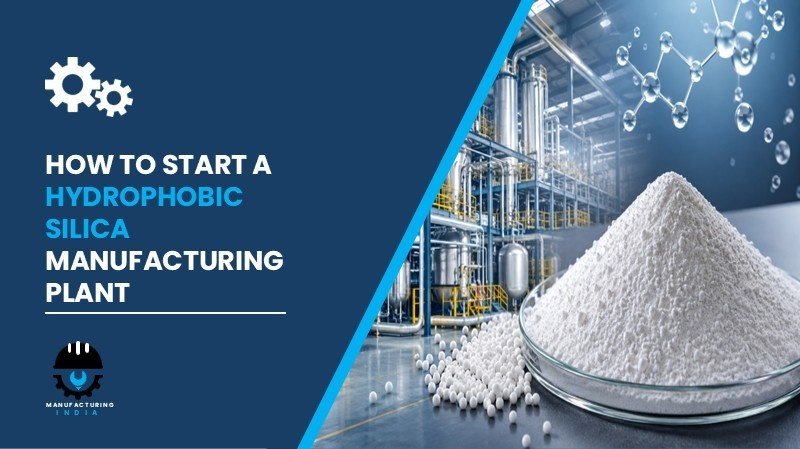
Hydrophobic silica is a chemically treated form of silicon dioxide with water-repelling characteristics. The material exists as a fine white powder that serves as an additive to improve the performance of coatings, adhesives, sealants, paints, plastics, rubber, and cosmetics. The hydrophobic treatment gives silica particles the ability to repel water, which stops caking and enhances flowability while protecting surfaces. The market offers different types of hydrophobic silica, including fumed silica, precipitated silica, and nano-silica, each designed to align with specific industrial and consumer needs. The material exhibits a high surface area combined with low bulk density, making it suitable for applications that need thixotropic behavior, anti-settling capabilities, and reinforcement.
A hydrophobic silica manufacturing plant produces this material through silica dispersion followed by hydrophobic surface treatment using silanes or silazanes, drying and milling, sieving, quality inspection, and packaging. Hydrophobic silica serves end-use industries including rubber, plastics, coatings, adhesives, sealants, cosmetics, pharmaceuticals, and chemical processing, where it maintains stability and non-toxicity while improving mechanical, thermal, and chemical resistance in finished products.
Cost of Setting Up a Hydrophobic Silica Manufacturing Plant in India
Cost depends on plant capacity, technology, location, automation level, and regulatory compliance requirements.
1. Capital Expenditure (CapEx)
Land and site development form a substantial part of the overall investment for a hydrophobic silica manufacturing plant, covering land registration charges, boundary development, and site preparation; investors can evaluate options within SEZs or established chemical industrial estates to streamline approvals. Civil works and construction costs cover the production shed, quality control laboratory, raw material and finished goods storage, and the administrative block.
Machinery costs account for the largest portion of total capital expenditure. Key machinery required includes:
- Reactors
- Fluidized bed dryers
- Mills
- Mixers
- Sieves
- Packaging machines
- QC instruments
Other capital costs cover effluent treatment plant installation, pre-operative expenses, commissioning costs, and applicable import duties on specialized equipment.
Request a Sample Report for In-Depth Market Insights: https://www.imarcgroup.com/hydrophobic-silica-manufacturing-plant-project-report/requestsample
2. Operational Expenditure (OpEx)
Raw material cost is the largest component of operating expenditure for this type of plant, with hydrophilic silica, silanes/siloxanes, and treatment chemicals accounting for approximately 50-60% of total OpEx; investors are advised to negotiate long-term supplier contracts to stabilize pricing and secure a consistent feedstock supply. Utility cost, covering electricity, water, and steam, represents roughly 25-30% of operating expenses for a hydrophobic silica manufacturing unit.
Other operating costs include transportation, packaging, salaries and wages, repairs and maintenance, depreciation, and taxes. By the fifth year, total operational cost is expected to increase substantially due to inflation, market fluctuations, potential rises in key raw material costs, supply chain disruptions, and shifts in the global economy.
3. Plant Capacity
A hydrophobic silica manufacturing plant is typically designed with an annual production capacity ranging between 5,000 and 20,000 tons per year, enabling economies of scale while maintaining operational flexibility. Capacity can be customized to match individual investor requirements, and profitability generally improves as capacity utilisation increases toward the higher end of this range.
4. Profit Margins and Financial Projections
Financial projections for a hydrophobic silica manufacturing plant are built around capital investment, operating costs, capacity utilisation, pricing trends, and demand outlook, and cover net present value (NPV), internal rate of return (IRR), payback period, and profitability. Gross profit margins typically range between 35-45%, while net profit margins range between 18-25%, reflecting healthy profitability potential under normal operating conditions.
Why Set Up a Hydrophobic Silica Plant in India?
Rising Industrial Demand: Demand for water-repellent silicas is increasing as the coatings, adhesives, rubber, plastics, and cosmetics markets all experience growth. This broad-based industrial pull supports steady offtake for a new hydrophobic silica manufacturing plant.
High-Value Applications: Businesses pay higher prices for hydrophobic silica because it improves product performance, durability, and quality across formulations. This value-added positioning supports stronger realizations than commodity silica grades.
Policy and Regulatory Tailwinds: The Make in India initiative encourages domestic chemical and specialty material production, supporting investors who set up local capacity instead of relying on imports.
Cost-Competitive Manufacturing: Scalable production allows businesses to expand capacity to match rising market demand through modular expansion, while India’s cost-competitive land, labour, and supply chain base supports favourable project economics.
Active Industry Investment: In February 2026, HPQ Silica Polvere Inc. entered a non-binding memorandum of understanding with a strategic industrial partner to advance a commercial-scale production facility, a 1,000-tonne-per-year unit valued near USD 20 million, with PyroGenesis Inc. leading design using Fumed Silica Reactor (FSR) technology to support hydrophobic silica production advancements – signalling active global investment momentum in this space.
Local Supply Chain Preference: Rubber, plastics, coatings, and cosmetics manufacturers increasingly prefer sourcing hydrophobic silica domestically to reduce lead times and import dependency, favouring plants located close to these end-use clusters.
Manufacturing Process – Step by Step
The hydrophobic silica manufacturing process uses silica dispersion followed by hydrophobic surface treatment as the primary production method, involving the following steps:
- Silica Dispersion: Hydrophilic silica is dispersed to prepare it for surface treatment.
- Hydrophobic Surface Treatment: The dispersed silica undergoes chemical treatment using silanes or silazanes to impart water-repelling properties.
- Drying: The treated material is processed through fluidized bed dryers to remove moisture.
- Milling: Mills reduce the dried material to the required particle size.
- Sieving: Sieves ensure consistent particle size distribution and product uniformity.
- Quality Inspection: QC instruments verify the material meets required technical and quality specifications.
- Packaging and Dispatch: The finished hydrophobic silica is packaged and dispatched to end-use industries, including rubber, plastics, coatings, adhesives, and cosmetics manufacturers.
Key Applications
Hydrophobic silica serves a broad set of industries that rely on its water repellency, stability, and reinforcing properties, with formulators across these sectors valuing the consistent, high-performance results the material delivers batch after batch.
- Rubber and Plastics Industry: Enhances filler dispersion, improves mechanical strength, and reduces moisture sensitivity.
- Coatings and Adhesives: Delivers water resistance together with anti-settling capabilities and thixotropic properties that enhance application performance.
- Cosmetics and Pharmaceuticals: Prevents caking, achieves a smooth texture, and maintains stability in cream, powder, and tablet formulations.
- Chemical Processing Industry: Acts as a flow agent and stabilizer for powders, suspensions, and reactive intermediates.
Leading Manufacturers
Leading manufacturers in the global hydrophobic silica industry operate extensive production capacities and diverse application portfolios. Key players include:
- Evonik Industries AG
- Wacker Chemie AG
- Cabot Corporation
- PPG Industries, Inc.
- Tokuyama Corporation
Timeline to Start the Plant
- Feasibility study and project report preparation
- Land acquisition and site development
- Regulatory approvals and environmental clearances
- Factory licence and fire safety compliance
- Machinery procurement and installation
- Raw material supplier agreements and supply chain setup
- Trial production and quality testing
- Commercial production launch
Licences and Regulatory Requirements
Starting a hydrophobic silica manufacturing unit in India requires several approvals:
- Business registration (Proprietorship, LLP, or Pvt Ltd)
- Factory Licence under the Factories Act
- Environmental Clearance from State Pollution Control Board
- GST Registration
- Fire Safety NOC
- Hazardous/Chemical compliance for silane and treatment chemical handling
- Effluent Treatment Plant (ETP) operational clearance
- Occupational Health and Safety compliance
Key Challenges to Consider
High Capital Requirements: Machinery costs, including reactors, fluidized bed dryers, mills, and mixers, account for the largest share of capital expenditure, requiring careful project financing.
Raw Material Price Volatility: Hydrophilic silica, silanes/siloxanes, and treatment chemicals together make up 50-60% of operating costs, so price fluctuations can directly affect plant margins.
Regulatory Compliance: Environmental clearances, effluent treatment obligations, and safety protocols for chemical handling demand ongoing compliance investment.
Technology and Process Optimization: Maintaining corrosion-resistant, industry-standard machinery and consistent hydrophobic treatment quality requires continued technical oversight.
Competition: Established global players such as Evonik Industries AG, Wacker Chemie AG, Cabot Corporation, PPG Industries, and Tokuyama Corporation set a high bar on quality and scale for new entrants.
Skilled Manpower: Operating reactors, dryers, and quality assurance systems requires trained technical staff with familiarity in specialty chemical processing, making structured manpower development, on-the-job training, and retention of experienced operators an ongoing priority for new entrants building out capacity for the first time.
Frequently Asked Questions
1. How much does it cost to set up a hydrophobic silica manufacturing plant in India?
Total cost depends on capacity, technology, land, machinery, and location, with machinery and land/site development forming the largest components of capital expenditure.
2. Is hydrophobic silica manufacturing profitable in India in 2026?
Yes, the plant demonstrates healthy profitability potential, with gross margins of 35-45% and net margins of 18-25% under normal operating conditions.
3. What machinery is required for a hydrophobic silica plant in India?
Key machinery includes reactors, fluidized bed dryers, mills, mixers, sieves, packaging machines, and QC instruments.
4. What licences and approvals are required to start a hydrophobic silica plant in India?
Requirements include business registration, Factory Licence, Environmental Clearance, GST Registration, Fire Safety NOC, hazardous chemical compliance, and ETP clearance.
5. What raw materials are needed for hydrophobic silica manufacturing?
The primary raw materials are hydrophilic silica, silanes/siloxanes, and treatment chemicals, which together account for 50-60% of operating costs.
6. What are the environmental compliance requirements for a hydrophobic silica plant in India?
Plants require Environmental Clearance from the State Pollution Control Board, an operational Effluent Treatment Plant, and adherence to hazardous chemical handling protocols.
7. What is the best location to set up a hydrophobic silica plant in India?
Locations with easy access to raw material suppliers, established chemical industrial estates, and proximity to end-use industries such as coatings, plastics, and rubber processing are best suited for this production activity.
8. What is the break-even period for this type of plant in India?
Break-even period depends on capacity utilisation, pricing trends, and cost structure; financial projections model payback period alongside NPV and IRR to assess viability.
9. What government incentives are available for manufacturers in India?
The Make in India initiative supports domestic chemical and specialty material production, encouraging investment in local manufacturing capacity over import dependency.
Key Takeaways for Investors
This facility offers a strong investment opportunity backed by rising demand from coatings, adhesives, rubber, plastics, cosmetics, and pharmaceutical sectors. The unit demonstrates financial viability across capacities ranging from 5,000 to 20,000 tons per year, supported by gross margins of 35-45% and net margins of 18-25%, with the hydrophobic silica manufacturing process itself remaining consistent across scale so that larger capacities primarily improve unit economics rather than complicating operations. The global hydrophobic silica market, valued at USD 2.12 billion in 2025, is projected to reach USD 3.58 billion by 2034 at a CAGR of 6.0%, reflecting sustained long-term demand growth across coatings, adhesives, rubber, plastics, and cosmetics end-uses. With active global investment momentum, cost-competitive Indian manufacturing conditions, and policy support for domestic production under Make in India, this remains a durable, forward-looking opportunity for investors evaluating a long-term foothold in India’s specialty chemicals sector.
About the Author