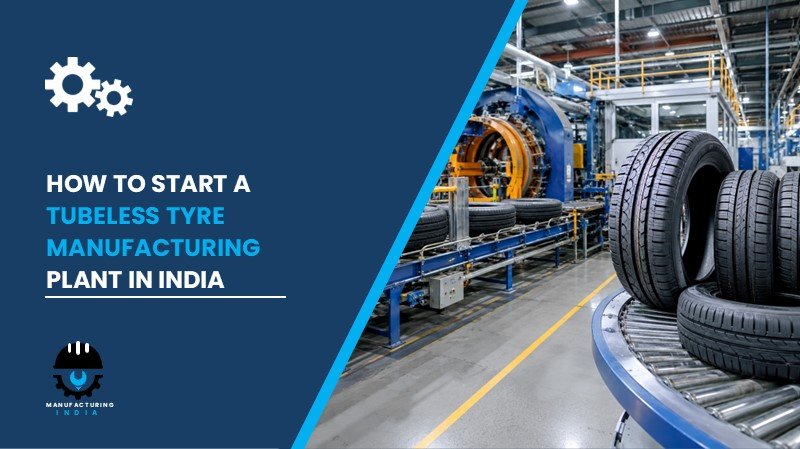
Setting up a tubeless tyre manufacturing plant in India presents a compelling investment case for entrepreneurs seeking exposure to the automotive components sector. Demand is driven by automotive, commercial transportation, construction, agriculture, mining, logistics & transportation, and industrial machinery industries. Because tubeless tyres lead the global tyre market, accounting for 78% of the share, this production is critical to India’s automotive and transportation economy.
India’s expanding vehicle production, growing commercial transportation sector, and rising road infrastructure investment make the country a strategically sound base. Government initiatives such as Make in India and automotive component localization initiatives are strengthening domestic tyre production and vehicle usage. Growth in the automotive aftermarket further supports this venture.
This investment case rests on strong policy support through Make in India and automotive component localization initiatives, cost-competitive access to natural rubber, synthetic rubber, and carbon black feedstock, and consistent demand from automotive, transportation, and industrial sectors. With gross profit margins of 16-24% and net profit margins of 5-10%, the project demonstrates a viable path to break-even and long-term profitability across a range of plant capacities.
What is Tubeless Tyre?
A tubeless tyre is a pneumatic vehicle or bicycle wheel design that holds compressed air directly within the casing without a separate inner tube. It forms an airtight seal against the metal or alloy rim using integrated bead ribs, offering safer slow-leak deflation and better heat control.
The tubeless tyre manufacturing process relies on rubber compounding, mixing, calendaring, extrusion, bead formation, tyre building, curing/vulcanization, inspection, and finishing as its core production stages. The end products serve automotive, commercial transportation, construction, agriculture, mining, logistics & transportation, and industrial machinery industries.
Cost of Setting Up a Tubeless Tyre Manufacturing Plant in India
The total cost of setting up the facility depends on capacity, technology, location, automation level, and regulatory compliance.
1. Capital Expenditure (CapEx)
Capital investment covers land acquisition, site preparation, and infrastructure, and can be planned around an industrial estate or SEZ location. Civil works costs cover the processing shed, laboratory, storage areas, and administrative block. Machinery costs account for the largest portion of total capital expenditure for a tubeless tyre manufacturing plant, and equipment must be corrosion-resistant and tailored for this operation.
Key machinery required includes:
- Rubber mixing mills/internal mixers
- Extruders
- Calendaring machines
- Bead winding machines
- Tyre building machines
- Curing presses
- Vulcanization systems
- Tyre uniformity testers
- Balancing machines
- Inspection systems
- Packaging machines
Other capital costs include land registration, boundary development charges, pre-operative expenses, and commissioning costs.
Request a Sample Report for In-Depth Market Insights: https://www.imarcgroup.com/tubeless-tyre-manufacturing-plant-project-report/requestsample
2. Operational Expenditure (OpEx)
Raw material cost is the largest component of operating expenditure, with natural rubber, synthetic rubber, carbon black, silica, sulfur, accelerators/antioxidants, halobutyl rubber, steel cord, and textile cord together accounting for approximately 65-72% of OpEx. Long-term supplier contracts are recommended to mitigate feedstock price volatility.
Utility costs account for approximately 10-14% of OpEx. Other operating costs include transportation, packaging, salaries, maintenance, depreciation, and taxes, which rise by the fifth year due to inflation.
3. Plant Capacity
The proposed unit is designed with an annual manufacturing capacity of 50,000-2,00,000 MT, enabling economies of scale while maintaining operational flexibility. Capacity can be customized per investor requirements, and profitability improves with higher capacity utilisation.
4. Profit Margins and Financial Projections
Financial projections cover capital investment, operating costs, capacity utilisation, pricing trends, and demand outlook, including NPV, IRR, and payback period. Gross profit margins typically range between 16-24%, while net margins range between 5-10%.
Why Set Up a Tubeless Tyre Plant in India?
Crucial Mobility Component. Tubeless tyres serve as fundamental components for safe, efficient, and reliable mobility across passenger vehicles, commercial vehicles, two-wheelers, agricultural machinery, and off-road equipment, positioning them as an essential product for transportation, vehicle performance, and road safety.
Moderate but Justifiable Entry Barriers. While requiring significant investment compared to conventional rubber products, stringent quality requirements, advanced tyre compounding, precise moulding and curing processes, and prolonged OEM approvals create entry hurdles favouring experienced producers.
Megatrend Alignment. The rapid growth of passenger vehicles, commercial transportation, two-wheelers, electric vehicles, and last-mile mobility is driving consistent demand for durable, puncture-resistant tubeless tyres, further supporting tyre replacement and OEM demand.
Policy and Infrastructure Push. Government investment in road infrastructure, highway expansion, logistics networks, vehicle electrification, and domestic automotive manufacturing, including Make in India and automotive component localization initiatives, indirectly supports demand for tubeless tyres.
Active Industry Investment. Electric car sales neared 14 million in 2023, with 95% concentrated in China, Europe, and the United States, and manufacturers are increasingly integrating lightweight, high-performance tyre solutions to match this expanding EV and premium vehicle segment.
Localization and Dependability in Supply Chains. OEMs, vehicle manufacturers, distributors, and fleet operators are favouring local, dependable tyre suppliers to shorten lead times, reduce logistics costs, and manage fluctuations in natural rubber and other raw material prices.
Manufacturing Process – Step by Step
The tubeless tyre manufacturing process uses rubber compounding, mixing, calendaring, extrusion, bead formation, tyre building, curing/vulcanization, inspection, and finishing as the primary production method.
- Rubber Compounding and Mixing: Natural rubber, synthetic rubber, carbon black, silica, sulfur, and accelerators/antioxidants are blended using rubber mixing mills/internal mixers.
- Calendaring: Mixed rubber compound is processed through calendaring machines to form sheets combined with steel cord and textile cord.
- Extrusion: Rubber compound is shaped using extruders to form tread and sidewall components.
- Bead Formation: Steel cord and halobutyl rubber are processed to form the tyre bead.
- Tyre Building: Component layers are assembled on tyre building machines to form the green tyre.
- Curing/Vulcanization: The assembled tyre is cured using curing presses and vulcanization systems to achieve final shape and strength.
- Inspection and Finishing: Finished tyres are checked using tyre uniformity testers, balancing machines, and inspection systems before being processed through packaging machines for dispatch to end-use industries.
Key Applications
Tubeless tyres serve a wide range of downstream industries.
- Automotive: Used in passenger cars, commercial vehicles, SUVs, motorcycles, and electric vehicles.
- Transportation & Logistics: Used in trucks, buses, delivery vehicles, trailers, and fleet vehicles.
- Off-Road & Industrial: Used in agricultural machinery, construction equipment, forklifts, and material-handling vehicles.
- Two-Wheelers: Used in motorcycles, scooters, and other performance and commuter vehicles.
Leading Manufacturers
Leading manufacturers in the global tubeless tyre industry include:
- Toyo Tire Corporation
- Bridgestone Corporation
- Yokohama Tire Corporation
- The Goodyear Tire & Rubber Company
Timeline to Start the Plant
- Feasibility study and project report preparation
- Land acquisition and site development
- Regulatory approvals and environmental clearances
- Factory licence and fire safety compliance
- Machinery procurement and installation
- Raw material supplier agreements and supply chain setup
- Trial production and quality testing
- Commercial production launch
Licences and Regulatory Requirements
Starting a tubeless tyre manufacturing unit in India requires several approvals:
- Business registration (Proprietorship, LLP, or Pvt Ltd)
- Factory Licence under the Factories Act
- Environmental Clearance from State Pollution Control Board
- GST Registration
- Fire Safety NOC
- Effluent Treatment Plant (ETP) operational clearance
- Occupational Health and Safety compliance
Key Challenges to Consider
High Capital Requirements. Machinery costs, including tyre building machines, curing presses, and vulcanization systems, account for the largest share of capital expenditure.
Raw Material Price Volatility. Natural rubber, synthetic rubber, and carbon black prices can fluctuate, and since raw materials account for 65-72% of OpEx, long-term supplier contracts are essential.
Regulatory Compliance. Safety protocols, effluent treatment, and emission standards must be maintained throughout operations.
Competition. Established players such as Toyo Tire Corporation, Bridgestone Corporation, Yokohama Tire Corporation, and The Goodyear Tire & Rubber Company operate with extensive capacities, so new entrants must compete on quality and cost-effectiveness.
Skilled Manpower. The plant requires trained personnel across compounding, tyre building, curing, and quality assurance functions.
Site Selection Constraints. The location must offer easy access to natural rubber, synthetic rubber, and carbon black feedstock, proximity to target markets, and compliance with zoning and environmental regulations.
Frequently Asked Questions
1. How much does it cost to set up a tubeless tyre manufacturing plant in India?
Cost depends on capacity, technology, location, automation, and regulatory compliance, covering land, civil works, machinery, and other capital costs.
2. Is tubeless tyre manufacturing profitable in India in 2026?
Yes, the project shows healthy profitability, with gross profit margins of 16-24% and net profit margins of 5-10% under normal operating conditions.
3. What machinery is required for a tubeless tyre plant in India?
Key machinery includes rubber mixing mills/internal mixers, extruders, calendaring machines, bead formation equipment, tyre building machines, curing presses, vulcanization systems, tyre uniformity testers, balancing machines, and packaging machines.
4. What licences and approvals are required to start a tubeless tyre plant in India?
Requirements include business registration, a Factory Licence, Environmental Clearance, GST Registration, Fire Safety NOC, ETP clearance, and Occupational Health and Safety compliance.
5. What raw materials are needed for tubeless tyre manufacturing?
The primary raw materials are natural rubber, synthetic rubber, carbon black, silica, sulfur, accelerators/antioxidants, halobutyl rubber, steel cord, and textile cord, together accounting for approximately 65-72% of operating expenditure.
6. What are the environmental compliance requirements for a tubeless tyre plant in India?
Facilities require Environmental Clearance from the State Pollution Control Board, an operational Effluent Treatment Plant, and advanced monitoring systems for emission compliance.
7. What is the best location to set up a tubeless tyre plant in India?
The site should offer easy access to natural rubber, synthetic rubber, and carbon black, proximity to target markets, robust infrastructure, and compliance with zoning and environmental regulations.
8. What is the break-even period for this type of plant in India?
Break-even depends on capital investment, operating costs, and capacity utilisation, assessed through payback period, NPV, and IRR calculations.
9. What government incentives are available for manufacturers in India?
Government initiatives such as Make in India and automotive component localization initiatives support domestic tyre production and strengthen demand for tubeless tyres.
Key Takeaways for Investors
This investment offers a compelling opportunity backed by consistent demand from the automotive, commercial transportation, construction, agriculture, mining, logistics & transportation, and industrial machinery sectors. Financial viability holds across capacities from 50,000 MT to 2,00,000 MT, with gross margins of 16-24% and net margins of 5-10% supporting steady returns. Tubeless tyres lead the global tyre market, accounting for 78% of the share, reflecting the scale of long-term demand this investment can capture. As vehicle electrification, road infrastructure, and replacement tyre demand continue to expand, tubeless tyre demand is set to remain sustainable for years to come.
About the Author