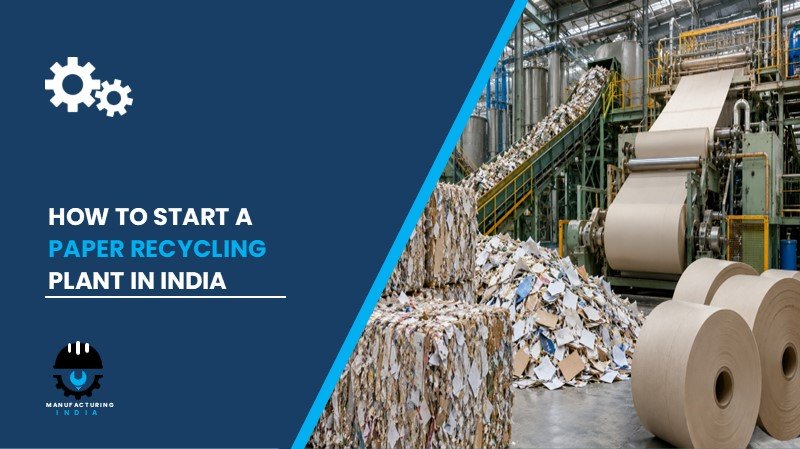
Setting up a paper recycling plant in India presents a compelling investment case for entrepreneurs seeking exposure to a resource-efficient circular economy sector. Demand is driven by packaging, printing & publishing, tissue & hygiene, stationery, food & beverage packaging, and industrial paper products industries. Because the process requires significantly less energy and water and produces fewer greenhouse gases than manufacturing new paper from virgin materials, this production is critical to India’s packaging, printing, and sustainability economy.
India’s expanding packaging industry, growing e-commerce activity, and rising waste management infrastructure make the country a strategically sound base. Government initiatives promoting waste segregation, recycling, plastic reduction, and extended producer responsibility (EPR), along with investments in solid waste management infrastructure, are strengthening demand for recycled paper. Rising environmental awareness further supports this venture.
This investment case rests on policy support through waste segregation, recycling, and extended producer responsibility (EPR) regulations, cost-competitive access to waste paper feedstock, and consistent demand from packaging, printing, and tissue sectors. With gross profit margins of 16-24% and net profit margins of 5-11%, the project demonstrates a viable path to break-even and long-term profitability across a range of plant capacities.
What is Paper Recycling?
Paper recycling is the vital process of recovering discarded paper and converting it into new paper products. It conserves natural resources by reducing the demand for raw timber, protecting forests, and requires significantly less energy and water while producing fewer greenhouse gases than manufacturing new paper from virgin materials. Collected scrap paper is sorted and mixed with water and chemicals to form pulp, which is screened, cleaned, and de-inked before being rolled and dried into new sheets.
The paper recycling production process relies on waste paper collection and sorting, pulping, screening, cleaning, deinking (if required), refining, sheet formation, pressing, drying, and finishing as its core production stages. The end products serve packaging, printing & publishing, tissue & hygiene, stationery, food & beverage packaging, and industrial paper products industries.
Cost of Setting Up a Paper Recycling Plant in India
The total cost of setting up the facility depends on capacity, technology, location, automation level, and regulatory compliance.
1. Capital Expenditure (CapEx)
Capital investment covers land acquisition, site preparation, and infrastructure, and can be planned around an industrial estate or SEZ location. Civil works costs cover the processing shed, laboratory, storage areas, and administrative block. Machinery costs account for the largest portion of total capital expenditure for a paper recycling production plant, and equipment must be corrosion-resistant and tailored for this operation.
Key machinery required includes:
- Waste paper sorting systems
- Pulpers
- Screening and cleaning units
- Deinking systems
- Refiners
- Paper machines
- Presses
- Drying cylinders
- Calenders
- Winding machines
- Cutting equipment
- Packaging machines
Other capital costs include land registration, boundary development charges, pre-operative expenses, and commissioning costs.
Request a Sample Report for In-Depth Market Insights: https://www.imarcgroup.com/paper-recycling-plant-project-report/requestsample
2. Operational Expenditure (OpEx)
Raw material cost is the largest component of operating expenditure, with waste paper accounting for approximately 35-45% of OpEx. Long-term supplier contracts are recommended to mitigate feedstock price volatility.
Utility costs account for approximately 20-28% of OpEx. Other operating costs include transportation, packaging, salaries, maintenance, depreciation, and taxes, rising by the fifth year due to inflation.
3. Plant Capacity
The proposed unit is designed with an annual production capacity of 30,000-100,000 MT, enabling economies of scale while maintaining operational flexibility. Capacity can be customized per investor requirements, and profitability improves with higher capacity utilisation.
4. Profit Margins and Financial Projections
Financial projections cover capital investment, operating costs, capacity utilisation, pricing trends, and demand outlook, including NPV, IRR, and payback period. Gross profit margins typically range between 16-24%, while net margins range between 5-11%.
Why Set Up a Paper Recycling Plant in India?
Essential Circular Economy Infrastructure. This production plays a vital role in recovering waste paper and converting it into reusable raw material for packaging, tissue, printing & writing paper, and paperboard manufacturing, making it an essential component of sustainable waste management and resource conservation.
Moderate but Justifiable Entry Barriers. While requiring lower investment than large integrated paper mills, successful operations depend on efficient collection networks, advanced sorting and deinking technologies, consistent raw material quality, environmental compliance, and process optimization, creating barriers that favour organized and technologically equipped recyclers.
Megatrend Alignment. The growing emphasis on sustainability, circular economy practices, e-commerce packaging, and increasing demand for recycled fiber is driving steady growth, with global B2C ecommerce revenue expected to reach USD 5.5 Trillion by 2027 at a 14.4% CAGR, as per the International Trade Administration.
Policy and Sustainability Push. Government initiatives promoting waste segregation, recycling, plastic reduction, extended producer responsibility (EPR), and sustainable manufacturing, along with increasing investments in solid waste management infrastructure, are supporting the expansion of paper recycling facilities.
Active Industry Investment. In April 2025, Cardiff launched a three-month AI-powered paper cup recycling pilot led by Keep Wales Tidy in partnership with the National Cup Recycling Scheme and app developer Bower, enabling consumers to earn rewards for returning used cups for specialist recycling of their paper fibers.
Localization and Supply Chain Reliability. Paper manufacturers and packaging companies increasingly source recycled fiber from reliable domestic suppliers to reduce dependence on virgin pulp, lower transportation costs, and ensure stable raw material availability, creating opportunities for regional recycling plants with efficient collection and processing capabilities.
Recycling Process – Step by Step
The paper recycling production process uses waste paper collection and sorting, pulping, screening, cleaning, deinking, refining, sheet formation, pressing, drying, and finishing as the primary production method.
- Collection and Sorting: Waste paper is collected and sorted using waste paper sorting systems to separate usable grades.
- Pulping: Sorted waste paper is broken down into pulp using pulpers, mixed with water and chemicals.
- Screening and Cleaning: Pulp is processed through screening and cleaning units to remove contaminants and debris.
- Deinking: Pulp is treated in deinking systems, where required, to remove inks, adhesives, and dyes.
- Refining: Cleaned pulp is processed through refiners to improve fiber quality.
- Sheet Formation and Pressing: Refined pulp is formed into sheets using paper machines and dewatered using presses.
- Drying and Finishing: Pressed sheets are dried using drying cylinders, smoothed using calenders, wound using winding machines, and cut using cutting equipment before being processed through packaging machines for dispatch to end-use industries.
Key Applications
Recycled paper serves a wide range of downstream industries.
- Packaging: Used in manufacture of recycled cardboard, corrugated boxes, paperboard, cartons, and protective packaging materials.
- Printing & Writing: Used in production of recycled office paper, notebooks, newspapers, magazines, and printing paper.
- Tissue & Hygiene: Used in manufacture of tissue paper, toilet paper, paper towels, napkins, and other sanitary paper products.
- Industrial & Specialty Paper: Used in production of kraft paper, molded fiber products, insulation paper, and other recycled paper-based industrial materials.
Leading Manufacturers
Leading manufacturers in the global paper recycling industry include:
- International Paper Company
- Smurfit Kappa Group
- WestRock Company
- Mondi Group
- DS Smith Plc
Timeline to Start the Plant
- Feasibility study and project report preparation
- Land acquisition and site development
- Regulatory approvals and environmental clearances
- Factory licence and fire safety compliance
- Machinery procurement and installation
- Raw material supplier agreements and supply chain setup
- Trial production and quality testing
- Commercial production launch
Licences and Regulatory Requirements
Starting a paper recycling production unit in India requires several approvals:
- Business registration (Proprietorship, LLP, or Pvt Ltd)
- Factory Licence under the Factories Act
- Environmental Clearance from State Pollution Control Board
- GST Registration
- Fire Safety NOC
- Effluent Treatment Plant (ETP) operational clearance
- Occupational Health and Safety compliance
Key Challenges to Consider
High Capital Requirements. Machinery costs, including paper machines, presses, and drying cylinders, account for the largest share of capital expenditure.
Raw Material Price Volatility. Waste paper prices can fluctuate, and since raw materials account for 35-45% of OpEx, long-term supplier contracts are essential.
Regulatory Compliance. Safety protocols, effluent treatment, and emission standards must be maintained throughout operations.
Competition. Established players such as International Paper Company, Smurfit Kappa Group, WestRock Company, Mondi Group, and DS Smith Plc operate with extensive capacities, so new entrants must compete on quality and cost-effectiveness.
Skilled Manpower. The plant requires trained personnel across pulping, screening, drying, and quality assurance functions.
Site Selection Constraints. The location must offer easy access to waste paper feedstock, proximity to target markets, and compliance with zoning and environmental regulations.
Frequently Asked Questions
1. How much does it cost to set up a paper recycling plant in India?
Cost depends on capacity, technology, location, automation, and regulatory compliance, covering land, civil works, machinery, and other capital costs.
2. Is paper recycling profitable in India in 2026?
Yes, the project shows healthy profitability, with gross profit margins of 16-24% and net profit margins of 5-11% under normal operating conditions.
3. What machinery is required for a paper recycling plant in India?
Key machinery includes waste paper sorting systems, pulpers, screening and cleaning units, deinking systems, refiners, paper machines, presses, drying cylinders, calenders, winding machines, cutting equipment, and packaging machines.
4. What licences and approvals are required to start a paper recycling plant in India?
Requirements include business registration, a Factory Licence, Environmental Clearance, GST Registration, Fire Safety NOC, ETP clearance, and Occupational Health and Safety compliance.
5. What raw materials are needed for paper recycling?
The primary raw material is waste paper, which accounts for approximately 35-45% of operating expenditure.
6. What are the environmental compliance requirements for a paper recycling plant in India?
Facilities require Environmental Clearance from the State Pollution Control Board, an operational Effluent Treatment Plant, and advanced monitoring systems for emission compliance.
7. What is the best location to set up a paper recycling plant in India?
The site should offer easy access to waste paper, proximity to target markets, robust infrastructure, and compliance with zoning and environmental regulations.
8. What is the break-even period for this type of plant in India?
Break-even depends on capital investment, operating costs, and capacity utilisation, assessed through payback period, NPV, and IRR calculations.
9. What government incentives are available for manufacturers in India?
Government initiatives promoting waste segregation, recycling, plastic reduction, and extended producer responsibility (EPR), along with investments in solid waste management infrastructure, indirectly support paper recycling producers.
Key Takeaways for Investors
This investment offers a compelling opportunity backed by consistent demand from the packaging, printing & publishing, tissue & hygiene, stationery, food & beverage packaging, and industrial paper products sectors. Financial viability holds across capacities from 30,000 MT to 100,000 MT, with gross margins of 16-24% and net margins of 5-11% supporting steady returns. Asia-Pacific holds the largest share of the global paper recycling market at approximately 42.0%, reflecting the scale of long-term demand this investment can capture. As e-commerce packaging, sustainability commitments, and recycled fiber demand continue to expand, paper recycling demand is set to remain sustainable for years to come.
About the Author