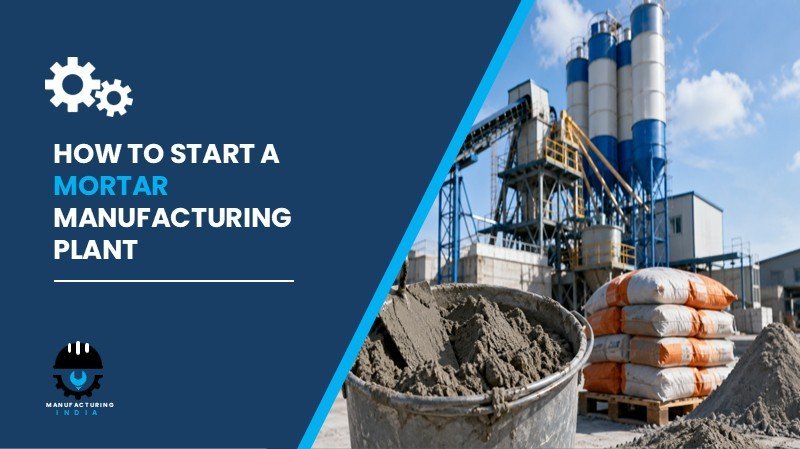
A mortar manufacturing plant setup in India presents a compelling investment case for entrepreneurs targeting the country’s fast-expanding construction ecosystem. Demand for mortar is driven by the construction industry, infrastructure development, residential and commercial building activity, and the growing renovation and repair segment, which rely on mortar for bonding, plastering, rendering, and tile-fixing applications.
India’s ongoing urbanisation, expanding infrastructure investment, and the Make in India push toward domestic material production create a strong backdrop for this facility. Key manufacturing states with active construction demand, such as Gujarat and Maharashtra, offer proximity to raw materials, industrial estates, and logistics networks that support a mortar plant’s operations. These factors make India a strategically sound base for mortar production aimed at regional and pan-India markets.
The investment case for a mortar manufacturing plant rests on steady construction-led demand, cost-competitive raw material access, and healthy margins of 18-26% gross and 6-12% net profit. Combined with a scalable capacity range and no major policy barriers reported for the sector, the project offers a reasonably achievable path to break-even for investors evaluating this type of plant.
What is Mortar?
Mortar is a workable paste traditionally utilized in masonry construction to bind building blocks such as stones, bricks, and concrete masonry units. Known for its adhesive properties, it sets and hardens to form sturdy joints that secure structural elements. Typically composed of cement, lime, sand, and water, mortar offers versatile uses, including laying bricks and stones, repairing structures, plastering, rendering surfaces, and acting as an adhesive in tiling and stone veneer installations. Its slight flexibility accommodates minor movements, making it suitable for varied climatic conditions.
The global market for this category is also seeing growth in advanced formulations such as tile adhesives, repair-grade, and waterproofing variants. The mortar manufacturing process centres on raw material proportioning, dry mixing, blending, and packaging, and it serves the construction, infrastructure development, residential and commercial building, and renovation and repair industries.
Cost of Setting Up a Mortar Manufacturing Plant in India
The cost of a mortar manufacturing plant depends on capacity, technology, location, automation level, and regulatory compliance requirements.
1. Capital Expenditure (CapEx)
Capital expenditure for the plant begins with Land and Site Development, which covers land registration, boundary development, and related site-preparation charges; investors can evaluate industrial estates or designated zones to streamline this stage. Civil Works and Construction costs cover the production shed, laboratory space, raw material and finished-product storage, and the administrative block needed to run the facility.
Machinery represents the largest share of capital investment for this type of plant. Key machinery required includes:
- Raw material storage silos or hoppers
- Sand screening units
- Weighing and batching systems
- Ribbon or paddle mixers
- Screw conveyors
- Dust collection systems
- Finished product storage bins
- Bag filling machines and packaging units
Other Capital Costs include effluent treatment provisions, pre-operative expenses, commissioning costs, and any applicable import duties on specialised machinery.
Request a Sample Report for In-Depth Market Insights: https://www.imarcgroup.com/mortar-manufacturing-plant-project-report/requestsample
2. Operational Expenditure (OpEx)
Raw Material Cost is the single largest component of operating expenditure, accounting for approximately 55-65% of total OpEx. Core raw materials include cement OPC/PPC, fine aggregate/sand, hydrated lime Ca(OH)₂, and polymer additive, and investors are advised to pursue long-term supplier contracts to stabilize pricing and secure a consistent supply.
Utility Cost, covering electricity, water, and steam, accounts for approximately 8-12% of OpEx. Other Operating Costs include transportation, packaging, salaries and wages, repairs and maintenance, depreciation, and taxes. By the fifth year of operations, total operating cost is projected to rise substantially due to inflation, market fluctuations, potential increases in raw material costs, and supply chain disruptions.
3. Plant Capacity
The proposed plant is designed with an annual production capacity ranging between 50,000 and 3,00,000 MT, enabling economies of scale while maintaining operational flexibility. This capacity can be customised to individual investor requirements, and profitability generally improves as capacity utilisation increases.
4. Profit Margins and Financial Projections
The project demonstrates healthy profitability potential. Gross profit margins typically range between 18-26%, while net profit margins range between 6-12%. Financial projections are developed using assumptions covering capital investment, operating costs, capacity utilisation, pricing, and demand outlook, and include ROI, net present value (NPV), internal rate of return (IRR), and payback period.
Why Set Up a Mortar Plant in India?
Expanding Construction Sector: The construction industry’s growth, driven by urbanisation, is a primary demand driver for mortar as a fundamental building material, supporting sustained offtake for the plant.
Infrastructure Development: Rising infrastructure investments highlight the ongoing need for reliable mortar solutions in large-scale engineering projects across public and industrial development.
Advanced Building Technologies: Innovative mortar formulations offer enhanced performance, addressing needs such as thermal efficiency and moisture resistance in modern construction applications.
Sustainability Focus: Eco-friendly mortar products, incorporating recycled materials, low-carbon binders, and energy-efficient production methods, are meeting rising industry demand for sustainable construction practices.
Active Industry Investment and Modernisation: The residential construction sector expanded at 6.8% during FY2024-25 and is projected to reach USD 350 Billion by 2030, according to industrial reports. The shift toward ready-mix and factory-produced mortars is gaining momentum due to improved consistency, reduced labour requirements, and faster application.
Versatile, Multi-Segment Applications: Mortar’s versatility across bricklaying, plastering, rendering, and tiling means a single plant can serve both new construction and renovation demand.
Manufacturing Process – Step by Step
The mortar manufacturing process uses raw material proportioning, dry mixing, blending, and packaging as the primary production method.
- Raw Material Proportioning: Cement OPC/PPC, fine aggregate/sand, hydrated lime Ca(OH)₂, and polymer additives are measured through weighing and batching systems.
- Dry Mixing: Proportioned materials are fed into ribbon or paddle mixers for thorough dry blending.
- Blending and Material Handling: Screw conveyors move materials between stages while dust collection systems manage particulate emissions.
- Storage: The blended mix is transferred to finished product storage bins ahead of packaging.
- Packaging: Bag filling machines and packaging units pack the finished mortar for dispatch to end-use industries.
Key Applications
Mortar produced by this mortar manufacturing plant serves a range of construction-related industries and use cases.
- Construction Industry: Used primarily for bonding bricks and stones, ensuring structural strength and stability in buildings.
- Renovation Projects: Essential in restoring and renovating older buildings, providing a robust adhesive for replacing damaged masonry units.
- Plastering & Rendering: Offers a durable foundational layer for the application of plasters or rendering on walls.
- Tile Installations: Serves as an effective adhesive for securely installing ceramic tiles, floor tiles, and stone veneers.
- Floor Screeding and Joint Filling: Used in floor screeding and general joint-filling and repair applications across residential and commercial sites.
Leading Manufacturers
The global mortar industry includes multinational companies with extensive manufacturing capacities and diverse application portfolios. Key players include:
- Holcim Group
- CEMEX S.A.B. de C.V.
Timeline to Start the Plant
Establishing a mortar manufacturing plant typically follows these phases:
- Feasibility study and project report preparation
- Land acquisition and site development
- Regulatory approvals and environmental clearances
- Factory licence and fire safety compliance
- Machinery procurement and installation
- Raw material supplier agreements and supply chain setup
- Trial production and quality testing
- Commercial production launch
Licences and Regulatory Requirements
Starting a mortar manufacturing unit in India requires several approvals:
- Business registration (Proprietorship, LLP, or Pvt Ltd)
- Factory Licence under the Factories Act
- Environmental Clearance from State Pollution Control Board
- GST Registration
- Fire Safety NOC
- Effluent Treatment Plant (ETP) operational clearance
- Occupational Health and Safety compliance
Key Challenges to Consider
Investors evaluating a mortar manufacturing plant should weigh the following factors:
High Capital Requirements: Machinery costs form the largest share of capital expenditure, so investors must plan for significant upfront investment before commercial production begins.
Raw Material Price Volatility: Prices of cement OPC/PPC, fine aggregate/sand, hydrated lime Ca(OH)₂, and polymer additives can fluctuate, directly affecting operating costs since raw materials account for 55-65% of OpEx.
Regulatory Compliance: Environmental clearances, effluent treatment compliance, and factory licensing require ongoing attention to avoid delays in commissioning.
Competition from Established Players: Global players such as Holcim Group and CEMEX S.A.B. de C.V. bring scale and established distribution, requiring new entrants to a mortar manufacturing plant to compete on cost or regional service levels.
Technology and Formulation Pressure: The shift toward ready-mix and eco-friendly formulations incorporating recycled materials and low-carbon binders means producers must keep pace with evolving product formulations.
Skilled Manpower: Operating batching, mixing, and quality-assurance systems reliably requires trained personnel, and sourcing this manpower can be a constraint in certain locations.
Frequently Asked Questions
1. How much does it cost to set up a mortar manufacturing plant in India?
Cost depends on plant capacity, technology, automation level, and location, with capital expenditure spread across land and site development, civil works, machinery, and other capital costs.
2. Is mortar manufacturing profitable in India in 2026?
The project shows healthy profitability potential, with gross profit margins of 18-26% and net profit margins of 6-12% reported for this type of plant.
3. What machinery is required for a mortar plant in India?
Key machinery includes raw material storage silos or hoppers, sand screening units, weighing and batching systems, ribbon or paddle mixers, screw conveyors, dust collection systems, finished product storage bins, and bag filling and packaging units.
4. What licences and approvals are required to start a mortar plant in India?
Requirements include business registration, a Factory Licence, Environmental Clearance, GST Registration, Fire Safety NOC, ETP operational clearance, and Occupational Health and Safety compliance.
5. What raw materials are needed for mortar manufacturing?
Core raw materials are cement OPC/PPC, fine aggregate/sand, hydrated lime Ca(OH)₂, and polymer additive.
6. What are the environmental compliance requirements for a mortar plant in India?
Plants require Environmental Clearance from the State Pollution Control Board and an operational Effluent Treatment Plant (ETP) to manage waste and emissions.
7. What is the best location to set up a mortar plant in India?
Site selection should prioritise proximity to raw materials such as cement, sand, and hydrated lime, along with robust transportation, utility infrastructure, and compliance with local zoning and environmental regulations.
8. What is the break-even period for this type of plant in India?
The break-even period depends on capacity utilisation, pricing, and cost structure; detailed payback period and net present value calculations are part of the plant’s financial analysis.
9. What government incentives are available for manufacturers in India?
The source report does not specify government incentive schemes for mortar manufacturing; investors should verify current state and central incentive programmes separately.
Key Takeaways for Investors
This type of plant taps into steady demand from the construction, infrastructure development, residential and commercial building, and renovation and repair sectors. The facility demonstrates financial viability across its 50,000-3,00,000 MT capacity range, with gross margins of 18-26% and net margins of 6-12% supporting a reasonable investment case. India’s residential construction sector, which expanded 6.8% in FY2024-25 and is projected to reach USD 350 Billion by 2030, points to sustained long-term demand for mortar. With construction modernisation continuing, a well-planned mortar manufacturing plant is positioned for durable, demand-backed growth in India’s building materials market.
About the Author