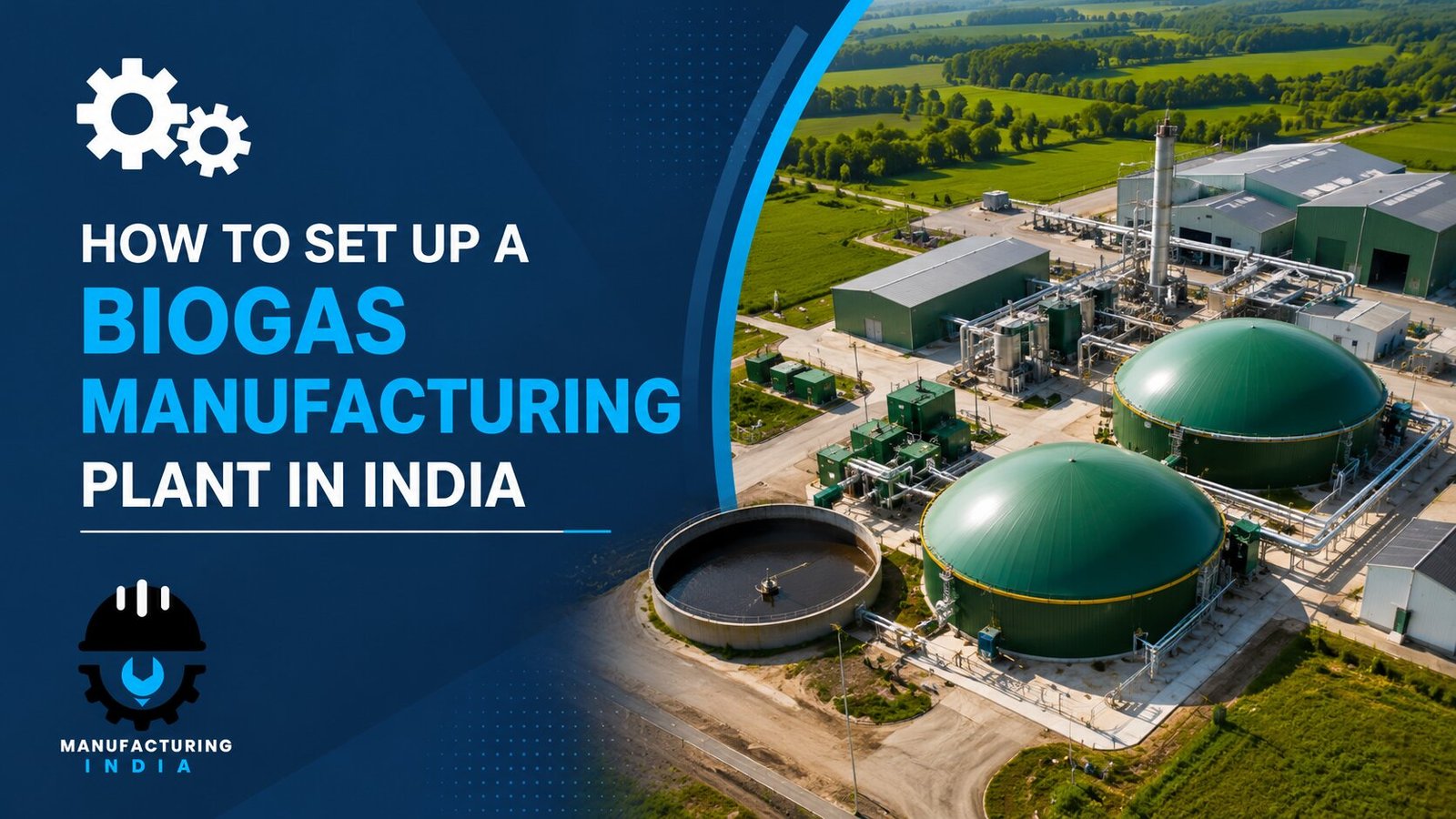
Setting up a biogas manufacturing plant in India presents a compelling investment case for entrepreneurs seeking exposure to the renewable energy and waste management sector. Demand is driven by renewable energy, agriculture, and waste management industries, all of which benefit from this green energy source. Because biogas reduces fossil fuel consumption, cuts greenhouse gas emissions, and encourages recycling-friendly waste management, this production is critical to India’s clean energy and circular economy goals.
India’s expanding compressed biogas mandate, growing agricultural waste base, and rising government support for clean energy adoption make the country a strategically sound base for this investment. In June 2025, Hindustan Petroleum Corporation Ltd (HPCL) announced plans to invest ₹20,000 crore ($231 million) over the next 2-3 years to set up 24 compressed biogas (CBG) plants across India, supporting the country’s mandate to blend CBG into fuel at a 5% target by 2028-2029. Government-run cooperative initiatives, such as the compressed bio-gas project inaugurated in Kopargaon, Maharashtra, further reinforce why India suits this venture.
This investment case rests on strong policy support through India’s CBG blending mandate and government-backed cooperative biogas initiatives, cost-competitive access to organic waste and dung feedstock, and consistent demand from renewable energy, agriculture, and waste management sectors. With gross profit margins of 50-60% and net profit margins of 20-30%, the project demonstrates a viable path to break-even and long-term profitability across a range of plant capacities.
What is Biogas?
Biogas is a green energy source generated via anaerobic digestion of organic waste, which consists of agricultural and food wastes, animal dung, and even sewage sludge. Its main components are methane (CH₄) and carbon dioxide (CO₂), and it can be used as a fuel for power generation, heating, and cooking. Biogas facilities work with anaerobic digesters to produce clean energy from biodegradable materials, and the remaining slurry can be used as organic fertilizer rich in nutrients.
The biogas manufacturing process relies on anaerobic digestion, biogas collection, gas scrubbing, and power generation or compression as its core production stages. The end products serve renewable energy, agriculture, and waste management industries.
Cost of Setting Up a Biogas Manufacturing Plant in India
The total cost of setting up the facility depends on capacity, technology, location, automation level, and regulatory compliance.
1. Capital Expenditure (CapEx)
Capital investment covers land acquisition, site preparation, and infrastructure, and can be planned around an industrial estate or SEZ location. Civil works costs cover the processing shed, laboratory, storage areas, and administrative block. Machinery costs account for the largest portion of total capital expenditure for a biogas manufacturing plant, and equipment for the biogas manufacturing plant must be corrosion-resistant and tailored for this operation.
Key machinery required includes:
- Anaerobic digesters
- Gas holders
- Compressors
- Generators
- Gas scrubbing systems
- Digestate handling machinery
Other capital costs include land registration, boundary development charges, pre-operative expenses, and commissioning costs.
Download a Free Sample Report for In-Depth Market Insights: https://www.imarcgroup.com/biogas-manufacturing-plant-project-report/requestsample
2. Operational Expenditure (OpEx)
Raw material cost is the largest component of operating expenditure, with organic waste and dung together accounting for approximately 20-30% of OpEx. Long-term supplier contracts are recommended to mitigate feedstock price volatility.
Utility costs account for approximately 10-15% of OpEx. Other operating costs include transportation, packaging, salaries, maintenance, depreciation, and taxes, which rise by the fifth year due to inflation.
3. Plant Capacity
The proposed unit is designed with an annual production capacity ranging between 3-6 MW equivalent, enabling economies of scale while maintaining operational flexibility. Capacity can be customized per investor requirements, and profitability improves with higher capacity utilisation.
4. Profit Margins and Financial Projections
Financial projections cover capital investment, operating costs, capacity utilisation, pricing trends, and demand outlook, including NPV, IRR, and payback period. Gross profit margins typically range between 50-60%, while net margins range between 20-30%.
Why Set Up a Biogas Plant in India?
Sustainable Energy Production. Biogas is a source of energy that is both eco-friendly and renewable, with very low emissions compared to conventional fossil fuels, positioning it as a promoter of energy security and a supporter of environmental sustainability.
Moderate Entry Barriers. Government support can provide feedstock access, help set up anaerobic digestion technology, and offer renewable energy incentives, reducing operational risks for new entrants and mitigating the expensive and technical nature of a biogas plant.
Alignment with Global Clean Energy Trends. The world is increasingly adopting biogas because of the global demand for renewable energy, sustainable waste management, and decarbonization initiatives.
Policy and Infrastructure Support. Government support schemes, subsidies, and policies promoting the renewable energy sector directly undergird biogas market potential, including India’s CBG blending mandate targeting 5% by 2028-2029.
Active Industry Investment. In October 2025, Union Minister Amit Shah inaugurated India’s first cooperative-run Compressed Bio-Gas and Spray Dryer Potash Granule Project at Shankarrao Kolhe Cooperative Sugar Factory in Kopargaon, Maharashtra, promoting a circular economy while supporting rural livelihoods.
Circular Economy Opportunities. Converting waste into biogas and bio-fertilizer is environmentally friendly due to efficient resource usage, and also helps mitigate and control pollution in nearby areas.
Manufacturing Process – Step by Step
The biogas manufacturing process uses anaerobic digestion, biogas collection, gas scrubbing, and power generation or compression as the primary production method.
- Anaerobic Digestion: Organic waste and dung are broken down within anaerobic digesters in the absence of oxygen.
- Biogas Collection: Gas produced during digestion is captured using gas holders.
- Gas Scrubbing: Collected gas is treated using gas scrubbing systems to remove impurities and improve quality.
- Power Generation or Compression: Scrubbed gas is converted into electricity using generators or compressed using compressors for use as fuel.
- Slurry Processing: Remaining slurry is processed for use as organic fertilizer, completing the production cycle for dispatch to end-use industries.
Key Applications
Biogas produced at the plant serves a wide range of downstream industries.
- Power Generation: Used in combined heat and power (CHP) systems that generate electric power and thermal energy for community or industrial use.
- Cooking Fuel: Compressed Biogas (CBG) is used as a pure, replenishable cooking fuel for domestic, commercial, and industrial applications.
- Agriculture: Biogas plant residue, known as digestate, is applied as organic fertilizer to enhance soil fertility and increase crop yields.
- Industrial Use: Used as a replacement for natural gas in boilers, furnaces, and other thermal applications.
Leading Manufacturers:
Leading manufacturers in the global biogas industry include:
- Engie SA
- IES Biogas
- BEKON GmbH
- EnviTec Biogas AG
- AEV Energy GmbH
- DMT International
- Weltec Biopower GmbH
- Hitachi Zosen Inova AG
- AAT Abwasser- und Abfalltechnik GmbH
Timeline to Start the Plant:
- Feasibility study and project report preparation
- Land acquisition and site development
- Regulatory approvals and environmental clearances
- Factory licence and fire safety compliance
- Machinery procurement and installation
- Raw material supplier agreements and supply chain setup
- Trial production and quality testing
- Commercial production launch
Licences and Regulatory Requirements:
Starting a biogas manufacturing unit in India requires several approvals:
- Business registration (Proprietorship, LLP, or Pvt Ltd)
- Factory Licence under the Factories Act
- Environmental Clearance from State Pollution Control Board
- GST Registration
- Fire Safety NOC
- Effluent Treatment Plant (ETP) operational clearance
- Occupational Health and Safety compliance
Key Challenges to Consider:
High Capital Requirements. Machinery costs, including anaerobic digesters, gas scrubbing systems, and generators, account for the largest share of capital expenditure.
Raw Material Price Volatility. Organic waste and dung availability can fluctuate, and since raw materials account for 20-30% of OpEx, long-term supplier contracts are essential.
Regulatory Compliance. Safety protocols, effluent treatment, and emission standards must be maintained throughout operations, requiring advanced monitoring systems to detect leaks or deviations.
Competition. Established players such as Engie SA, EnviTec Biogas AG, and Hitachi Zosen Inova AG operate with extensive capacities, so new entrants must compete on quality and reliability.
Skilled Manpower. The plant requires trained personnel across digestion, gas scrubbing, compression, and quality assurance functions.
Site Selection Constraints. The location must offer easy access to organic waste and dung feedstock, proximity to target markets, and compliance with zoning and environmental regulations.
Frequently Asked Questions
1. How much does it cost to set up a biogas manufacturing plant in India?
Cost depends on capacity, technology, location, automation, and regulatory compliance, covering land, civil works, machinery, and other capital costs.
2. Is biogas manufacturing profitable in India in 2026?
Yes, the project shows healthy profitability, with gross profit margins of 50-60% and net profit margins of 20-30% under normal operating conditions.
3. What machinery is required for a biogas plant in India?
Key machinery includes anaerobic digesters, gas holders, compressors, generators, gas scrubbing systems, and slurry/digestate processing equipment.
4. What licences and approvals are required to start a biogas plant in India?
Requirements include business registration, a Factory Licence, Environmental Clearance, GST Registration, Fire Safety NOC, ETP clearance, and Occupational Health and Safety compliance.
5. What raw materials are needed for biogas manufacturing?
The primary raw materials are organic waste and dung, together accounting for approximately 20-30% of operating expenditure.
6. What are the environmental compliance requirements for a biogas plant in India?
Facilities require Environmental Clearance from the State Pollution Control Board, an operational Effluent Treatment Plant, and advanced monitoring systems to detect leaks or deviations.
7. What is the best location to set up a biogas plant in India?
The site should offer easy access to organic waste and dung, proximity to target markets, robust infrastructure, and compliance with zoning and environmental regulations.
8. What is the break-even period for this type of plant in India?
Break-even depends on capital investment, operating costs, and capacity utilisation, assessed through payback period, NPV, and IRR calculations.
9. What government incentives are available for manufacturers in India?
India’s mandate to blend compressed biogas into fuel at a 5% target by 2028-2029, alongside government subsidies and renewable energy policies, supports biogas manufacturers, as reflected in HPCL’s ₹20,000 crore investment in 24 CBG plants across the country.
Key Takeaways for Investors
This investment offers a compelling opportunity backed by consistent demand from the renewable energy, agriculture, and waste management sectors. Financial viability holds across capacities of 3-6 MW equivalent, with gross margins of 50-60% and net margins of 20-30% supporting steady returns. The global biogas market, valued at USD 77.21 Billion in 2025 and projected to reach USD 108.20 Billion by 2034 at a CAGR of 3.8%, alongside India’s CBG blending mandate and HPCL’s planned ₹20,000 crore investment in 24 plants, reflects the scale of long-term demand this investment can capture. As clean energy mandates, waste management needs, and rural circular-economy initiatives continue to expand, biogas demand is set to remain sustainable for years to come.
About the Author