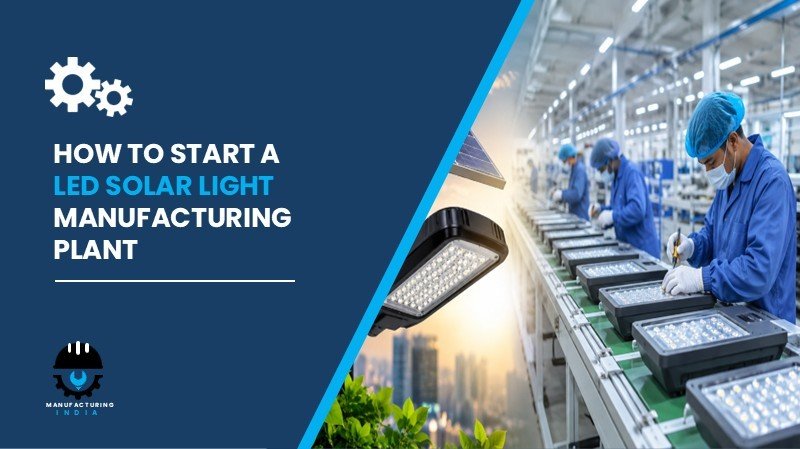
A LED solar light manufacturing plant setup in India presents a compelling investment case as demand for energy-efficient, off-grid lighting accelerates across urban, rural, and infrastructure applications. Expansion of solar power capacity, rural electrification, smart-city projects, and sustainable infrastructure are supporting adoption, with infrastructure, municipal, residential, commercial, and public-utility buyers deploying solar LED lighting for roads, villages, highways, parks, and remote locations lacking grid access.
India’s urbanisation, infrastructure expansion, and the Make in India initiative make the country a strategically sound base for this type of facility. Falling battery and solar-module costs, improved lithium-ion and LiFePO₄ battery technology, motion sensors, and integrated designs are widening the addressable market. With Asia-Pacific holding the largest global market share, an India-based unit is well positioned to serve both domestic and regional demand.
A LED solar light manufacturing plant combines strong policy tailwinds, cost-competitive production, and rapidly expanding infrastructure demand with healthy gross margins of 20-30%. Supported by falling component costs and consistent government deployment programs, a well-planned facility offers a realistic path to profitability and break-even viability within a reasonable investment horizon.
What is a LED Solar Light?
LED solar lights are lighting systems that use solar panels to convert sunlight into electricity, which then powers LED lamps. They are characterized by energy efficiency, durability, and minimal maintenance, and come with built-in batteries to store energy for nighttime or cloudy-weather operation. They are used for outdoor, street, garden, and landscape lighting, and as emergency backup power, with applications spanning grid-tied, off-grid, and hybrid systems.
A LED solar light manufacturing plant typically follows a process involving component preparation, LED assembly, PCB assembly, battery-pack assembly, solar-panel integration, controller installation, housing assembly, wiring, sealing, testing, and packaging, serving end-use industries including infrastructure, municipalities, residential, commercial, industrial, rural development, hospitality, transportation, and public utilities.
Cost of Setting Up a LED Solar Light Manufacturing Plant in India
Cost depends on capacity, technology, location, automation level, and regulatory compliance.
1. Capital Expenditure (CapEx)
Land and site development form a foundational part of the investment; investors can evaluate SEZs or industrial estates for existing infrastructure and streamlined approvals. Civil works cover the production shed, testing laboratory, storage, and administrative block.
Machinery represents the largest share of capital expenditure. Key machinery required includes:
- PCB assembly lines, solder-paste printers, pick-and-place machines, reflow ovens
- LED mounting equipment and LED module assembly stations
- Battery-cell testing equipment, battery-pack assembly machines, spot-welding machines, BMS programming systems
- Solar-panel testing equipment, wire-cutting and stripping machines, crimping machines
- Injection molding machines, CNC equipment, aluminum die-casting machines (where applicable), powder-coating systems
- Ultrasonic welding machines, adhesive dispensing equipment, screw-fastening systems, sealing equipment
- Photometric testing systems, integrating spheres, electrical safety testers, solar charging testers, battery testers, waterproof testing equipment, aging and burn-in chambers
- Packaging machines and material-handling systems
Other capital costs include effluent treatment provisions, pre-operative expenses, commissioning, and applicable import duties.
Request a Sample Report for In-Depth Market Insights: https://www.imarcgroup.com/led-solar-light-manufacturing-plant-project-report/requestsample
2. Operational Expenditure (OpEx)
Raw material cost is the largest component of OpEx, at approximately 60-70%. Core raw materials include monocrystalline solar panels, lithium-ion or LiFePO₄ batteries, LED chip arrays, PWM/MPPT charge controller ICs, PIR motion sensors, and polycarbonate housing, making long-term supplier contracts important for price stability.
Utility costs (electricity, water, compressed air) account for approximately 8-12% of OpEx. Other costs include transportation, packaging, salaries, maintenance, depreciation, and taxes. By the fifth year, total operational cost is expected to rise due to inflation and market fluctuations.
3. Plant Capacity
A LED solar light plant is typically designed for an annual capacity between 5-20 million units, enabling economies of scale with operational flexibility. Capacity can be customized to investor requirements, and profitability generally improves with higher utilisation.
4. Profit Margins and Financial Projections
Financial projections are built around capital investment, operating costs, capacity utilisation, and demand outlook, providing a view of ROI, NPV, IRR, and payback period. Gross profit margins typically range between 20-30%, while net profit margins range between 7-14%.
Why Set Up This Facility in India?
Energy Efficiency and Off-Grid Capability: LEDs provide efficient illumination while solar generation reduces grid dependence. These systems operate independently of the grid, suiting remote and rural locations costly to connect.
Government Programs: Public-sector investment in rural infrastructure and renewable energy is creating opportunities for solar street-light manufacturers. The Haryana government has a 2026 rate contract covering 20,000 solar street-light systems, directly supporting demand.
Policy and Regulatory Tailwinds: Per MNRE, cumulative installed solar power capacity reached 162.15 GW as of June 30, 2026, including 6.43 GW off-grid, a favorable ecosystem for this facility backed by active government deployment programs.
Low Maintenance and Smart Features: Integrated LED, solar-panel, and battery systems reduce wiring and maintenance versus grid-connected lighting, while motion sensors and remote monitoring add functionality.
Active Industry Investment: On May 6, 2026, Calcom Vision entered the solar-powered outdoor street-lighting segment with All-in-One, Semi-Integrated, and Remote Monitoring-enabled Street Lights, plus solar floodlights and high-bay lights, expecting ₹100 crore in revenue by FY2030 – evidence of growing manufacturer interest.
Regional Market Position: Asia-Pacific holds about 47.3% of the global market, positioning an Indian unit to serve strong regional and domestic demand.
Manufacturing Process – Step by Step
The LED solar light manufacturing process uses a multi-stage assembly and integration method as the primary production approach.
- Component Preparation: Solar panels, batteries, LED chip arrays, controller ICs, sensors, and housing parts are inspected.
- PCB Assembly: Boards are populated using solder-paste printers, pick-and-place machines, and reflow ovens.
- LED Assembly: LED chip arrays are mounted at dedicated assembly stations.
- Battery-Pack Assembly: Cells are tested and assembled using spot-welding machines and BMS programming.
- Solar-Panel Integration: Panels are tested and integrated with wiring and the charge controller.
- Controller Installation: Controller ICs and motion sensors are installed using crimping and wiring equipment.
- Housing Assembly: Housings are formed via injection molding and CNC equipment, then powder-coated.
- Wiring and Sealing: Wiring is completed using ultrasonic welding and sealing equipment for weatherproofing.
- Testing: Units undergo photometric, electrical safety, charging, battery, and waterproof testing.
- Packaging and Dispatch: Tested units are packaged and dispatched to end users.
Key Applications
A LED solar light manufacturing plant serves infrastructure, public, and private-sector applications.
- Street and Highway Lighting: Illuminates roads, highways, crossings, and pathways without substantial grid connections.
- Rural and Remote Areas: Off-grid operation suits villages and locations where grid infrastructure is scarce.
- Parks and Public Spaces: Energy-efficient nighttime illumination for parks, walkways, and communal spaces.
- Industrial Facilities: General illumination and outdoor security for factories, warehouses, and parking lots.
- Commercial Areas: Shopping areas, hotels, resorts, and campuses reduce grid dependence with solar LED systems.
- Security Lighting: Motion sensors and automated controls provide targeted illumination around entrances.
Leading Manufacturers
Any LED solar light manufacturing plant entering this space competes with established global players offering diverse light solutions:
- Signify N.V.
- Sunna Design
- Solar Electric Power Company (SEPCO)
- Greenshine New Energy
These companies serve residential, commercial, public infrastructure, rural electrification, and recreational end-use sectors.
Timeline to Start the Plant
Understanding the LED solar light manufacturing process helps sequence the following phases:
- Feasibility study and project report preparation
- Land acquisition and site development
- Regulatory approvals and environmental clearances
- Factory licence and fire safety compliance
- Machinery procurement and installation
- Raw material supplier agreements and supply chain setup
- Trial production and quality testing
- Commercial production launch
Licences and Regulatory Requirements
Starting this unit in India requires several approvals:
- Business registration (Proprietorship, LLP, or Pvt Ltd)
- Factory Licence under the Factories Act
- Environmental Clearance from State Pollution Control Board
- GST Registration
- Fire Safety NOC
- Effluent Treatment Plant (ETP) operational clearance
- Occupational Health and Safety compliance
Key Challenges to Consider
High Capital Requirements: Machinery costs, spanning PCB assembly, battery-pack equipment, and testing systems, represent the largest share of capital expenditure.
Raw Material Price Volatility: Core inputs such as monocrystalline solar panels, lithium-ion or LiFePO₄ batteries, and LED chip arrays face price fluctuations, making long-term supplier contracts important.
Regulatory Compliance: Environmental clearances, factory licensing, and safety certifications must be maintained throughout operations.
Technology Pressure: Manufacturers must keep improving battery life, charging efficiency, and remote-monitoring capability to stay competitive.
Competition: Established global players such as Signify N.V., Sunna Design, SEPCO, and Greenshine New Energy, alongside expanding Indian manufacturers, create a competitive landscape.
Skilled Manpower: Assembly and testing operations require trained staff familiar with electronics and battery-pack handling.
Frequently Asked Questions
1. How much does it cost to set up a LED solar light manufacturing plant in India?
Total cost depends on capacity, automation level, machinery selection, and site location, covering land, civil works, machinery, and other capital costs.
2. Is LED solar light manufacturing profitable in India in 2026?
Yes – gross profit margins typically range between 20-30% and net profit margins between 7-14%.
3. What machinery is required for a LED solar light plant in India?
Key machinery includes PCB assembly lines, LED module assembly stations, battery-pack assembly machines, solar-panel testing equipment, injection molding machines, and various testing and packaging systems.
4. What licences and approvals are required to start this facility in India?
Requirements include business registration, a Factory Licence, Environmental Clearance, GST registration, Fire Safety NOC, ETP clearance, and Occupational Health and Safety compliance.
5. What raw materials are needed for LED solar light manufacturing?
Core raw materials include monocrystalline solar panels, lithium-ion or LiFePO₄ batteries, LED chip arrays, PWM/MPPT controller ICs, PIR motion sensors, and polycarbonate housing.
6. What are the environmental compliance requirements for this plant in India?
Plants must secure Environmental Clearance from the State Pollution Control Board and maintain effluent treatment and occupational health and safety compliance.
7. What is the best location to set up a LED solar light plant in India?
Site selection should prioritise access to raw material suppliers, proximity to infrastructure and municipal markets, robust utility infrastructure, and compliance with zoning and environmental regulations.
8. What is the break-even period for this type of plant in India?
Break-even timing depends on capacity utilisation, pricing, and cost structure, assessed through detailed financial and payback period analysis.
9. What government incentives are available for manufacturers in India?
Manufacturers benefit from state-level procurement contracts, such as Haryana’s 2026 rate contract covering 20,000 solar street-light systems, supporting demand for domestically produced solar lighting.
Key Takeaways for Investors
This investment offers a compelling opportunity supported by demand from infrastructure, municipal, rural development, industrial, and commercial sectors. Financial viability holds across capacities from 5 million to 20 million units annually, with gross margins of 20-30% and net margins of 7-14%. With India’s solar power capacity reaching 162.15 GW as of June 30, 2026, including 6.43 GW off-grid, and Asia-Pacific commanding roughly 47.3% of the global market, the underlying demand base is substantial. Continued rural electrification and infrastructure procurement point to sustained long-term demand.
About the Author