Setting up a water bottling plant in India presents a compelling investment case, driven by strong demand from food & beverages, hospitality, healthcare, retail, institutional supply, transportation, and commercial establishment sectors. Rising urbanization, growing concerns around water quality, and increasing preference for packaged beverages are pushing consumers and institutions toward certified packaged drinking water. Hospitals, schools, offices, hotels, and airports depend on a steady supply of safe drinking water, making this category essential to daily life.
India’s expanding urban population, rising disposable incomes, and developing infrastructure make the country a strategically sound base for this type of plant. Under the broader push toward domestic manufacturing, states such as Gujarat and Maharashtra offer access to land, utilities, and logistics networks suited to beverage production. Combined with steady demand growth and rising tourism activity, India offers a favourable setting for scalable production.
This investment opportunity is backed by strong demand from food & beverages, hospitality, healthcare, retail, and institutional supply sectors, supported by policy-driven industrial growth. With gross margins of 28-38% and net margins of 8-16%, the plant offers cost-competitive production, healthy margins, and a realistic path to break-even viability.
What is Water Bottling?
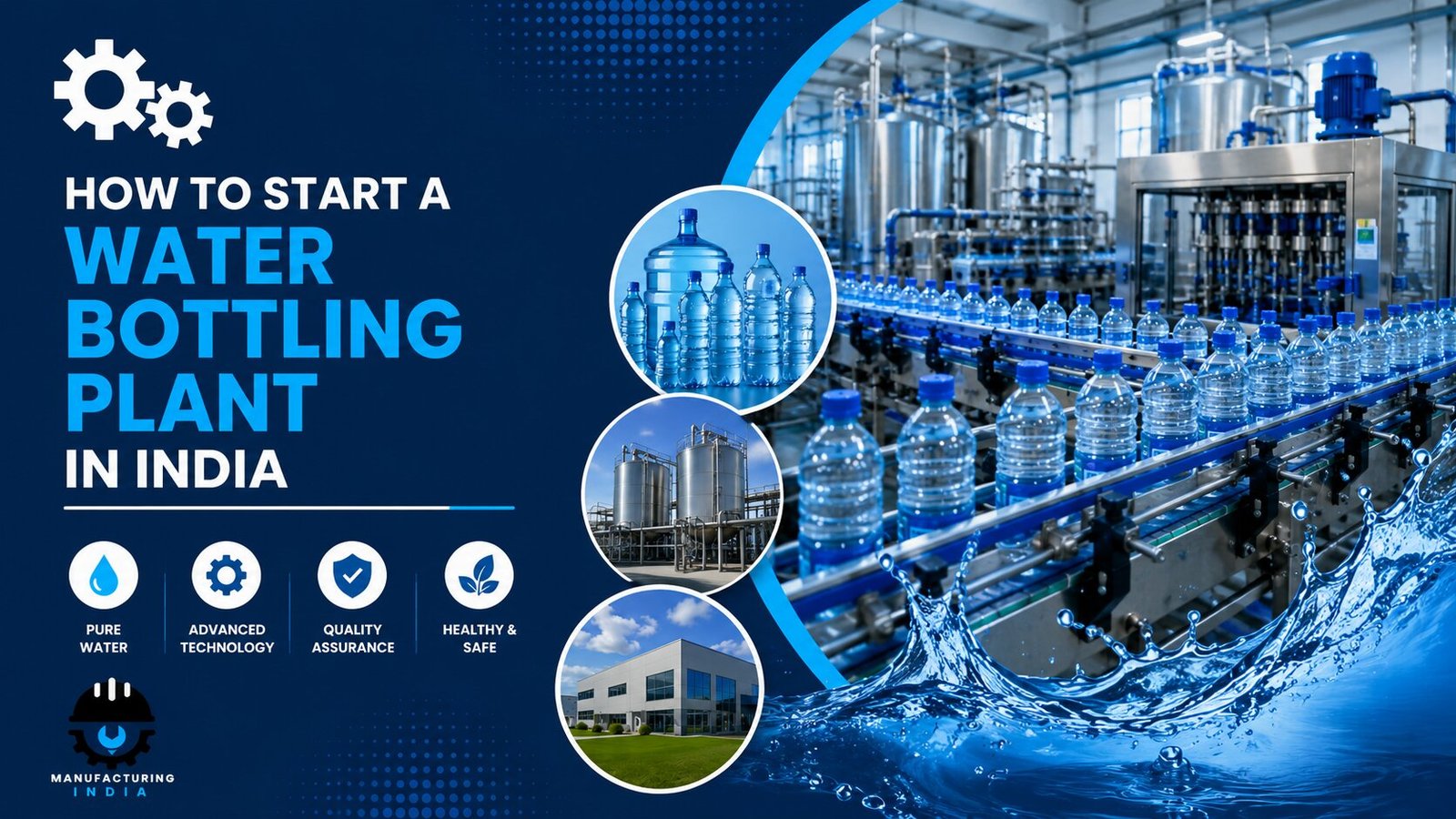
This facility is an industrial operation designed to purify, process, package, and distribute drinking water in sealed containers while ensuring compliance with food safety and quality standards. The process begins with raw water intake, followed by multi-stage filtration, activated carbon treatment, reverse osmosis, UV sterilization, ozonation, mineral adjustment where required, bottle rinsing, automated filling, capping, labelling, inspection, and packaging, using automated process control systems for consistency and compliance.
Product variants include packaged drinking water, natural mineral water, premium bottled water, institutional water supply, and commercial beverage distribution. The water bottling manufacturing process relies on filtration, reverse osmosis, and UV sterilization as its core purification steps. These facilities serve homes, companies, hospitals, healthcare facilities, and educational institutions requiring clean drinking water, with end-use industries spanning food & beverages, hospitality, healthcare, retail, institutional supply, transportation, and commercial establishments.
Cost of Setting Up a Water Bottling Plant in India
The total cost of setting up a water bottling manufacturing plant depends on capacity, technology, location, automation level, and regulatory compliance requirements.
1. Capital Expenditure (CapEx)
Capital investment covers land, site preparation, and infrastructure, optimized through industrial estates offering developed land and shared utilities. Civil works cover production sheds, quality control labs, storage, and admin blocks. Machinery costs account for the largest share of capital expenditure. Key machinery required includes:
- Raw water storage tanks
- Multimedia filters
- Activated carbon filters
- Reverse osmosis systems
- UV sterilizers
- Ozone generators
- Mineral dosing systems
- Bottle rinsing machines
- Automatic filling and capping machines
- Labelling systems
- Shrink wrapping units
- Date coding machines
- Conveyor systems
- Quality inspection equipment
- Palletizing systems
- CIP (Clean-in-Place) systems
- Automated process control systems
Other capital costs include effluent treatment systems, pre-operative expenses, commissioning costs, and land registration charges.
Request a Sample Report for In-Depth Market Insights: https://www.imarcgroup.com/water-bottling-plant-project-report
2. Operational Expenditure (OpEx)
Raw material cost is the largest driver of operating expenditure, at approximately 35-45% of total OpEx. Required raw materials include source water (groundwater, spring, or municipal treated), PET preforms for bottles, and caps and seals. Long-term supplier contracts help mitigate price volatility.
Utility cost, covering electricity, water, and steam, accounts for approximately 12-18% of OpEx. Other operating costs include transportation, packaging, salaries, maintenance, depreciation, and taxes. By year five, total operational cost is expected to rise due to inflation and higher input costs.
3. Plant Capacity
The proposed facility is designed with an annual production capacity ranging between 50-200 million liters, enabling economies of scale while maintaining operational flexibility. Capacity can be customized based on investor requirements and target markets, and profitability generally improves as capacity utilisation increases.
4. Profit Margins and Financial Projections
Financial projections are developed based on assumptions related to capital investment, operating costs, capacity utilisation, and pricing trends, covering income and expenditure projections, payback period, net present value (NPV), and internal rate of return (IRR). Gross profit margins typically range between 28-38%, supported by stable demand, while net profit margins range between 8-16%. These figures provide a comprehensive view of the plant’s financial viability, ROI, and long-term sustainability.
Why Set Up a Water Bottling Plant in India?
Growing Demand for Safe Drinking Water: Concerns over water quality and contamination are encouraging consumers and institutions to buy packaged drinking water meeting certified standards.
Expansion of Urban Population: Rapid urbanization and rising disposable incomes are driving higher bottled water consumption through retail, hospitality, and commercial channels.
Increasing Tourism and Hospitality Activities: Growth in domestic and international tourism generates demand for packaged drinking water across hotels, restaurants, and airports.
Policy and Regulatory Tailwinds: India’s push toward domestic industrial development supports manufacturing investment, with industrial hubs across Gujarat and Maharashtra offering established infrastructure.
Cost-Competitive Manufacturing: Access to industrial land, utilities, and a developed logistics network enables a cost-competitive supply chain relative to distribution centres.
Active Industry Investment: In May 2026, Niagara Bottling announced a US$160 million investment to build its first manufacturing facility at Tryon Technology Park, Fulton County, New York — a 362,000-square-foot plant set to expand bottled water production and create jobs.
Local Supply Chain Preference: Retailers, hospitality operators, and healthcare institutions increasingly prefer sourcing packaged drinking water from nearby facilities to cut distribution costs.
Manufacturing Process – Step by Step
The water bottling manufacturing process uses multi-stage filtration and purification as its primary production method:
- Raw Water Intake: Source water from groundwater, spring, or municipal treated sources is drawn in for processing.
- Multi-Stage Filtration: Multimedia filters remove suspended particles.
- Activated Carbon Treatment: Activated carbon filters remove chlorine, odours, and organic contaminants.
- Reverse Osmosis: Reverse osmosis systems remove dissolved solids at a molecular level.
- UV Sterilization: UV sterilizers eliminate microbiological contaminants without chemicals.
- Ozonation: Ozone generators provide additional disinfection during storage.
- Mineral Adjustment: Mineral dosing systems balance mineral content where required.
- Bottle Rinsing: Bottle rinsing machines clean containers prior to filling.
- Automated Filling and Capping: Filling and capping machines fill and seal bottles hygienically.
- Labelling: Labelling systems apply product labels per regulatory requirements.
- Quality Inspection: Inspection equipment checks fill levels, seal integrity, and labels.
- Packaging and Dispatch: Shrink wrapping, date coding, conveyor, and palletizing systems prepare finished goods for dispatch to end-use industries.
Key Applications
The facility serves several end-use industries that depend on a consistent supply of safe drinking water.
- Retail Packaged Drinking Water: Supplies supermarkets, convenience stores, and online retail platforms with hydration solutions.
- Hospitality & Tourism: Hotels, restaurants, resorts, and airlines rely on bottled water to meet hygiene expectations.
- Healthcare & Institutional Supply: Hospitals, schools, and offices use bottled water for continuous access to clean drinking water.
- Commercial & Industrial Operations: Manufacturing facilities and corporate offices purchase bottled water in bulk for worker hydration.
- Emergency & Disaster Relief: Bottled water serves as an essential resource during natural disasters and relief operations.
Leading Manufacturers
Competing with a new water bottling manufacturing plant means benchmarking against established multinational players with extensive production capacities. Key players include:
- Nestlé
- PepsiCo
- The Coca-Cola Company
- Danone
- FIJI Water Company LLC
Timeline to Start the Plant
- Feasibility study and project report preparation
- Land acquisition and site development
- Regulatory approvals and environmental clearances
- Factory licence and fire safety compliance
- Machinery procurement and installation
- Raw material supplier agreements and supply chain setup
- Trial production and quality testing
- Commercial production launch
Licences and Regulatory Requirements
Starting a water bottling manufacturing unit in India requires several approvals:
- Business registration (Proprietorship, LLP, or Pvt Ltd)
- Factory Licence under the Factories Act
- Environmental Clearance from State Pollution Control Board
- GST Registration
- Fire Safety NOC
- Effluent Treatment Plant (ETP) operational clearance
- Occupational Health and Safety compliance
Key Challenges to Consider
- High Capital Requirements: Machinery, including reverse osmosis systems and filling lines, forms the largest share of capital expenditure and requires careful planning.
- Raw Material Price Volatility: Prices of source water inputs, PET preforms, and caps and seals can fluctuate, making long-term supplier contracts important.
- Regulatory Compliance: Environmental clearances, factory licensing, and effluent treatment requirements must be managed to avoid delays.
- Competition: Established players such as Nestlé, PepsiCo, The Coca-Cola Company, Danone, and FIJI Water Company LLC operate extensive networks.
- Skilled Manpower: Operating automated filtration, filling, and inspection systems requires trained technical staff.
- Utility Dependence: Utility costs, at 12-18% of OpEx, make reliable electricity, water, and steam access essential.
Frequently Asked Questions
1. How much does it cost to set up a water bottling manufacturing plant in India?
Cost depends on capacity, technology, automation level, and location, and includes land, civil works, machinery, and other capital costs.
2. Is water bottling manufacturing profitable in India in 2026?
Yes, with gross margins of 28-38% and net margins of 8-16% under normal operating conditions.
3. What machinery is required for a water bottling plant in India?
Key machinery includes raw water storage tanks, filters, reverse osmosis systems, UV sterilizers, ozone generators, mineral dosing systems, filling and capping machines, labelling systems, and CIP systems.
4. What licences and approvals are required to start a water bottling plant in India?
Business registration, a Factory Licence, Environmental Clearance, GST Registration, Fire Safety NOC, and ETP operational clearance.
5. What raw materials are needed for water bottling manufacturing?
Source water (groundwater, spring, or municipal treated), PET preforms for bottles, and caps and seals.
6. What are the environmental compliance requirements for a water bottling plant in India?
Environmental Clearance from the State Pollution Control Board and an operational Effluent Treatment Plant to manage wastewater.
7. What is the best location to set up a water bottling plant in India?
Locations near source water and packaging suppliers are ideal, with industrial hubs in states such as Gujarat and Maharashtra offering established infrastructure.
8. What is the break-even period for this type of plant in India?
This depends on capacity utilisation, pricing, and cost structure; a feasibility study provides payback period and NPV calculations for the chosen capacity.
9. What government incentives are available for manufacturers in India?
India’s push toward domestic industrial development supports manufacturing investment, with state-level industrial estates offering developed land and infrastructure.
Key Takeaways for Investors
This investment opportunity represents a strong case, backed by consistent demand from food & beverages, hospitality, healthcare, retail, institutional supply, transportation, and commercial establishment sectors. Financial viability holds across capacities ranging from 50 to 200 million liters annually, with gross margins of 28-38% and net margins of 8-16% supporting a realistic path to profitability. The global water bottling market, valued at USD 288.80 Billion in 2025 and projected to reach USD 498.40 Billion by 2034 at a CAGR of 6.1%, reflects sustained long-term growth. With rising urbanization, tourism, and institutional demand continuing to drive consumption, this type of plant is positioned for durable, long-term demand sustainability.
About the Author