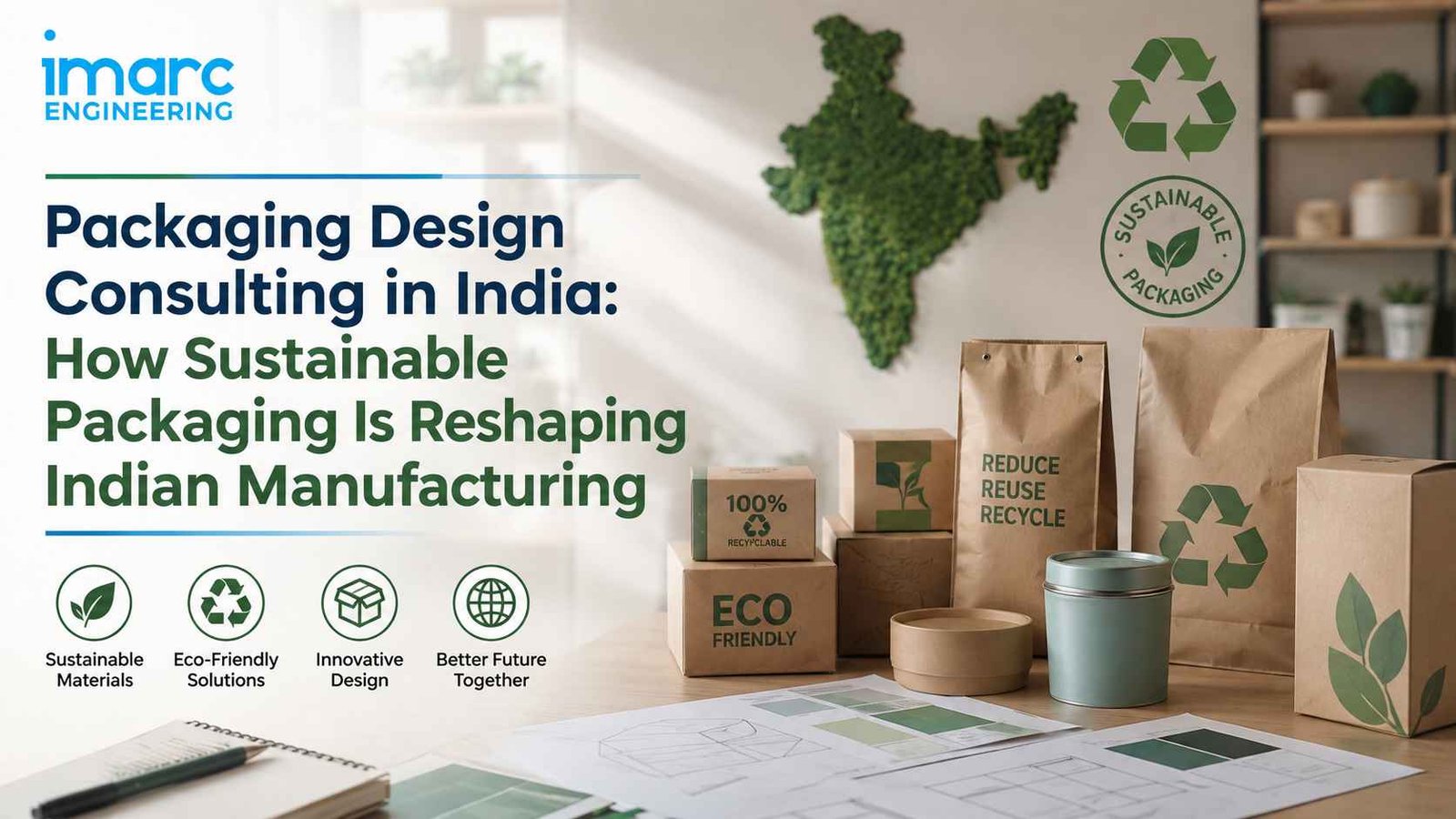
Packaging in India has stopped being a cosmetic afterthought bolted onto the end of a production line. Between recycled-content mandates, mandatory traceability codes, and rising penalties for non-compliance, packaging decisions now sit inside the same regulatory and cost conversation as raw material sourcing and plant design.
This shift is why manufacturers across FMCG, pharmaceuticals, and food processing are turning to Packaging Design Consulting earlier in the product development cycle rather than treating it as a downstream fix. Getting material choice, structural design, and compliance documentation right at the design stage is now cheaper than retrofitting a packaging line after a regulatory notice.
Why Sustainable Packaging Has Become a Compliance Issue
India’s plastic packaging regulations moved from voluntary guidance to hard numerical targets over the current cycle, and manufacturers are still adjusting.
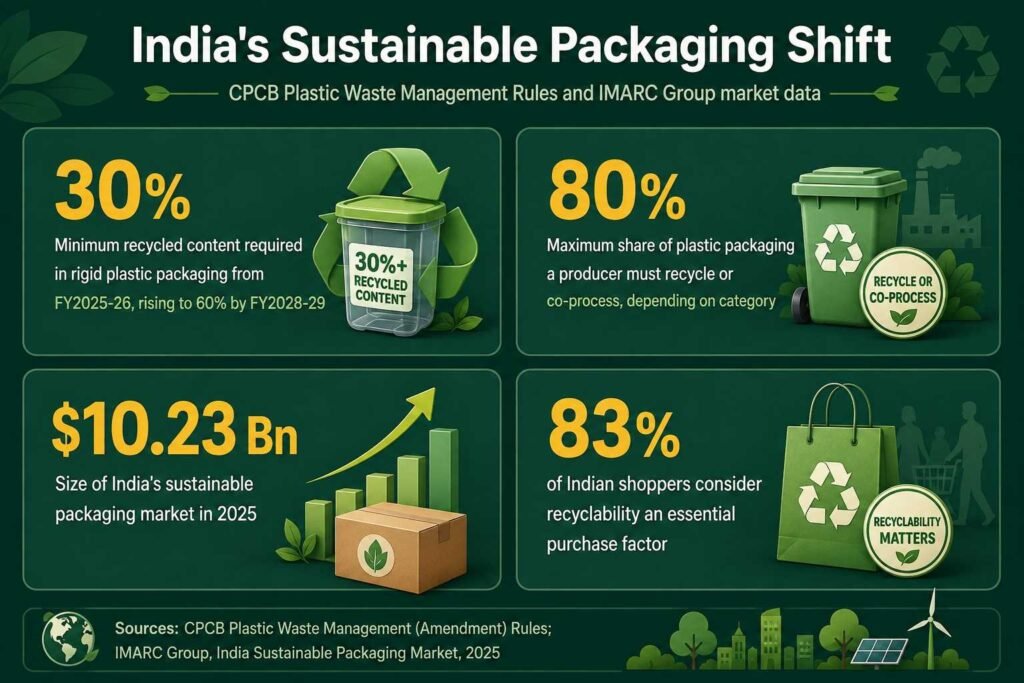
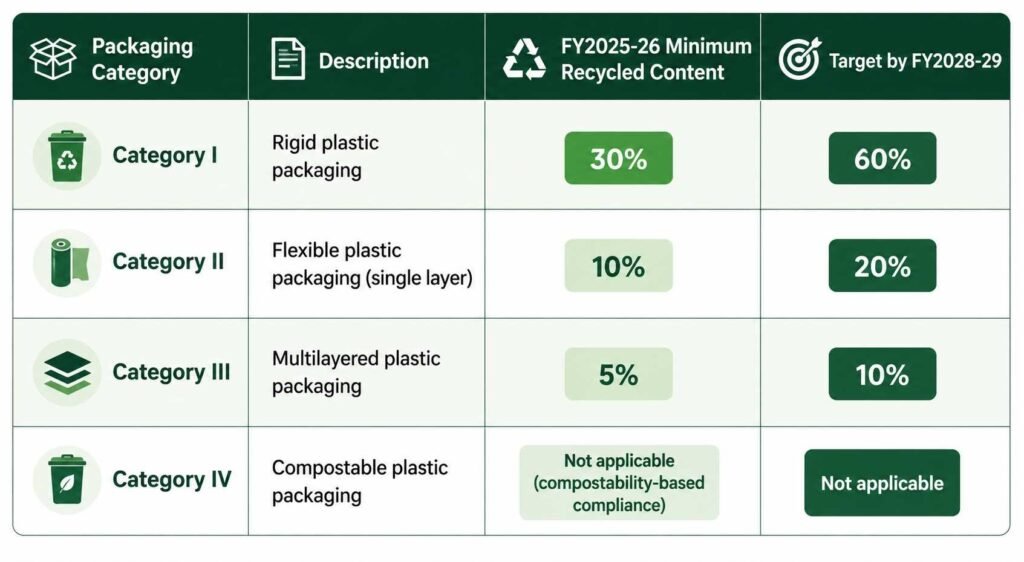
- A minimum recycled content mandate took effect from FY2025-26 under the Plastic Waste Management Rules, requiring rigid Category I packaging to use 30% recycled plastic, rising to 60% by FY2028-29.
- Flexible Category II packaging must use 10% recycled content, rising to 20%, while multilayered Category III packaging starts at 5%, rising to 10% over the same period.
- Between 60% and 80% of the plastic a producer, importer, or brand owner introduces into the market must be recycled or co-processed, depending on the packaging category.
- All plastic carry bags and multilayered packaging have been required to carry a QR code or barcode with manufacturer and regulatory details since 1 July 2025, enabling CPCB to trace non-compliant packaging back to source.
- Shortfalls against annual recycling targets draw environmental compensation of ₹5,000 per tonne in the first year, ₹10,000 in a second consecutive year, and ₹20,000 in a third, with the unmet obligation carried forward rather than waived.
Paper-based packaging is entering a similar cycle. Extended Producer Responsibility rules for paper packaging mandate phased recycling targets for producers, importers, and brand owners starting 1 April 2026, even though nearly three-fourths of India’s paper production already comes from recovered paper and recycled fibre.
The compliance system itself has also matured. The CPCB Centralized EPR Portal for plastic packaging has been operational since 2022, and every producer, importer, brand owner, and plastic waste processor placing packaging on the Indian market must register on it before operating lawfully. Since July 2025, importers of plastic raw materials, including resin, pellets, and preforms, must also present proof of EPR registration at customs, meaning a packaging design decision made without checking compliance status can now hold up an import consignment before it ever reaches the production line.
Consumer expectations are moving in the same direction as regulation. Recent industry survey data shows that 83% of Indian shoppers consider recyclability an essential purchase factor, and one in five shoppers say they avoid a product altogether if it lacks clear sustainability information on the pack. For manufacturers selling into organized retail and e-commerce, packaging design is now doing double duty: satisfying a numerical compliance threshold and signalling credibility to an increasingly attentive buyer.
What This Means for Manufacturing Decisions
For a plant, these targets are not abstract policy. They translate directly into material sourcing, vendor qualification, and line design choices.
- Material substitution decisions now need to account for recycled-content thresholds that will keep rising through FY2028-29, not just current-year compliance.
- Vendor qualification has to verify that recycled resin or fibre suppliers can meet IS 14534:2023 and, where relevant, FSSAI food-contact requirements.
- Print and label design must accommodate the mandatory QR code or barcode without compromising shelf branding or production speed.
- Documentation systems need to track virgin versus recycled content by weight for annual CPCB portal filings, since inaccurate reporting carries the same environmental compensation exposure as an actual shortfall.
Why Customized Packaging Design Changes the Outcome
A single packaging specification rarely works across a company’s full product range, let alone across an industry. A pharmaceutical blister pack, a food-grade flexible pouch, and an e-commerce shipping carton each carry different regulatory obligations, damage-in-transit risks, and material substitution limits.
Effective, customized packaging design typically accounts for:
- Category-specific recycled content limits: rigid, flexible, and multilayered formats each carry different thresholds under the CPCB schedule, so a single blanket material choice risks both under-compliance and unnecessary cost.
- Product protection requirements: pharmaceutical and food packaging must balance recycled content and lightweighting against barrier performance and shelf life, not sustainability alone.
- Transit and returns exposure: e-commerce and FMCG brands need structural designs that reduce damage-driven returns, since packaging failure during transit is a recurring cost line separate from regulatory compliance.
- Export market alignment: manufacturers selling into the EU and other regulated markets need packaging that satisfies both Indian EPR rules and destination-market recyclability or extended producer requirements simultaneously.
- Category IV compostable formats: food delivery, quick-service, and hospitality brands moving to compostable serviceware need design validation against certification standards rather than assuming compostable claims are automatically compliant.
India’s packaging sector illustrates why this customization has become commercially significant rather than a compliance footnote. The country’s sustainable packaging market reached USD 10.23 billion in 2025, and flexible plastic formats alone are projected to account for a majority share of the broader consumer packaging segment through 2026, meaning material and structural decisions made today will apply across a large, fast-moving base of production volume rather than a one-off product line.
For detailed insights into Packaging Design and Labelling Services in India, read IMARC Engineering’s comprehensive guide: https://www.imarcengineering.com/blog/packaging-design-labelling-services-in-india
Category-Wise Recycled Content Mandates Under the CPCB Rules
How IMARC Engineering’s Expertise Can Help with Packaging Design Services
IMARC Engineering works with manufacturers to align packaging design with CPCB recycled-content schedules, product protection needs, and cost targets at the same stage rather than sequentially.
- Regulatory mapping by category: matching a client’s product portfolio against the correct rigid, flexible, or multilayered recycled-content thresholds and their year-on-year escalation.
- Material and structural redesign: evaluating substrate and structural changes that meet compliance thresholds without compromising barrier performance or transit durability.
- Vendor and recycler qualification support: verifying that recycled resin or fibre suppliers meet IS 14534:2023 and applicable FSSAI food-contact standards.
- Documentation and portal readiness: setting up the weight-tracking and reporting systems needed for accurate CPCB annual filings, reducing exposure to environmental compensation for reporting gaps.
- Cross-market compliance alignment: designing packaging specifications that satisfy Indian EPR obligations alongside requirements in export destination markets, avoiding duplicate packaging lines for domestic and export SKUs.
Get in Touch With Our Team: https://www.imarcengineering.com/contact?service=packaging-design-labelling
Conclusion
Sustainable packaging in India has moved from a marketing claim to a set of enforceable, category-specific numerical targets that will keep tightening through FY2028-29. Manufacturers that build compliance into packaging design decisions now, rather than retrofitting materials after a shortfall notice, will manage both regulatory exposure and production cost more predictably than those still treating packaging as an afterthought.
Frequently Asked Questions
What recycled content is mandatory in Indian plastic packaging?
Under CPCB rules effective FY2025-26, rigid packaging needs 30% recycled content, flexible packaging needs 10%, and multilayered packaging needs 5%, with all three thresholds rising through FY2028-29.
What happens if a company misses its recycling target?
Environmental compensation of ₹5,000 per tonne applies for a first-year shortfall, rising to ₹10,000 for a second consecutive year and ₹20,000 for a third, and the unmet obligation carries forward rather than being waived.
Why do manufacturers need packaging design consulting instead of just switching materials?
Recycled-content compliance interacts with product protection, shelf life, and transit durability, so material substitution without structural redesign often creates new performance or cost problems even while meeting the regulatory threshold.
Is paper packaging also regulated like plastic packaging in India?
Yes. Extended Producer Responsibility rules for paper packaging introduce phased recycling targets for producers, importers, and brand owners starting 1 April 2026.
Contact Us:
IMARC Engineering
Phone: +91-120-433-0800
Email: sales@imarcengineering.com
India: C-130, Sector 2, Noida, Uttar Pradesh 201301
LinkedIn: https://www.linkedin.com/showcase/imarc-engineering/
About the Author