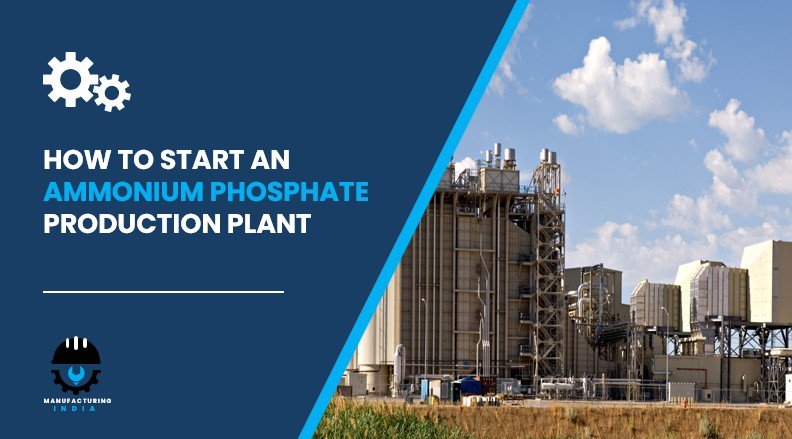
Setting up an ammonium phosphate production plant in India represents a highly attractive investment proposition underpinned by robust and structurally growing demand for high-efficiency fertilizers, rising agricultural productivity requirements, expanding food security concerns, and growing adoption of nutrient-rich crop inputs. As global population levels climb and arable land per capita continues to shrink, ammonium phosphate fertilizers, comprising primarily monoammonium phosphate (MAP) and diammonium phosphate (DAP), occupy an increasingly important position across broadcast fertilization, fertigation, and compound fertilizer blending applications. This growth trajectory, combined with steady raw material availability through established ammonia and phosphoric acid supply chains and strong government support for balanced fertilization, creates a highly favourable manufacturing environment for new entrants with efficient neutralization, granulation, and quality systems.
What is Ammonium Phosphate?
Ammonium phosphates are a group of inorganic salts formed by the reaction of ammonia with phosphoric acid, widely used as essential fertilizers in agriculture. The most common variants, monoammonium phosphate (MAP) and diammonium phosphate (DAP), provide a concentrated source of nitrogen and phosphorus, two critical nutrients required for plant growth. These compounds are highly water-soluble, allowing for quick nutrient absorption by crops and improving soil fertility and crop yield.
Ammonium phosphate is compatible with a wide range of soil types and can be applied through broadcasting, fertigation, or blending with other fertilizers. Beyond agriculture, it is used in fire retardants, food additives, water treatment chemicals, and select industrial applications, owing to its chemical stability and high nutrient content.
The global ammonium phosphate market was valued at approximately USD 48.70 Billion in 2025 and is expected to reach USD 69.32 Billion by 2034, exhibiting a CAGR of 4.0% from 2026 to 2034, supported by rising fertilizer intensification, growing food security concerns, and expanding compound fertilizer manufacturing.
Cost of Setting Up an Ammonium Phosphate Production Plant
The total capital investment required to establish an ammonium phosphate production plant is shaped by several key parameters: annual production capacity (typically anchored around 50,000 MT per annum), the process route adopted (batch or continuous neutralization, with or without integrated granulation), the level of automation across the neutralization, granulation, and drying sections, facility specification, raw material sourcing strategy, and applicable regulatory and safety compliance requirements. Below is a structured breakdown of the major cost components.
1. Capital Expenditure (CapEx)
Total capital investment in an ammonium phosphate production plant covers the following major heads:
Land and Site Development
This encompasses land acquisition or lease, site preparation, boundary development, and utilities connectivity. Site selection should prioritise proximity to ammonia and phosphoric acid supply sources to ensure a steady, low-transport-cost feedstock supply, given the hazardous nature and handling sensitivity of anhydrous ammonia. Access to reliable power and steam generation infrastructure for the neutralization, granulation, and drying processes, strong road and rail logistics for inbound raw materials and outbound bagged or bulk fertilizer, availability of process water of suitable quality, and a trained workforce for plant operations and quality control are critical site selection criteria. Compliance with industrial zoning regulations, hazardous chemical storage norms applicable to ammonia handling, fire and explosion safety norms, and effluent and emission compliance frameworks must be assessed from project initiation.
Civil Works and Construction
Building costs cover the main processing facility including the raw material reception and storage section, the neutralizer/pre-neutralizer and ammoniator-granulator house, the rotary drying and cooling section, the screening and product recycle area, the coating and bagging line, the quality control laboratory, the administrative block, and utility infrastructure including the boiler house, power backup, cooling water systems, scrubber and off-gas treatment systems, and effluent treatment plant. Construction must comply with applicable factory act requirements, hazardous chemical storage rules, fire and explosion-proofing norms for ammonia handling areas, and fertilizer industry infrastructure guidelines.
Machinery and Equipment
Machinery represents the single largest CapEx component. Key equipment required for an ammonium phosphate production plant includes:
- Raw Material Reception and Storage Systems: Ammonia storage tanks/refrigerated vessels, phosphoric acid storage tanks, unloading systems, and conveying and piping infrastructure for safe receipt and handling of incoming raw materials
- Pre-Neutralizer/Reactor Systems: Corrosion-resistant reactor vessels where phosphoric acid is partially neutralized with ammonia to form a MAP/DAP slurry, along with associated agitation, temperature control, and pH monitoring instrumentation
- Ammoniator-Granulator: Rotary drum or pug-mill type granulators where the neutralized slurry is combined with recycled fines and further ammoniated to build uniform granules of the target nutrient grade
- Rotary Dryer: Direct or indirect-fired rotary dryers to reduce granule moisture content to specification prior to cooling, along with associated combustion and fuel handling systems
- Cooling Systems: Rotary or fluid-bed coolers to bring dried granules down to a safe storage and handling temperature, preventing caking during subsequent storage and transport
- Screening and Product Recycle Systems: Vibrating screens to separate on-size product from oversize and undersize material, with crushers and recycle conveyors to return off-size fractions to the granulation circuit
- Off-Gas Scrubbing and Emission Control: Wet scrubber systems to capture ammonia and fluoride off-gases from the reaction, granulation, and drying sections, protecting air quality and enabling nutrient recovery
- Coating and Conditioning Systems: Rotary coating drums applying anti-caking agents to finished granules to preserve free-flowing characteristics during storage and transport
- Boiler and Steam Generation: Steam boilers to supply process steam and heating requirements for the neutralization, drying, and utility sections of the plant
- Automated Bagging and Packaging Lines: Weighing, filling, stitching, and palletising lines for retail and bulk bags, along with bulk loading facilities for rail or truck dispatch
- Quality Control Laboratory Equipment: Equipment for nutrient content (nitrogen and phosphorus), moisture, granule size distribution, and other analytical tests to verify compliance with fertilizer quality standards
- Material Handling and Warehousing: Conveyors, bucket elevators, storage silos for raw materials and recycle streams, and finished goods warehousing with FIFO stock management
Other Capital Costs
These include pre-operative expenses, commissioning charges, import duties on specialised reaction and granulation equipment, staff training and competency development, initial raw material and consumable inventory for production commissioning, regulatory compliance setup including fertilizer manufacturing licensing, hazardous chemical storage and handling compliance for ammonia, and quality management system establishment costs such as ISO 9001 certification.
Request a Sample Report for In-Depth Market Insights: https://www.imarcgroup.com/ammonium-phosphate-manufacturing-plant-project-report/requestsample
2. Operational Expenditure (OpEx)
Raw materials, principally ammonia and phosphoric acid, along with anti-caking and conditioning agents and other consumables, constitute the dominant operating cost, typically representing 58–68% of total OpEx. Utility costs, driven primarily by steam generation, electricity consumption of the granulation and drying equipment, and scrubbing operations, account for 7–11% of OpEx. Labour, maintenance, quality control, packaging, transportation, depreciation, taxes, and overhead costs constitute the remainder of the operating cost base.
3. Plant Capacity
The proposed ammonium phosphate production facility is designed with an annual production capacity of approximately 50,000 MT, enabling economies of scale while maintaining operational flexibility. This capacity supports a product portfolio spanning monoammonium phosphate (MAP) and diammonium phosphate (DAP) grades, serving domestic fertilizer distribution networks, agrochemical blending units, and export channels.
4. Profit Margins and Financial Projections
The project demonstrates healthy profitability potential under normal operating conditions. Financial projections encompass capital investment, operating costs, capacity utilisation ramp-up schedule, product mix between MAP and DAP grades, and forward demand outlook underpinned by rising fertilizer intensification and food security priorities. A comprehensive feasibility analysis includes sensitivity analysis, Net Present Value (NPV), Internal Rate of Return (IRR), and Payback Period calculations. Gross profit margins for ammonium phosphate production typically range from 20–27%, supported by stable demand, government-backed fertilizer offtake, and efficient raw material utilisation. Net profit margins of 11–17% are achievable with disciplined cost management, optimal capacity utilisation, and effective ammonia recovery from scrubbing systems.
Why Set Up an Ammonium Phosphate Production Plant?
Rising Global Food Demand and Fertilizer Intensification
Increasing population and food consumption needs are driving sustained demand for high-efficiency fertilizers such as ammonium phosphates. The global population reached nearly 8.28 to 8.30 billion in 2026, expanding at an annual rate of about 0.84% and adding close to 69 million people each year, placing continuous pressure on food production systems and encouraging the adoption of nutrient-rich fertilizers such as MAP and DAP to support higher agricultural productivity on limited arable land.
High Nutrient Efficiency and Dual-Nutrient Value
Ammonium phosphate fertilizers provide a concentrated, highly water-soluble source of both nitrogen and phosphorus in a single granule, improving crop yield and reducing the frequency and complexity of fertilizer application relative to single-nutrient alternatives. This dual-nutrient efficiency makes ammonium phosphate a preferred starter fertilizer across major row crops, supporting strong root development and early-season plant growth.
Expansion of Modern and Precision Agriculture
Precision farming and intensive agriculture practices are increasing demand for advanced, uniformly granulated fertilizer solutions that support accurate nutrient dosing through fertigation and variable-rate application equipment. Ammonium phosphate’s compatibility with blending into NPK compound formulations further supports its adoption across precision agriculture programmes.
Stable and Necessity-Driven Market
Fertilizers remain a necessity-driven sector with consistent demand across economic cycles, given their direct link to food production and national food security priorities. Government price stabilisation programmes and subsidy mechanisms in major agricultural economies further underpin steady offtake for ammonium phosphate producers.
Large-Scale Production Advantage and Established Supply Chains
The neutralization and granulation process supports high-volume, continuous manufacturing with strong economies of scale. Established global supply chains for ammonia and phosphate rock-derived phosphoric acid, combined with mature process technology, allow new entrants to achieve reliable production economics relative to less standardised fertilizer manufacturing routes.
Favourable Policy Environment and Government Support
Governments across major agricultural economies actively promote balanced fertilization practices and offer price stabilisation measures and subsidies to support fertilizer consumption. For instance, the Indian government reaffirmed its commitment to stabilising diammonium phosphate prices for the Rabi 2025–26 season, maintaining retail prices despite global raw material volatility and supporting availability well above stated requirement levels through coordinated subsidy and monitoring mechanisms, illustrating the strong policy support underpinning the category.
Emerging Circular Economy and By-Product Value Streams
Advances in nutrient recovery technology are creating new circular economy pathways linked to ammonium phosphate chemistry, including wastewater nitrogen recovery integrated with advanced material synthesis for applications such as battery-grade lithium iron phosphate precursors. These developments highlight the broadening industrial relevance of ammonium phosphate chemistry beyond conventional fertilizer use, supporting long-term category resilience.
Manufacturing Process Overview
The ammonium phosphate production operation transforms ammonia and phosphoric acid into granulated MAP or DAP fertilizer through a sequence of neutralization, granulation, drying, cooling, screening, and packaging operations. The key process stages are:
- Raw Material Reception and Storage: Anhydrous or aqueous ammonia and phosphoric acid received from suppliers are stored in dedicated, corrosion-resistant and, where applicable, refrigerated storage systems. Raw material quality parameters such as concentration and impurity levels are verified on receipt
- Pre-Neutralization: Phosphoric acid is reacted with ammonia in a pre-neutralizer vessel under controlled temperature and pH conditions, forming a MAP slurry. The degree of ammoniation determines whether the process is directed toward MAP or further ammoniated toward DAP
- Granulation: The neutralized slurry is fed into a rotary drum or pug-mill granulator along with recycled fines, where further ammoniation, agglomeration, and granule build-up take place to achieve the target particle size distribution
- Drying: Wet granules from the granulator pass through a rotary dryer, where moisture content is reduced to the specification required for stable storage and handling
- Cooling: Dried granules are cooled in rotary or fluid-bed coolers to a safe handling temperature, preventing caking and granule degradation during subsequent storage
- Screening and Recycling: Cooled granules are screened to separate on-size product from oversize and undersize fractions. Oversize material is crushed and undersize fines are recycled back to the granulator, minimising material loss
- Coating and Conditioning: On-size product is coated with anti-caking and conditioning agents in a rotary coating drum to preserve free-flowing characteristics through storage, transport, and application
- Off-Gas Scrubbing: Ammonia and fluoride-bearing off-gases generated during neutralization, granulation, and drying are captured in wet scrubber systems, both to meet emission standards and to recover nutrient value for recycling into the process
- Quality Control: Finished product is tested for nitrogen and phosphorus content, moisture, and granule size distribution to verify compliance with fertilizer grade specifications before release for packaging
- Packaging and Dispatch: Finished ammonium phosphate is packed into retail and bulk bags for distribution through fertilizer dealer networks, or dispatched in bulk to blending units and export customers
Key Applications of Ammonium Phosphate
The ammonium phosphate market serves several major end-use segments across agriculture, horticulture, and industrial sectors:
- Agriculture and Fertilizer Industry: Ammonium phosphates are extensively used to supply essential nitrogen and phosphorus nutrients that enhance crop productivity and soil fertility across a wide range of farming systems
- Horticulture Sector: These fertilizers support high-value crops, improving root development, flowering, and overall plant health in both controlled and open-field cultivation environments
- Agrochemical Blending Units: The compounds are integrated into customised NPK fertilizer blends to meet specific soil nutrient requirements and crop demands across diverse agro-climatic zones
- Industrial Applications: Ammonium phosphates are utilised in fire retardant formulations, water treatment chemicals, and certain food-grade applications due to their chemical stability and buffering properties
Global Ammonium Phosphate Market Outlook
The global ammonium phosphate market was valued at approximately USD 48.70 Billion in 2025. According to IMARC Group estimates, the market is expected to reach USD 69.32 Billion by 2034, exhibiting a CAGR of 4.0% from 2026 to 2034. The ammonium phosphate market benefits from multiple structural demand drivers:
- Rising global population and food consumption needs driving demand for high-efficiency, dual-nutrient fertilizers across major agricultural economies
- Expanding precision farming and fertigation practices increasing demand for uniformly granulated, easily dosed fertilizer products
- Growing government support through price stabilisation programmes and subsidies aimed at promoting balanced fertilization practices
- Strengthening compound fertilizer and NPK blending capacity, improving downstream demand for ammonium phosphate as a blending feedstock
- Advancements in fertilizer application technologies, including fertigation and precision farming, improving the efficiency of ammonium phosphate usage
- Emerging circular economy pathways linking ammonium phosphate chemistry to nutrient recovery and advanced material applications, broadening long-term industrial relevance
- Continued investment by established fertilizer and mining companies in expanding integrated ammonia-phosphoric acid-ammonium phosphate production capacity
Leading producers in the global ammonium phosphate industry include several multinational companies with extensive production capacities and diverse application portfolios, including Lanxess AG, Solvay S.A., CF Industries Holdings Inc., Ma’aden-Saudi Arabian Mining Company, OCP SA, Prayon SA, and Yidu Xingfa Chemicals Company Limited, serving end-use sectors such as the agriculture and fertilizers industry, horticulture sector, agrochemical blending units, and industrial applications.
Latest Industry Developments
- April 2026: A research study published in the Journal of Cleaner Production outlined a circular economy pathway integrating wastewater nitrogen recovery with advanced material synthesis. The process enabled crystallisation of ferrous ammonium phosphate followed by conversion into lithium iron phosphate for battery applications, improving resource efficiency and reducing waste streams while highlighting sustainable nutrient recovery routes linked to ammonium phosphate chemistry
- March 2026: The Indian government reaffirmed its commitment to stabilising fertilizer prices for the Rabi 2025–26 season, with the Ministry of Chemicals and Fertilizers maintaining diammonium phosphate (DAP) prices despite global volatility. Availability comfortably exceeded stated requirement levels, supported by per-tonne subsidies and real-time monitoring systems, strengthening supply dynamics across the ammonium phosphate value chain
Licenses and Regulatory Requirements
Establishing an ammonium phosphate production unit requires a range of approvals and certifications, which may vary by country and jurisdiction, including:
- Business registration and company incorporation under applicable company law
- Factory License under applicable state Factories Act provisions for manufacturing operations
- Fertilizer manufacturing and marketing license from the relevant national fertilizer regulatory authority
- Compliance under hazardous chemical storage and handling rules for facilities storing and handling anhydrous or aqueous ammonia
- Explosive and pressurised gas storage licenses for ammonia storage, where applicable, from the relevant petroleum and explosives safety authority
- Pollution Control Board clearances, including Consent to Establish (CTE) and Consent to Operate (CTO), for manufacturing operations involving scrubbing and effluent generation
- ISO 9001:2015 Quality Management System certification for quality management infrastructure compliance
- Weights and Measures (Legal Metrology) registration for packaged commodity labelling and net quantity declaration
- Export-Import Code (IEC) for international market access
- Trademark and brand registration for proprietary branded product launch
- Occupational Health and Safety management compliance (ISO 45001 / Factories Act provisions) for manufacturing worker safety, particularly in ammonia handling areas
Key Challenges to Consider
Raw Material Price Volatility
Ammonia and phosphoric acid, which together account for 58–68% of total operating costs, are subject to global commodity price cycles driven by natural gas prices, phosphate rock availability, and international trade dynamics. Price volatility in these inputs can materially affect production economics, requiring processors to manage long-term supply contracts and hedging strategies to stabilise costs.
Ammonia Handling and Process Safety
Anhydrous ammonia is a hazardous, toxic, and reactive material that introduces fire, toxicity, and process safety hazards which must be managed through corrosion-resistant equipment, leak detection systems, and rigorous safety protocols compliant with hazardous chemical handling regulations. Any lapse in containment or scrubbing efficiency increases regulatory exposure and operational risk.
Fertilizer Price Regulation and Subsidy Dependence
In several major markets, ammonium phosphate pricing is influenced by government price stabilisation programmes and subsidy mechanisms, which can affect realisable margins and require producers to closely track policy developments and subsidy disbursement timelines when planning production and sales strategies.
Emission Control and Environmental Compliance
Ammonia and fluoride off-gases generated during neutralization, granulation, and drying must be captured and treated to meet emission standards. Maintaining scrubber efficiency and effluent treatment performance requires ongoing capital and operating investment, with any compliance lapse carrying the risk of production disruption and regulatory penalties.
Demand Seasonality
Fertilizer demand is closely tied to agricultural planting seasons, creating pronounced seasonal peaks in offtake around key cropping cycles such as the Rabi and Kharif seasons in South Asia. Producers must manage inventory, working capital, and logistics planning carefully to align production with these seasonal demand patterns.
Capital Intensity and Long Payback Periods
Establishing an integrated ammonium phosphate production facility, including reaction, granulation, drying, and emission control systems, represents a substantial capital commitment with break-even periods typically ranging from four to eight years. New entrants must carefully evaluate financing structures, capacity utilisation ramp-up plans, and product mix strategy to manage this capital intensity.
Frequently Asked Questions (FAQs)
1. How much capital is required to start an ammonium phosphate production plant?
Capital requirements generally include land acquisition, construction, equipment procurement and installation, pre-operative expenses, and initial working capital. The total amount varies with capacity, process technology, and location, and a detailed feasibility study provides capacity-specific cost estimates covering all CapEx and OpEx components.
2. How do I start an ammonium phosphate production business?
Starting an ammonium phosphate production business involves conducting a market feasibility study, securing required licenses, arranging funding, selecting suitable land with access to raw material supply chains, procuring equipment, recruiting skilled labour, and establishing a supply chain and distribution network.
3. What raw materials are required for ammonium phosphate production?
Ammonium phosphate production requires phosphoric acid and ammonia as primary raw materials, along with anti-caking and conditioning agents depending on the target formulation. Utilities such as water, steam, electricity, and fuel are also required to support the process.
4. What machinery and equipment are required to start an ammonium phosphate factory?
Required equipment includes reactors or pre-neutralizers, ammoniator-granulators, rotary dryers, coolers, screening and crushing systems, coating drums, storage tanks, scrubbers, and bagging and packaging units, along with air pollution control and effluent treatment systems.
5. What are the key steps involved in ammonium phosphate production?
The main steps generally include raw material reception and storage, reaction of phosphoric acid with ammonia to form a MAP or DAP slurry, granulation of the slurry, drying and cooling of the granules, screening, crushing, and recycling of off-size product, coating, quality testing, and packaging for distribution.
6. How long does it take to start an ammonium phosphate production plant?
The timeline to start an ammonium phosphate production plant usually ranges from 18 to 36 months, depending on factors such as regulatory approvals, safety compliance for ammonia handling, and sourcing of specialised reaction and granulation equipment.
7. What are the biggest challenges in starting an ammonium phosphate production business?
Challenges typically include high capital requirements, securing regulatory approvals for hazardous chemical handling, ensuring stable raw material supply, price volatility in ammonia and phosphoric acid, competition, and managing operational and safety risks.
8. What licenses and approvals are needed to start an ammonium phosphate factory?
Typical requirements include business registration, fertilizer manufacturing licenses, environmental clearances, factory licenses, hazardous chemical storage compliance, and fire safety certifications, with specific requirements varying by local, state, and national regulations.
9. Who are the top ammonium phosphate producers in the world?
Leading global producers include Lanxess AG, Solvay S.A., CF Industries Holdings Inc., Ma’aden-Saudi Arabian Mining Company, OCP SA, Prayon SA, and Yidu Xingfa Chemicals Company Limited.
10. Is ammonium phosphate production a profitable business?
Profitability depends on factors including market demand, production efficiency, pricing strategy, raw material cost management, and operational scale. Profit margins tend to improve with capacity expansion, higher capacity utilisation rates, and efficient ammonia recovery from scrubbing systems.
11. What is the cost breakdown of setting up an ammonium phosphate production plant?
Cost components typically include land and infrastructure, machinery and equipment, building and civil construction, utilities and installation, and working capital, with machinery and raw material costs generally representing the largest shares.
12. How long does it take to break even in an ammonium phosphate production business?
Break-even in an ammonium phosphate production business typically ranges from 4 to 8 years, depending on plant capacity, market demand, and the costs associated with safety, storage, and quality assurance given the reactive nature of the raw materials involved.
13. Are there any government subsidies or incentives for ammonium phosphate production?
Governments in many countries offer incentives such as capital subsidies, tax exemptions, reduced utility tariffs, export benefits, or interest subsidies, and in several markets directly subsidise fertilizer prices to promote manufacturing and consumption under national or regional industrial and agricultural policies.
14. What financing options are available for setting up a production unit?
Financing can be arranged through term loans, government-backed schemes, private equity, venture capital, equipment leasing, or strategic partnerships, with financial viability assessments helping to identify optimal funding routes.
Key Takeaways for Investors
The ammonium phosphate production industry represents a structurally resilient and financially attractive investment opportunity positioned at the intersection of rising global food security needs, expanding precision agriculture adoption, and growing government support for balanced fertilization. Stable, necessity-driven demand across agriculture, horticulture, and agrochemical blending channels provides resilience against single-segment demand volatility, while the dual-nutrient efficiency of MAP and DAP supports sustained preference over single-nutrient alternatives. Established global supply chains for ammonia and phosphoric acid provide new entrants with a mature, well-understood raw material base, while emerging circular economy pathways linking ammonium phosphate chemistry to nutrient recovery and advanced material applications broaden the category’s long-term industrial relevance. The scalable, continuous nature of the neutralization-granulation-drying value chain allows investors to phase capital deployment according to risk appetite and target market positioning, while continued investment by established fertilizer and mining companies in expanding integrated production capacity reflects strong confidence in the long-term growth and profitability of the category.
About the Author