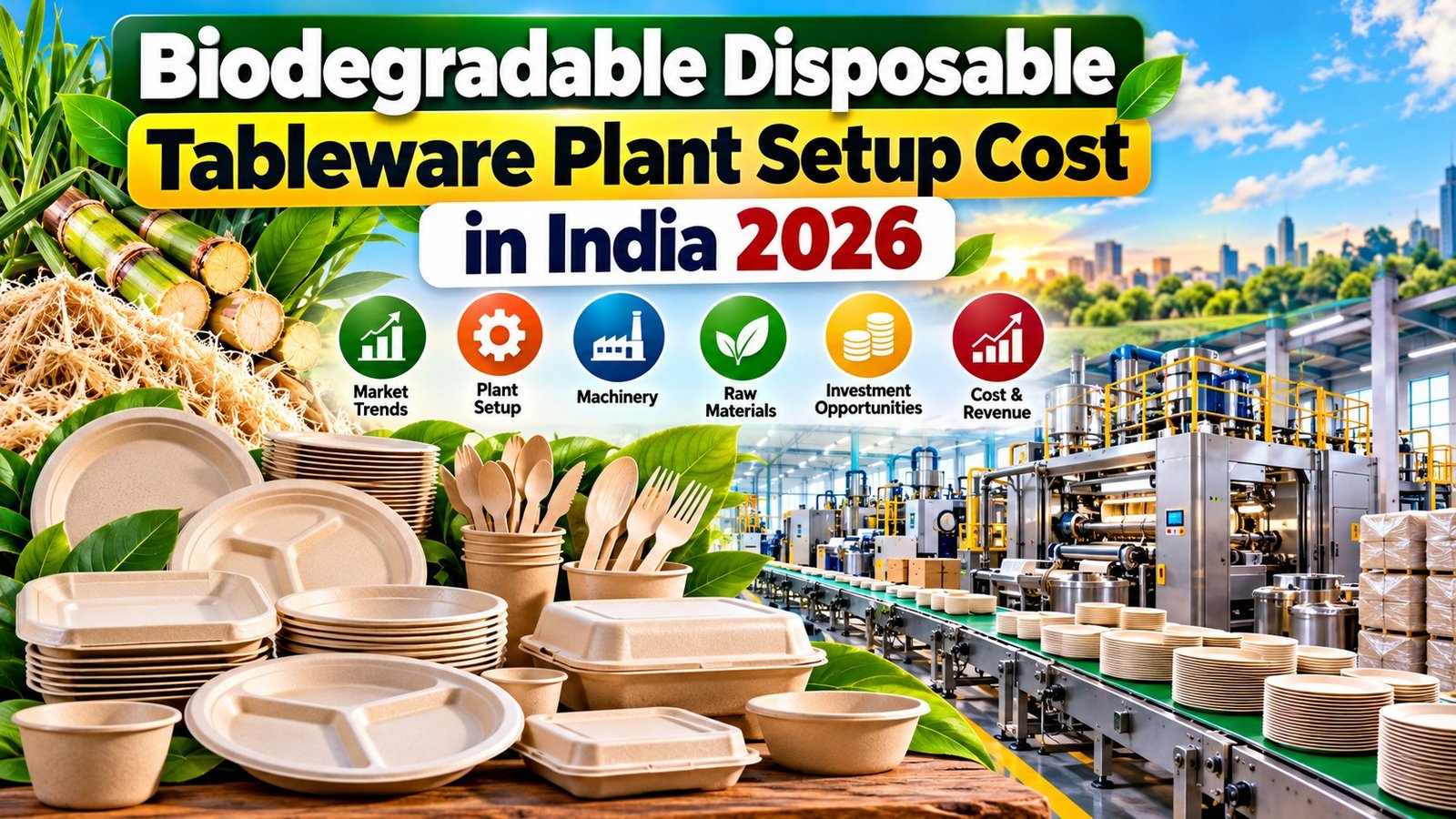
Setting up a biodegradable disposable tableware manufacturing plant in India presents a compelling investment case, given demand from food service, catering, hospitality, retail packaging, events, and festivals. Governmental regulations banning single-use plastics and promoting eco-friendly solutions are driving market growth, with APAC already holding the largest global share at 38.1%.
India’s own research institutions are advancing this category: scientists at CSIR-National Institute for Interdisciplinary Science and Technology (NIIST) at Pappanamcode have developed a technology for manufacturing 100% biodegradable tableware, including dishes and cups, from wheat bran. In countries like India, regulatory measures and sustainability initiatives are directly supporting demand for eco-friendly disposable tableware, positioning the country as a strategically sound location for this production.
Backed by APAC’s 38.1% share of the global market, gross margins of 25–30%, and India’s own regulatory push and domestic research into wheat-bran-based tableware, this investment offers a cost-competitive route into sustainable packaging, with steady demand from food service and retail sectors supporting sound break-even viability.
What is Biodegradable Disposable Tableware?
Biodegradable disposable tableware is an eco-friendly alternative to plastic, designed to decompose naturally into organic materials within months, often within 180 days. Made from renewable resources like sugarcane bagasse, bamboo pulp, palm leaves, or starch, these products are durable, heat-resistant, and non-toxic. They are ideal for serving hot or cold food at events and restaurants, and unlike plastic, which takes centuries to degrade, these items break down under composting conditions, leaving no harmful residues.
The biodegradable disposable tableware manufacturing process uses pulping, thermoforming, and edge trimming. This method serves end-use industries such as food service, catering, hospitality, retail packaging, events, and festivals.
Cost of Setting Up a Biodegradable Disposable Tableware Manufacturing Plant in India
The cost of a biodegradable disposable tableware manufacturing plant depends on capacity, technology, location, automation, and regulatory compliance.
1. Capital Expenditure (CapEx)
Capital investment covers land acquisition, site preparation, and infrastructure, optimized through industrial estates or SEZ-linked plots with developed utilities and faster approvals. Civil works cover the production shed, laboratory, storage areas, and administrative block.
Machinery is the largest portion of capital expenditure for a biodegradable disposable tableware manufacturing plant, since equipment costs scale with automation level and capacity. Key machinery required includes:
- Pulping systems
- Forming machines
- Thermoforming presses
- Drying tunnels
- Trimming and edge-cutting units
- Sterilization chambers
- Packaging lines
Other capital costs include effluent treatment systems, monitoring systems to detect leaks or process deviations, pre-operative and commissioning expenses, and import duties on machinery.
Request a Sample Report for In-Depth Market Insights: https://www.imarcgroup.com/biodegradable-disposable-tableware-manufacturing-plant-project-report/requestsample
2. Operational Expenditure (OpEx)
Raw material cost dominates the operating structure at approximately 60–70% of OpEx, driven primarily by plant fiber (bagasse), along with water and waterproof/oilproof agents. This unusually high share makes long-term supplier contracts essential to stabilize pricing and secure consistent supply.
Utility cost, covering electricity, water, and steam, is comparatively heavy at approximately 15–25% of OpEx. Other costs include transportation, packaging, salaries, depreciation, taxes, and maintenance. By the fifth year, operational cost is expected to rise on inflation, market fluctuations, and supply chain disruptions.
3. Plant Capacity
The proposed facility is designed with an annual production capacity of 5,000 MT, enabling economies of scale while maintaining flexibility. Capacity can be customized to investor requirements, and profitability improves with higher capacity utilisation as fixed costs spread across greater output.
4. Profit Margins and Financial Projections
Financial projections cover net present value (NPV), internal rate of return (IRR), payback period, liquidity, and profitability analysis. Under normal conditions, a biodegradable disposable tableware manufacturing plant typically shows gross margins of 25–30% and net margins of 10–15%, reflecting profitability supported by stable demand and value-added applications.
Why Set Up a Biodegradable Disposable Tableware Plant in India?
Essential Sustainable Packaging Alternative: Made from bagasse, paper pulp, bamboo, or other natural fibers, these products serve as an environmentally responsible substitute for single-use plastics across food service, hospitality, catering, and retail sectors, positioning the category as critical to the shift toward sustainable consumption.
Moderate but Defensible Entry Barriers: Although accessible compared to heavy manufacturing, consistent product quality, food-grade compliance, moulding technology, agricultural-residue supply management, and compostability certifications create meaningful barriers favouring manufacturers with reliable processes and strong quality control.
Megatrend Alignment: Rapid growth in food delivery, takeaway culture, organized catering, quick-service restaurants, and eco-conscious consumer behaviour is driving steady demand, while global sustainability commitments and plastic-waste reduction are accelerating adoption across developed and emerging markets.
Policy and Environmental Regulation Tailwinds: Government bans and restrictions on single-use plastics, along with environmental policies promoting compostable materials, are encouraging businesses to shift toward biodegradable alternatives. In countries like India, regulatory measures and sustainability initiatives are directly supporting demand for eco-friendly disposable tableware.
Supply Chain Localization and Agricultural Synergy: These products often use agricultural by-products such as bagasse, wheat straw, or bamboo, enabling localized raw material sourcing that strengthens supply chain resilience, reduces material costs, and supports rural economies.
India’s Domestic Research and Development: Scientists at CSIR-National Institute for Interdisciplinary Science and Technology (NIIST) at Pappanamcode have developed a technology for manufacturing 100% biodegradable tableware, including dishes and cups, from wheat bran, reflecting a growing domestic innovation base for this category.
Manufacturing Process – Step by Step
The biodegradable disposable tableware manufacturing process uses pulping as the primary production method, followed by a series of unit operations, material handling steps, and quality checks.
- Pulping: Plant fiber (bagasse) is broken down and mixed with water into a workable pulp.
- Forming: Forming machines shape the pulp into the target product form.
- Thermoforming: Thermoforming presses heat-press the formed pulp into its final shape.
- Drying: Drying tunnels remove residual moisture to stabilize the product.
- Edge Trimming: Trimming and edge-cutting units finish the product to its final dimensions.
- Sterilization: Sterilization chambers ensure the product meets food-safety requirements.
- Packaging: Packaging lines prepare finished tableware for dispatch to food-service, retail, and event end-users.
Key Applications
This product serves a broad set of end-use industries centered on food service and hospitality:
- Food Service Industry: Plates, bowls, trays, and cutlery used in restaurants, cafés, and catering services.
- Retail and Takeaway: Disposable containers, cups, and packaging for takeaway meals and ready-to-eat foods.
- Events and Hospitality: Eco-friendly tableware for weddings, festivals, corporate events, and outdoor gatherings.
- Institutional Use: Canteens, schools, hospitals, and offices adopting sustainable disposable dining solutions.
Leading Manufacturers
Leading manufacturers in this global industry include several companies with extensive production capacities and diverse application portfolios. Key players include:
- BioPak
- Vegware
- Huhtamaki
- Eco-Products
- Biotrem
Timeline to Start the Plant
- Feasibility study and project report preparation
- Land acquisition and site development
- Regulatory approvals and environmental clearances
- Factory licence and fire safety compliance
- Machinery procurement and installation
- Raw material supplier agreements and supply chain setup
- Trial production and quality testing
- Commercial production launch
Licences and Regulatory Requirements
Starting a biodegradable disposable tableware manufacturing unit in India requires several approvals:
- Business registration (Proprietorship, LLP, or Pvt Ltd)
- Factory Licence under the Factories Act
- Environmental Clearance from State Pollution Control Board
- GST Registration
- Fire Safety NOC
- Food-grade and compostability compliance covering material safety and certification
- Effluent Treatment Plant (ETP) operational clearance
- Occupational Health and Safety compliance
Key Challenges to Consider
High Capital Requirements: Machinery is the largest share of capital expenditure, with forming and thermoforming lines demanding significant investment.
Raw Material Price Volatility: Plant fiber (bagasse) at 60–70% of OpEx, along with water and waterproof/oilproof agents, leaves margins exposed to agricultural-residue supply and pricing.
Regulatory Compliance: Food-grade compliance, compostability certification, SOPs, documentation protocols, and regular audits govern each stage of production.
Competition from Established Players: BioPak, Vegware, Huhtamaki, Eco-Products, and Biotrem hold extensive production capacities and diverse application portfolios.
Product Innovation Pressure: Developments such as heavier, more durable paper-based tableware lines require continual investment in material strength and sustainability performance.
Skilled Manpower: Pulping, forming, and quality-control operations require trained personnel to maintain consistent standards.
Frequently Asked Questions
1. How much does it cost to set up a biodegradable disposable tableware manufacturing plant in India?
Cost depends on capacity, automation level, land and site development, and civil works; a detailed CapEx and OpEx breakdown is covered in the full feasibility report.
2. Is biodegradable disposable tableware manufacturing profitable in India in 2026?
The facility demonstrates healthy profitability potential, with gross margins of 25–30% and net margins of 10–15% under normal operating conditions.
3. What machinery is required for a biodegradable disposable tableware plant in India?
Key machinery includes pulping systems, forming machines, thermoforming presses, drying tunnels, trimming and edge-cutting units, sterilization chambers, and packaging lines.
4. What licences and approvals are required to start a biodegradable disposable tableware plant in India?
Requirements include business registration, a Factory Licence, Environmental Clearance, GST Registration, Fire Safety NOC, food-grade and compostability compliance, ETP clearance, and occupational health and safety compliance.
5. What raw materials are needed for biodegradable disposable tableware manufacturing?
Plant fiber (bagasse), water, and waterproof/oilproof agents are the primary raw materials.
6. What are the environmental compliance requirements for a biodegradable disposable tableware plant in India?
Plants require Environmental Clearance from the State Pollution Control Board, an operational Effluent Treatment Plant, and adherence to emission and safety monitoring standards.
7. What is the best location to set up a biodegradable disposable tableware plant in India?
Sites should offer access to raw materials, proximity to target markets, robust transportation and utility infrastructure, and compliance with zoning and environmental regulations.
8. What is the break-even period for this type of plant in India?
Break-even timing depends on capacity utilisation, pricing, and cost structure, assessed through payback period and net present value analysis.
9. What government incentives are available for manufacturers in India?
Incentives vary by state and are typically tied to industrial estate or SEZ location, land and infrastructure support, and regulatory compliance; India’s single-use plastic restrictions further support demand for domestically manufactured alternatives.
Key Takeaways for Investors
A biodegradable disposable tableware manufacturing plant offers a compelling opportunity supported by demand from food service, catering, hospitality, retail packaging, events, and festivals. Financial projections indicate sound viability at a capacity of 5,000 MT annually, with gross margins of 25–30% and net margins of 10–15%. APAC’s 38.1% share of the global market, alongside India’s own regulatory tailwinds and CSIR-NIIST’s domestic research into wheat-bran-based tableware, points to sustained demand for sustainable, compostable dining solutions.
About the Author