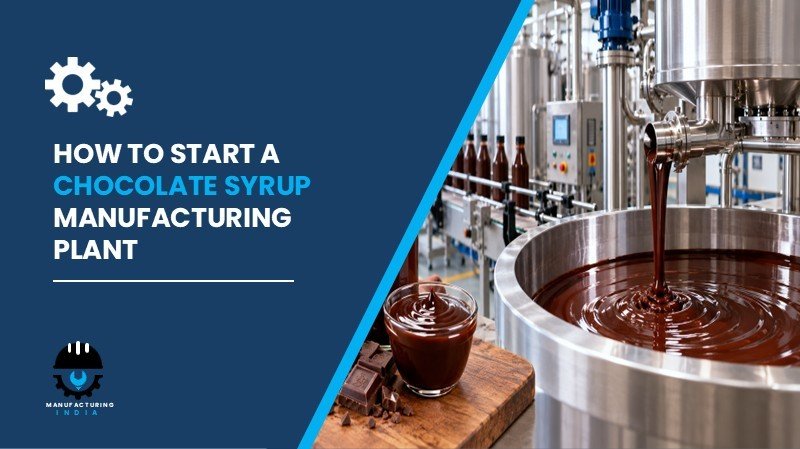
A chocolate syrup manufacturing plant setup in India presents a compelling investment case for entrepreneurs targeting the food and beverage, confectionery, and retail and foodservice sectors. It is used as a dessert topping, a flavouring in milkshakes and hot chocolate, a confectionery filling, and a household staple. These varied uses make it a critical ingredient wherever indulgent, ready-to-use products are in demand. The global market was valued at USD 10.60 Billion in 2025, which shows the scale of demand behind the category.
India offers relevant advantages for this production, including growing urbanisation, expanding infrastructure, the Make in India initiative, and established manufacturing states such as Gujarat and Maharashtra. Rising dessert and beverage consumption and a growing preference for convenient, pre-made products strengthen the case for producing close to domestic customers. For investors seeking a stable, scalable food manufacturing opportunity, India is a strategically sound location.
Policy support, cost-competitive production, and steady demand from food and beverage, confectionery, and retail and foodservice make this a strong investment case. Gross margins of 35-45% and net margins of 18-25% support a viable break-even outlook, particularly at higher capacities.
What is Chocolate Syrup?
Chocolate syrup is a sweet and viscous liquid prepared mainly from cocoa powder, sugar, and water, with stabilizers and flavorings included in some formulations. Preparation generally involves dissolving cocoa powder in a sugar and water solution, adding flavoring agents and preservatives, and then homogenizing the mixture to achieve a smooth texture.
The product is available in regular, sugar-free, and organic varieties. The chocolate syrup manufacturing process follows a sequence of raw material sourcing, mixing, homogenization, flavor and preservative addition, cooling, and packaging. The finished product serves the food and beverage, confectionery, and retail and foodservice industries.
Cost of Setting Up a Chocolate Syrup Manufacturing Plant in India
The cost of a chocolate syrup manufacturing plant depends on capacity, technology, location, automation, and regulatory compliance.
1. Capital Expenditure (CapEx)
Land and site development for a chocolate syrup manufacturing plant covers land registration, boundary development, and related charges, and forms a substantial part of the overall investment. An industrial estate or SEZ location is worth evaluating for access to raw materials, utilities, and target markets. Civil works include separate areas for raw material storage, production, quality control, and finished goods storage, with space reserved for future expansion.
Machinery accounts for the largest portion of CapEx, and the level of automation shapes the total. Key machinery required includes:
- Mixing machines
- Homogenizers
- Filling systems
- Pasteurization systems
- Packaging machines
Other capital costs include effluent treatment systems, pre-operative expenses, commissioning, and import duties where equipment is sourced abroad. The report presents CapEx line items for land, civil works, machinery, and other capital costs.
Request a Sample Report for In-Depth Market Insights: https://www.imarcgroup.com/chocolate-syrup-manufacturing-plant-project-report/requestsample
2. Operational Expenditure (OpEx)
Raw material cost is the largest OpEx component at 60-70%, driven mainly by cocoa powder. The other inputs are sugar, water, corn syrup, and flavors. Long-term contracts with reliable, nearby suppliers help stabilize pricing and secure steady supply.
The operating cost structure of a chocolate syrup manufacturing plant is led by raw materials, followed by utility costs for electricity, water, and steam account for 10-15% of OpEx. Other operating costs include transportation, packaging, salaries and wages, repairs and maintenance, depreciation, and taxes. By the fifth year, total operating cost is expected to rise substantially because of inflation, market fluctuations, higher key material costs, supply chain disruptions, and rising consumer demand.
3. Plant Capacity
The proposed chocolate syrup manufacturing plant is designed for an annual capacity of 5,000-15,000 tons, which enables economies of scale while maintaining operational flexibility. Capacity can be customized to investor requirements. Profitability improves with higher capacity utilisation.
4. Profit Margins and Financial Projections
Under normal operating conditions, gross profit margins range between 35-45% and net profit margins between 18-25%. Financial projections rest on assumptions about capital investment, operating costs, capacity utilisation, pricing trends, and demand outlook. The analysis covers ROI, NPV, IRR, payback period, and sensitivity analysis, helping investors judge long-term viability.
Why Set Up a Chocolate Syrup Plant in India?
Increasing Demand for Sweet Toppings and Flavors: It is used as a topping and flavor enhancer across many food products, so demand stays stable in retail and food industries. Growing consumption of desserts and beverages such as milkshakes, iced coffee, and flavored milk adds to this. Data from the Global Dietary Database shows children and teens in 56 countries, representing 238 million young people, averaged 7 or more servings of sweet products per week.
Convenience and Product Customization: Ready-to-use, pre-made products are gaining popularity as consumers look for convenience. Producers can also customize offerings, such as sugar-free syrup and organic variants, and rising demand for these products supports the market.
Policy and Regulatory Tailwinds: The Make in India initiative encourages domestic manufacturing. The report also covers regulatory procedures, financial assistance, and certifications, giving investors a clearer route through compliance.
Cost-Competitive Manufacturing: A site close to cocoa powder, sugar, corn syrup, and flavor suppliers, with robust infrastructure and labour availability, keeps input and distribution costs down. Proximity to target markets minimizes distribution expenses.
Active Industry Investment: In January 2026, Surge Brands was appointed global licensing agent for Bosco to expand the brand into desserts, baking mixes, frostings, frozen treats, and ready-to-drink beverages. In July 2025, Skinny Food Co. launched a Dubai Chocolate Coffee Syrup under its Skinny Barista range.
Local Supply Chain Preference: Retail and foodservice buyers, including restaurants, cafes, and bars, value reliable supply. A domestic unit near these customers shortens the distribution chain.
Manufacturing Process: Step by Step
The chocolate syrup manufacturing process uses a multi-step mixing and homogenization process as the primary production method:
- Raw Material Sourcing: Cocoa powder, sugar, water, corn syrup, and flavors are procured from reliable suppliers.
- Mixing: Cocoa powder is dissolved in a solution of sugar and water using mixing machines.
- Homogenization: The mixture is homogenized to give the desired smooth texture.
- Flavor and Preservative Addition: Flavoring agents and preservatives are added to the solution.
- Cooling: The syrup is cooled before filling.
- Filling and Packaging: Filling systems and packaging machines pack the product under quality assurance checks.
- Dispatch: Packed goods move to food and beverage, confectionery, and retail and foodservice customers.
Key Applications
This product serves three major industries:
- Food & Beverage: Topping for ice cream, cakes, pancakes, and waffles, and flavoring in milkshakes and hot chocolate.
- Confectionery: Ingredient and filling in chocolates and confectionery items, and topping for cupcakes and pastries.
- Retail & Foodservice: Home consumption in retail, and dessert and drink topping in restaurants, cafes, and bars.
Leading Manufacturers
Several multinational companies with extensive production capacities lead the global industry:
- The Hershey’s Company
- Nestlé
- The Kroger Co.
- The J.M. Smucker Company
- Torani
- Bosco
Timeline to Start the Plant
- Feasibility study and project report preparation
- Land acquisition and site development
- Regulatory approvals and environmental clearances
- Factory licence and fire safety compliance
- Machinery procurement and installation
- Raw material supplier agreements and supply chain setup
- Trial production and quality testing
- Commercial production launch
Licences and Regulatory Requirements
Starting a chocolate syrup manufacturing unit in India requires several approvals:
- Business registration (Proprietorship, LLP, or Pvt Ltd)
- Factory Licence under the Factories Act
- Environmental Clearance from State Pollution Control Board
- GST Registration
- Fire Safety NOC
- Effluent Treatment Plant (ETP) operational clearance
- Occupational Health and Safety compliance
Key Challenges to Consider
- High Capital Requirements: Machinery is the largest CapEx item, and land, civil works, and infrastructure add to the upfront outlay.
- Raw Material Price Volatility: Cocoa powder, sugar, and corn syrup make up 60-70% of OpEx, so price swings affect margins directly.
- Regulatory Compliance: Zoning laws, environmental regulations, emission standards, and effluent treatment must all be met.
- Technology or Innovation Pressure: Demand for sugar-free, organic, and customized products requires flexible production.
- Competition: Established players such as The Hershey’s Company, Nestlé, The J.M. Smucker Company, Torani, and Bosco hold wide application portfolios.
- Skilled Manpower: Quality assurance, testing, and traceability need trained staff, and training helps control operating costs.
Frequently Asked Questions
How much does it cost to set up a chocolate syrup manufacturing plant in India?
Cost depends on capacity, technology, location, and automation. Machinery is the largest CapEx item, and detailed figures are available in the sample report.
Is chocolate syrup manufacturing profitable in India in 2026?
The report indicates gross margins of 35-45% and net margins of 18-25% under normal operating conditions.
What machinery is required for a chocolate syrup plant in India?
Mixing machines, homogenizers, filling systems, pasteurization systems, and packaging machines, all corrosion-resistant and compliant with safety standards.
What licences and approvals are required to start a chocolate syrup plant in India?
Business registration, Factory Licence, Environmental Clearance, GST Registration, Fire Safety NOC, ETP clearance, and Occupational Health and Safety compliance.
What raw materials are needed for chocolate syrup manufacturing?
Cocoa powder, sugar, water, corn syrup, and flavors, with stabilizers and preservatives in some formulations.
What are the environmental compliance requirements for a chocolate syrup plant in India?
Effluent treatment systems, adherence to emission standards, local zoning and environmental regulations, and safety monitoring for leaks or deviations.
What is the best location to set up a chocolate syrup plant in India?
Choose a site with easy access to raw materials, proximity to target markets, reliable utilities, and waste management. States such as Gujarat and Maharashtra can be assessed against these criteria.
What is the break-even period for this type of plant in India?
It depends on capacity utilisation, pricing, and costs. The report covers break-even points, payback period, NPV, and IRR.
What government incentives are available for manufacturers in India?
The Make in India initiative supports domestic manufacturing, and the report covers financial assistance and regulatory requirements.
Key Takeaways for Investors
A chocolate syrup manufacturing plant offers a solid opportunity backed by food and beverage, confectionery, and retail and foodservice demand. Financial viability holds across capacities of 5,000-15,000 tons, with gross margins of 35-45% and net margins of 18-25%. The global market is projected to grow from USD 10.60 Billion in 2025 to USD 14.83 Billion by 2034, at a CAGR of 3.8% from 2026 to 2034. With demand for desserts, beverages, and convenient products continuing to rise, this segment is well placed for sustained growth.
About the Author