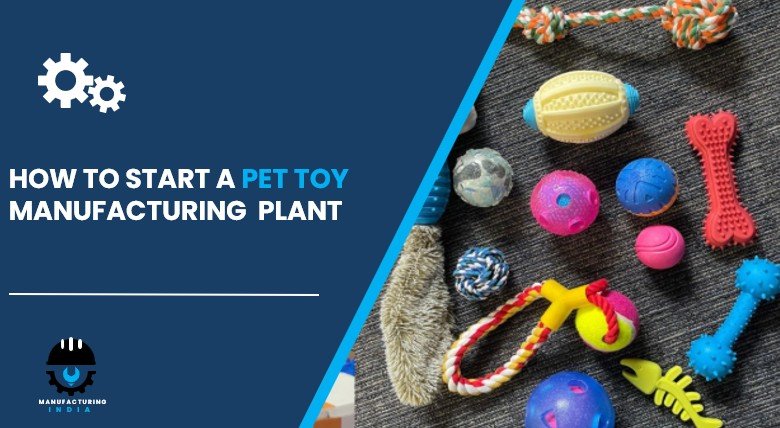
Setting up a pet toy manufacturing plant in India represents a highly attractive investment proposition underpinned by robust and structurally growing demand from pet owners, the expanding pet care retail ecosystem, the veterinary and animal shelter sector, and the rapidly scaling e-commerce pet products channel. As pet ownership rates rise, pets are increasingly humanised within households, and consumer spending on companion animal wellness accelerates, pet toys spanning chew toys, interactive puzzle toys, plush toys, squeaky toys, rope toys, and treat-dispensing toys occupy an increasingly important position across pet specialty retail, veterinary clinics, and online marketplaces. This growth trajectory, combined with steady raw material availability, low barriers to product innovation, and strong repeat-purchase dynamics driven by wear and tear, creates a highly favourable manufacturing environment for new entrants with efficient production, quality, and safety systems.
What is a Pet Toy?
A pet toy is a specially designed product intended to provide entertainment, mental stimulation, physical exercise, and behavioural enrichment for companion animals such as dogs, cats, and small pets. Pet toys are manufactured using a combination of durable, pet-safe materials, including natural rubber, thermoplastic elastomers, nylon, cotton fabric, polyester fibres, and non-toxic plastics. The category spans chew toys, fetch toys, interactive puzzle toys, plush toys, squeaky toys, rope toys, and treat-dispensing toys, each engineered to withstand repeated biting, scratching, and rough play while minimising ingestion and choking hazards.
Beyond simple entertainment, pet toys increasingly support dental health, stress reduction, weight management, and improved activity levels in companion animals. With growing focus on pet wellness and behavioural enrichment, manufacturers are developing advanced products featuring smart and interactive elements, sustainability-focused materials, and designs customised for pet size, breed, and activity level.
The global pet toy market was valued at approximately USD 3.11 Billion in 2025 and is expected to reach USD 5.30 Billion by 2034, exhibiting a CAGR of 6.1% from 2026 to 2034, supported by rising pet ownership, growing humanisation of pets, and expanding demand for safe, durable, enrichment-based play products.
Cost of Setting Up a Pet Toy Manufacturing Plant
The total capital investment required to establish a pet toy manufacturing plant is shaped by several key parameters: annual production capacity (typically ranging from 5 to 20 million units per annum), the product mix adopted (rubber and thermoplastic chew toys, plush and fabric toys, rope toys, or interactive/smart toys), the level of automation across molding, cutting, stitching, and assembly operations, facility specification, raw material sourcing strategy, and applicable product safety and regulatory compliance requirements. Below is a structured breakdown of the major cost components.
1. Capital Expenditure (CapEx)
Total capital investment in a pet toy manufacturing plant covers the following major heads:
Land and Site Development
This encompasses land acquisition or lease, site preparation, boundary development, and utilities connectivity. Site selection should prioritise proximity to key raw material sources such as natural rubber, cotton, and plastic resin suppliers, as well as proximity to target markets to minimise distribution costs. Access to reliable power and utility infrastructure, strong road logistics for inbound raw materials and outbound finished goods, availability of a trained workforce, and robust waste management systems are critical site selection criteria. Compliance with local zoning regulations, product safety manufacturing standards, and environmental regulations must be assessed from project initiation.
Civil Works and Construction
Building costs cover the main production facility including the raw material and compounding area, injection and rubber molding section, fabric cutting and stitching floor, assembly and bonding area, filling and finishing section for soft toys, quality control laboratory, automated packaging and dispatch infrastructure, administrative block, and utility infrastructure including power backup, compressed air systems, and effluent and waste management facilities. Construction must comply with applicable factory act requirements, product safety manufacturing standards, and fire safety norms.
Machinery and Equipment
Machinery represents the single largest CapEx component. Key equipment required for a pet toy manufacturing plant includes:
- Raw Material Handling and Compounding Systems: Mixing and compounding units for rubber and thermoplastic formulations, along with material handling and storage systems for natural rubber, cotton, and plastic resins
- Injection Molding Machines: Precision molding equipment for producing plastic and thermoplastic elastomer toy components in a range of shapes and sizes
- Rubber Molding Units: Compression and injection molding systems for natural rubber chew toys and durable play products
- Fabric Cutting Machines: Automated or semi-automated cutting systems for producing plush and fabric toy components from cotton and polyester materials
- Stitching and Sewing Machines: Industrial sewing equipment for assembling and seaming plush and fabric-based toys
- Filling and Stuffing Systems: Equipment for filling plush toys with polyester fibre or other stuffing materials to required density specifications
- Assembly and Bonding Equipment: Ultrasonic welding, adhesive bonding, and mechanical assembly systems for joining components such as squeakers, bells, and multi-material parts
- Drying Units: Drying and curing systems for rubber and coated components prior to finishing and packaging
- Quality Testing Instruments: Equipment for tensile strength, bite-force durability, small-parts and choking-hazard testing, colourfastness, and chemical safety compliance testing
- Automated Packaging Lines: Bagging, labelling, and cartoning equipment for retail packaging and bulk dispatch
- Material Handling and Warehousing: Conveyors, storage racking, and finished goods warehousing with FIFO stock management
Other Capital Costs
These include pre-operative expenses, commissioning charges, import duties on specialised molding and testing equipment, staff training and competency development, initial raw material and consumable inventory for production commissioning, regulatory compliance setup including product safety certifications, and quality management system establishment costs such as ISO 9001 and applicable toy safety standards.
Request a Sample Report for In-Depth Market Insights: https://www.imarcgroup.com/pet-toy-manufacturing-plant-project-report/requestsample
2. Operational Expenditure (OpEx)
Raw materials principally natural rubber, along with cotton, polyester fibre, thermoplastic elastomers, and non-toxic plastics constitute the dominant operating cost, typically representing 55–65% of total OpEx. Utility costs, driven primarily by electricity consumption for molding, compounding, and drying equipment, account for 10–15% of OpEx. Labour, maintenance, quality control, packaging, transportation, depreciation, taxes, and overhead costs constitute the remainder of the operating cost base.
3. Plant Capacity
The proposed pet toy manufacturing facility is designed with an annual production capacity ranging between 5–20 million units, enabling economies of scale while maintaining operational flexibility. This capacity range supports a diversified product portfolio spanning chew toys, interactive puzzle toys, plush toys, squeaky toys, rope toys, and treat-dispensing toys, serving pet specialty retail, veterinary channels, e-commerce platforms, and export markets.
4. Profit Margins and Financial Projections
The project demonstrates healthy profitability potential under normal operating conditions. Financial projections encompass capital investment, operating costs, capacity utilisation ramp-up schedule, product mix across toy categories, and forward demand outlook underpinned by rising pet humanisation and wellness spending. A comprehensive feasibility analysis includes sensitivity analysis, Net Present Value (NPV), Internal Rate of Return (IRR), and Payback Period calculations. Gross profit margins for pet toy manufacturing typically range from 35–45%, supported by stable demand and value-added product applications. Net profit margins of 18–25% are achievable with disciplined cost management, optimal capacity utilisation, and effective product mix management.
Why Set Up a Pet Toy Manufacturing Plant?
Growing Pet Humanisation Trend
Rising emotional bonding between pets and owners, particularly among Millennial and Gen Z pet parents, is increasing demand for premium, safe, and engaging pet toys. As pets are increasingly treated as family members rather than utility animals, spending on toy categories that support cognitive development, physical fitness, and emotional wellbeing is transitioning from discretionary to essential, supporting steady volume growth across retail and veterinary channels.
Rising Pet Health Awareness
Increasing consumer focus on dental care, mental stimulation, and physical activity for companion animals is driving sustained demand for enrichment-based toys. As health-conscious pet owners increasingly seek out toys perceived to deliver functional wellness benefits, the category is transitioning from basic entertainment products toward structured behavioural and health-support tools.
Expanding Pet Care Retail Ecosystem
Growth of organised pet specialty stores, veterinary retail channels, and rapid expansion of e-commerce pet product platforms is driving consistent demand for diverse toy portfolios. Online retail in particular enables easy access to innovative, customised, and subscription-based pet toy products, broadening market reach for manufacturers beyond traditional brick-and-mortar distribution.
Strong Repeat-Purchase Market Dynamics
Pet toys experience frequent replacement demand due to wear and tear from chewing, scratching, and rough play, ensuring stable and recurring revenue streams for manufacturers. This repeat-purchase characteristic, combined with low switching costs for consumers, supports predictable demand planning and reduces the cyclicality risk associated with single-purchase durable goods categories.
Product Innovation Opportunities
Manufacturers can differentiate through smart and interactive toys, eco-friendly and sustainable materials, and designs tailored to specific pet behaviours, breeds, and sizes. Emerging categories such as AI-enabled and motion-tracking pet companion devices signal a broader shift toward emotionally responsive, technology-integrated play products, creating premium-tier growth opportunities alongside the traditional toy segment.
Rising Pet Adoption and Shelter Activity
Sustained global pet adoption activity, supported by rising disposable incomes and expanding shelter and rehabilitation programmes, continues to expand the addressable base of pet-owning households. Dynamic shelter movements including adoptions, transfers, and rehabilitation placements drive incremental demand for pet toys as new and returning pet owners equip their households with enrichment and training products.
Manufacturing Process Overview
The pet toy manufacturing operation transforms raw materials such as natural rubber, cotton, polyester fibre, and plastic resins into finished, pet-safe play products through a sequence of compounding, molding or fabric processing, assembly, and packaging operations. The key process stages are:
- Raw Material Selection and Compounding: Natural rubber, thermoplastic elastomers, cotton fabric, polyester fibres, and non-toxic plastics are inspected, selected, and, where required, compounded into formulations suited to specific toy categories.
- Molding or Fabric Processing: Rubber and plastic components are produced through injection or compression molding, while fabric-based toys proceed to cutting and pattern preparation from cotton or polyester textiles.
- Cutting and Shaping: Fabric panels are cut to pattern, and molded components are trimmed and shaped to final dimensions, removing flash and excess material from the molding process.
- Assembly and Bonding: Multi-material components, including squeakers, bells, and reinforcement elements, are joined through ultrasonic welding, adhesive bonding, or mechanical assembly to form complete toy structures.
- Filling and Stitching (for Soft Toys): Plush and fabric toys are filled with polyester fibre stuffing to the required density and stitched or sewn closed using reinforced seams designed to withstand repeated pulling and chewing.
- Drying and Curing: Rubber and coated components undergo drying or curing to achieve final material properties and surface finish prior to inspection.
- Finishing and Quality Inspection: Finished toys are inspected for dimensional accuracy, seam and bond strength, and surface finish, with defective units removed prior to testing.
- Quality Control and Safety Testing: Products undergo tensile strength, bite-force durability, small-parts and choking-hazard, colourfastness, and chemical safety testing to verify compliance with applicable pet product safety standards before release for packaging.
- Packaging and Labelling: Finished pet toys are packed in retail-ready bags, boxes, or blister packs with compliant labelling, or consolidated into bulk cartons for dispatch to distributors, pet specialty retailers, and e-commerce fulfilment centres.
Key Applications of Pet Toys
The pet toy market serves several major end-use segments across pet care, veterinary, and retail sectors:
- Pet Care Industry: Pet toys are used to improve physical activity levels and reduce behavioural issues in companion animals through structured play and engagement.
- Veterinary Retail Sector: Toys are recommended for stress reduction, recovery support, and behavioural correction in clinical and therapeutic environments.
- Pet Specialty Stores: A wide variety of durable and interactive toys are distributed to meet breed-specific and size-specific pet requirements.
- E-commerce Pet Product Platforms: Online retail channels enable easy access to innovative, customised, and subscription-based pet toy products for consumers.
- Animal Shelters and Training Centers: Durable and affordable toys support enrichment, socialisation, and training programmes for sheltered and rehabilitated animals.
Global Pet Toy Market Outlook
The global pet toy market was valued at approximately USD 3.11 Billion in 2025. According to IMARC Group estimates, the market is expected to reach USD 5.30 Billion by 2034, exhibiting a CAGR of 6.1% from 2026 to 2034. The pet toy market benefits from multiple structural demand drivers:
- Rising pet ownership rates and growing humanisation of pets as family members across urban and suburban households globally
- Increasing consumer expenditure on companion animal wellness, supporting demand for enrichment-based, dental-care, and behavioural-support toys
- Expansion of organised pet specialty retail and rapid growth of e-commerce platforms, improving accessibility to a wide variety of pet toys
- Sustained pet adoption and shelter rehabilitation activity, expanding the addressable base of pet-owning households
- Growing demand for safe, durable, and non-toxic materials, driving investment in product safety testing and certification
- Emerging product innovation in smart and interactive toys, including AI-enabled and motion-tracking pet companion devices
- Strong repeat-purchase dynamics driven by wear and tear, supporting stable and recurring revenue for manufacturers
- Continued brand investment in ergonomic, durable toy collections designed to strengthen the bond between pets and owners
Leading manufacturers in the global pet toy industry include Fluff and Tuff, Inc., Petsport USA, Inc., Cosmic Pet, ZippyPaws, Ethical Products, Inc., and Benebone LLC, serving end-use sectors including the pet care industry, veterinary retail sector, pet specialty stores, e-commerce pet product platforms, and animal shelters and training centers.
Latest Industry Developments
- January 2026: Ecovacs unveiled an AI-powered pet companion device at CES 2026, positioning it as a next-generation smart-home product that engages with pets and supports owners through voice and motion tracking, reflecting growing manufacturer interest in emotionally responsive, technology-integrated pet toys.
- 2026: Established pet food and pet care manufacturers continued to announce multi-hundred-million-dollar facility expansions across North America and Latin America, reflecting sustained investor confidence in the broader companion-animal products value chain that pet toy manufacturing forms part of.
Licenses and Regulatory Requirements
Establishing a pet toy manufacturing unit requires a range of approvals and certifications, which may vary by country and jurisdiction, including:
- Business registration and company incorporation under applicable company law
- Factory License under applicable state Factories Act provisions for manufacturing operations
- Product safety certification for pet toys, verifying compliance with applicable toy and pet-product safety standards, including small-parts, choking-hazard, and chemical safety requirements
- Bureau of Indian Standards (BIS) or equivalent quality certification, where applicable, for finished toy products
- Compliance with hazardous substances and restricted-chemicals regulations governing dyes, plasticisers, and coatings used in toy manufacturing
- Pollution Control Board Clearances Consent to Establish (CTE) and Consent to Operate (CTO) for manufacturing operations
- ISO 9001:2015 Quality Management System Certification for quality management infrastructure compliance
- Weights and Measures (Legal Metrology) registration for packaged product labelling and net quantity declaration
- Export-Import Code (IEC) for international market access
- Trademark and Brand Registration for proprietary branded product launch
- Occupational Health and Safety management compliance (ISO 45001 / Factories Act provisions) for manufacturing worker safety
Key Challenges to Consider
Raw Material Price Volatility
Natural rubber, which accounts for 55–65% of total operating costs, along with cotton and plastic resins, is subject to global commodity price cycles and supply fluctuations. Inconsistent raw material pricing or availability can materially affect production costs and margins, making long-term supplier contracts and diversified sourcing critical operational priorities.
Product Safety and Compliance Maintenance
Maintaining product safety certifications and quality management system certifications requires ongoing investment in testing infrastructure, process monitoring, and surveillance audit preparedness. Producing toys that consistently meet small-parts, choking-hazard, and chemical safety specifications across all production batches requires disciplined process control, as any compliance lapse can trigger recalls and damage brand reputation.
Intense Competitive Landscape
The pet toy industry features established global brands alongside a growing number of direct-to-consumer and private-label entrants, particularly through e-commerce channels. New manufacturers must differentiate through product durability, safety credentials, and innovative design to secure retail and online distribution in a crowded competitive environment.
Durability and Warranty Expectations
Consumers increasingly expect pet toys to withstand aggressive chewing and rough play, and product failures can result in returns, negative reviews, and reputational damage. Manufacturers must invest in rigorous durability and bite-force testing throughout product development to meet rising consumer expectations for toy longevity.
Channel Fragmentation and Distribution Complexity
Serving pet specialty stores, veterinary retail, e-commerce platforms, and animal shelters simultaneously requires manufacturers to manage diverse packaging, labelling, and fulfilment requirements across channels. Building efficient, multi-channel distribution capabilities is an important operational consideration for new entrants seeking broad market coverage.
Frequently Asked Questions (FAQs)
1. How much does it cost to set up a pet toy manufacturing plant?
The total investment depends on plant capacity (5–20 million units per annum), the product mix adopted (rubber and thermoplastic toys, plush and fabric toys, or interactive/smart toys), automation level, facility specification, location, and target market certifications. Costs cover land, civil construction (compounding area, molding section, fabric cutting and stitching floor, assembly area, quality laboratory, utilities), machinery (molding machines, cutting and stitching equipment, filling systems, testing instruments, packaging lines), quality certifications, working capital, and regulatory compliance. A comprehensive feasibility study from IMARC Group provides detailed, capacity-specific cost estimates covering all CapEx and OpEx components.
2. Is pet toy manufacturing a profitable business in 2026?
Yes. Sustained demand from pet-humanisation trends, the expanding pet specialty and e-commerce retail sectors, and strong repeat-purchase dynamics combined with gross margins of 35–45% and net profit margins of 18–25% make pet toy manufacturing financially attractive. Continued product innovation in interactive and smart toys offers meaningful margin enhancement opportunities above basic toy sales alone.
3. What machinery and equipment are required for a pet toy manufacturing plant?
Key equipment includes raw material compounding systems, injection molding machines, rubber molding units, fabric cutting machines, industrial stitching machines, filling and stuffing systems, assembly and bonding equipment, drying units, quality testing instruments for durability and safety compliance, and automated packaging lines for retail and bulk dispatch.
4. What licenses and approvals are required?
Required approvals include company registration, Factory License, product safety certification for pet toys, compliance with hazardous-substances and restricted-chemicals regulations, Pollution Control Board clearances, and ISO 9001 quality management system certification. Product safety certification is a mandatory prerequisite for manufacturing and selling pet toys in most jurisdictions.
5. How long does it take to commission a pet toy manufacturing plant?
Typically, 9–18 months from project initiation to commercial production launch, depending on project scale, facility construction timeline, equipment procurement lead times for molding and testing systems, and regulatory approval and product safety certification timelines, which should be initiated early in the project to avoid delays to commercial launch.
6. What are the key raw materials for pet toy manufacturing?
The primary raw materials are natural rubber, thermoplastic elastomers, cotton fabric, polyester fibres, and non-toxic plastics. Other key inputs include dyes and coatings compliant with pet-product safety standards, squeakers and bells for interactive toys, and packaging materials including retail bags, boxes, and blister packs for finished goods.
7. What is the break-even period for a pet toy manufacturing plant?
The break-even period generally depends on capacity utilisation ramp-up trajectory, the product mix between basic and value-added toy categories, raw material supply consistency, and distribution channel development. Securing long-term raw material supply agreements and stable retail and e-commerce offtake arrangements significantly improves revenue predictability and supports faster break-even achievement.
8. What are the main categories of pet toys and their applications?
The principal categories are chew toys, fetch toys, interactive puzzle toys, plush toys, squeaky toys, rope toys, and treat-dispensing toys. These serve applications including chewing, fetching, training, behavioural enrichment, dental care support, and interactive play for dogs, cats, and small companion animals across household, veterinary, and shelter settings.
9. What government incentives are available for pet toy manufacturers?
Processors may benefit from manufacturing sector incentive schemes, state-level industrial investment incentives and capital subsidies for consumer goods manufacturing units, infrastructure support under industrial park schemes, and export promotion benefits for pet product exports.
10. How does pet toy manufacturing compare to other consumer goods manufacturing in terms of setup?
Compared to other plastics and textile-based consumer goods manufacturing, pet toy manufacturing benefits from relatively lower technology complexity and moderate capital intensity, but requires stringent product safety and durability testing infrastructure specific to pet-product regulations. The molding and stitching technology employed is broadly similar to other consumer plastics and soft-goods manufacturing, allowing processors with relevant experience to adapt existing technical capabilities to pet toys with targeted investment in safety testing and quality assurance infrastructure.
Key Takeaways for Investors
The pet toy manufacturing industry represents a structurally resilient and financially attractive investment opportunity positioned at the intersection of rising global pet ownership, growing pet humanisation, and the expanding companion-animal wellness economy. Stable demand from pet specialty retail, veterinary channels, e-commerce platforms, and animal shelters provides resilience against single-segment demand volatility, while strong repeat-purchase dynamics driven by wear and tear ensure recurring revenue streams beyond a single sale. Rising consumer willingness to invest in premium, safe, and enrichment-focused toys supports healthy gross margins of 35–45% and net margins of 18–25%, while emerging product categories such as smart and interactive toys offer meaningful upside beyond traditional chew and plush products. The relatively moderate capital intensity and scalable nature of the production process allow investors to phase capacity expansion according to risk appetite and target market positioning, while continued brand investment and innovation across the industry reflect strong confidence in the long-term growth and profitability of the category.
About the Author