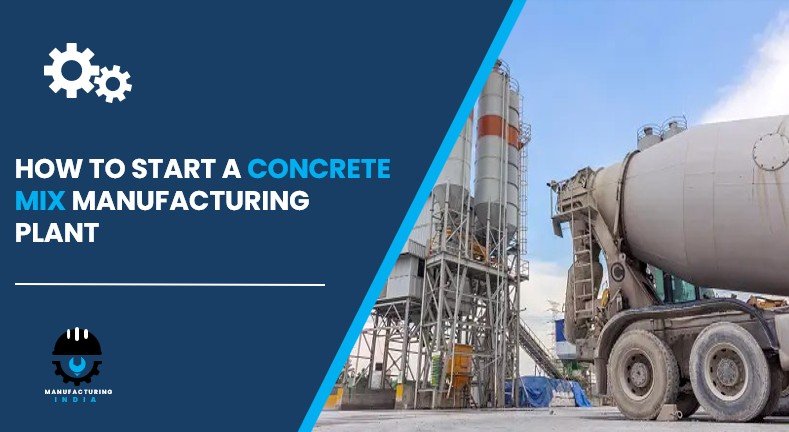
Setting up a concrete mix manufacturing plant in India represents a highly attractive investment proposition underpinned by robust and structurally growing demand from the residential, commercial, and infrastructure construction sectors, the ready-mix concrete industry, and large-scale government infrastructure programmes. As urbanisation accelerates, housing demand rises, and public investment in roads, bridges, metros, and airports expands, concrete mix available in nominal, standard, and design mix forms occupies an increasingly important position across residential, commercial, and industrial construction applications. This growth trajectory, combined with wide raw material availability and strong policy support for infrastructure development, creates a highly favourable manufacturing environment for new entrants with efficient batching, mixing, and quality control systems.
What is Concrete Mix?
A concrete mix is a precisely engineered combination of cement, water, fine aggregate (sand), and coarse aggregate (gravel or crushed stone) that forms a durable, stone-like building material. Cement acts as the binding agent, which, when mixed with water, undergoes a chemical hydration process that binds the aggregates together into a solid matrix. The proportions of these ingredients, often expressed in ratios like 1:2:4 (cement:sand:aggregate), determine the concrete’s workability, strength, and durability.
Concrete mix is produced and sold in three principal forms nominal mixes for basic construction work, standard mixes for general structural applications, and design mixes engineered for high-strength and specialised requirements depending on the structural application and performance specifications required. Beyond conventional construction, the product is used extensively in ready-mix concrete supply for large infrastructure projects, precast component manufacturing, and specialised high-performance formulations incorporating admixtures to modify setting times or enhance durability.
The global concrete mix market is supported by sustained construction activity across residential, commercial, and infrastructure segments, with APAC holding the largest regional share at over 35.0% of the global market, driven by rapid urbanisation and large-scale infrastructure investment across the region.
Cost of Setting Up a Concrete Mix Manufacturing Plant
The total capital investment required to establish a concrete mix manufacturing plant is shaped by several key parameters: annual production capacity (typically ranging from 100,000 to 500,000 tons), the level of automation across batching, mixing, and quality control sections, facility specification, raw material sourcing strategy, and applicable regulatory and quality compliance requirements. Below is a structured breakdown of the major cost components.
1. Capital Expenditure (CapEx)
Total capital investment in a concrete mix manufacturing plant covers the following major heads:
Land and Site Development
This encompasses land acquisition or lease, site preparation, boundary development, and utilities connectivity. Site selection should prioritise proximity to cement sources, aggregate quarries, and target construction markets to ensure a steady, low-transport-cost supply of raw materials and minimise distribution costs for finished concrete mix. Access to reliable power and water infrastructure, strong road and rail logistics for inbound raw materials and outbound product dispatch, and a trained workforce for plant operations and quality control are critical site selection criteria. Compliance with industrial zoning regulations, environmental impact assessment requirements, and effluent and emission compliance frameworks must be assessed from project initiation.
Civil Works and Construction
Building costs cover the main processing facility including the aggregate storage and stockyard area, cement silo foundations, batching and mixing plant structure, water storage and dosing systems, finished product storage and loading bays, quality control laboratory, administrative block, and utility infrastructure including power backup, water treatment, dust control systems, and effluent treatment plant. Construction must comply with applicable factory act requirements, environmental clearance conditions, and industry infrastructure guidelines.
Machinery and Equipment
Machinery represents the single largest CapEx component. Key equipment required for a concrete mix manufacturing plant includes:
- Aggregate Handling and Storage Systems: Aggregate bins, stockpile conveyors, feeder systems, and screening equipment to receive, store, and proportion sand and coarse aggregate prior to batching
- Cement Storage Silos: Bulk cement silos with pneumatic or screw conveying systems for receiving, storing, and dosing cement into the batching process while minimising moisture exposure and material loss
- Weigh Batching Systems: Automated weigh batchers and load-cell based dosing systems for cement, aggregates, water, and admixtures to ensure precise proportioning in line with specified mix design ratios
- Mixing Systems: Twin-shaft or pan-type mixers for high-homogeneity batch mixing, and/or drum-type mixers for continuous or transit-mixed production, selected according to target output volume and mix consistency requirements
- Water Dosing and Admixture Systems: Automated water metering systems and admixture dosing pumps for accurate addition of plasticisers, accelerators, retarders, and other performance-modifying chemicals
- Control Panels and Automation Systems: PLC-based control systems for batching sequence automation, recipe management, production data logging, and real-time process monitoring to ensure consistent mix quality
- Material Handling Equipment: Wheel loaders for aggregate handling, bucket elevators, belt conveyors, and skip hoists for transferring raw materials between storage and batching sections
- Transit and Delivery Fleet: Transit mixer trucks for ready-mix concrete delivery to construction sites, along with concrete pumps for placement at height or in confined areas where applicable
- Bagging and Packaging Lines: Automated bagging machines, weighing and sealing equipment, and palletising systems for producing packaged dry concrete mix for retail and institutional distribution
- Quality Control Laboratory Equipment: Slump test apparatus, compressive strength testing machines, cube moulds, curing tanks, and moisture and gradation testing equipment to verify compliance with structural and quality standards
- Dust Control and Environmental Systems: Dust collectors, water sprinkler systems, and wheel-wash facilities to control particulate emissions and comply with environmental regulations
Other Capital Costs
These include pre-operative expenses, commissioning charges, import duties on specialised batching and mixing equipment, staff training and competency development, initial raw material and consumable inventory for production commissioning, regulatory compliance setup including environmental clearances, BIS certification for ready-mix concrete, and ISO 9001 quality management system establishment costs.
Request a Sample Report for In-Depth Market Insights: https://www.imarcgroup.com/concrete-mix-manufacturing-plant-project-report/requestsample
2. Operational Expenditure (OpEx)
Raw materials principally cement, along with fine aggregate (sand), coarse aggregate (gravel or crushed stone), water, and chemical admixtures constitute the dominant operating cost, typically representing 70-80% of total OpEx. Utility costs, driven primarily by electricity consumption of batching, mixing, and material handling equipment, account for 10-15% of OpEx. Labour, maintenance, quality control, packaging, transportation, depreciation, taxes, and overhead costs constitute the remainder of the operating cost base.
3. Plant Capacity
The proposed concrete mix manufacturing facility is designed with an annual production capacity ranging between 100,000-500,000 tons, enabling economies of scale while maintaining operational flexibility. This capacity range supports a diversified product portfolio of nominal mixes, standard mixes, and design mixes, along with ready-mix concrete supply, serving residential construction, commercial building, and infrastructure development customers.
4. Profit Margins and Financial Projections
The project demonstrates healthy profitability potential under normal operating conditions. Financial projections encompass capital investment, operating costs, capacity utilisation ramp-up schedule, product mix between nominal, standard, and design mixes, and forward demand outlook underpinned by rising infrastructure investment and construction sector growth. A comprehensive feasibility analysis includes sensitivity analysis, Net Present Value (NPV), Internal Rate of Return (IRR), and Payback Period calculations. Gross profit margins for concrete mix manufacturing typically range from 20-30%, supported by stable demand, operational efficiency, and effective raw material cost management. Net profit margins of 10-15% are achievable with disciplined cost management, optimal capacity utilisation, and efficient logistics coordination.
Why Set Up a Concrete Mix Manufacturing Plant?
Crucial Infrastructure Material
Concrete mix is a fundamental construction input used in residential buildings, commercial projects, roads, bridges, metro systems, and industrial facilities making it an essential material for urban development and infrastructure expansion, and providing a structural, non-discretionary demand base for manufacturers.
Moderate but Justifiable Entry Barriers
Although the technology is well established, maintaining consistent mix quality, precise batching ratios, moisture control, logistics coordination, and compliance with structural standards creates operational barriers that favour disciplined producers with strong quality systems, limiting fragmentation in well-run regional markets.
Megatrend Alignment
Rapid urbanisation, housing demand, smart cities, industrial corridors, and transportation infrastructure projects are driving sustained demand for ready-mix and specialised concrete solutions across developing and developed economies, supporting long-term volume growth for well-positioned producers.
Policy and Infrastructure Push
Government investment in highways, metros, airports, rail networks, affordable housing, and large-scale infrastructure programmes, such as national infrastructure pipelines and urban development initiatives, indirectly supports long-term demand for concrete mix manufacturing and provides a favourable policy backdrop for new capacity additions.
Localisation and Reliable Supply Chains
Construction contractors and infrastructure developers increasingly prefer nearby, dependable concrete suppliers to reduce transportation time, maintain freshness and consistency, and ensure uninterrupted project execution creating opportunities for regionally positioned producers with efficient plant operations and distribution networks.
Growing Residential Construction Demand
The residential construction sector, which expanded at 6.8% during FY2024-25, is projected to reach USD 350 Billion by 2030, as per industrial reports, providing a substantial and growing addressable market for concrete mix producers serving housing developers and individual contractors.
Urbanisation and Rising Disposable Incomes
Approximately 45% of the world’s 8.2 billion people resided in urban areas in 2025, according to the United Nations World Urbanization Prospects 2025 report by UN DESA. Rising urban development, increasing reliance on formal construction methods, and growing infrastructure spending among city-based economies are supporting higher consumption of ready-mix and packaged concrete solutions, providing a structural demand tailwind for producers with strong project-based and retail distribution.
Manufacturing Process Overview
The concrete mix manufacturing operation transforms raw cement, aggregates, and water into a homogeneous, quality-tested concrete product through a sequence of batching, mixing, testing, and dispatch operations. The key process stages are:
- Raw Material Reception and Storage: Cement is received and stored in bulk silos, while sand and coarse aggregate are received, screened, and stockpiled in designated storage bins. Raw material quality parameters including moisture content and gradation are verified on receipt.
- Batching: Cement, sand, coarse aggregate, water, and admixtures are proportioned using automated weigh batching systems in accordance with the specified mix design ratio, ensuring precise and repeatable material dosing for each batch.
- Mixing: Batched materials are transferred to twin-shaft, pan-type, or drum mixers where they are blended to a uniform, homogeneous consistency, with mixing time and sequence controlled to achieve target workability and strength characteristics.
- Quality Testing: Fresh concrete is tested for slump, air content, and temperature to verify workability specifications, while sample cubes are cast and cured for compressive strength testing to confirm compliance with structural design requirements.
- Transportation: Ready-mix concrete is loaded into transit mixer trucks for delivery to construction sites, with continuous agitation maintained during transport to prevent segregation and premature setting.
- Placing: Concrete is discharged into prepared formwork at the construction site, either directly from the transit mixer or via concrete pump for elevated or confined placement locations.
- Compaction: Placed concrete is compacted using vibrators to remove entrapped air voids and ensure full consolidation around reinforcement and within formwork, improving density and structural strength.
- Curing: Placed concrete is cured under controlled moisture and temperature conditions to achieve desired strength development, with curing duration and method determined by ambient conditions and structural specifications.
- Packaging and Dispatch: For packaged dry concrete mix products, finished material is bagged, sealed, and palletised for retail and institutional distribution, while bulk ready-mix concrete is dispatched directly via transit mixer fleet to active construction sites.
Key Applications of Concrete Mix
The concrete mix market serves several major end-use segments across infrastructure, residential, commercial, and industrial construction sectors:
- Infrastructure: Ready-mix concrete for roads, bridges, highways, and flyovers, where consistent quality and reliable supply are critical to large-scale public infrastructure project timelines.
- Residential Construction: Foundations, slabs, columns, and beams in housing projects, supporting both individual home builders and large-scale residential developers.
- Commercial Buildings: Structural concrete for offices, malls, and institutional structures, where design mixes are engineered for specific strength and durability requirements.
- Industrial Projects: Heavy-duty flooring, machine foundations, and large structural components requiring high-strength, specialised concrete formulations.
Global Concrete Mix Market Outlook
The concrete mix market is projected to experience steady growth, driven by the increasing demand for construction activities across residential, commercial, and infrastructure sectors. As urbanisation accelerates globally, especially in emerging markets, the need for durable and sustainable building materials is rising, leading to the adoption of advanced concrete mixtures. The integration of eco-friendly and green technologies, such as recycled aggregates and low-carbon cement, is expected to become a significant trend within the industry, addressing environmental concerns. Innovations like self-healing concrete and high-performance mixes are gaining traction for their ability to extend the lifespan of structures and reduce maintenance costs. As governments invest in infrastructure development and urban renewal projects, the demand for concrete mixes will continue to grow, making it a crucial player in the global construction sector. The concrete mix market benefits from multiple structural demand drivers:
- Rising urbanisation and residential construction activity driving sustained demand for both nominal and design mix concrete across developing and developed economies
- Continued government investment in highways, metros, airports, rail networks, and large-scale infrastructure programmes supporting long-term demand for ready-mix concrete
- Expanding commercial and industrial construction activity requiring specialised, high-strength design mix formulations for structural applications
- Growing adoption of automation and digitalisation in batching and mixing operations, enhancing production efficiency, reducing waste, and ensuring consistent quality
- Increasing integration of eco-friendly technologies, including recycled aggregates and low-carbon cement, addressing sustainability requirements in the construction sector
- Innovation in self-healing concrete and high-performance mixes, gaining traction for extending structure lifespan and reducing long-term maintenance costs
- APAC holding the largest regional market share at over 35.0% of the global market, driven by rapid urbanisation and infrastructure investment across the region
- Continued investment by established construction materials players in expanding ready-mix and precast concrete capacity, reflecting confidence in long-term category growth
Major players in the global concrete mix industry include Holcim Group, CEMEX S.A.B. de C.V., Heidelberg Materials AG, CRH plc, and China National Building Material (CNBM), all of which serve end-use sectors such as ready-mix concrete production, precast manufacturing, construction, and infrastructure development.
Latest Industry Developments
- February 2026: Heidelberg Materials Australia entered into a binding agreement to acquire the construction materials business of Maas Group Holdings, a diversified industrial group listed on the Australian Securities Exchange (ASX). Maas’s construction materials business is based across New South Wales, Queensland, and Victoria and employs over 1,000 people. The transaction includes 40 quarries with combined reserves of over 350 million tonnes, 22 ready-mixed concrete plants, two asphalt operations, a recycling site, as well as adjacent activities.
- June 2025: Holcim acquired the operations of Langley Concrete Group Inc., a leading provider of precast solutions based in British Columbia. This strategic move marks the company’s entry into the precast concrete market in the province, expanding its national capabilities and strengthening its footprint in the rapidly growing infrastructure sector.
Licenses and Regulatory Requirements
Establishing a concrete mix manufacturing unit requires a range of approvals and certifications, which may vary by country and jurisdiction, including:
- Business registration and company incorporation under applicable company law
- Factory License under applicable state Factories Act provisions for manufacturing operations
- BIS (Bureau of Indian Standards) certification for ready-mix concrete under applicable structural and quality standards
- Consent to Establish (CTE) and Consent to Operate (CTO) from the applicable Pollution Control Board for manufacturing operations involving dust and effluent generation
- Environmental Clearance where applicable, based on plant capacity and location under relevant environmental impact assessment regulations
- Mining and quarrying permits or supply agreements for sourcing of sand and coarse aggregate raw materials
- ISO 9001:2015 Quality Management System Certification for quality management infrastructure compliance
- Weights and Measures (Legal Metrology) registration for packaged product labelling and net quantity declaration
- Occupational Health and Safety management compliance (ISO 45001 / Factories Act provisions) for manufacturing worker safety
- Transport and vehicle permits for transit mixer trucks and delivery fleet operations
Key Challenges to Consider
Raw Material Supply Consistency and Cost Volatility
Cement, which accounts for the largest share of total operating costs, is subject to price volatility driven by energy costs, demand cycles, and regional supply-demand dynamics, while aggregate availability and quality can vary depending on quarry proximity and regulatory restrictions on mining. Inconsistent raw material supply or price volatility can materially affect production costs and margins. Securing long-term supply arrangements with reliable cement and aggregate suppliers is a critical operational priority.
Quality Consistency and Batching Precision
Maintaining consistent mix quality across batches requires precise batching ratios, moisture control, and rigorous quality assurance protocols. Any lapse in batching accuracy or quality control can result in non-compliant concrete, rejected deliveries, and reputational damage, making disciplined process control and calibrated equipment a non-negotiable operational requirement.
Transportation and Delivery Time Constraints
Ready-mix concrete has a limited workable window before setting begins, requiring efficient logistics coordination between batching operations and construction site delivery. Delays in transportation, traffic congestion, or site readiness issues can result in wasted product and increased costs, making proximity to target markets and reliable transit mixer fleet management essential.
Competitive and Fragmented Regional Markets
The concrete mix industry in many regions is characterised by numerous local and regional producers competing primarily on price and proximity to construction sites. This competitive intensity can pressure margins, requiring producers to differentiate through quality consistency, reliability, and value-added services such as technical support and customised mix design.
Environmental and Regulatory Compliance
Concrete mix manufacturing generates dust emissions, wastewater, and noise that must be managed through appropriate control systems and compliance with environmental regulations. Increasing regulatory focus on sustainability, including requirements for low-carbon cement alternatives and recycled aggregate usage, requires ongoing investment in cleaner production technologies and processes.
Capital Intensity and Capacity Utilisation Risk
Establishing an integrated concrete mix manufacturing plant with batching, mixing, and transit mixer fleet infrastructure represents a substantial capital commitment. New entrants must carefully evaluate demand visibility, project pipeline commitments, and capacity utilisation assumptions to ensure adequate returns on invested capital, particularly given the cyclical nature of construction activity.
Frequently Asked Questions (FAQs)
1. How much does it cost to set up a concrete mix manufacturing plant?
The total investment depends on plant capacity (100,000-500,000 tons per annum), automation level, facility specification, location, and target market certifications. Costs cover land, civil construction (batching plant structure, aggregate storage, quality laboratory, utilities), machinery (aggregate bins, cement silos, weigh batchers, mixers, transit mixer fleet), quality certifications, working capital, and regulatory compliance. A comprehensive feasibility study from IMARC Group provides detailed, capacity-specific cost estimates covering all CapEx and OpEx components.
2. Is concrete mix manufacturing a profitable business in 2026?
Yes. Sustained demand from residential, commercial, and infrastructure construction sectors, combined with gross margins of 20-30% and net profit margins of 10-15%, make concrete mix manufacturing financially attractive. Effective raw material cost management and efficient logistics coordination offer meaningful margin enhancement opportunities.
3. What machinery and equipment are required for a concrete mix manufacturing plant?
Key equipment includes aggregate bins, conveyor belts, cement silos, weigh batchers, mixers (twin-shaft or drum type), water dosing systems, control panels, bagging machines, wheel loaders for material handling, transit mixer trucks for transport, and water pumps for accurate mixing. Other important components include conveyor systems, weigh hoppers, and possibly concrete pumps for delivery.
4. What licenses and approvals are required?
Required approvals include company registration, Factory License, BIS certification for ready-mix concrete, Pollution Control Board clearances (CTE/CTO), environmental clearance where applicable, mining and quarrying permits or supply agreements, and ISO 9001 quality management system certification. Requirements vary by country and jurisdiction.
5. How long does it take to commission a concrete mix manufacturing plant?
Usually, the timeline can range from 12 to 24 months to start a concrete mix manufacturing plant, depending on factors like site development, machinery installation, environmental clearances, safety measures, and trial runs.
6. What are the key raw materials for concrete mix manufacturing?
Concrete mix manufacturing requires raw materials such as cement, sand (fine aggregate), coarse aggregate (gravel or crushed stone), and water. Other components can be added, such as mineral admixtures like fly ash and chemical additives, to modify the concrete’s properties.
7. What is the break-even period for a concrete mix manufacturing plant?
Break-even in a concrete mix manufacturing business typically ranges from 3 to 6 years, depending on scale, regulatory compliance costs, raw material pricing, and market demand. Efficient manufacturing and strong project pipeline visibility can help accelerate returns.
8. What are the main forms of concrete mix and their applications?
The three principal forms are nominal mixes (for basic construction work), standard mixes (for general structural applications), and design mixes (engineered for high-strength and specialised requirements). Nominal and standard mixes serve residential and general construction, while design mixes serve commercial and infrastructure applications requiring specific performance characteristics.
9. What government incentives are available for concrete mix manufacturers?
Manufacturers may benefit from infrastructure sector incentive schemes, state-level industrial investment incentives and capital subsidies for construction material units, and infrastructure support under industrial corridor and urban development schemes. Government investment in national infrastructure pipelines also indirectly supports demand for concrete mix producers.
10. Who are the top concrete mix manufacturers in the world?
The top concrete mix manufacturers are Holcim, CRH, Cemex, Heidelberg Materials, and China National Building Material Co. (CNBM).
Key Takeaways for Investors
The concrete mix manufacturing industry represents a structurally resilient and financially attractive investment opportunity positioned at the intersection of rising global urbanisation, expanding residential and commercial construction, and sustained government infrastructure investment. Stable demand from infrastructure, residential, commercial, and industrial channels provides resilience against single-segment demand volatility, while moderate entry barriers around quality consistency and logistics coordination favour disciplined producers with strong operational systems. Wide raw material availability and the scalable nature of the value chain from packaged dry mix to fully integrated ready-mix operations allow investors to phase capital deployment according to risk appetite and target market positioning, while continued investment by established construction materials players in expanding ready-mix and precast capacity reflects strong confidence in the long-term growth and profitability of the category.
About the Author