Setting up a concrete mixer manufacturing plant in India represents an attractive investment proposition underpinned by expanding residential, commercial, and infrastructure construction activity, accelerating urbanisation, and rising demand for ready-mix concrete solutions that ensure quality, efficiency, and time savings on site. As government spending on roads, metro rail, bridges, and smart city development continues to grow, and precast and modular construction gain wider adoption, concrete mixers spanning drum, twin-shaft, pan, and planetary designs occupy an increasingly critical position across construction sites, ready-mix concrete plants, and precast facilities. This growth trajectory, combined with steady raw material availability and strong scope for product customisation, creates a favourable manufacturing environment for new entrants with efficient fabrication, assembly, and quality systems.
What is a Concrete Mixer?
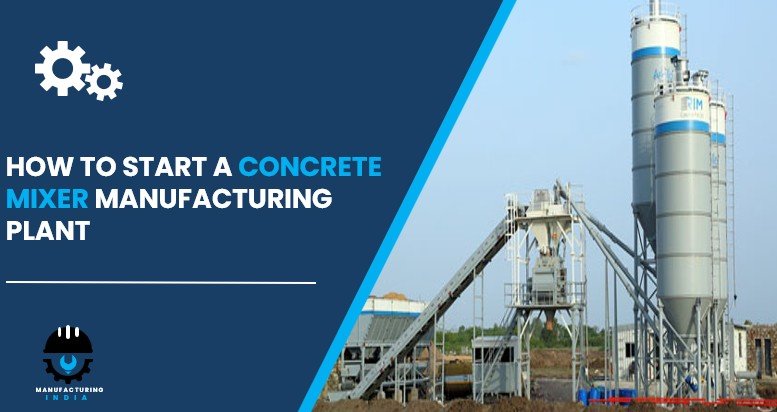
A concrete mixer is a machine that combines cement, sand, aggregates, and water to produce concrete for use in construction activities. Mixers operate in stationary or mobile configurations and are available in sizes ranging from small portable units for residential use to large industrial machines deployed on commercial and infrastructure projects. They function through rotating drums, blades, or pan systems that combine raw materials either continuously or in batches, ensuring uniform mix quality that is critical to structural strength.
Four principal types of concrete mixers serve the industry: drum mixers, twin-shaft mixers, pan mixers, and planetary mixers, each suited to different construction and precast requirements. By standardising the mixing process, mixers improve work efficiency, reduce manpower needs, and ensure consistent concrete quality. They find application across construction sites, ready-mix concrete plants, precast concrete facilities, and infrastructure development projects including roads, bridges, and high-rise buildings.
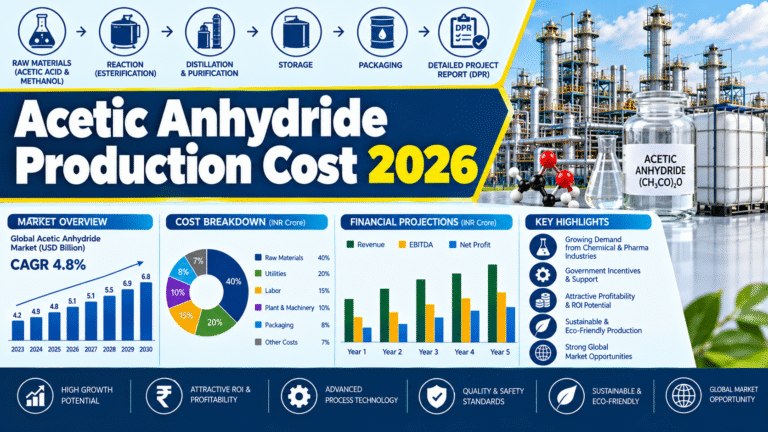
The India concrete mixer market was valued at approximately USD 117.51 Million in 2025 and is expected to reach USD 170.17 Million by 2034, exhibiting a CAGR of 4.2% from 2026 to 2034, supported by rising construction activity, infrastructure investment, and growing adoption of ready-mix concrete.
Cost of Setting Up a Concrete Mixer Manufacturing Plant
The total capital investment required to establish a concrete mixer manufacturing plant is shaped by several key parameters: annual production capacity (typically ranging from 10,000 to 50,000 units per annum), the level of automation across fabrication, machining, and assembly operations, facility specification, raw material sourcing strategy, and applicable industrial and safety compliance requirements. Below is a structured breakdown of the major cost components.
1. Capital Expenditure (CapEx)
Total capital investment in a concrete mixer manufacturing plant covers the following major heads:
Land and Site Development
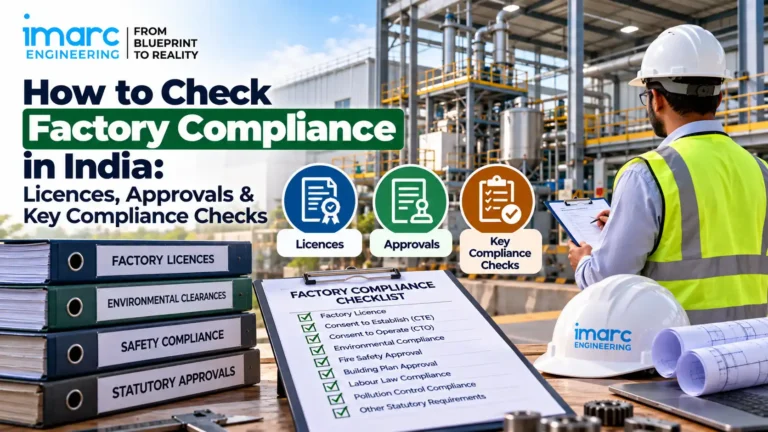
This encompasses land acquisition or lease, site preparation, boundary development, and utilities connectivity. Site selection should prioritise proximity to key raw material sources such as steel drum, chassis, gearbox, and engine or motor suppliers, along with proximity to target markets to minimise distribution costs. Access to reliable power supply, robust road logistics for inbound raw materials and outbound finished mixers, and a trained fabrication and welding workforce are critical site selection criteria. Compliance with local zoning regulations, factory licensing norms, and environmental clearance requirements must be assessed from project initiation.
Civil Works and Construction
Building costs cover the main manufacturing facility including the fabrication and welding shop, CNC machining area, painting and corrosion-resistant finishing booths, assembly line for mechanical and electrical systems, testing and quality control area, raw material and finished goods warehousing, administrative block, and utility infrastructure including power backup, compressed air systems, and effluent and waste management systems. Construction must comply with applicable factory act requirements, fire safety norms, and industrial zoning regulations.
Machinery and Equipment
Machinery represents the single largest CapEx component. Key equipment required for a concrete mixer manufacturing plant includes:
- CNC Machines: Computer numerically controlled machining centres for precision cutting, drilling, and shaping of drum, frame, and structural components
- Welding Stations: Automated and manual welding equipment for fabrication of drum shells, chassis frames, and structural assemblies with consistent weld quality
- Batching Plant Equipment: Mixer units, aggregate bins, cement silos with screw conveyors, and material handling conveyors used in the production and testing of batching systems
- Testing Rigs: Equipment for verifying mixer performance, drum rotation balance, load-bearing capacity, and mechanical durability prior to dispatch
- Painting Booths: Corrosion-resistant surface finishing systems including shot blasting, primer application, and powder or wet-coat painting lines
- Assembly Lines: Integrated lines for assembling mechanical drivetrains, gearboxes, engines or motors, and electrical control systems into finished mixer units
- Material Handling and Storage Systems: Aggregate feeders, cement silos with screw conveyors, water and additive dosing systems, and storage systems for incoming steel, chassis, and component inventory
- Quality Control Laboratory Equipment: Instruments for verifying material strength, weld integrity, dimensional accuracy, and finished product compliance with industry standards
Other Capital Costs
These include pre-operative expenses, commissioning charges, import duties on specialised CNC and fabrication equipment, staff training and competency development, initial raw material and consumable inventory for production commissioning, and regulatory compliance setup including factory licensing, fire safety certification, and environmental clearances.
Request a Sample Report for In-Depth Market Insights: https://www.imarcgroup.com/concrete-mixer-manufacturing-plant-project-report/requestsample
2. Operational Expenditure (OpEx)
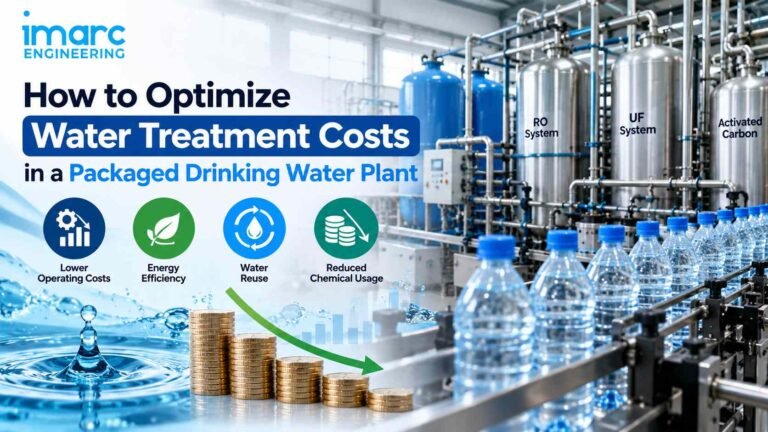
Raw materials principally steel drum, chassis, gearbox, and engine or motor components constitute the dominant operating cost, typically representing 65–75% of total OpEx. Utility costs, driven primarily by electricity consumption for CNC machining, welding, and assembly operations, account for 5–10% of OpEx. Labour, maintenance, quality control, packaging, transportation, depreciation, taxes, and overhead costs constitute the remainder of the operating cost base.
3. Plant Capacity
The proposed concrete mixer manufacturing facility is designed with an annual production capacity ranging between 10,000–50,000 units, enabling economies of scale while maintaining operational flexibility. This capacity range supports a diversified product portfolio spanning drum mixers, twin-shaft mixers, pan mixers, and planetary mixers, serving construction sites, ready-mix concrete plants, precast facilities, and infrastructure development projects.
4. Profit Margins and Financial Projections
The project demonstrates healthy profitability potential under normal operating conditions. Financial projections encompass capital investment, operating costs, capacity utilisation ramp-up schedule, product mix across mixer types, and forward demand outlook underpinned by expanding construction and infrastructure activity. A comprehensive feasibility analysis includes sensitivity analysis, Net Present Value (NPV), Internal Rate of Return (IRR), and Payback Period calculations. Gross profit margins for concrete mixer manufacturing typically range from 30–40%, supported by stable construction demand and value-added product customisation. Net profit margins of 12–20% are achievable with disciplined cost management, optimal capacity utilisation, and effective supply chain management.
Why Set Up a Concrete Mixer Manufacturing Plant?
Rising Construction and Infrastructure Demand
New construction projects require dependable concrete preparation equipment as urban infrastructure development, residential building construction, and commercial building construction continue to expand. Growing public and private investment in road construction, highway development, metro rail, and urban planning projects is creating sustained demand for concrete mixers across construction and infrastructure segments.
Consistency and Quality Advantages
Concrete mixer production establishes standardised mixing processes that deliver dependable, uniform results, helping construction projects reduce defects and rework. This reliability positions well-manufactured mixers favourably with contractors, ready-mix concrete plants, and precast operators who depend on consistent material quality to maintain project timelines and structural integrity.
Expanding Ready-Mix and Precast Segments
Growing urbanisation and smart city development are driving increased demand for ready-mix concrete solutions that ensure quality, efficiency, and time savings on site. The growing popularity of precast concrete elements and modular construction is further increasing demand for specialised mixers capable of consistent, high-volume output.
Product Customisation Opportunities
Manufacturers can design customised mixers tailored to the specific requirements of different construction projects, ranging from compact portable units for residential use to large-capacity industrial machines for infrastructure projects, creating opportunities for product differentiation and premium positioning.
Scalable and Moderate Capital Entry
Companies can establish production facilities with moderate capital investment and expand operations progressively according to market demand, allowing new entrants to manage capital deployment while building manufacturing expertise and customer relationships.
Technology Transition Toward Electrification
The introduction of battery-electric transit concrete mixers and lightweight, CDL-free volumetric mixers reflects a broader industry shift toward lower-emission and more operationally efficient equipment, creating opportunities for manufacturers positioned to develop next-generation mixer technology.
Supportive Government Infrastructure Push
Large-scale urban development programmes, including smart city initiatives that have completed thousands of infrastructure projects worth hundreds of billions of rupees with many more underway, are driving sustained demand for construction equipment, including concrete mixers, across residential, commercial, and infrastructure segments.
Manufacturing Process Overview
The concrete mixer manufacturing operation transforms raw steel, chassis components, gearboxes, and engines or motors into finished mixer units through a sequence of design, fabrication, machining, assembly, and quality verification operations. The key process stages are:
- Design and Engineering: Mixer components are designed and engineered based on target capacity, application type, and performance specifications, covering drum geometry, blade configuration, and drivetrain layout.
- Material Selection: Steel and other structural materials are selected based on strength, corrosion-resistance, and durability requirements for the drum, frame, and load-bearing components.
- Fabrication of Drum and Frame Parts: Steel plates and structural sections are cut, formed, and prepared for the drum shell, mixing blades, and chassis frame using CNC machining and cutting equipment.
- Machining and Welding: Metal structures are machined to precise tolerances and welded using automated or manual welding stations to form the drum, frame, and mounting assemblies.
- Assembly of Mechanical and Electrical Systems: Gearboxes, engines or motors, drive systems, control panels, and electrical wiring are integrated into the fabricated structure on dedicated assembly lines.
- Painting and Corrosion-Resistant Finishing: Assembled units undergo surface preparation, shot blasting, and priming followed by powder or wet-coat painting to protect against corrosion and provide a finished appearance.
- Quality Testing and Performance Verification: Finished mixers are tested for drum rotation balance, mixing performance, structural integrity, and mechanical durability against applicable industry standards.
- Packaging, Storage, and Distribution: Verified units are packaged for transport, stored in finished goods warehousing, and dispatched to construction sites, dealers, and ready-mix concrete plant customers.
Key Applications of Concrete Mixers
Concrete mixers serve several major end-use segments across construction, infrastructure, and precast sectors:
- Construction Industry: Mixers produce high-quality concrete for residential, commercial, and industrial construction projects, supporting builders across foundation work, structural elements, and finishing applications.
- Ready-Mix Concrete Plants: Large-capacity mixers enable efficient, high-volume concrete preparation that meets the quality standards required for large construction projects and consistent site delivery schedules.
- Infrastructure Projects: Mixers produce high-strength concrete for the construction of roads, bridges, tunnels, and other public infrastructure works requiring durable, uniform material quality.
- Precast Concrete Operations: Precast factories use specialised mixers to efficiently produce beams, panels, blocks, and other prefabricated elements for modular and industrialised construction methods.
Global Concrete Mixer Market Outlook
The India concrete mixer market was valued at approximately USD 117.51 Million in 2025. According to IMARC Group estimates, the market is expected to reach USD 170.17 Million by 2034, exhibiting a CAGR of 4.2% from 2026 to 2034. The concrete mixer market benefits from multiple structural demand drivers:
- Expanding residential, commercial, and infrastructure construction activity driving sustained demand for reliable concrete mixing equipment
- Continued urbanisation and smart city development programmes supporting adoption of ready-mix concrete solutions across urban centres
- Growing government investment in road development, metro rail, bridges, and other public infrastructure projects
- Rising adoption of precast concrete elements and modular construction methods requiring specialised, high-volume mixing equipment
- Increasing demand for automated and industrial-grade mixers capable of fast, consistent concrete delivery at construction sites
- Emerging technology transition toward battery-electric and lightweight mixer designs supporting lower-emission construction operations
- Product customisation opportunities allowing manufacturers to serve diverse project requirements across residential, commercial, and infrastructure segments
Leading manufacturers in the global concrete mixer industry include AB Volvo (Sweden), Sany Group (China), Liebherr International AG (Switzerland), Terex Corporation (U.S.), and BHS Sonthofen GmbH (Germany), serving end-use sectors including construction sites, ready-mix concrete plants, and large-scale infrastructure projects.
Latest Industry Developments
- January 2026: ProAll introduced the L20R Lightweight Concrete Mixer, a mobile volumetric mixer designed for CDL-free operation under 26,000 lbs GVW, targeting small- to mid-sized contractors and producers. The mixer offers intuitive controls, flexible brake options, and bag-fill capability, eliminating silos, with multiple chassis configurations meeting Volumetric Mixer Manufacturers Bureau (VMMB) standards for professional-grade concrete output.
- December 2025: Schwing Stetter India, in partnership with Qucev Technologies, introduced India’s first Battery Electric Transit Concrete Mixer (eRMC), a 7 cubic metre lithium-battery-powered unit featuring fast-charging in about one hour, targeting lower emissions and reduced operating costs compared with diesel models.
Licenses and Regulatory Requirements
Establishing a concrete mixer manufacturing unit requires a range of approvals and certifications, which may vary by country and jurisdiction, including:
- Business registration and company incorporation under applicable company law
- Factory License under applicable state Factories Act provisions for manufacturing operations
- Fire Safety Certification for manufacturing facilities involving welding, painting, and fabrication operations
- Environmental Clearances and Pollution Control Board consent for manufacturing operations and effluent management
- BIS (Bureau of Indian Standards) certification for applicable machinery and equipment quality standards
- ISO 9001:2015 Quality Management System Certification for quality management infrastructure compliance
- ISO 45001 / Occupational Health and Safety management compliance for manufacturing worker safety, particularly in welding and fabrication areas
- Weights and Measures (Legal Metrology) registration where applicable for product labelling and specification declaration
- Export-Import Code (IEC) for international market access
- Trademark and Brand Registration for proprietary branded product launch
Key Challenges to Consider
Raw Material Price Volatility
Steel drum, chassis, gearbox, and engine or motor components together account for 65–75% of total operating costs, and steel prices in particular are subject to global commodity cycles. Periods of elevated steel pricing can compress margins, requiring processors to manage cost structures through long-term supplier contracts and efficient material utilisation.
High Capital Requirements
Establishing CNC machining, welding, painting, and assembly infrastructure requires substantial upfront capital investment. New entrants must carefully evaluate the phasing of investment between moderate-scale entry and larger, more automated production capacity based on available capital and target market positioning.
Regulatory Approvals and Compliance
Securing factory licenses, fire safety certifications, and environmental clearances can involve extended timelines and jurisdiction-specific requirements. Delays in regulatory approval can push back commercial launch timelines and affect project economics.
Skilled Manpower Availability
Welding, CNC machining, and quality assurance operations require skilled technical manpower. Availability of trained welders, machinists, and quality control personnel in the plant’s operating location is a critical factor in maintaining consistent production quality and output.
Competitive Intensity
The concrete mixer manufacturing industry includes established multinational players with extensive production capacities and distribution networks. New entrants must differentiate through product customisation, pricing, service support, and reliability to compete effectively against established brands.
Operational Risk Management
Managing supply chain disruptions, maintaining consistent raw material supply, and ensuring reliable equipment performance across varied end-use conditions require disciplined operational risk management and quality control systems throughout the manufacturing process.
Frequently Asked Questions (FAQs)
1. How much capital is required to set up a concrete mixer manufacturing plant?
Capital requirements generally include land acquisition, construction, equipment procurement, installation, pre-operative expenses, and initial working capital. The total amount varies with plant capacity (10,000–50,000 units per annum), automation level, facility specification, and location. A comprehensive feasibility study from IMARC Group provides detailed, capacity-specific cost estimates covering all CapEx and OpEx components.
2. Is concrete mixer manufacturing a profitable business in 2026?
Yes. Sustained demand from expanding construction and infrastructure sectors, combined with gross margins of 30–40% and net profit margins of 12–20%, make concrete mixer manufacturing financially attractive. Profitability generally improves with capacity expansion and increased capacity utilisation rates.
3. What raw materials are required for concrete mixer manufacturing?
Key raw materials include steel for the drum and main frame, and components for the engine or motor such as metals, plastics, and electrical parts. Steel drum, chassis, gearbox, and engine or motor components together account for approximately 65–75% of total operating costs.
4. What machinery and equipment are required to start a concrete mixer factory?
A concrete mixer factory typically requires CNC machines, welding stations, testing rigs, painting booths, and assembly lines, along with a material handling and storage system involving aggregate feeders, a cement silo with a screw conveyor, and a water and additive system.
5. What are the key steps involved in concrete mixer manufacturing?
The main steps include design and engineering of mixer components, material selection based on strength requirements, fabrication of drum and frame parts, machining and welding of metal structures, assembly of mechanical and electrical systems, painting and corrosion-resistant surface finishing, quality testing and performance verification, and packaging, storage, and distribution.
6. How long does it take to start a concrete mixer manufacturing plant?
Typically, 12–24 months from project initiation to commercial production launch, depending on factors such as site development, machinery installation, environmental clearances, safety measures, and trial runs.
7. What licenses and approvals are needed to start a concrete mixer factory?
Typical requirements include business registration, environmental clearances, factory licenses, fire safety certifications, and industry-specific permits, which may vary depending on local, state, or national regulations.
8. Who are the top concrete mixer manufacturers in the world?
Leading manufacturers include SANY, Zoomlion, Liebherr, XCMG, and Terex, alongside other players such as AB Volvo and BHS Sonthofen serving construction sites, ready-mix concrete plants, and infrastructure projects worldwide.
9. What is the break-even period for a concrete mixer manufacturing plant?
The break-even period typically ranges from 3 to 6 years, depending on scale, regulatory compliance costs, raw material pricing, and market demand. Efficient manufacturing and export opportunities can help accelerate returns.
10. What are the biggest challenges in starting a concrete mixer manufacturing business?
Key challenges include high capital requirements, securing regulatory approvals, ensuring consistent raw material supply, competition from established manufacturers, skilled manpower availability, and managing operational risks across the production process.
Key Takeaways for Investors
The concrete mixer manufacturing industry represents a structurally resilient investment opportunity positioned at the intersection of expanding construction activity, accelerating urbanisation, and sustained public infrastructure investment. Stable demand from construction sites, ready-mix concrete plants, precast operations, and infrastructure projects provides resilience against single-segment demand volatility, while opportunities for product customisation across mixer types offer meaningful differentiation potential. India’s expanding infrastructure programme, including large-scale smart city and urban development initiatives, provides a structural demand tailwind for manufacturers with efficient fabrication, assembly, and quality systems. The moderate capital intensity of entry-level production allows investors to phase capital deployment according to risk appetite and target market positioning, while emerging technology shifts toward electrification and automation reflect long-term confidence in the category’s growth and profitability.
About the Author