A GRP (glass reinforced plastic) pipe manufacturing plant setup in India presents a compelling investment case for entrepreneurs eyeing the country’s expanding water infrastructure and industrial piping needs. Demand is driven by rising investments in the oil and gas, chemical, power generation, and mining sectors, all of which require durable piping systems capable of handling aggressive fluids and harsh operating conditions. As municipal water distribution networks, sewage disposal systems, chemical processing plants, and seawater desalination facilities expand across the country, GRP pipes are becoming a critical enabler of reliable, low-maintenance fluid transport.
India’s accelerating urbanisation, large-scale infrastructure build-out, and the Make in India push toward domestic manufacturing create a favourable backdrop for this venture. Industrial clusters in states such as Gujarat and Maharashtra, with their strong chemical, oil and gas, and engineering ecosystems, offer ready access to raw materials, skilled labour, and logistics networks suited to composite pipe production. Combined with government-backed water supply and sanitation programmes, these factors make India a strategically sound base for the unit.
This investment offers a strong case built on policy support for water infrastructure, cost-competitive production, and consistent demand from water, oil and gas, and chemical sectors. With gross margins of 35-45% and net margins of 18-25%, the project demonstrates healthy break-even viability across a wide range of capacities.
What is a GRP (Glass Reinforced Plastic) Pipe?
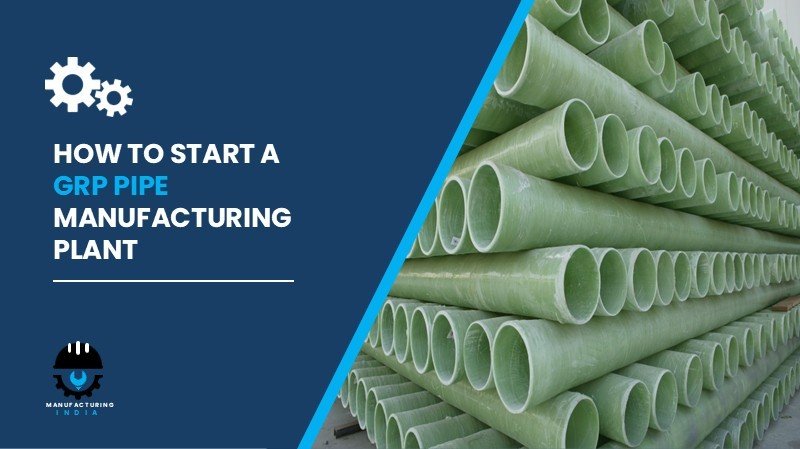
GRP (glass reinforced plastic) pipe is a high-strength composite piping solution engineered from a blend of glass fibers, thermosetting resins, and sand aggregates. The glass fibers provide exceptional structural reinforcement, while the resin matrices deliver outstanding chemical and corrosion resistance. Because they are lightweight and highly durable, GRP pipes serve as an efficient alternative to traditional concrete, steel, and ductile iron piping. The smooth internal bore ensures optimal fluid flow hydraulics, minimises pumping energy requirements, prevents scale buildup, and guarantees a long operational lifespan with virtually zero maintenance needs.
A GRP pipe manufacturing plant relies on resin preparation, glass fiber winding/lay-up, a winding or centrifugal casting stage, and curing and finishing as the core stages of the GRP pipe manufacturing process. The finished pipes serve end-use industries including water & wastewater management, oil & gas, chemical processing, irrigation, infrastructure, marine, power, and industrial utilities.
Cost of Setting Up a GRP Pipe Manufacturing Plant in India
The overall cost of a GRP pipe manufacturing plant depends on capacity, technology, location, automation level, and regulatory compliance requirements.
1. Capital Expenditure (CapEx)
Land and site development form a foundational part of the investment, and promoters can evaluate options within SEZs or dedicated industrial estates to benefit from ready infrastructure and faster approvals. Civil works and construction cover the manufacturing shed, quality control laboratory, raw material and finished goods storage areas, and the administrative block, all designed to support safe and efficient operations.
Key machinery required includes:
- Resin mixing tanks
- Glass fiber roving/mat handling systems
- Filament winding machines or centrifugal casting machines
- Silica sand/filler dosing systems
- Catalyst and curing agent dosing units
- Curing ovens
- Cutting machines
- Grinding/finishing equipment
- Hydrostatic testing systems
- Inspection/packaging machines
Other capital costs for the facility include effluent treatment plant (ETP) installation, pre-operative expenses, commissioning costs, and applicable import duties on specialised winding or testing equipment.
Request a Sample Report for In-Depth Market Insights: https://www.imarcgroup.com/glass-reinforced-plastic-pipe-manufacturing-plant-project-report/requestsample
2. Operational Expenditure (OpEx)
Raw material cost is the dominant OpEx component, accounting for approximately 65-75% of total operating expenses. Key raw materials include glass fiber roving/mat, unsaturated polyester/vinyl ester resin, silica sand (filler), and catalysts/curing agents. Investors are advised to negotiate long-term supplier contracts to stabilise pricing and secure a consistent supply of these inputs.
Utility cost, covering electricity, water, and steam requirements for resin processing, winding, and curing, accounts for approximately 15-20% of OpEx. Other operating costs include transportation, packaging, salaries and wages, repairs and maintenance, depreciation, and taxes. By the fifth year of operations, total operational cost is expected to increase substantially due to inflation, market fluctuations, and potential rises in the cost of key raw materials, alongside supply chain disruptions and shifts in the global economy.
3. Plant Capacity
The proposed facility is designed with an annual production capacity ranging between 5,000-15,000 MT, enabling economies of scale while maintaining operational flexibility. Capacity can be customised based on investor requirements and target markets, and profitability generally improves with higher capacity utilisation as fixed costs are spread across greater output.
4. Profit Margins and Financial Projections
Financial projections for the GRP pipe manufacturing plant are developed around capital investment, operating costs, capacity utilisation, pricing trends, and demand outlook, and include net present value (NPV), internal rate of return (IRR), and payback period analysis. The project demonstrates healthy profitability potential under normal operating conditions, with gross profit margins typically ranging between 35-45% and net profit margins between 18-25%, supported by stable demand and value-added applications.
Why Set Up a GRP Pipe Plant in India?
Crucial Infrastructure Component: GRP pipes serve as durable, corrosion-resistant, and lightweight solutions for water supply, sewage, irrigation, desalination, industrial fluid handling, and chemical transportation, positioning them as essential to modern water infrastructure and industrial reliability.
Moderate but Justifiable Entry Barriers: While requiring capital for winding and curing systems, stringent quality requirements, precise resin-glass fibre ratios, pressure and dimensional standards, and project approvals create entry hurdles that favour experienced producers focused on quality and consistent pricing.
Megatrend Alignment: The rapid expansion of water infrastructure, desalination, wastewater treatment, irrigation, industrial development, and urbanization is driving consistent demand for lightweight, corrosion-resistant, long-service-life piping, with water scarcity and infrastructure modernization further supporting adoption.
Policy & Infrastructure Push: Government investment in water supply, sewage treatment, irrigation networks, desalination, smart cities, and industrial infrastructure indirectly supports demand, with public water and wastewater projects creating opportunities for domestic manufacturers.
Active Industry Investment: The industry is poised for steady growth as governments worldwide expand spending on municipal water supply and sanitation, addressing urbanization, population growth, and water scarcity, while advancements in resin formulations and automated manufacturing continue to improve production efficiency.
Localization and Dependability in Supply Chains: EPC contractors, utilities, and infrastructure developers favour local, dependable suppliers to shorten project lead times, reduce transportation costs, ensure customised pipe availability, and maintain reliable supplies, opening doors for regional producers with streamlined sourcing and manufacturing operations.
Manufacturing Process – Step by Step
The GRP pipe manufacturing process uses winding or centrifugal casting as the primary forming method, alongside resin preparation and curing and finishing stages.
- Resin Preparation: Unsaturated polyester or vinyl ester resin is prepared and blended with catalysts and curing agents in resin mixing tanks to achieve the required chemical properties.
- Glass Fiber Winding/Lay-Up: Glass fiber roving/mat is fed through handling systems and applied in controlled layers to build structural reinforcement.
- Forming: The resin-saturated glass fibers, along with silica sand filler dosed through dedicated dosing systems, are wound or cast into the pipe shape using the winding or casting machines.
- Curing: The formed pipe passes through curing ovens where the resin matrix hardens and bonds with the reinforcement and filler.
- Cutting and Finishing: Cutting machines trim pipes to specified lengths, followed by grinding and finishing equipment for surface and edge preparation.
- Testing: Hydrostatic testing systems verify pressure resistance and structural integrity of each pipe.
- Inspection and Packaging: Finished pipes pass through inspection and packaging machines before dispatch to water & wastewater, oil & gas, chemical, and infrastructure end users.
Key Applications
GRP pipes serve a wide range of industries that require corrosion-resistant, long-life piping systems.
- Oil & Gas: Pipeline transportation, crude oil and gas gathering systems, and offshore applications.
- Water & Wastewater: Water supply pipelines, sewage systems, irrigation networks, and desalination plants.
- Chemical & Industrial: Corrosive chemical pipelines, process piping, and industrial fluid transportation.
- Power & Infrastructure: Cooling water systems, fire protection pipelines, drainage systems, and utility infrastructure.
Leading Manufacturers
The global GRP pipe manufacturing plant landscape includes several established companies with extensive manufacturing capacities and diverse application portfolios. Key players include:
- Graphite India Limited
- Enduro Composites
- Future Pipe Industries
- Smithline Reinforced Composites
- Veplas d.d.
Timeline to Start the Plant
- Feasibility study and project report preparation
- Land acquisition and site development
- Regulatory approvals and environmental clearances
- Factory licence and fire safety compliance
- Machinery procurement and installation
- Raw material supplier agreements and supply chain setup
- Trial production and quality testing
- Commercial production launch
Licences and Regulatory Requirements
Starting this manufacturing unit in India requires several approvals:
- Business registration (Proprietorship, LLP, or Pvt Ltd)
- Factory Licence under the Factories Act
- Environmental Clearance from State Pollution Control Board
- GST Registration
- Fire Safety NOC
- Hazardous/Chemical compliance for resin and catalyst handling
- Effluent Treatment Plant (ETP) operational clearance
- Occupational Health and Safety compliance
Key Challenges to Consider
High Capital Requirements: Winding, casting, and curing systems for a GRP pipe manufacturing plant represent a significant upfront investment, requiring careful capital planning and phased scale-up.
Raw Material Price Volatility: Prices of glass fiber roving/mat, unsaturated polyester/vinyl ester resin, silica sand, and catalysts/curing agents can fluctuate, directly affecting the cost structure, which makes long-term supplier contracts important for stability.
Regulatory Compliance: Meeting factory licensing, environmental clearance, and hazardous material handling requirements for a GRP pipe manufacturing plant demands ongoing attention throughout operations.
Technology and Quality Pressure: Stringent quality requirements, precise resin-glass fibre ratios, and pressure and dimensional standards require continuous investment in equipment calibration and skilled process control.
Competition: Established players such as Graphite India Limited, Enduro Composites, and Future Pipe Industries bring scale and established distribution relationships, requiring new entrants to differentiate on quality, pricing, or regional service.
Skilled Manpower: Operating winding and casting equipment, along with maintaining stringent quality assurance systems, requires trained technical personnel who may be limited in certain regions.
Frequently Asked Questions
1. How much does it cost to set up a GRP pipe manufacturing plant in India?
The total cost depends on capacity, technology, automation level, and location, covering land, civil works, machinery, and other capital costs.
2. Is GRP pipe manufacturing profitable in India in 2026?
Yes, the project demonstrates healthy profitability potential, with gross profit margins of 35-45% and net profit margins of 18-25% under normal operating conditions.
3. What machinery is required for a GRP pipe plant in India?
Essential machinery includes resin mixing tanks, glass fiber roving/mat handling systems, filament winding or centrifugal casting machines, silica sand/filler dosing systems, catalyst and curing agent dosing units, curing ovens, cutting machines, grinding/finishing equipment, hydrostatic testing systems, and inspection/packaging machines.
4. What licences and approvals are required to start a GRP pipe plant in India?
Requirements include business registration, a Factory Licence, Environmental Clearance from the State Pollution Control Board, GST Registration, Fire Safety NOC, hazardous/chemical compliance, ETP clearance, and occupational health and safety compliance.
5. What raw materials are needed for GRP pipe manufacturing?
Key raw materials are glass fiber roving/mat, unsaturated polyester/vinyl ester resin, silica sand (filler), and catalysts/curing agents.
6. What are the environmental compliance requirements for a GRP pipe plant in India?
Plants must secure Environmental Clearance from the State Pollution Control Board, operate an Effluent Treatment Plant, and maintain monitoring systems to detect leaks or process deviations.
7. What is the best location to set up a GRP pipe plant in India?
Locations with easy access to raw material suppliers, proximity to target markets, robust transportation and utility infrastructure, and compliance with local zoning laws are best suited.
8. What is the break-even period for this type of plant in India?
The break-even period depends on capacity utilisation, pricing, and cost structure, and is assessed through payback period and net present value analysis as part of the financial planning.
9. What government incentives are available for manufacturers in India?
Government investment in water supply, sewage treatment, irrigation networks, desalination, and smart cities infrastructure indirectly supports demand for domestic producers.
Key Takeaways for Investors
A GRP pipe manufacturing plant in India taps into sustained demand from the water & wastewater, oil & gas, chemical processing, and power infrastructure sectors, supported by government investment in water security and industrial infrastructure. The project shows financial viability across capacities ranging from 5,000 to 15,000 MT annually, with gross margins of 35-45% and net margins of 18-25% under normal operating conditions. With the global GRP pipe market valued at USD 5.50 Billion in 2025 and projected to reach USD 8.53 Billion by 2034 at a CAGR of 5.0%, demand for corrosion-resistant, lightweight piping solutions is set to remain strong, positioning this venture as a durable, long-term industrial investment.
About the Author