Introduction
Technical due diligence is one of the most important safeguards before investing in a manufacturing plant — and one of the most often reduced to a short site walk and a capacity brochure.
Once capital is committed, the hidden issues surface: nameplate capacity that cannot be sustained, utilities that limit output, equipment condition that demands early overhaul, process bottlenecks that cap throughput, and compliance gaps that block expansion or offtake. These risks are rarely obvious in financial models alone. They become clear only when technical due diligence examines process, assets, utilities, layout and operating reality before the investment decision is finalized.
IMARC Engineering provides technical due diligence and manufacturing project advisory across India. This article explains how to conduct technical due diligence before investing in a manufacturing plant, which areas matter most, and how a structured review can protect investment value and reduce technical downside risk.
Why Technical Due Diligence Matters for Manufacturing Investments in India
India’s manufacturing sector continues to attract capital under policy support and rising demand.
- Manufacturing GVA grew by 7.0% in FY 2025-26 at constant prices, according to MoSPI.
- FDI into manufacturing rose 18% in FY 2024-25 to US$19.04 billion (Ministry of Commerce & Industry / DPIIT).
- Cumulative gross FDI inflows into India have reached approximately US$1.16 trillion since April 2000.
- PLI cumulative investment has exceeded ₹2.16 lakh crore, with cumulative production and sales surpassing ₹20.41 lakh crore as of December 2025 (PIB).
- Logistics costs have improved to an estimated 7.97% of GDP (DPIIT-NCAER study).
As investors evaluate existing plant acquisitions, brownfield expansions, and new manufacturing projects, technical due diligence and project-level technical validation help test whether the underlying engineering assumptions support the investment case.
What Technical Due Diligence Covers
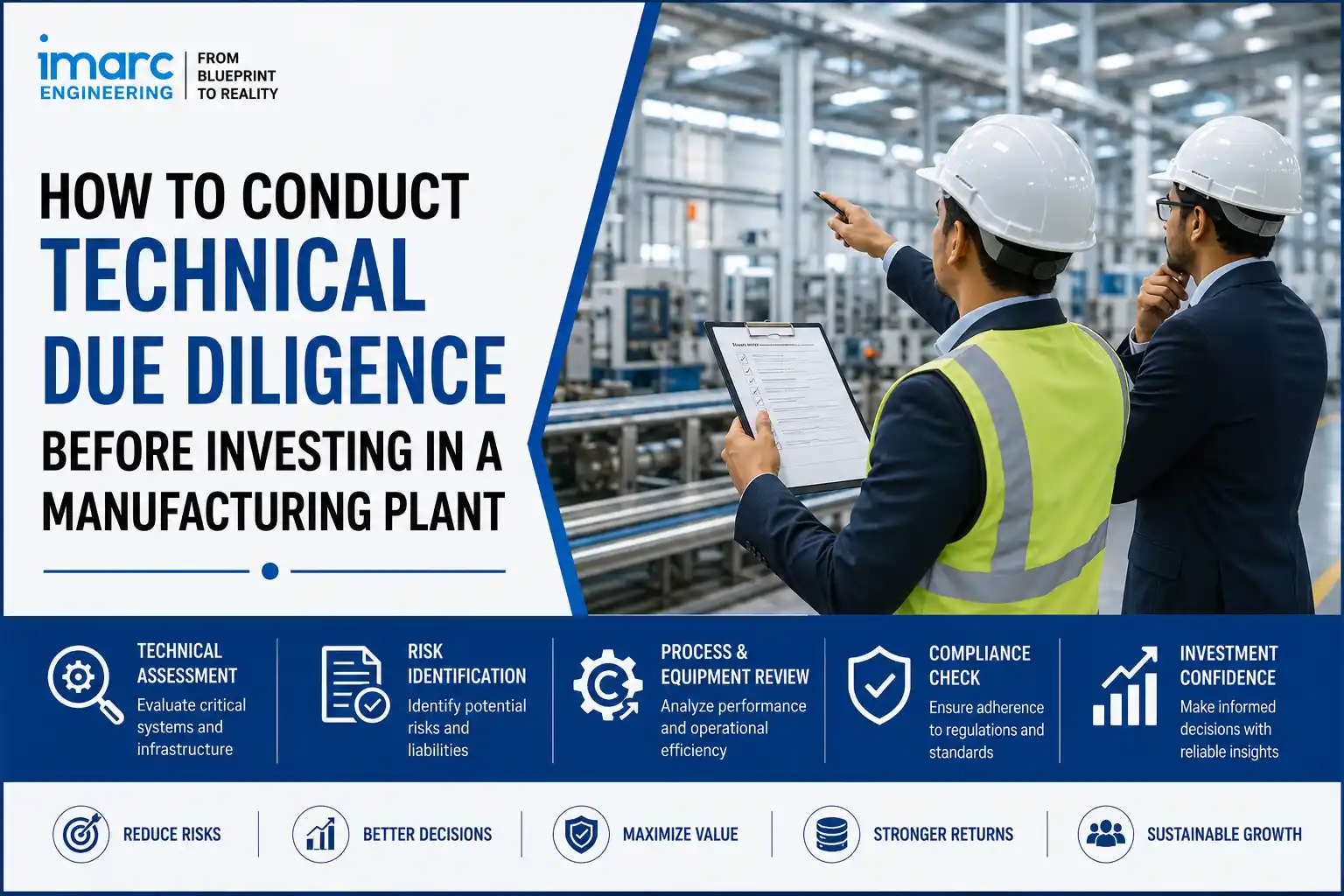
Technical due diligence is a structured assessment of whether a manufacturing plant can achieve, sustain and expand the performance claimed in the investment case. Core areas typically include:
- Process and technology fit — process route, yields, quality capability and technology risk
- Capacity reality — nameplate versus demonstrated output, bottlenecks and utilisation
- Equipment and asset condition — age, maintenance history, critical spares and remaining life
- Utilities and infrastructure — power, water, effluent, steam, HVAC and internal logistics
- Layout and material flow — bottlenecks, access, expansion room and safety interfaces
- Compliance and operating constraints — environmental, factory, quality and licence conditions that affect output
- CapEx and operating implications — near-term investment needed to stabilise or reach claimed performance
The aim is not to redesign the plant. It is to verify what the plant can do, what it cannot do, and what investment is required for the business case to hold.
How to Conduct Technical Due Diligence for a Manufacturing Plant
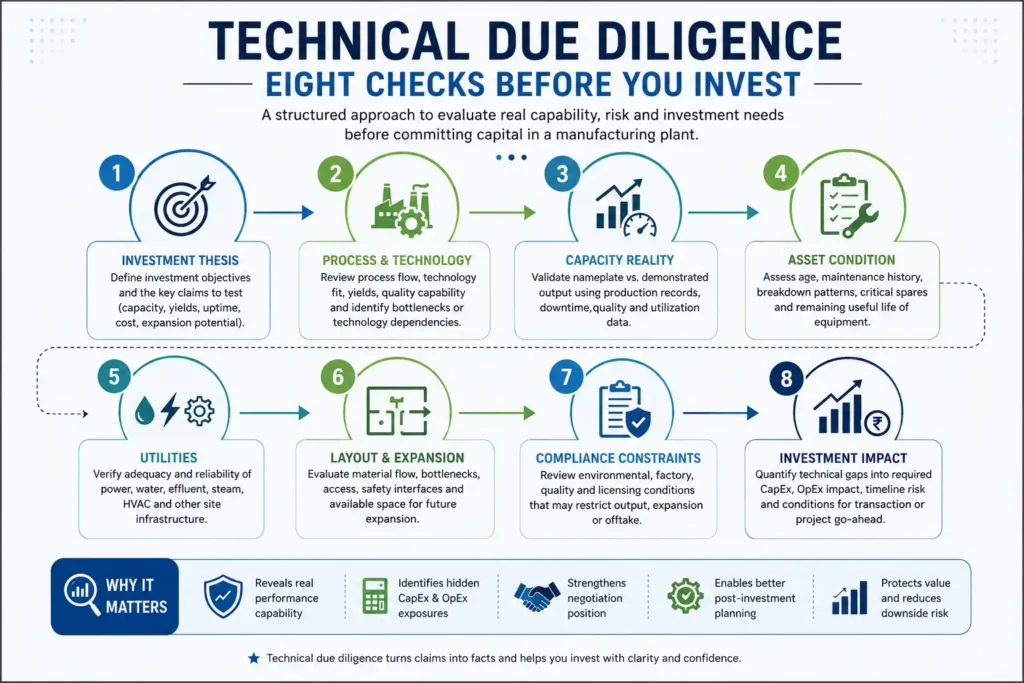
1. Define investment thesis and claims to test
Clarify what the seller or project model asserts: capacity, product mix, yields, uptime, utility cost and expansion potential. Diligence should test those claims, not run a generic checklist.
2. Review process and technology
Map the process flow, critical control points, known bottlenecks and technology dependencies. Identify single points of failure and any process steps that limit quality or throughput.
3. Validate capacity and performance data
Compare nameplate ratings with production records, downtime logs and quality outcomes. Demonstrated sustainable capacity matters more than design capacity on a nameplate.
4. Assess equipment condition and maintenance
Inspect critical assets, review maintenance history, breakdown patterns and spare strategy. Estimate near-term replacement or overhaul exposure.
5. Check utilities and site infrastructure
Confirm whether power, water, effluent and other services can support current and planned output without major unplanned CapEx.
6. Evaluate layout, flow and expansion headroom
Review material movement, storage, access and whether future capacity needs a major layout change or only incremental addition.
7. Identify compliance and operating constraints
Note consent conditions, quality system gaps and licence limits that could restrict output, offtake or expansion.
8. Translate findings into investment impact
Convert technical gaps into required CapEx, OpEx impact, timeline risk and conditions for the transaction or project go-ahead.
What Strong Technical Due Diligence Changes in the Decision
When technical due diligence is done properly, investors typically gain:
- Clearer view of sustainable operating capacity versus claimed or nameplate capacity
- Early visibility of catch-up CapEx and operating risk
- Stronger negotiation position on price, earn-outs or conditions
- Better sequencing of post-deal stabilisation work
- Reduced chance of discovering process limits only after funding is released
Technical due diligence does not eliminate all risk. It converts unknown technical risks into quantified, decision-ready findings that can be reflected in valuation, CapEx planning and transaction conditions.
Common Red Flags in Manufacturing Plant Investments
- Large gap between nameplate and demonstrated output
- Critical equipment near end of life with no funded replacement plan
- Expansion case that ignores real site and utility limits
- Layout that blocks debottlenecking without major civil work
- Incomplete maintenance records or chronic unplanned downtime
- Quality or consent constraints that restrict product mix or offtake
- Expansion case that ignores real site and utility limits
Any one of these can change returns. Several together can change the investment decision.
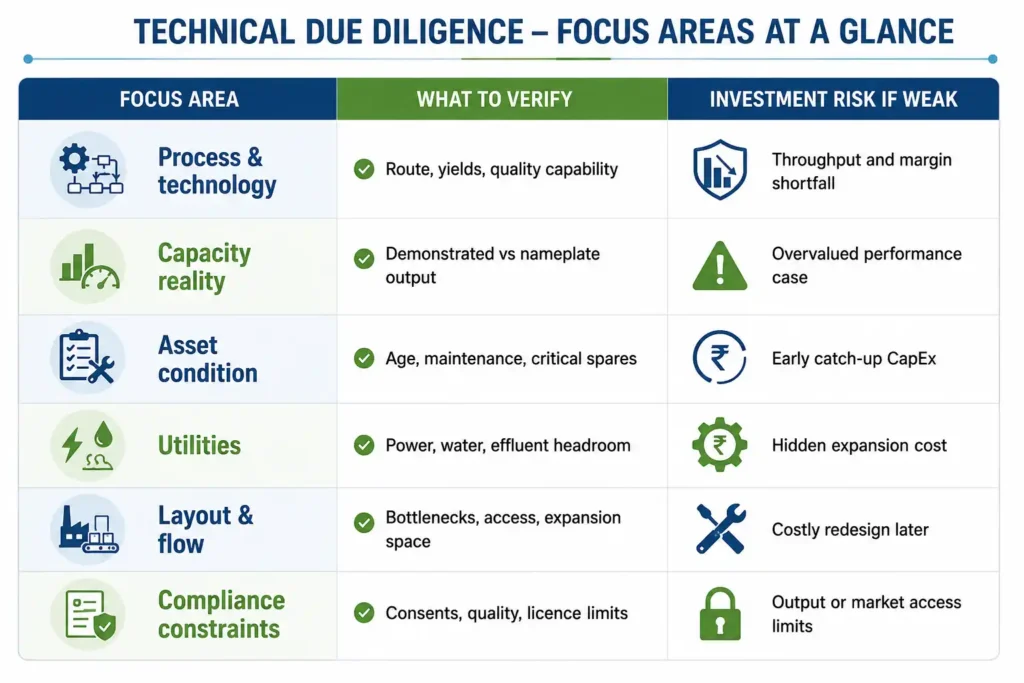
Technical Due Diligence Focus Areas at a Glance
How IMARC Engineering Supports Technical Due Diligence
IMARC Engineering supports investors and project sponsors in evaluating manufacturing plant performance and technical risks before capital is committed.
- Process, capacity and bottleneck review
- Equipment and utility readiness assessment
- Layout, flow and expansion headroom checks
- Translation of technical findings into CapEx, OpEx and investment-risk implications
- Support for greenfield project validation and brownfield acquisition diligence
- Coordination across technical, operational, financial and investment stakeholders
IMARC Engineering works with investors, promoters and industrial buyers across pharmaceuticals, food and beverage, chemicals, auto components, electronics, FMCG and discrete manufacturing sectors in India.
Contact IMARC Engineering’s team for technical due diligence support: https://www.imarcengineering.com/contact?service=technical-due-diligence-for-investors
Common Technical Due Diligence Mistakes Investors Should Avoid
- Relying on nameplate capacity without production evidence
- Treating a site tour as technical due diligence
- Ignoring utilities and layout until after the deal
- Separating technical findings from the financial model
- Assuming expansion is “available” without site proof
- Leaving compliance constraints out of the investment case
Conclusion
Technical due diligence before investing in a manufacturing plant helps investors determine whether the process, assets, utilities, capacity and compliance position can support the business case under real operating conditions. As manufacturing investment and capacity expansion continue across India, structured technical assessment is increasingly important for evaluating existing plant acquisitions, brownfield expansions and other industrial investment opportunities.
Investors who verify technical assumptions early are better positioned to identify hidden CapEx requirements, assess sustainable operating capacity, price technical risk and establish realistic conditions for investment.
Through structured reviews of process performance, capacity, equipment condition, utilities, layout and compliance constraints, IMARC Engineering helps investors convert plant-level technical findings into evidence-based inputs for investment decisions before major capital is committed.
Contact Us:
IMARC Engineering
Phone: +91-120-433-0800
Email: sales@imarcengineering.com
India: C-130, Sector 2, Noida, Uttar Pradesh 201301
LinkedIn: https://www.linkedin.com/showcase/imarc-engineering/
About the Author