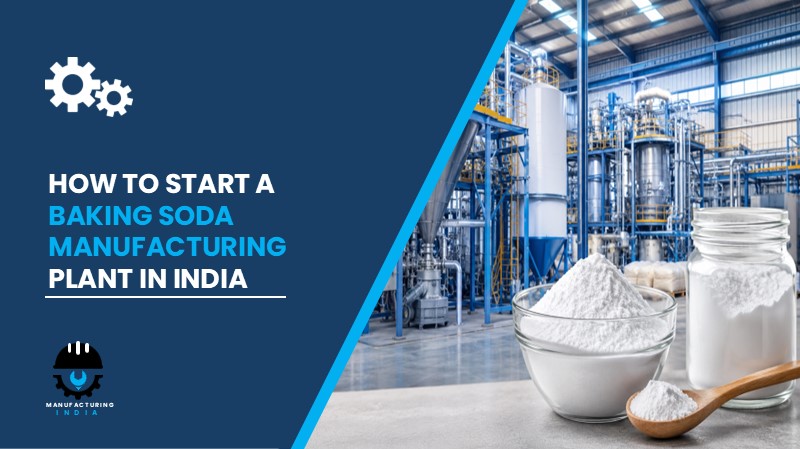
Setting up a baking soda manufacturing plant in India presents a compelling investment case for entrepreneurs and institutional investors alike. Sodium bicarbonate — the chemical name for baking soda — serves as a fundamental input across food and beverage, pharmaceuticals, personal care, cleaning products, animal feed, and flue gas treatment, positioning it as a versatile, high-volume chemical with steady, non-cyclical demand. India’s surging processed food sector, rapidly expanding pharmaceutical industry, and growing FMCG market collectively create a multi-dimensional demand base that makes this investment opportunity both resilient and scalable.
India’s structural advantages further reinforce the case for domestic production. Rapid urbanisation, accelerating infrastructure growth, and the Government of India’s Make in India initiative together create a policy and logistics environment that actively supports chemical manufacturing. States such as Gujarat and Maharashtra offer well-developed industrial estates, robust chemical-sector ecosystems, proximity to port infrastructure, and cost-competitive land and labour. As downstream industries — from packaged food companies to pharmaceutical formulators — increasingly prefer local suppliers to reduce logistics costs and manage raw material price volatility, a domestically established baking soda manufacturing plant in India is strategically positioned to capture long-term, recurring off-take agreements.
India’s food manufacturing market is projected to grow from USD 307 Billion in 2023 to USD 700 Billion in 2030, providing a vast and sustained demand base for sodium bicarbonate. Combined with Make in India policy support, cost-competitive manufacturing inputs, and gross profit margins of 30–40%, a well-planned baking soda plant in India offers clear break-even viability and attractive long-term returns.
What is Baking Soda?
Baking soda, or sodium bicarbonate, is a white, crystalline chemical compound that functions primarily as a leavening agent in baking. Known for its alkaline nature, it reacts with acidic ingredients such as buttermilk, lemon juice, or yogurt to produce carbon dioxide gas bubbles, causing batters and doughs to rise and achieve a light, airy texture. Beyond the kitchen, this versatile powder serves as a gentle household cleaner, a natural deodorizer, and a remedy for indigestion by neutralizing stomach acid. Unlike baking powder, which includes a pre-mixed acid, pure baking soda requires an external acidic component to trigger its leavening power.
The production method used in a baking soda manufacturing plant follows solution mining, carbonation, crystallization, drying, and milling — a multi-step process that ensures precise purity standards suitable for food-grade, pharmaceutical-grade, and industrial-grade applications. The end-use industries served by this facility span food and beverage, pharmaceuticals, personal care, agriculture, water treatment, chemical processing, and cleaning products. Applications range from leavening agents, pH buffers, and antacids to odor control, pool maintenance, fire suppression, livestock feed additives, and industrial scrubbing.
Cost of Setting Up a Baking Soda Manufacturing Plant in India
The cost of establishing a baking soda manufacturing plant depends on several variables, including chosen production capacity, technology level, site location, degree of automation, and applicable regulatory compliance requirements. Investors should evaluate both capital expenditure (CapEx) and operational expenditure (OpEx) rigorously before committing to a project.
1. Capital Expenditure (CapEx)
The total CapEx for a baking soda manufacturing plant in India covers four primary heads. Land and Site Development includes the cost of land acquisition, boundary development, land registration charges, and site-levelling work. Locating the facility within an SEZ or a notified industrial estate in Gujarat or Maharashtra can yield significant savings on land registration costs, utility hookup, and regulatory clearances. Civil Works and Construction covers the manufacturing shed, quality control laboratory, raw material and finished goods warehouses, effluent treatment plant (ETP) structure, and administrative block — all designed to support safe, efficient, and scalable operations.
Machinery and Equipment represent the single largest portion of CapEx for this type of plant. Key machinery required includes:
- Calcining kilns
- Carbonation towers
- Filtration units
- Centrifuge systems
- Drying units
- Screening equipment
- Packaging machines
Other Capital Costs include the effluent treatment plant (ETP) systems, pre-operative expenses, commissioning costs, and import duties applicable on specialized machinery that may not be available domestically.
Request a Sample Report for In-Depth Market Insights: https://www.imarcgroup.com/baking-soda-manufacturing-plant-project-report/requestsample
2. Operational Expenditure (OpEx)
Raw Material Cost is the dominant OpEx driver in a baking soda manufacturing unit, accounting for approximately 60–70% of total operating expenses. The primary raw materials are sodium carbonate (soda ash) and carbon dioxide. Establishing long-term supplier contracts with reliable domestic producers of soda ash is critical to mitigating price volatility and ensuring production continuity. Utility Cost — covering electricity, water, and steam — forms the second-largest expense category, representing 20–25% of OpEx, reflecting the energy-intensive nature of the drying and calcining stages.
Other operating costs include transportation, packaging, salaries and wages, maintenance, depreciation, and taxes. By the fifth year of operations, total operational costs are expected to increase substantially due to inflation, market fluctuations, and potential rises in the cost of key materials. Supply chain disruptions, rising consumer demand, and shifts in the global economy are additional factors expected to contribute to this upward cost trajectory, underscoring the importance of proactive procurement and financial planning.
3. Plant Capacity
The proposed baking soda manufacturing facility is designed with an annual production capacity ranging between 20,000 and 50,000 tons, enabling economies of scale while maintaining operational flexibility. This capacity band can be customized based on individual investor requirements, market access, and capital availability. Profitability improves meaningfully with higher capacity utilisation, as fixed costs — including land, civil infrastructure, and core machinery — are spread over a larger production volume, driving down the per-unit cost of manufacture.
4. Profit Margins and Financial Projections
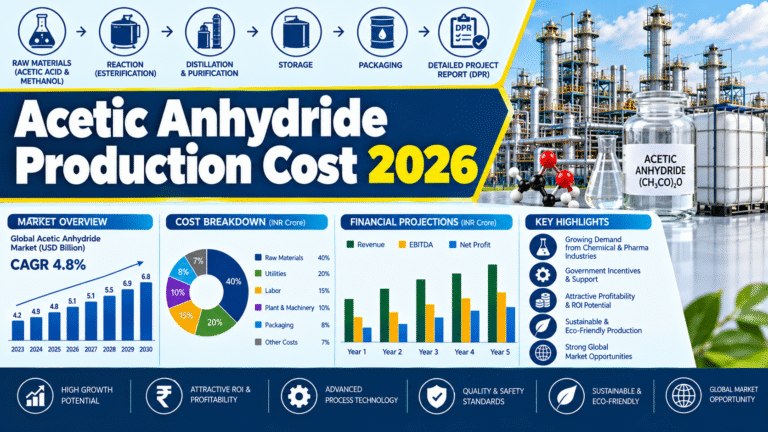
The financial projections for this investment demonstrate healthy profitability under normal operating conditions. Gross profit margins typically range between 30–40%, supported by stable demand and value-added applications across multiple industries. Net profit margins are projected at 15–22%, reflecting a well-structured cost base and diversified revenue streams. The full financial model includes NPV (Net Present Value), IRR (Internal Rate of Return), payback period analysis, gross margin and net margin projections, sensitivity analysis, and an uncertainty analysis — all of which provide investors with a comprehensive view of the project’s financial viability and long-term sustainability.
Why Set Up a Baking Soda Plant in India?
Essential Multi-Industry Demand. Baking soda is a fundamental input across food and beverage, pharmaceuticals, personal care, cleaning products, animal feed, and flue gas treatment. This non-cyclical, broad-based demand structure insulates the investment from sector-specific downturns and ensures consistent off-take volumes across economic cycles.
India’s Food Manufacturing Growth. India’s food manufacturing market is expected to expand from USD 307 Billion in 2023 to USD 700 Billion in 2030, according to IBEF. This growth trajectory translates directly into rising volumes of baking soda consumed as a leavening agent, pH control ingredient, and preservative across packaged foods and beverages, creating a sustained and growing domestic demand base.
Rising Demand for Natural and Eco-Friendly Products. The shift towards natural, non-toxic, and eco-friendly products is accelerating growth in the personal care and cleaning markets, where baking soda is increasingly valued. This megatrend supports long-term volume expansion for Indian manufacturers who can certify product purity and align with global sustainability standards.
Policy and Regulatory Tailwinds. Increasing environmental regulations on industrial emissions — specifically SOx and acid gas treatment where sodium bicarbonate serves as an industrial scrubbing agent — alongside the Make in India initiative’s support for domestic chemical manufacturing, are creating additional indirect demand drivers. Food safety standards and pharmaceutical compliance requirements further reinforce the need for high-quality, domestically produced sodium bicarbonate.
Active Industry Investment. In December 2025, Tata Chemicals International Limited signed an agreement to acquire full ownership of Novabay, a premium sodium bicarbonate producer. This move marks a key strategic step in Tata’s expansion into the high-value-added, low-cyclical specialty chemicals market — a clear signal that global-scale Indian conglomerates see long-term value in the sodium bicarbonate space.
Local Supply Chain Preference. Food manufacturers, pharmaceutical formulators, and FMCG companies increasingly prefer reliable local suppliers to reduce logistics costs, ensure timely availability, and manage raw material price volatility. This preference creates significant opportunity for regionally established baking soda production units with efficient sourcing and consistent product quality.
Manufacturing Process – Step by Step
The baking soda manufacturing process uses solution mining, carbonation, crystallization, drying, and milling as the primary production method. The process is a multi-step operation involving several unit operations, material handling stages, and quality checks at each critical juncture.
- Solution Mining: Sodium carbonate (soda ash) is dissolved in water to create a saturated solution, which serves as the primary feedstock for subsequent carbonation.
- Carbonation: The sodium carbonate solution is exposed to carbon dioxide under controlled pressure and temperature conditions within carbonation towers, triggering the chemical reaction that produces sodium bicarbonate.
- Crystallization: The resulting sodium bicarbonate precipitates out of the solution in crystalline form. The crystallization stage is carefully controlled to achieve the desired particle size and purity grade.
- Filtration: Filtration units separate the sodium bicarbonate crystals from the remaining liquid, removing impurities and excess moisture.
- Centrifuge Processing: Centrifuge systems further reduce moisture content and refine the crystal consistency, ensuring product uniformity.
- Drying: Drying units remove residual moisture from the filtered crystals, producing a stable, free-flowing powder suitable for food, pharmaceutical, and industrial applications.
- Milling and Screening: Milling equipment and screening equipment reduce particle size and classify the product to meet specific grade specifications required by different end-use industries.
- Quality Testing: Technical tests and quality assurance checks are conducted at multiple stages to verify purity, particle size, pH, and compliance with food-grade or pharmaceutical-grade standards.
- Packaging and Dispatch: Packaging machines fill and seal the finished product into appropriate packaging formats before dispatch to food and beverage manufacturers, pharmaceutical companies, personal care producers, and industrial customers.
Key Applications
Baking soda serves a wide range of industries across both consumer and industrial segments, making it one of the most versatile commodity chemicals in production.
- Food & Beverage: Used as a leavening agent in baking, for pH control, and as an ingredient in packaged foods and drinks.
- Pharmaceuticals: Used in antacids, effervescent tablets, and a range of medicinal formulations.
- Household & Cleaning: Serves as an odor neutralizer, surface cleaner, and laundry additive across household and institutional cleaning products.
- Personal Care: Used in toothpaste, deodorants, and skincare products for its mild abrasive and pH-buffering properties.
- Agriculture: Applied as a livestock feed additive and used in certain crop protection and soil management applications.
- Water Treatment: Used for pH adjustment and treatment processes in municipal and industrial water treatment facilities.
- Chemical Processing and Industrial: Applied in flue gas treatment for SOx/acid gas scrubbing, fire suppression systems, and other industrial processes.
Leading Manufacturers
The global baking soda market is served by several multinational companies with extensive production capacities and diverse application portfolios. Key players in the industry include:
- Church & Dwight Co. Inc.
- Solvay SA
- Tata Chemicals Ltd.
- Nirma Ltd.
- Tosoh Corporation
All of these players serve end-use sectors including food and beverage, pharmaceuticals, personal care, agriculture, water treatment, chemical processing, and cleaning products.
Timeline to Start the Plant
Establishing a baking soda manufacturing plant in India from concept to commercial production typically involves the following phases:
- Feasibility study and project report preparation
- Land acquisition and site development
- Regulatory approvals and environmental clearances
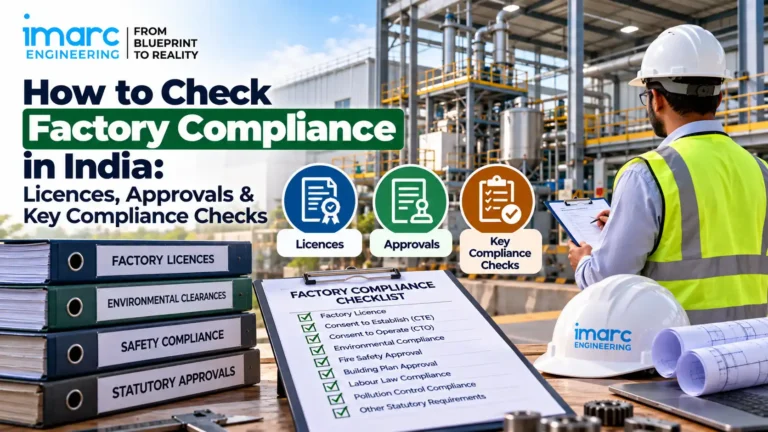
- Factory licence and fire safety compliance
- Machinery procurement and installation
- Raw material supplier agreements and supply chain setup
- Trial production and quality testing
- Commercial production launch
Licences and Regulatory Requirements
Starting a baking soda manufacturing unit in India requires several approvals:
- Business registration (Proprietorship, LLP, or Pvt Ltd)
- Factory Licence under the Factories Act
- Environmental Clearance from State Pollution Control Board
- GST Registration
- Fire Safety NOC
- Hazardous/Chemical compliance (applicable given the use of carbon dioxide and sodium carbonate as process inputs)
- Effluent Treatment Plant (ETP) operational clearance
- Occupational Health and Safety compliance
Key Challenges to Consider
High Capital Requirements. Establishing a baking soda manufacturing plant demands significant upfront investment covering land, civil construction, and specialized equipment including calcining kilns, carbonation towers, and centrifuge systems. Securing appropriate funding structures — including term loans and government scheme benefits — is essential to managing capital deployment risk.
Raw Material Price Volatility. Sodium carbonate (soda ash) accounts for approximately 60–70% of total operating expenses, making the facility highly sensitive to fluctuations in soda ash prices. Carbon dioxide procurement adds a secondary layer of supply chain risk. Long-term supplier contracts and strategic inventory management are critical mitigation tools.
Regulatory Compliance. The manufacturing process involves chemical inputs and produces industrial effluents, requiring ongoing compliance with environmental clearances, ETP operational standards, and chemical handling regulations. Staying ahead of evolving food safety and pharmaceutical purity standards adds further regulatory complexity.
Technology and Innovation Pressure. As purity standards for food-grade and pharmaceutical-grade sodium bicarbonate become increasingly stringent, continuous investment in process quality assurance systems and quality management protocols is necessary to retain access to premium markets.
Competition from Established Players. The market includes well-capitalised multinational players such as Solvay SA and Church & Dwight Co. Inc., as well as established Indian producers including Tata Chemicals Ltd. and Nirma Ltd. New entrants must compete on quality, reliability, and regional logistics advantages.
Skilled Manpower. Operating carbonation towers, centrifuge systems, and drying units to food-grade purity standards requires a technically trained workforce. Recruiting, training, and retaining qualified chemical plant operators and quality control personnel in competitive labour markets represents an ongoing operational challenge.
Frequently Asked Questions
1. How much does it cost to set up a baking soda manufacturing plant in India?
The setup cost depends on plant capacity, location, technology choice, and automation level. A facility with an annual capacity of 20,000–50,000 tons involves capital expenditure covering land, civil works, and machinery including calcining kilns, carbonation towers, and packaging machines. A detailed CapEx breakdown is available in the full project report.
2. Is baking soda manufacturing profitable in India in 2026?
Yes. Gross profit margins for a baking soda manufacturing plant typically range between 30–40%, with net profit margins of 15–22%. India’s growing food manufacturing sector, pharmaceutical industry, and FMCG market provide strong, sustained demand to support profitability.
3. What machinery is required for a baking soda plant in India?
Key machinery required includes calcining kilns, carbonation towers, filtration units, centrifuge systems, drying units, screening equipment, and packaging machines.
4. What licences and approvals are required to start a baking soda plant in India?
Required approvals include business registration, Factory Licence under the Factories Act, Environmental Clearance from the State Pollution Control Board, GST Registration, Fire Safety NOC, chemical compliance certifications, ETP operational clearance, and Occupational Health and Safety compliance.
5. What raw materials are needed for baking soda manufacturing?
The primary raw materials are sodium carbonate (soda ash) and carbon dioxide. Sodium carbonate alone accounts for 60–70% of total operating expenses, making reliable supplier sourcing critical.
6. What are the environmental compliance requirements for a baking soda plant in India?
The facility must obtain Environmental Clearance from the State Pollution Control Board, install and operate an Effluent Treatment Plant (ETP), comply with emission standards for chemical processing, and implement advanced monitoring systems to detect process deviations.
7. What is the best location to set up a baking soda plant in India?
The site must offer easy access to key raw materials such as sodium carbonate and carbon dioxide, proximity to target markets, robust infrastructure including reliable transportation and utilities, and compliance with local zoning laws. States such as Gujarat and Maharashtra, with established chemical manufacturing ecosystems, are natural candidates.
8. What is the break-even period for this type of plant in India?
The break-even period depends on plant capacity, actual capacity utilisation, raw material costs, and product pricing. The full project report includes payback period analysis, NPV, and IRR calculations based on realistic production and demand assumptions.
9. What government incentives are available for manufacturers in India?
Manufacturers in India may benefit from Make in India incentives, Production Linked Incentive (PLI) schemes applicable to chemical sectors, SEZ-based tax advantages, state industrial policy subsidies for capital investment, and GST input tax credit mechanisms.
Key Takeaways for Investors
A baking soda manufacturing plant in India represents a well-rounded investment opportunity anchored by non-cyclical demand from food and beverage, pharmaceutical, personal care, and industrial processing sectors. The facility demonstrates strong financial viability across the 20,000–50,000 ton annual capacity range, with gross margins of 30–40% and net margins of 15–22% providing a defensible return profile across varying market conditions. The global baking soda market was valued at USD 1.75 Billion in 2025 and is projected to reach USD 2.61 Billion by 2034, growing at a CAGR of 4.51% from 2026 to 2034, while India’s food manufacturing market alone is set to expand to USD 700 Billion by 2030. These converging growth vectors — supported by Make in India policy momentum, rising domestic consumption of packaged foods and hygiene products, and the strategic entry of players like Tata Chemicals into premium sodium bicarbonate — confirm that demand for high-quality, locally produced baking soda will remain robust and structurally sustainable for the foreseeable future.
About the Author