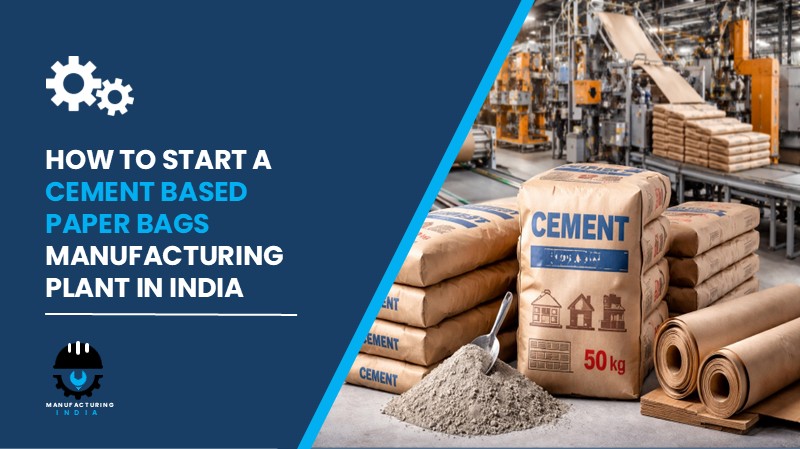
Setting up a cement based paper bags manufacturing plant in India presents a compelling investment case driven by the country’s accelerating infrastructure build-out, rapid urbanisation, and surging cement consumption. The cement manufacturing industry, construction and infrastructure sector, building material supply chains, and export and bulk cement packaging operations are the primary demand-driving industries for this product. As cement production scales up across India to meet the needs of roads, residential towers, commercial complexes, and industrial estates, the requirement for durable, moisture-resistant, and recyclable packaging solutions has never been more pronounced. Cement based paper bags sit at the intersection of industrial packaging and sustainability, making them a critical enabler of India’s construction economy.
India offers a uniquely favourable environment for establishing this type of manufacturing facility. The country’s cost-competitive land and labour markets, well-developed kraft paper and adhesive supply chains in states such as Gujarat, Maharashtra, and Uttar Pradesh, and the government’s Make in India initiative all combine to create a strong foundation for new entrants. India’s rail network had already reached nearly 69,439 route kilometres by March 2025, with plans to add approximately 3,500 kilometres in FY26 alongside 99.1% broad gauge electrification an infrastructure push that directly accelerates cement consumption and therefore demand for packaging. Investors who act now can capture first-mover advantages in a market where local supply chain preference among cement producers is intensifying.
Establishing a cement based paper bags manufacturing plant in India offers investors the dual benefit of policy tailwinds under Make in India and a construction sector that generates non-cyclical, year-round demand. With gross profit margins typically ranging between 18-25% and net margins of 8-12%, the project demonstrates healthy financial viability across plant capacities of 10-30 million bags annually, making break-even a realistic near-term milestone.
What are Cement Based Paper Bags?
Cement based paper bags are industrial-grade packaging solutions designed specifically for the storage, handling, and transportation of cement and other powdered construction materials. The production of these bags involves multiple layers of high-strength kraft paper, which manufacturers combine with moisture-resistant coatings or liners to create a barrier that protects cement from humidity and contamination. The structural design enables filling and stacking operations while securing materials during transit.
These bags are available in two principal configurations: valve designs and open-mouth designs. Valve designs enable automated, high-speed, dust-free filling operations that modern cement plants prefer for their efficiency, while open-mouth variants offer flexibility for different filling systems. The packaging solution provides multiple benefits beyond containment — it enables simple disposal, offers recycling options, and creates a smaller environmental footprint compared with plastic alternatives. The uniform dimensions and consistent production quality of cement based paper bags allow businesses to operate efficiently while reducing material waste throughout the cement supply chain.
The primary production method is a multi-stage mechanical process that moves from paper roll unwinding through to tube formation, multi-layer pasting, bottom and valve formation, cutting, printing, quality inspection, and stacking. End-use industries served include the cement manufacturing industry, the construction materials sector, infrastructure and real estate development, and bulk building material suppliers. Applications span the packaging of portland cement, blended cement, white cement, and other powdered construction materials.
Cost of Setting Up a Cement Based Paper Bags Manufacturing Plant in India
The total investment required for a cement based paper bags manufacturing plant in India depends on several interdependent variables: chosen plant capacity, level of automation, technology configuration, geographic location, and degree of regulatory compliance infrastructure. Investors should approach cost planning across both capital expenditure and operational expenditure to arrive at a complete picture of financial commitment.
1. Capital Expenditure (CapEx)
The capital investment for this facility covers several major heads. Land and site development including land registration charges, boundary development, drainage, internal roads, and utility connection points forms a substantial portion of the overall CapEx. Investors in India can explore options within Special Economic Zones (SEZs) or state-designated industrial estates, particularly in Gujarat and Maharashtra, where land costs are structured and infrastructure is already in place.
Civil works and construction costs cover the main production shed, raw material warehousing, finished goods storage, administrative block, quality control laboratory, and worker amenities. The construction specification for a paper bag plant must account for adequate ventilation, dust management systems, and floor load-bearing capacity for roll storage.
Machinery costs account for the largest single portion of capital expenditure. Key machinery required includes:
- High-speed paper bag forming machines
- Printing units
- Cutting systems
- Quality inspection equipment
Other capital costs include effluent treatment plant (ETP) installation, pre-operative expenses such as consultant fees and trial run costs, commissioning charges, and import duties on any equipment sourced internationally.
Request a Sample Report for In-Depth Market Insights: https://www.imarcgroup.com/cement-based-paper-bags-manufacturing-plant-project-report/requestsample
2. Operational Expenditure (OpEx)
Raw material cost is the dominant driver of the operating cost structure, accounting for approximately 70-75% of total OpEx. The three principal raw materials cement, kraft paper, and adhesive must be procured through reliable supplier networks, and investors are strongly advised to negotiate long-term supply contracts to mitigate price volatility. Proximity to kraft paper mills in central and western India can materially reduce inbound logistics costs.
Utility costs, covering electricity for forming machines, printing, and cutting equipment, plus water and any steam requirements, represent approximately 5–10% of operational expenditure. Other ongoing operating costs include transportation to cement plant customers and construction material distributors, packaging of finished bags, salaries and wages across production, quality, maintenance, and administrative functions, depreciation on machinery and civil assets, and applicable taxes. By the fifth year of operations, total operational costs are projected to increase substantially due to inflation, market fluctuations, and potential rises in the cost of key raw materials, as well as supply chain disruptions and rising consumer demand.
3. Plant Capacity
The proposed manufacturing facility is designed with an annual production capacity ranging between 10 and 30 million bags, enabling economies of scale while maintaining operational flexibility. This range accommodates both mid-scale regional suppliers and larger operations targeting national cement producers. Plant capacity can be customised per individual investor requirements, and profitability improves meaningfully with higher capacity utilisation as fixed costs are spread across a larger volume of output.
4. Profit Margins and Financial Projections
The project demonstrates healthy profitability potential under normal operating conditions. Gross profit margins typically range between 18-25%, supported by stable demand and value-added applications. Net profit margins range between 8-12%. Investors should also evaluate the project on the basis of net present value (NPV), internal rate of return (IRR), payback period, and sensitivity analysis to understand the financial performance envelope under varying assumptions of capacity utilisation, raw material pricing, and selling price trends.
Why Set Up a Cement Based Paper Bags Plant in India?
Rising infrastructure and construction activities are the most powerful structural demand driver for this investment. Ongoing infrastructure projects across India including road construction, residential development, and commercial building programmes lead directly to increased cement consumption and therefore higher demand for packaging materials. India’s rail network expansion alone, targeting an addition of approximately 3,500 kilometres in FY26, signals the scale of cement-intensive investment underway.
Shift toward sustainable packaging is reshaping procurement decisions across the cement industry. Paper-based cement bags establish compliance with environmental regulations and achieve sustainability targets, progressively replacing plastic packaging as regulatory pressure on single-use plastics increases. This structural shift is durable and policy-reinforced, creating a growing addressable market.
Strong and consistent industrial demand underpins the investment case. Cement packaging is a non-cyclical requirement because construction and renovation activities are continuous throughout the year. This demand stability provides revenue predictability that investors in more cyclical packaging categories do not enjoy.
Compatibility with automated filling systems is a key product advantage that drives adoption among large cement producers. Modern cement plants prefer paper bags that enable high-speed, dust-free filling processes, and the valve and open-mouth designs of cement based paper bags are purpose-engineered for exactly this requirement, making them the natural specification choice for capital-intensive filling lines.
Scalable and capital-efficient manufacturing is a structural advantage of this production process. The paper bag forming and converting process allows scalability with moderate capital investment and efficient cost management, making it accessible to a range of investor profiles from mid-sized industrial groups to large packaging conglomerates.
Active industry investment confirms commercial momentum in this segment. In July 2025, Klabin presented two new packaging solutions at the 9th Brazilian Cement Congress and ExpoCimento in São Paulo, including a 100% paper dispersible cement bag and a paper packaging with a plastic-free moisture barrier, both developed at Klabin’s Technology Center. In June 2024, Mondi and Cemex collaborated to announce the Spanish launch of SolmixBag, a water-soluble cement bag made from paper that fully dissolves during the cement mixing process, eliminating the need to remove packaging and aligning with Mondi’s MAP2030 sustainability goals.
Manufacturing Process – Step by Step
The cement based paper bags manufacturing process uses paper roll unwinding, tube forming, multi-layer pasting, bottom and valve formation, cutting, printing, quality inspection, and stacking as the primary production method. The sequence below describes each stage of this operation:
- Paper Roll Unwinding: Large rolls of high-strength kraft paper are loaded onto unwinding stations and fed continuously into the forming line, with tension control systems ensuring consistent feed.
- Paper Tube Forming: The kraft paper is formed into a continuous tube using forming mandrels and adhesive application systems, creating the structural sleeve of the bag.
- Multi-Layer Pasting: Additional layers of kraft paper are bonded to the initial tube to achieve the required multi-layer construction, with each layer adding burst strength and moisture resistance.
- Bottom and Valve Formation: The tube is cut to bag length and bottom closures are formed; valve inserts are fitted for valve-type bags to enable automated filling, while open-mouth variants receive their respective closure configuration.
- Cutting: Finished bag blanks are cut to precise dimensional specifications to ensure uniformity across all production runs.
- Printing: Brand identifiers, weight markings, regulatory information, and handling instructions are printed onto the bag surface using integrated printing units.
- Quality Inspection: Each bag passes through inspection equipment that checks dimensional accuracy, seam integrity, valve function, and print quality against defined quality assurance criteria.
- Stacking and Dispatch: Finished and inspected bags are stacked, bundled, and prepared for dispatch to cement manufacturing plants, construction material sector clients, and bulk building material suppliers.
Key Applications
Cement based paper bags serve a range of industries that depend on reliable, standardised, and sustainable packaging for powdered construction materials:
- Cement Manufacturing Industry: Provides safe storage and moisture protection, allowing efficient transportation of bulk cement during distribution to dealers, contractors, and retail outlets.
- Construction and Infrastructure Sector: Offers standardised handling methods for construction projects that require reliable cement packaging across site operations of varying scale.
- Building Material Supply Chains: The standard bag dimensions and strength characteristics deliver better operational performance throughout warehouse and distribution network operations, reducing damage and spillage.
- Export and Bulk Cement Packaging: Achieves sustainability standards while preserving product quality during extended shipping distances, meeting the requirements of export-oriented cement producers.
Leading Manufacturers
The global cement based paper bags industry is served by multinational companies with extensive production capacities and diverse application portfolios, all of which serve end-users such as cement producers, construction material suppliers, and infrastructure developers across domestic and export markets. Leading manufacturers in this industry include:
- Klabin – presented two new sustainable cement packaging solutions at the 9th Brazilian Cement Congress and ExpoCimento in July 2025
- Mondi – collaborated with Cemex on the Spanish launch of SolmixBag in June 2024
Timeline to Start the Plant
A realistic phased timeline for establishing a cement based paper bags manufacturing plant in India covers the following sequential phases:
- Feasibility study and project report preparation
- Land acquisition and site development
- Regulatory approvals and environmental clearances
- Factory licence and fire safety compliance
- Machinery procurement and installation
- Raw material supplier agreements and supply chain setup
- Trial production and quality testing
- Commercial production launch
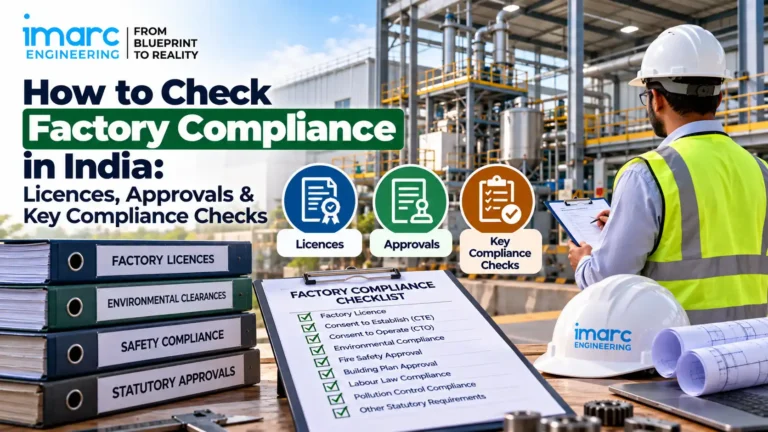
Licences and Regulatory Requirements
Starting a cement based paper bags manufacturing unit in India requires several approvals:
- Business registration (Proprietorship, LLP, or Pvt Ltd)
- Factory Licence under the Factories Act
- Environmental Clearance from State Pollution Control Board
- GST Registration
- Fire Safety NOC
- Effluent Treatment Plant (ETP) operational clearance
- Occupational Health and Safety compliance
Key Challenges to Consider
High Capital Requirements represent the most immediate barrier to entry. Machinery costs covering high-speed paper bag forming machines, printing units, cutting systems, and quality inspection equipment account for the largest portion of CapEx, and investors must ensure adequate funding arrangements before committing to site development.
Raw Material Price Volatility is a persistent operational risk. Cement, kraft paper, and adhesive are all subject to commodity price movements, and any significant cost increase in these inputs which collectively represent 70-75% of OpEx can compress margins materially without adequate supplier contract structures.
Regulatory Compliance demands careful advance planning. Environmental clearance from the State Pollution Control Board, ETP commissioning, and factory licensing under the Factories Act each carry lead times that must be factored into the project timeline to avoid delays in commercial production.
Technology and Innovation Pressure is a growing consideration. Industry developments such as Klabin’s dispersible cement bag and Mondi’s water-soluble SolmixBag illustrate that product innovation is advancing rapidly, and Indian manufacturers will need to monitor and respond to evolving customer preferences for higher-performance, sustainability-aligned packaging.
Competition from established global players including Klabin and Mondi, as well as domestic packaging manufacturers, means that market positioning, product quality, and customer relationship management will be critical success factors for new entrants.
Skilled Manpower availability for operating high-speed forming machines, printing units, and quality inspection systems is a constraint that investors must address through a combination of technical training programmes, partnerships with ITIs, and competitive compensation structures.
Frequently Asked Questions
1. How much does it cost to set up a cement based paper bags manufacturing plant in India? The total investment depends on plant capacity, technology, automation level, and location. Machinery costs including high-speed forming machines, printing units, and cutting systems represent the largest CapEx component, while land, civil construction, and utilities form additional significant heads. A detailed project report covering CapEx and OpEx breakdowns is the recommended starting point for any investor.
2. Is cement based paper bags manufacturing profitable in India in 2026? Yes, the project demonstrates healthy profitability under normal operating conditions, with gross profit margins typically ranging between 18–25% and net profit margins of 8-12%, supported by stable and non-cyclical demand from the cement and construction sectors.
3. What machinery is required for a cement based paper bags plant in India? Essential equipment includes high-speed paper bag forming machines, printing units, cutting systems, and quality inspection equipment. The scale of production and chosen automation level will determine the total machinery cost.
4. What licences and approvals are required to start a cement based paper bags plant in India? Required approvals include business registration, a Factory Licence under the Factories Act, Environmental Clearance from the State Pollution Control Board, GST Registration, a Fire Safety NOC, ETP operational clearance, and Occupational Health and Safety compliance.
5. What raw materials are needed for cement based paper bags manufacturing? The three primary raw materials are cement, kraft paper, and adhesive. Long-term contracts with reliable suppliers are recommended to stabilise pricing and ensure a consistent production supply.
6. What are the environmental compliance requirements for a cement based paper bags plant in India? The facility must obtain Environmental Clearance from the State Pollution Control Board, install and commission an Effluent Treatment Plant, and maintain ongoing compliance with emission standards and waste management regulations.
7. What is the best location to set up a cement based paper bags plant in India? The optimal site should offer proximity to kraft paper mills and adhesive suppliers, access to reliable transportation infrastructure, and location within or near major cement production clusters. States such as Gujarat, Maharashtra, and Uttar Pradesh offer strong supply chain depth and established industrial infrastructure.
8. What is the break-even period for this type of plant in India? Break-even timing depends on plant capacity, utilisation rate, and operating cost management. The detailed financial analysis in a project report covers payback period, NPV, and IRR calculations to give investors a clear view of the break-even timeline.
9. What government incentives are available for manufacturers in India? Investors can explore incentives under the Make in India initiative, state-level industrial promotion policies, capital subsidy schemes for packaging industries, and benefits available to units established within designated SEZs or industrial estates.
Key Takeaways for Investors The cement based paper bags manufacturing plant in India represents a well-founded investment opportunity anchored by non-cyclical demand from the cement manufacturing industry, construction and infrastructure sector, and building material supply chains, all of which generate year-round procurement requirements. The project is financially viable across plant capacities of 10-30 million bags annually, with gross margins of 18-25% and net margins of 8-12% providing a clear path to profitability. India’s ongoing infrastructure expansion evidenced by a rail network approaching 69,439 route kilometres and continued housing and commercial development reinforces both the current demand base and the forward growth trajectory. As the global shift from plastic to paper-based cement packaging accelerates, driven by regulatory pressure and sustainability mandates, demand for high-quality cement based paper bags manufactured in India is positioned to grow sustainably over the medium and long term.
About the Author