Setting up a glass manufacturing plant in India presents a compelling investment case for entrepreneurs and industrialists seeking to capitalise on one of the country’s most foundational industrial sectors. Demand for glass is driven by rapid expansion across construction, automotive, packaging, telecommunications, electronics, and aerospace — all critical pillars of India’s evolving economy. As urbanisation accelerates and infrastructure development intensifies, glass has become indispensable for energy-efficient buildings, vehicle glazing, fiber optic networks, and advanced electronics.
India’s growth trajectory makes the country one of the most strategically sound locations for this investment. The Make in India initiative actively encourages domestic manufacturing, while industrial states such as Gujarat and Maharashtra offer competitive land costs, robust logistics, and proximity to key raw materials including silica sand, soda ash, and limestone. With a large domestic market, a cost-competitive labour base, and strong linkages across construction and automotive supply chains, the unit offers an ideal environment to scale profitably.
This glass manufacturing investment benefits from strong policy support under Make in India, cost-competitive access to silica sand, soda ash, and limestone, and sustained demand across construction, automotive, and packaging sectors. With gross margins in the 25–35% range and robust market fundamentals, the glass manufacturing unit demonstrates credible break-even and long-term profitability potential.
What is Glass?
Glass manufacturing involves the processing of raw materials such as sand, soda ash, and limestone through exposure to high temperatures to achieve melting, followed by moulding into shapes ranging from simple to highly complex objects. Composition and strength are varied in accordance with intended use, enabling products tailored to specific industrial and consumer requirements.
The primary production method is glass forming, annealing, and fiberization — a multi-stage sequence that ensures structural integrity and application-specific performance. End-use industries served include construction and building materials, automotive, telecommunications, electronics, and aerospace. Core applications include window glazing, structural insulation, fiber optic cables, circuit boards, vehicle glazing, and reinforcement composites.
Cost of Setting Up a Glass Manufacturing Plant in India
The cost of establishing this facility depends on production capacity, technology type, plant location, degree of automation, and regulatory compliance requirements.
1. Capital Expenditure (CapEx)
Land and Site Development costs form a substantial portion of the overall investment, covering land registration, boundary development, and site preparation. Investors may consider Special Economic Zones (SEZs) or industrial estates in Gujarat or Maharashtra for tax concessions and improved infrastructure connectivity.
Civil Works and Construction cover the main production shed, quality control laboratory, raw material storage, finished goods warehouse, and administrative block. Adequate space is required for high-temperature furnace installations, annealing facilities, and forming lines.
Key machinery required includes:
- Batch mixers
- Furnaces or melters
- Forming machines (for float, container, or fiber)
- Annealing lehrs
- Cutting and edging units
- Tempering ovens
- Coating lines
- Inspection and packaging systems
Other Capital Costs include effluent treatment plant (ETP) setup, pre-operative expenses, commissioning charges, and import duties on specialised equipment.
Request a Sample Report for In-Depth Market Insights: https://www.imarcgroup.com/glass-manufacturing-plant-project-report/requestsample
2. Operational Expenditure (OpEx)
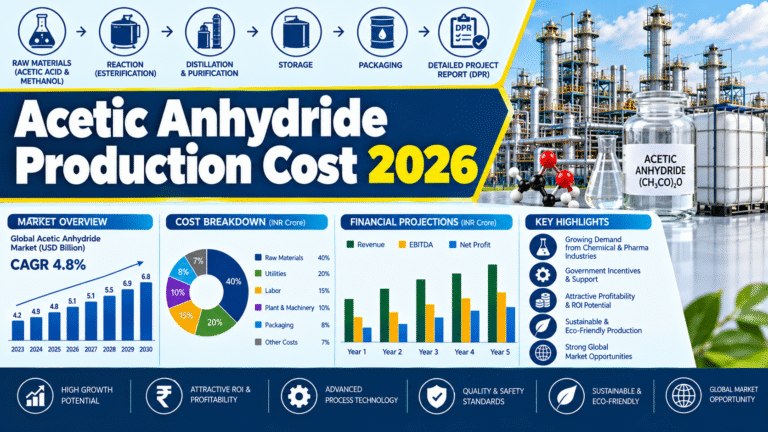
Raw Material Cost is the dominant OpEx component at approximately 35–45% of total operating expenses. Primary raw materials — silica sand, soda ash, and limestone — should be procured under long-term supplier contracts to stabilise input costs and reduce supply chain risk.
Utility Cost accounts for 40–50% of operational expenses, covering electricity, water, and steam consumed in substantial quantities by high-temperature furnaces and annealing operations. Site proximity to reliable industrial power grids is essential.
Other Operating Costs include transportation, packaging, salaries, maintenance, depreciation, and applicable taxes. By year five, total operating costs are expected to increase substantially due to inflation, raw material price movements, and rising demand.
3. Plant Capacity
The proposed facility is designed with an annual production capacity of 200,000–500,000 MT, enabling economies of scale with operational flexibility. Capacity can be customised per investor requirements, and profitability improves with higher utilisation rates as fixed costs are spread across greater output volumes.
4. Profit Margins and Financial Projections
The investment demonstrates healthy profitability under normal operating conditions. Gross profit margins range between 25–35%, supported by stable demand and value-added applications. Net profit margins are projected at 10–15% on average. Financial analysis covers NPV, IRR, payback period, gross margin, and sensitivity projections — providing a comprehensive view of long-term viability.
Why Set Up a Glass Manufacturing Plant in India?
Construction Sector Demand: Rapid urbanisation and infrastructure expansion are generating sustained demand for energy-efficient glass, windows, and facades. According to the UNFPA, more than half of the world’s population now lives in cities, and this figure is projected to reach approximately 5 billion by 2030 — underpinning long-term structural demand.
Automotive Industry Growth: The automotive sector’s shift toward lightweight construction and enhanced safety standards is boosting demand for tempered windscreens and laminated safety glass, creating a reliable growth segment for domestic producers.
Packaging Demand: The food and beverage industry’s continued reliance on glass packaging — valued for its non-reactivity and recyclability — is a consistent demand driver. Sustainability priorities among FMCG brands reinforce its long-term relevance.
Policy and Regulatory Tailwinds: Make in India, green building codes, and government investment in smart cities, housing, renewable energy, and transportation infrastructure indirectly accelerate glass consumption across multiple product segments.
Active Industry Investment: Borosil Renewables announced in January 2025 plans to expand solar glass capacity by 50%, from 1,000 TPD to 1,500 TPD (6.5 GW/annum). In April 2024, O-I Glass achieved a key construction milestone at its glass packaging facility in Bowling Green, KY, reflecting strong global capital commitment to the sector.
Local Supply Chain Preference: Developers, OEMs, and EPC contractors increasingly source glass locally to reduce logistics costs and manage raw material volatility — creating a competitive advantage for regional manufacturers with integrated operations.
Manufacturing Process — Step by Step
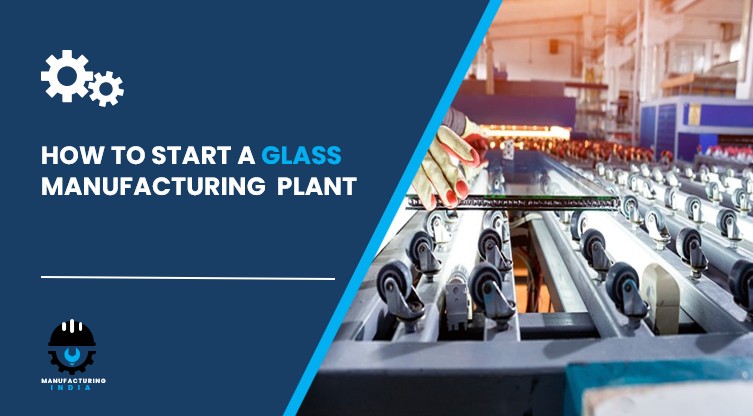
The glass manufacturing process uses glass forming, annealing, and fiberization as its primary production method. Understanding the glass manufacturing process in detail is essential for equipment planning, energy optimisation, and quality assurance. The sequence proceeds as follows:
- Silica sand, soda ash, and limestone are weighed and blended in batch mixers to the required glass composition.
- The blended batch is fed into high-temperature furnaces or melters where raw materials are fused into molten glass.
- Molten glass is shaped using forming machines appropriate to product type — float lines for flat glass, container moulds for bottles, or fib erization equipment for glass fibres.
- Formed glass passes through annealing lehrs where controlled cooling relieves internal stresses and ensures structural integrity.
- Glass sheets are cut and edged to specification using precision cutting and edging units.
- Products requiring enhanced strength are tempered in tempering ovens; specialty products receive functional coatings via coating lines.
- Finished glass is inspected using automated inspection and packaging systems, then dispatched to construction, automotive, electronics, and packaging end-users.
Key Applications
Glass produced at an India-based unit serves diverse industries across construction, mobility, communications, and consumer goods:
- Window glazing, architectural facades, and energy-efficient structural panels.
- Vehicle glazing, windscreens, and laminated safety glass for passenger and commercial vehicles.
- Fiber optic cables for high-speed data transmission infrastructure.
- Circuit boards and display panels for consumer electronics and industrial devices.
- Reinforcement composites and specialised glazing for aircraft.
- Bottles and jars for food, beverage, and pharmaceutical products.
Leading Manufacturers
The global glass industry is served by multinational manufacturers with extensive capacities and diversified application portfolios. Key players include:
- Saint-Gobain
- Guardian Industries
- Asahi Glass Co.
- O-I Glass
- Corning Inc.
Timeline to Start the Plant
- Feasibility study and project report preparation
- Land acquisition and site development
- Regulatory approvals and environmental clearances
- Factory licence and fire safety compliance
- Machinery procurement and installation
- Raw material supplier agreements and supply chain setup
- Trial production and quality testing
- Commercial production launch
Licences and Regulatory Requirements
Starting a glass manufacturing unit in India requires several approvals:
- Business registration (Proprietorship, LLP, or Pvt Ltd)
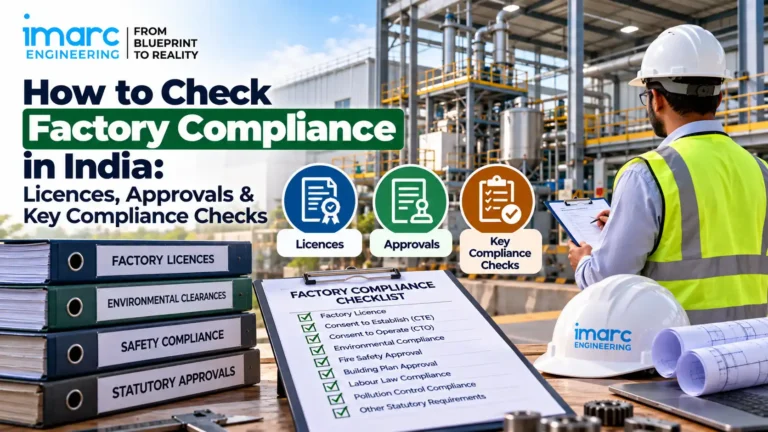
- Factory Licence under the Factories Act
- Environmental Clearance from State Pollution Control Board
- GST Registration
- Fire Safety NOC
- Hazardous/Chemical compliance (applicable for soda ash and related process chemicals)
- Effluent Treatment Plant (ETP) operational clearance
- Occupational Health and Safety compliance
Key Challenges to Consider
High Capital Requirements: Establishing a glass manufacturing plant demands significant upfront investment in high-temperature furnaces, forming machinery, and quality control systems, requiring structured financing support for new entrants.
Raw Material Price Volatility: The cost of silica sand, soda ash, and limestone is subject to commodity price fluctuations and supply chain disruptions that can affect unit economics.
Regulatory Compliance: High-energy processes and chemical handling attract environmental scrutiny. Continuous compliance with State Pollution Control Board requirements and ETP standards requires dedicated operational investment.
Technology and Innovation Pressure: Growing demand for smart glass, energy-efficient coatings, and solar glass requires ongoing process technology investment to maintain market competitiveness.
Competition from Established Players: Saint-Gobain, Guardian Industries, and Asahi Glass Co. bring scale advantages that require new entrants to differentiate through quality, localisation, or niche product focus.
Skilled Manpower: Operating high-temperature furnaces and precision forming equipment demands a technically skilled workforce, which can be challenging to recruit in Tier-2 and Tier-3 industrial locations.
Frequently Asked Questions
- How much does it cost to set up a glass manufacturing plant?
- Is glass manufacturing profitable in India in 2025?
- What machinery is required for a glass plant in India?
- What licences and approvals are required to start a glass plant in India?
- What raw materials are needed for glass manufacturing?
- What are the environmental compliance requirements for a glass plant in India?
- What is the best location to set up a glass plant in India?
- What is the break-even period for this type of plant in India?
- What government incentives are available for manufacturers in India?
Key Takeaways for Investors
Establishing a glass manufacturing plant represents a robust opportunity backed by sustained demand from construction, automotive, packaging, electronics, and telecommunications sectors in India. Across a range of plant capacities, the glass manufacturing investment delivers gross margins of 25–35% and net margins of 10–15%, supported by stable end-use demand and value-added product applications. The India glass market was valued at USD 5.16 Billion in 2025 and is projected to reach USD 8.87 Billion by 2034, growing at a CAGR of 6.2% from 2026 to 2034 according to IMARC Group. With favourable policy tailwinds, strong domestic demand, and expanding end-use segments driven by urbanisation and infrastructure growth, the long-term demand outlook for glass in India remains robust and sustainable.
About the Author